This will be a short one, as we stayed in Volterra all day.
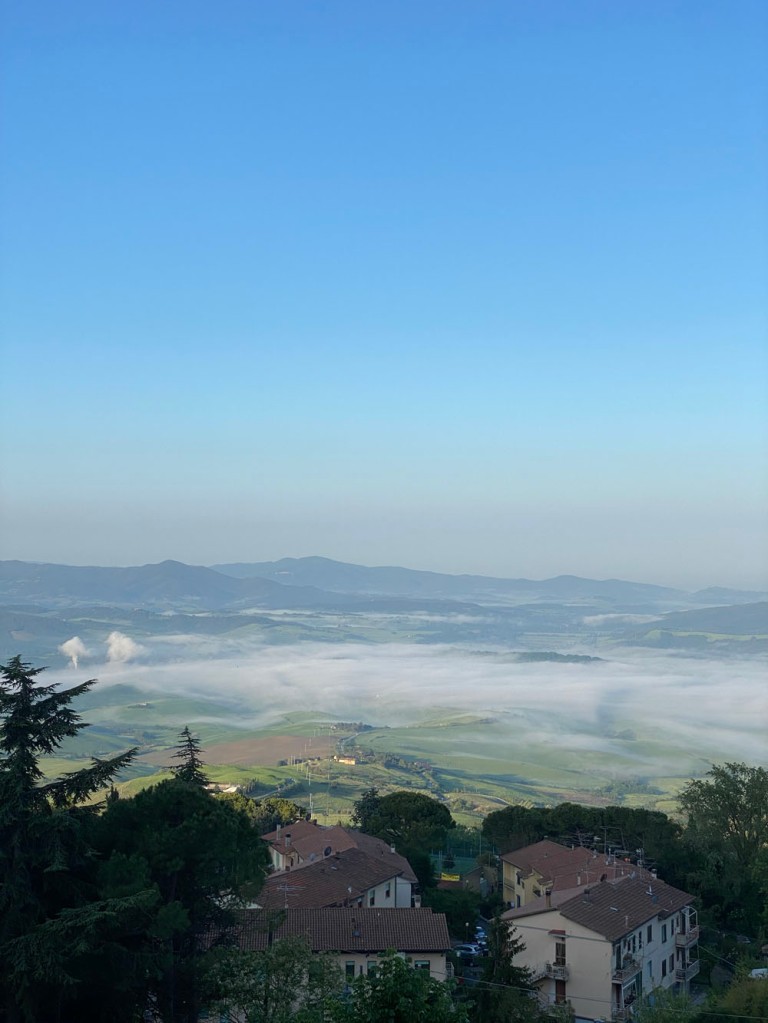
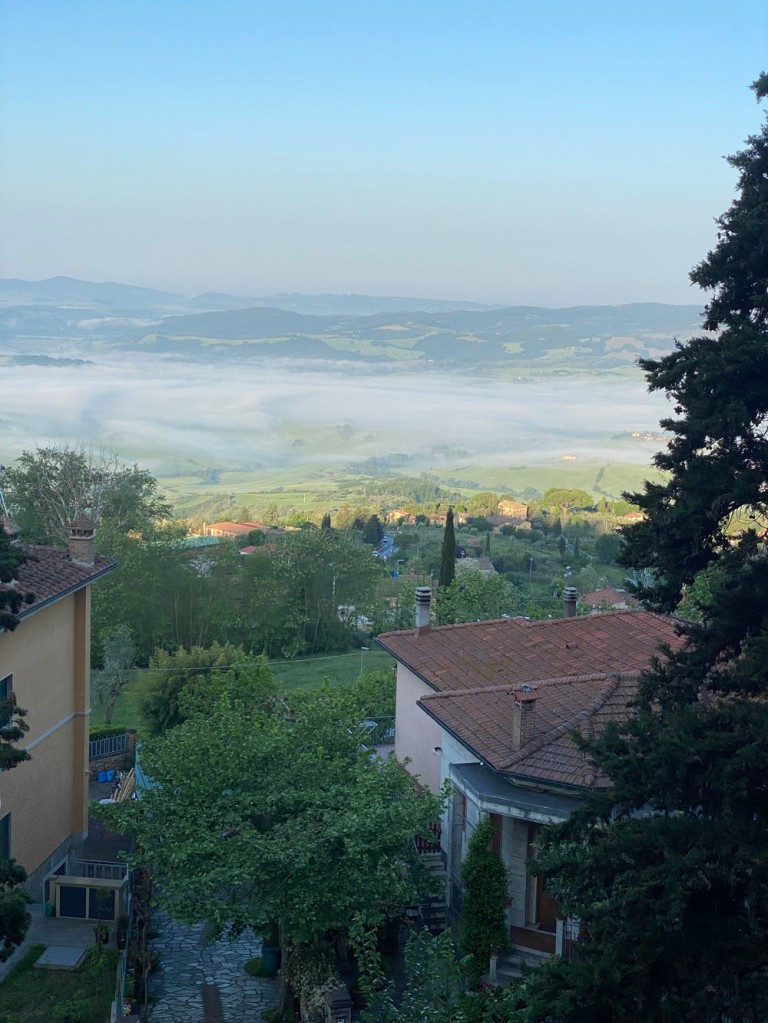
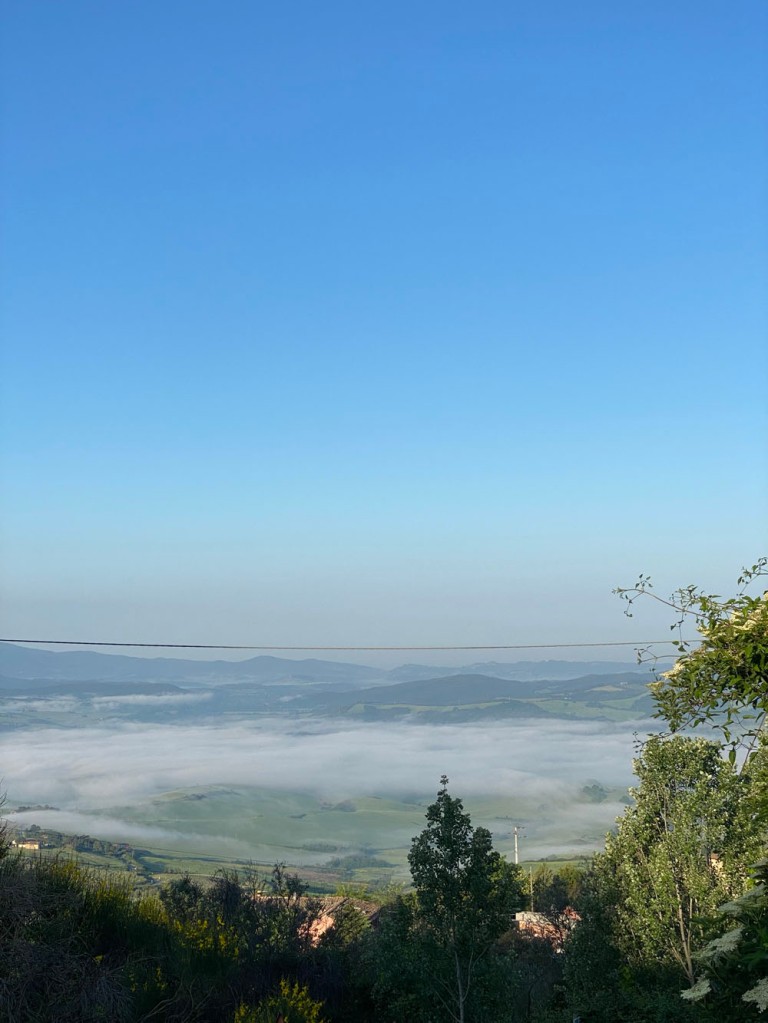
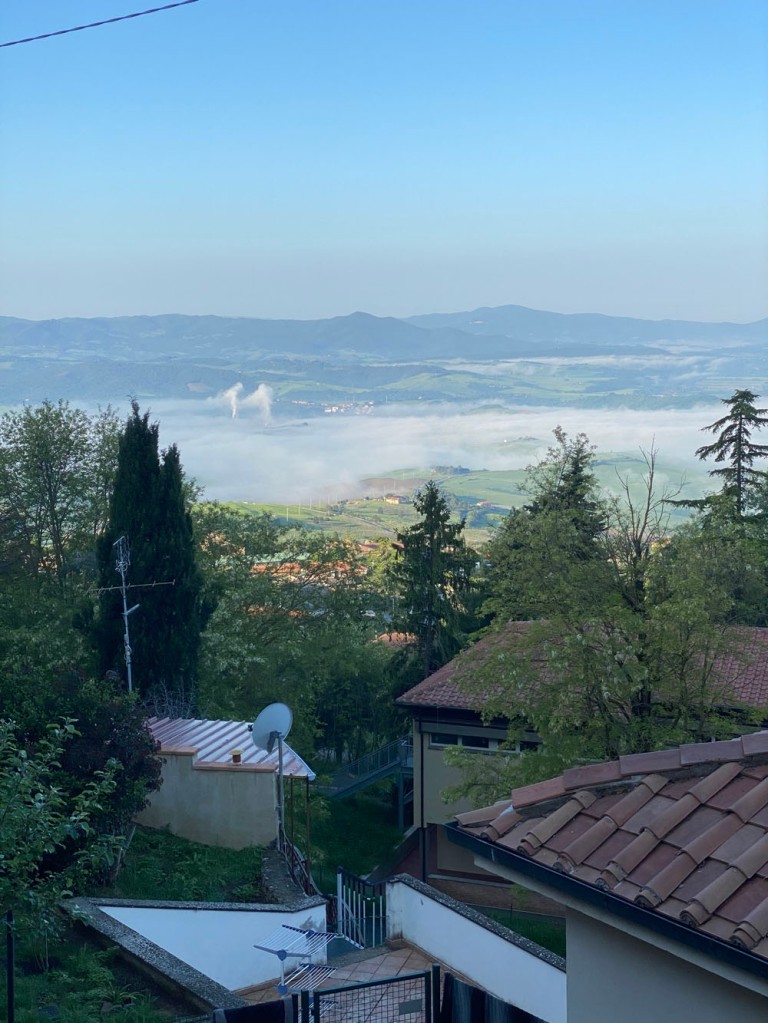
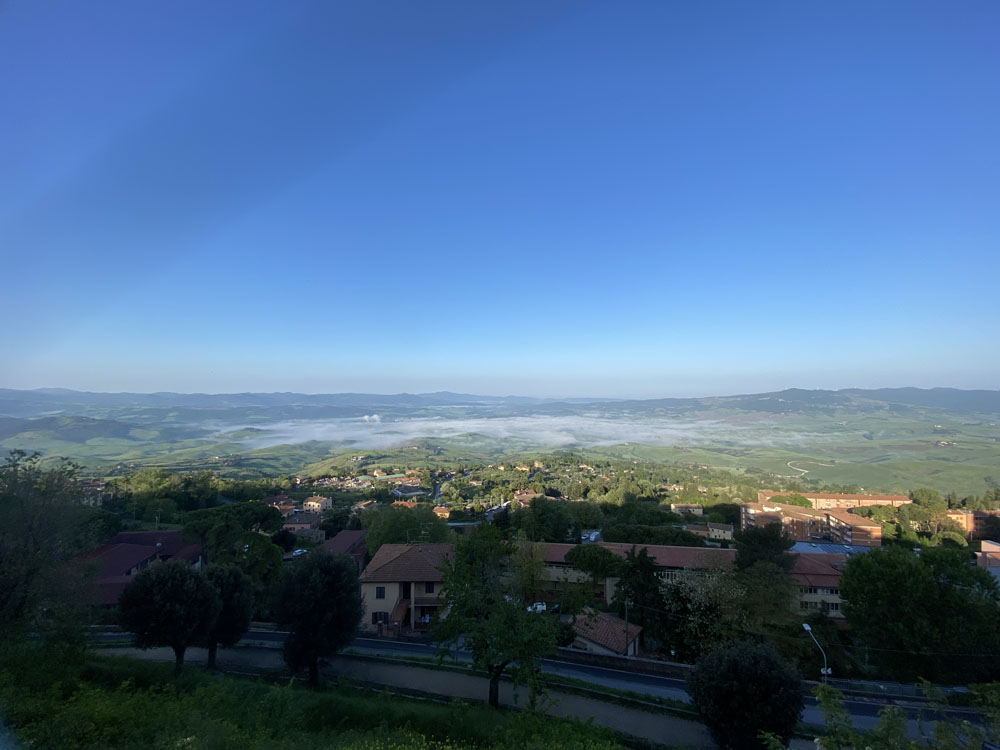
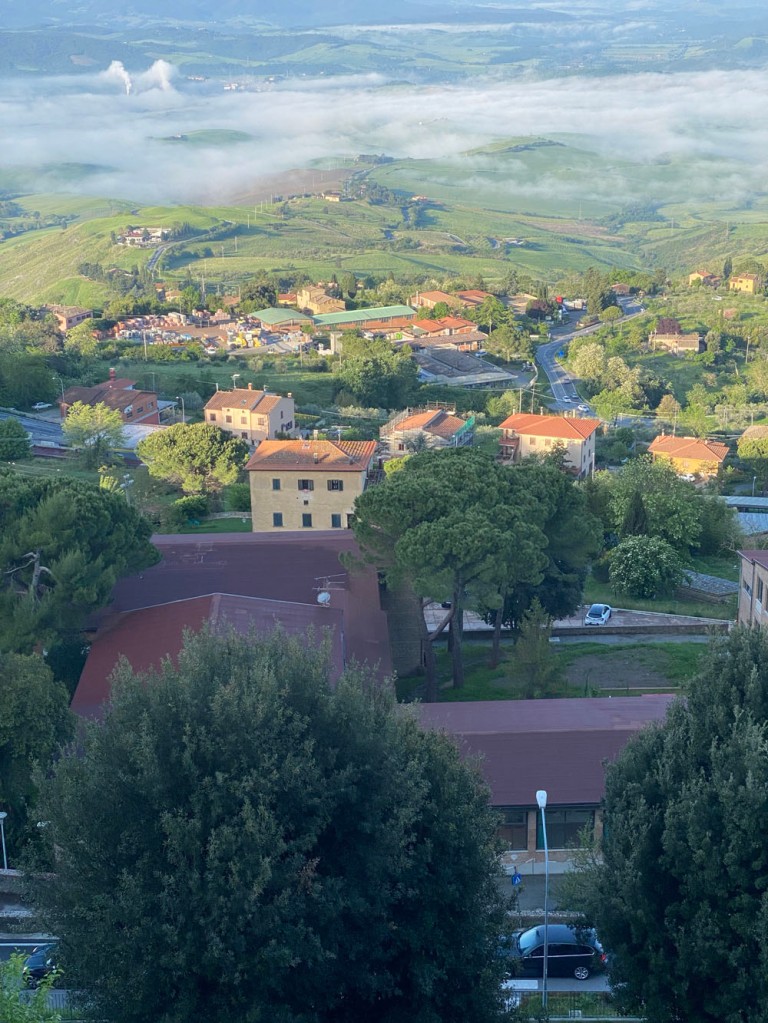
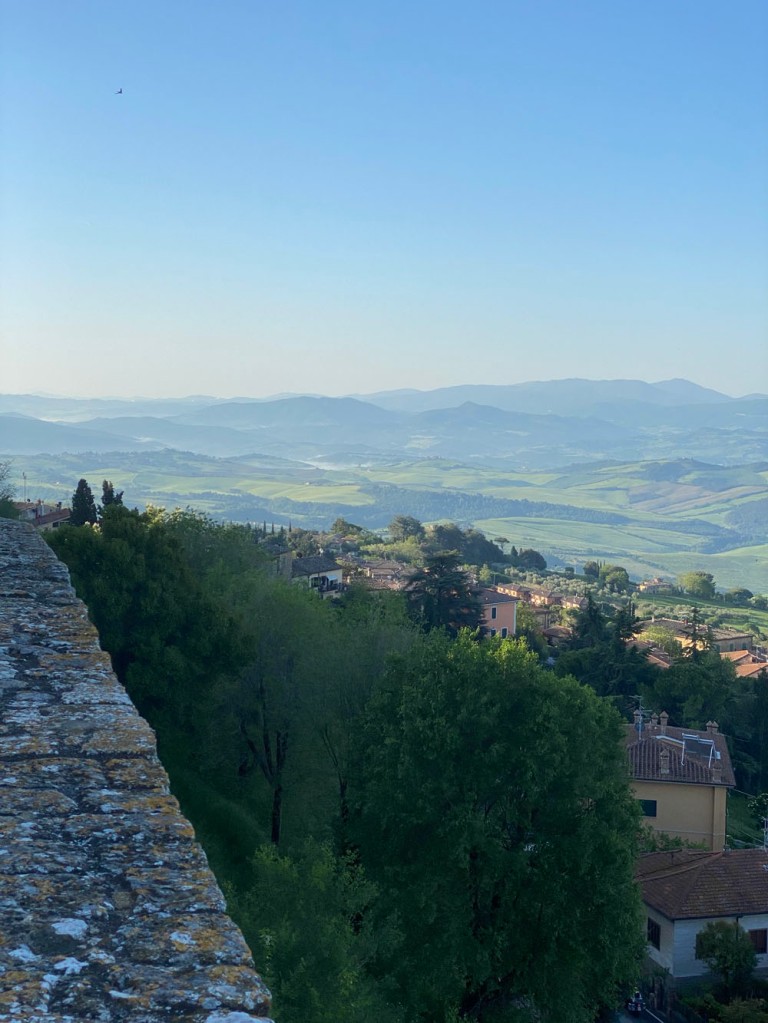
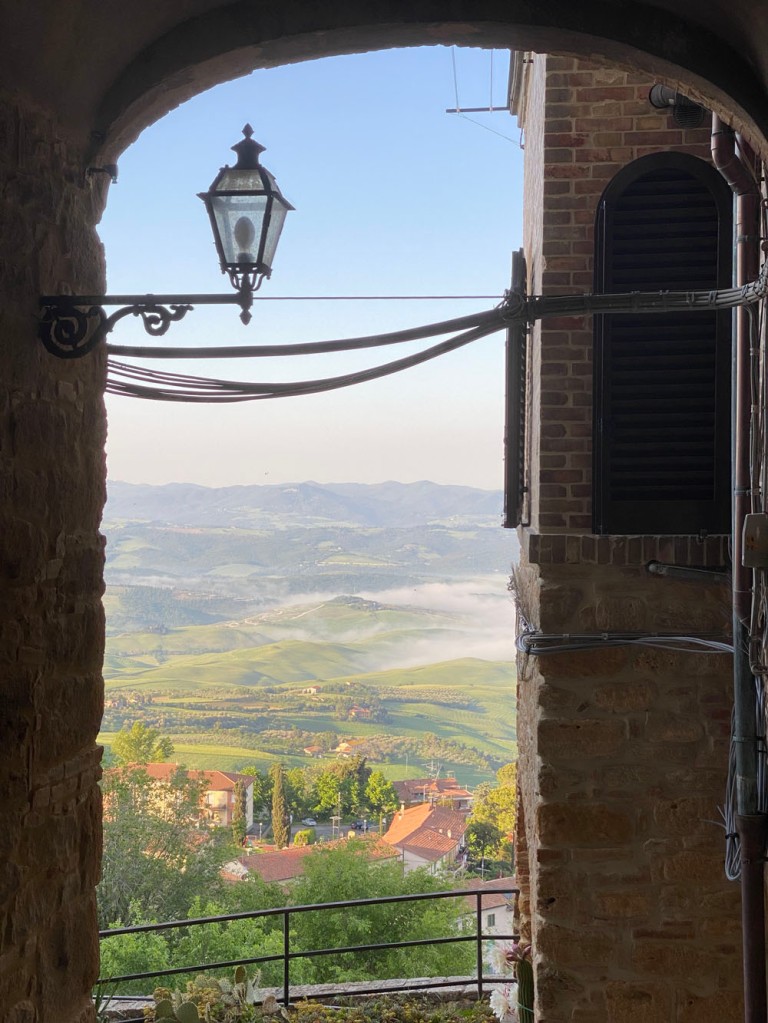
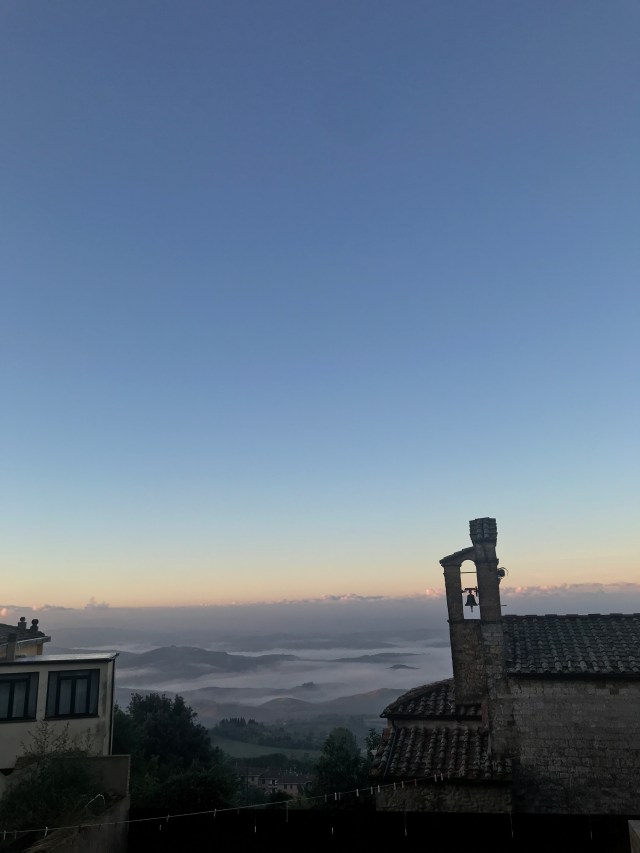
One of the things I like most about my morning walks outside of the summer season are the clouds that form lakes between the colline (hills) in the surrounding countryside. They burn off in the mid-morning enough, so you have to get up early enough to catch them. I caught some!
Steam plumes from Saline di Volterra (I think!)Porta San Felice – best photographed in the late afternoon
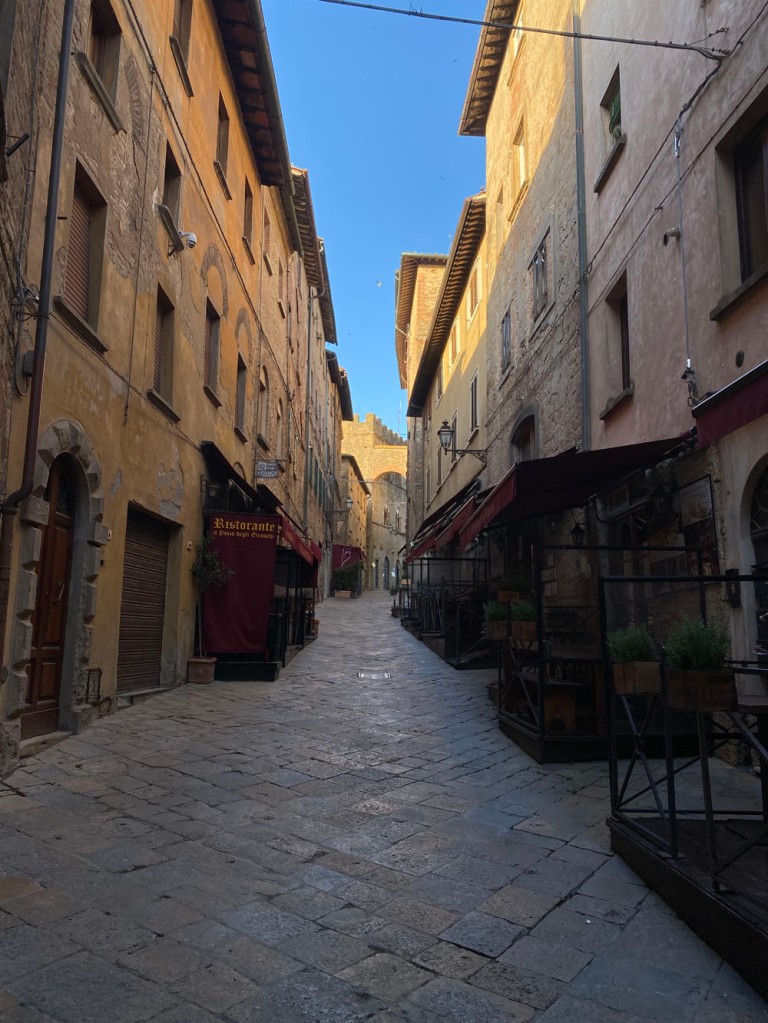
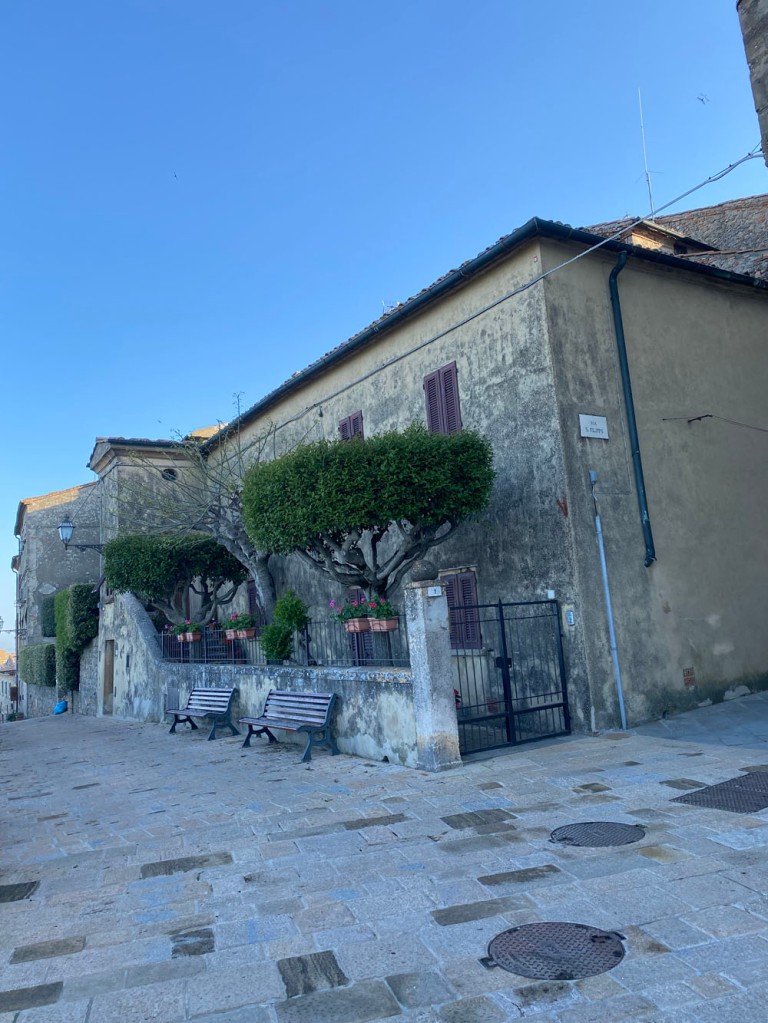
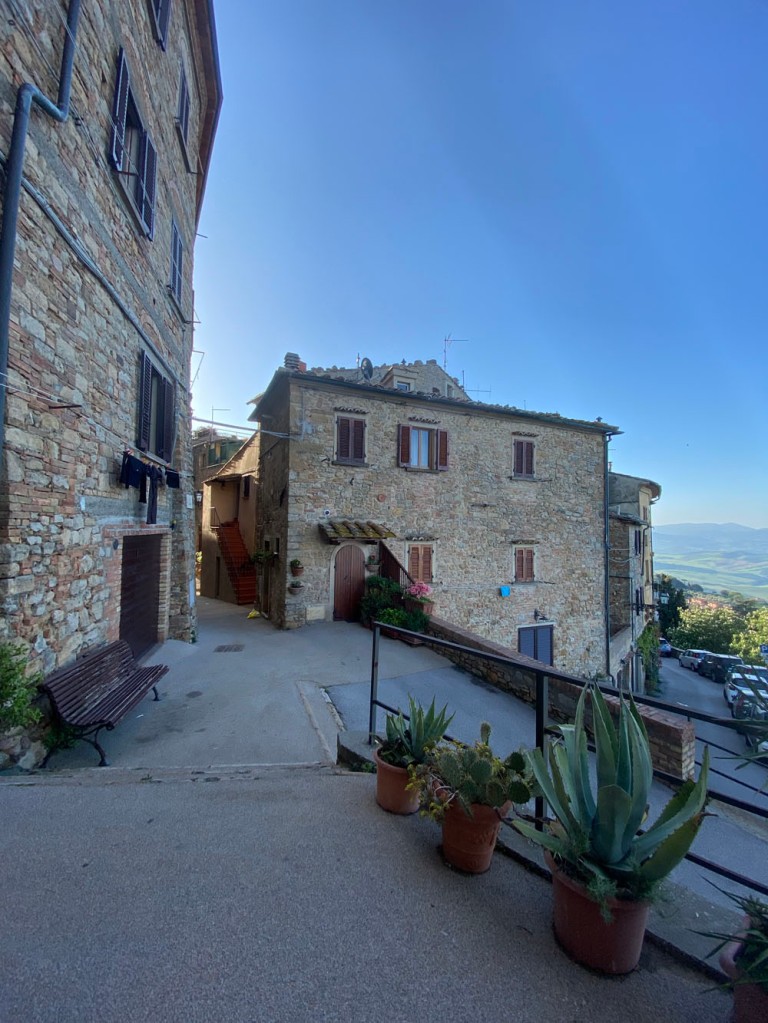
I generally stuck to inside the walls and leisurely papped what ticked my fancy.
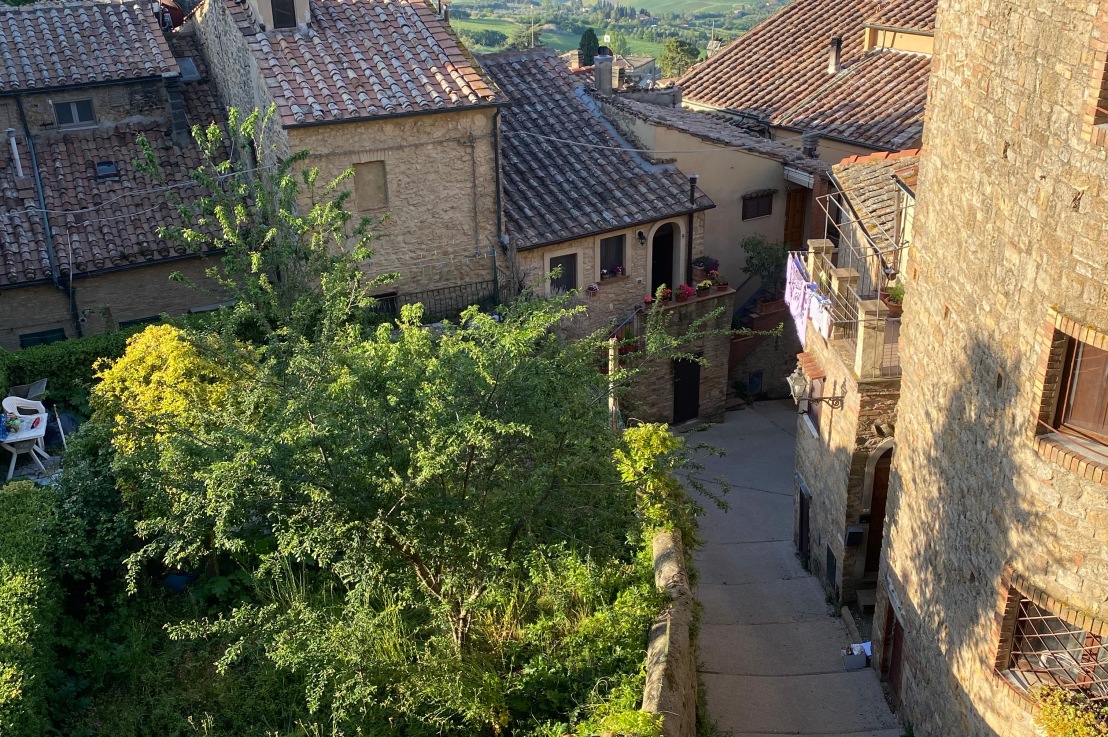
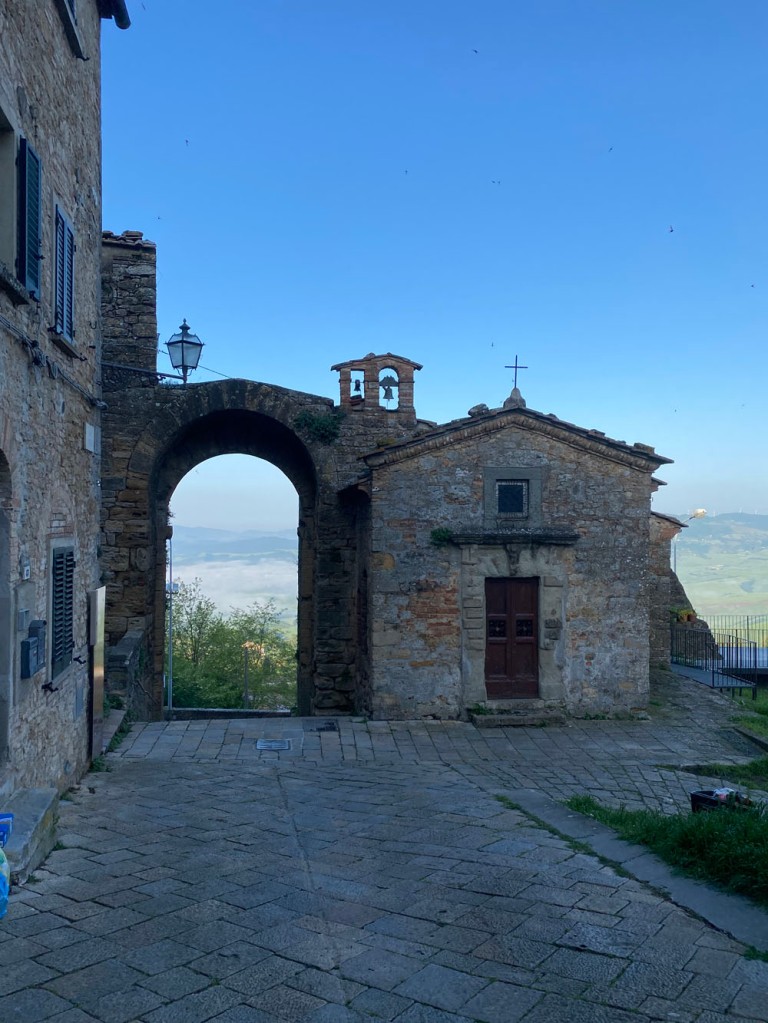
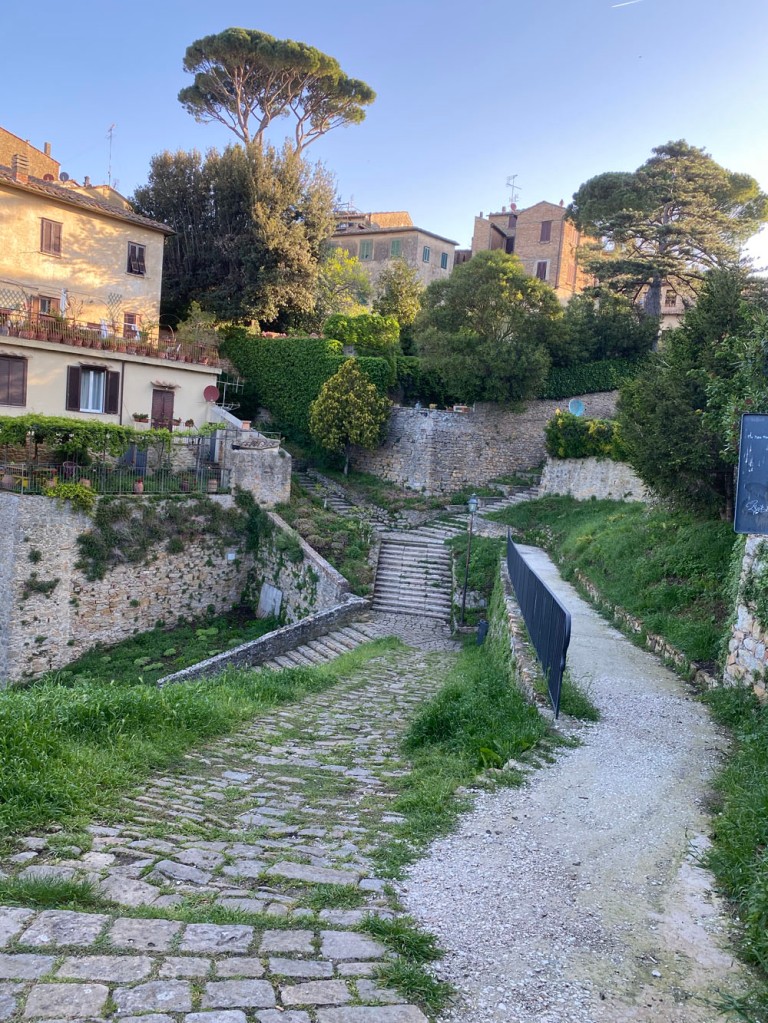
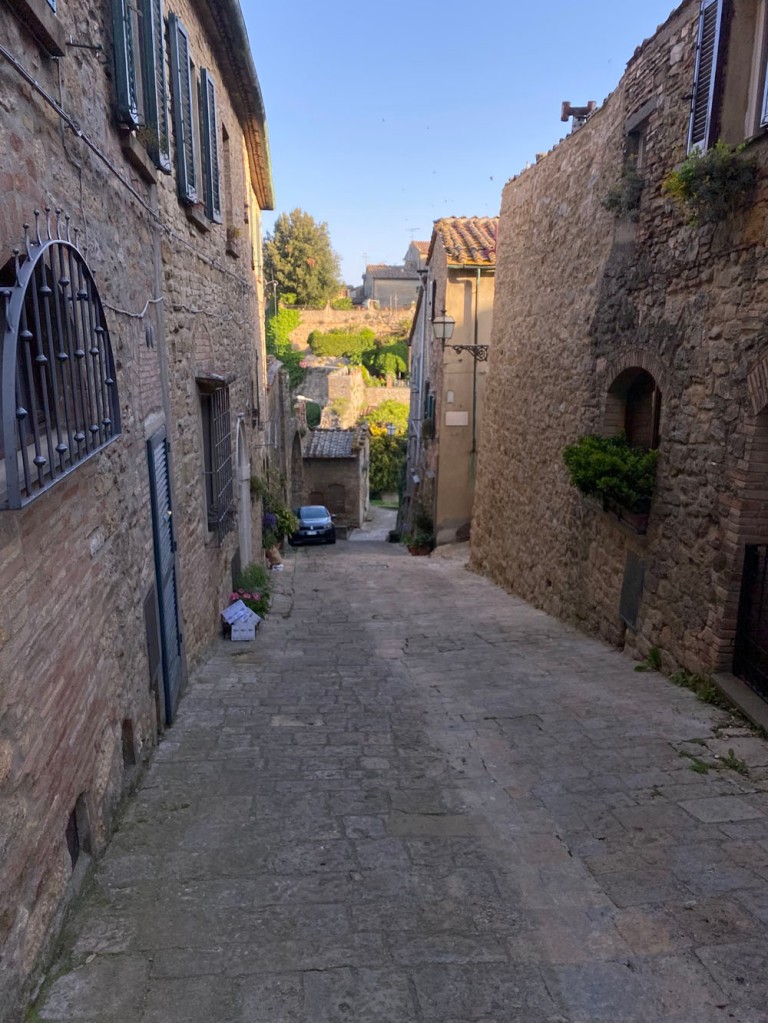
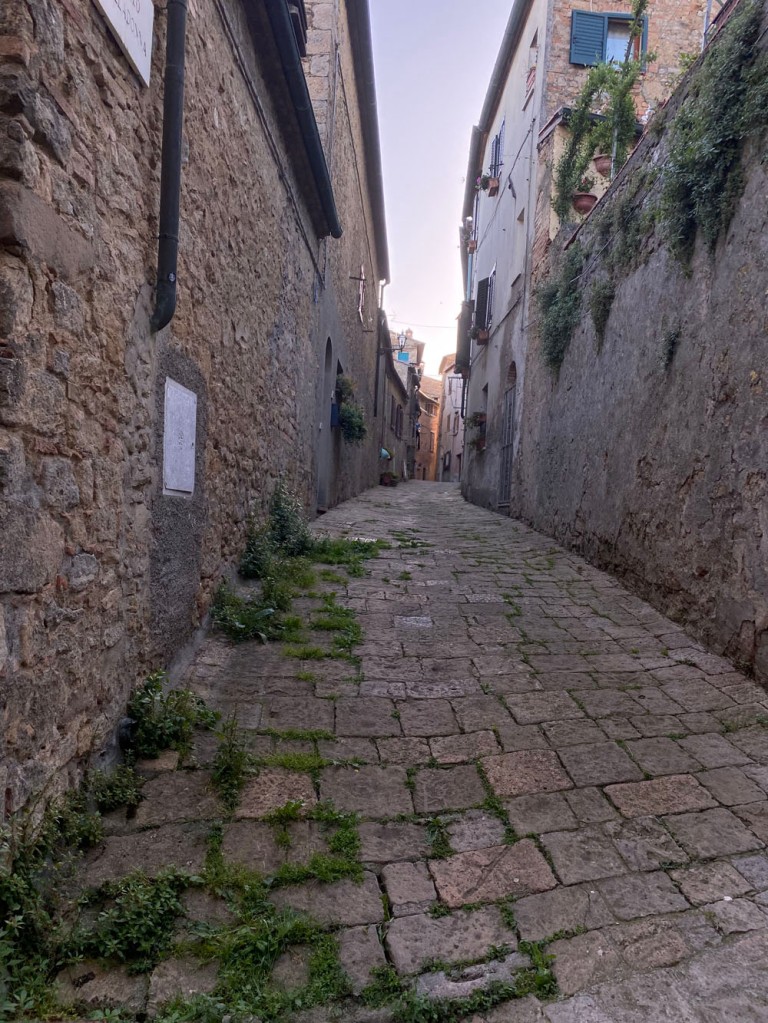
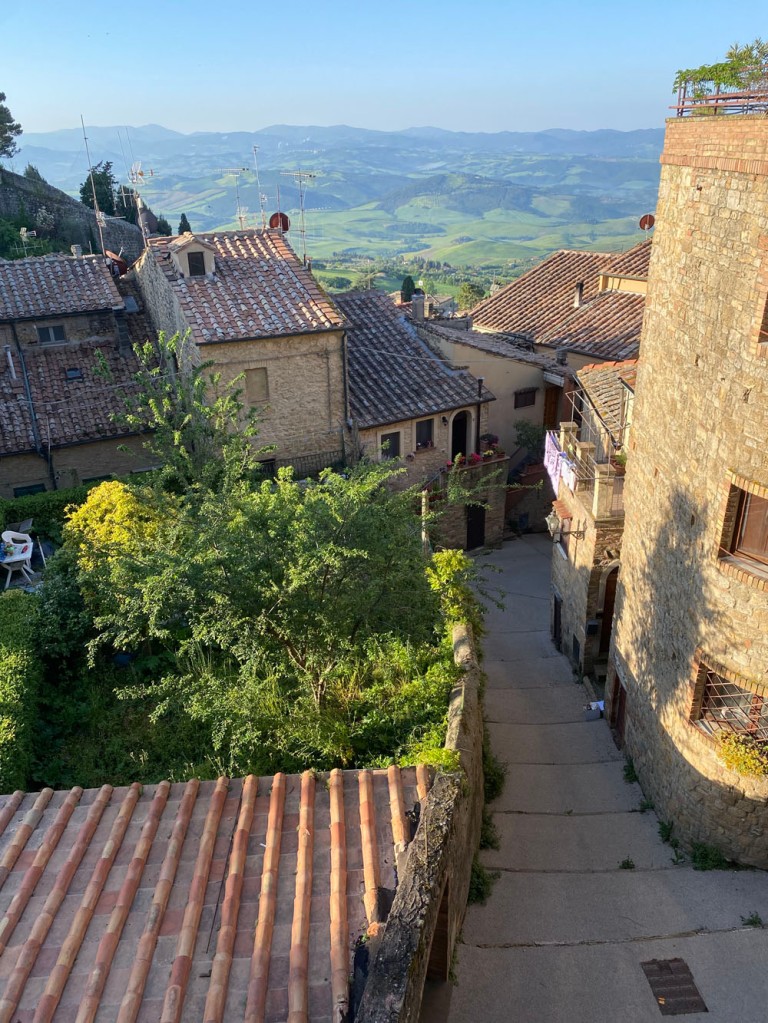
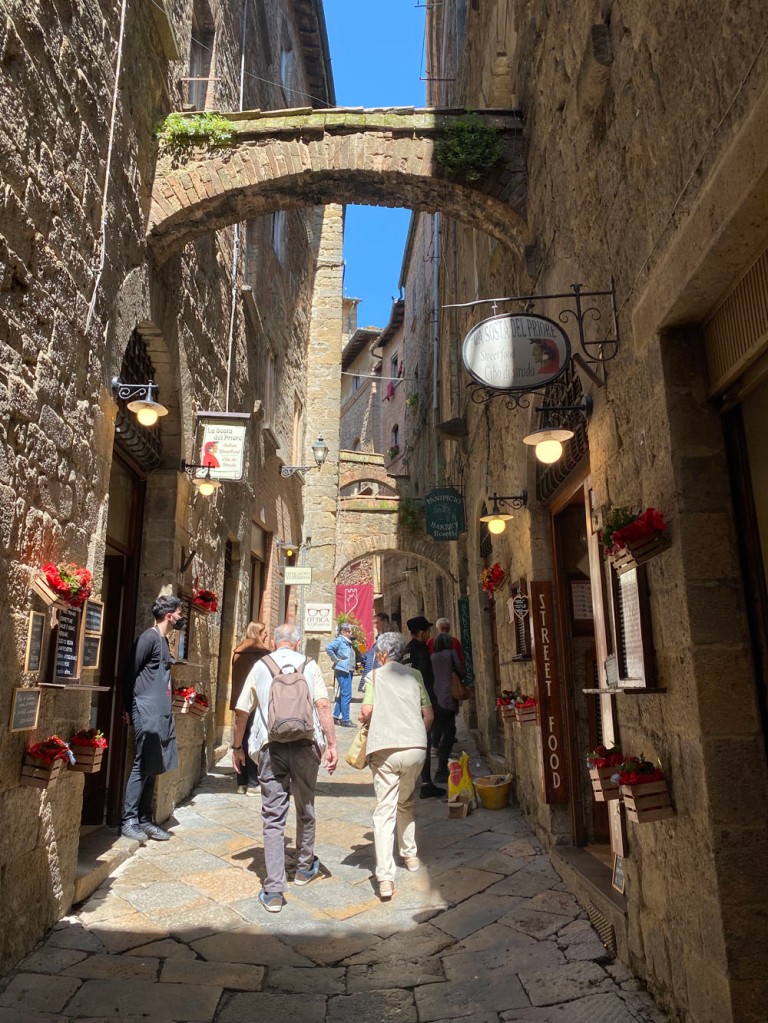
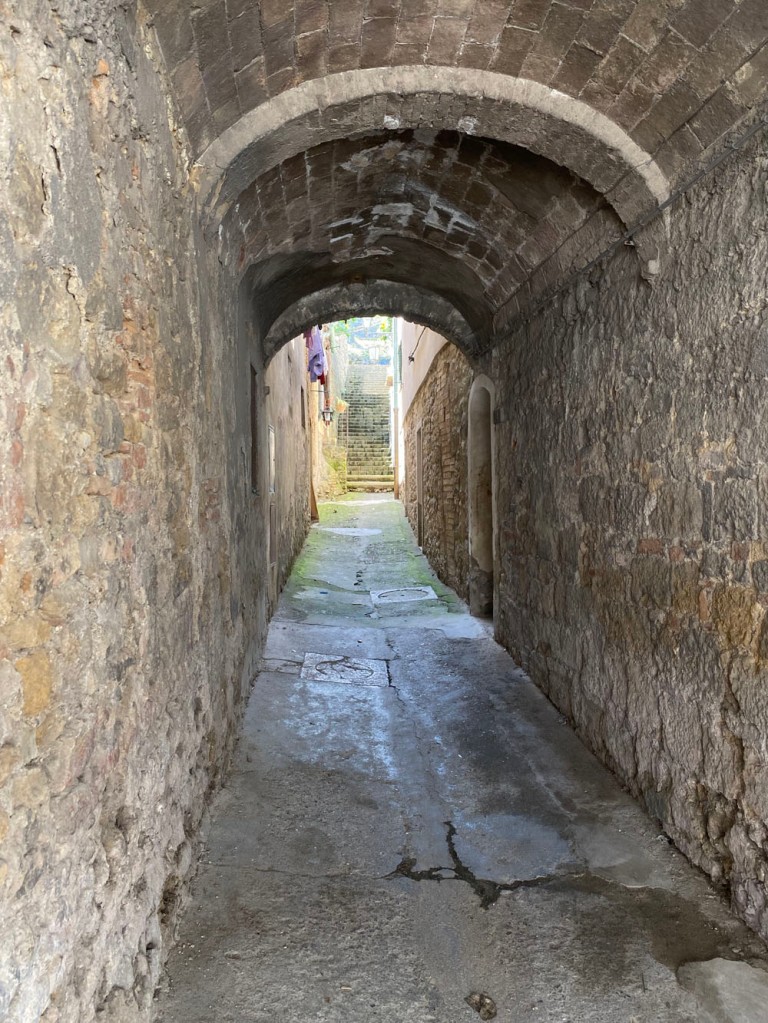
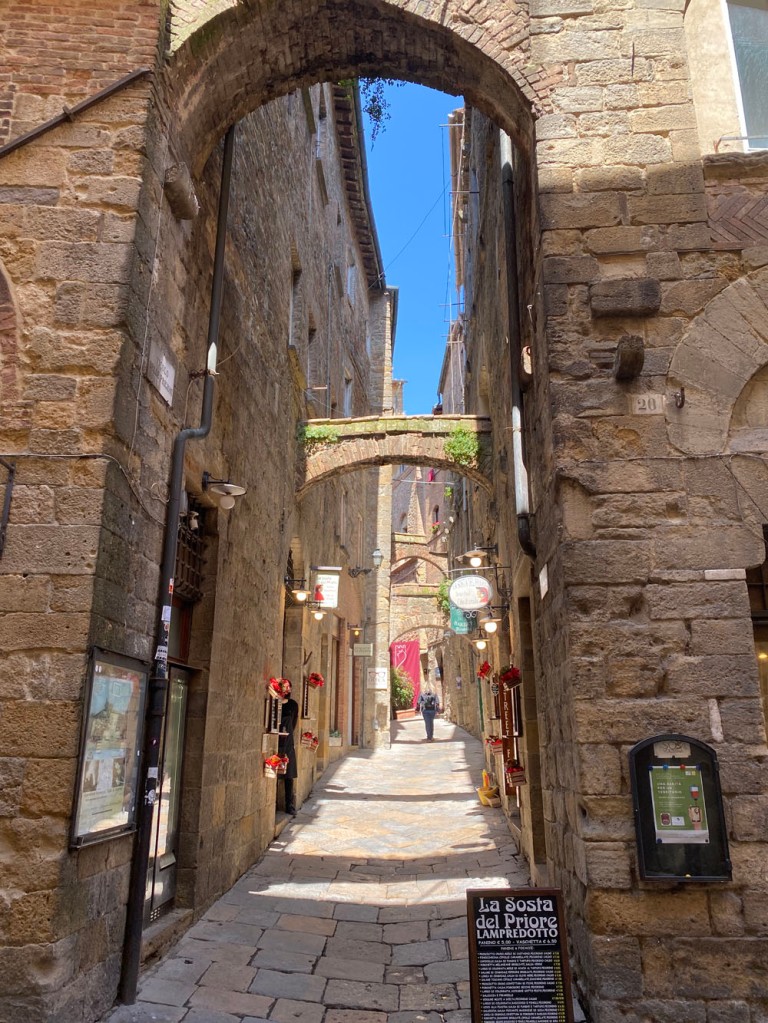
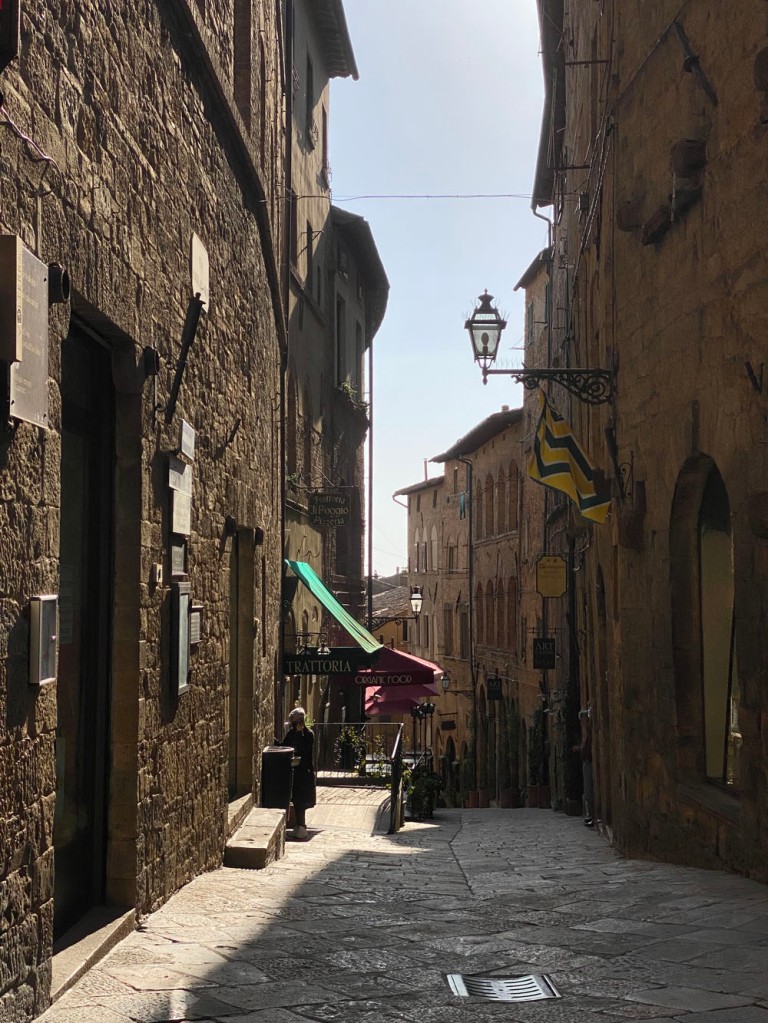
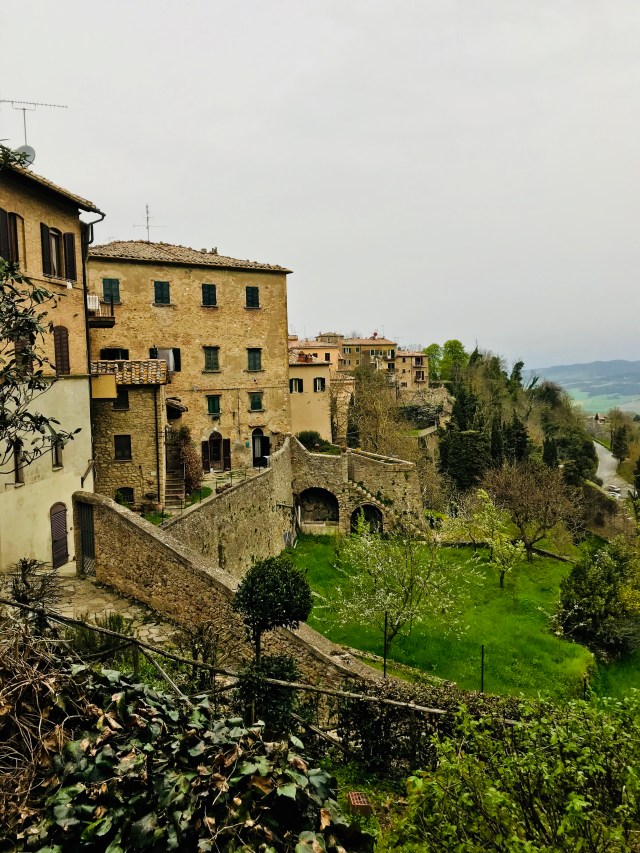
Steps everywhere at Piazzetta degli AvelliSteeeeeep roadOne of the classic shots of Volterra at Vicolo degli Abbandonati – the view here is expansive.Cathedral bell towerAnd an angle I very rarely take – this is one of the best shots I’ve taken here.
I got home a cleaned myself up, and we both had to wait for visitors. We had a ring at the door, and let in the apartment building superintendent and our (very much out of breath) geometra. Think of a gemoetra as a cross between an architect and building inspector. You have to engage one when you need work done on your property. They had a look at our damp patch on the kitchen wall, and again at the neighbour’s balcony where the problem originates. They drew the conclusion that they will have to get in touch with the owner of the apartment – he rarely lives there. At the time of writing this (July 119th 2022), they have gotten in touch, but it remains to be seen what the next step is. I’m not too worried right now, but we’ll need it fixed before it gets cold and rainy.
We probably were a little lazy in deciding that too much of the morning had gone for us to travel out of the town, so we stayed in for a while, and then treated ourselves to lunch (what else is new?) at Osteria La Pace down the other end of town, by Pota a Selci (the gate beside the fortress). But first, we had a bit of a stroll around the town centre to work up an appetite!
If they were playing ball, they had a nasty climb up to the town… and so will have experienced an awseome downhill sprint after!
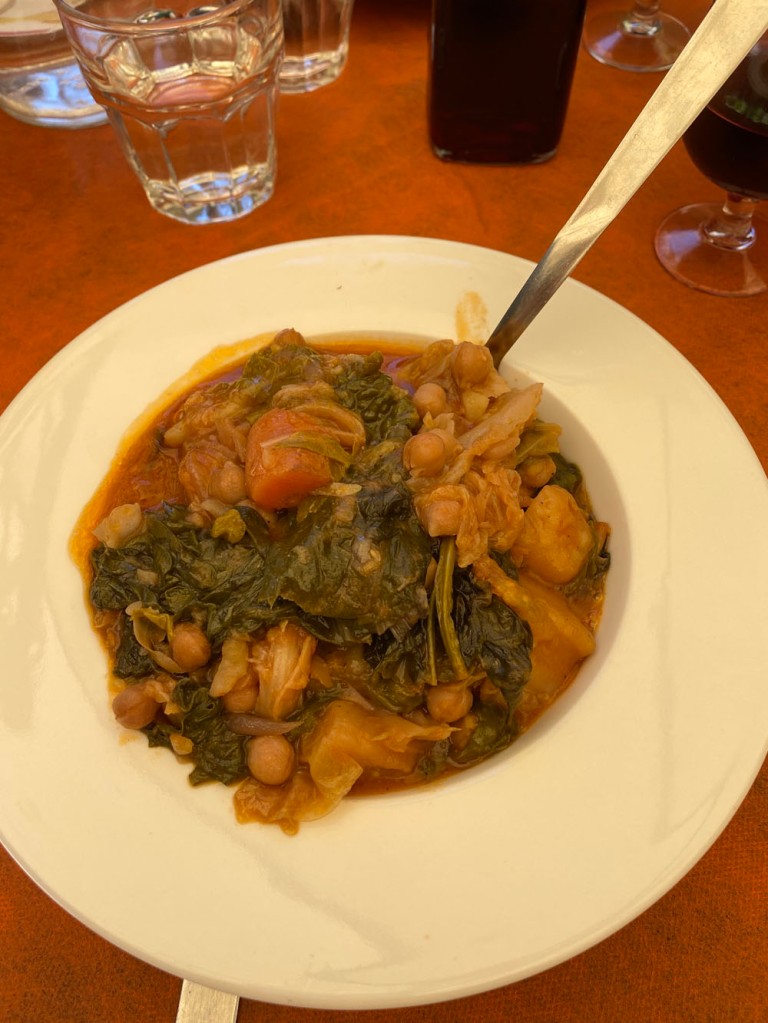
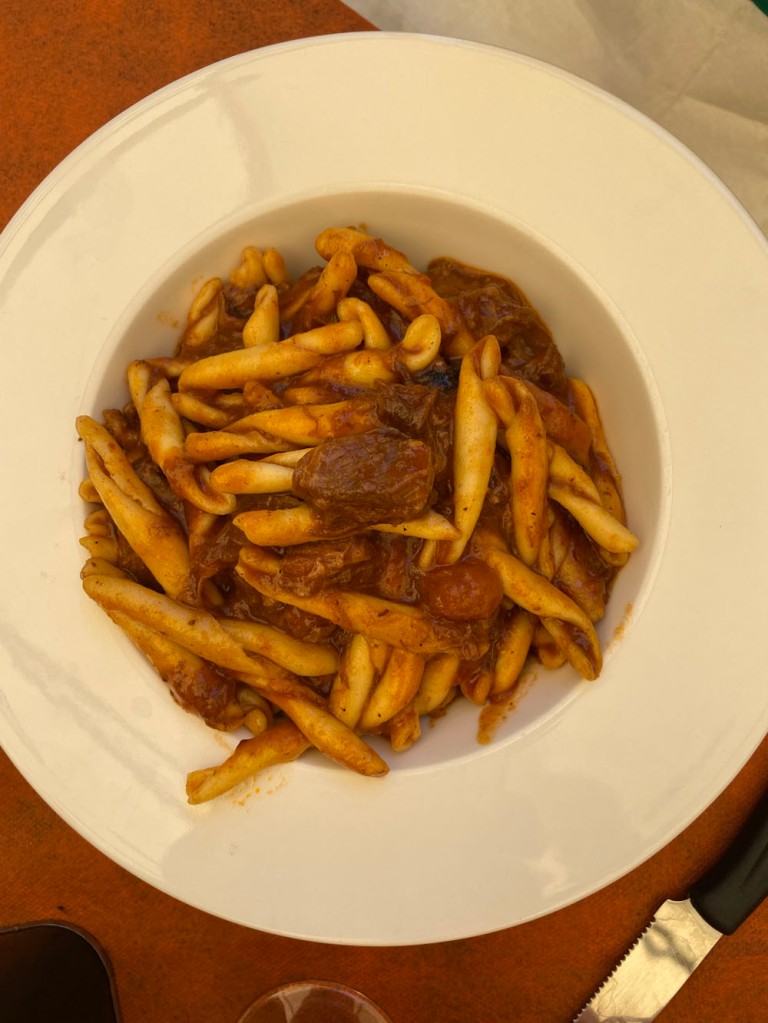
La Pace do lovely homemade pasta there, with a boar and black olive stew that is outstanding. But we made the mistake of ordering two courses. You see, their pasta dishes are incredibly filling. But we gave it our best shot!
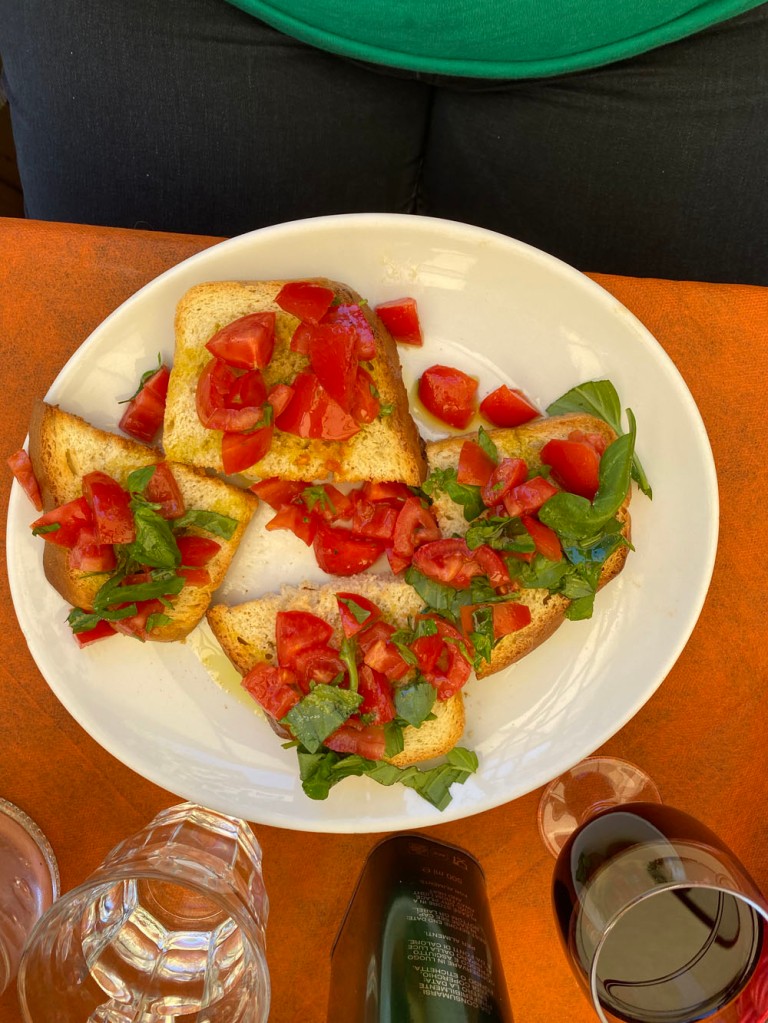
Their version of Zuppa alla VolterranaThe colour of those tomatoes!Homemade pici with a white ragu… tasty and fillingNiamh had the strozzapreti pasta (it means ‘priest-strangler’) with the wild boar. I had food jealousy, even though mine was also great.
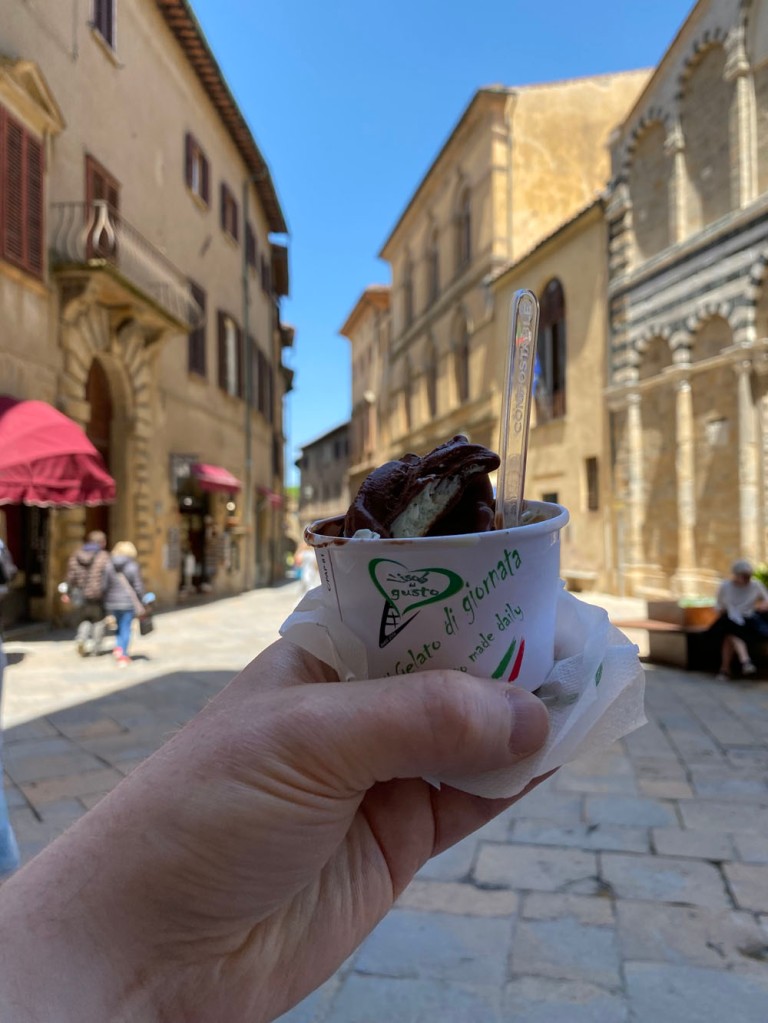
Although they do a killer tiramisu there (served in a huge coffee cup), I just wanted a little gelato as dessert.
Ah, L’Isola del Gusto… where would I be without you?
We lazed about it bit – we couldn’t do much else with full bellies. For a while now I had wanted to go on one of Annie Adair‘s tours of the town. She does them a couple of times a day, a few times a week. I waited outside her usual spot at the alabaster and artisinal goods store opposite the leather good shops at Piazza Martiri della Libertà. What Annie doesn’t know about Volterra probably isn’t worth knowing. Ordinarily, I would have been excited, but for some reason my anxiety had kicked in and I unfortunately didn’t have the wherewithal to reframe it. Them’s the breaks. So, Annie, if you’re reading this and were wonding why I was a litte quiet – that’s the reason. Nothing to do with you (or me, directly), it just rears its head from time to time. Anyway, it turns out I was the only one there today, so I excused her the tour.
But we did chat for a good 20-30 minutes instead about the new Roman amphitheatre, the sad and slow demise of alabaster craftsmastery (I thought the seams of alabaster were running out, as well as the youth not particularly wanting to do ‘manual’ labour). She corrected me on the former point, but confirm the latter. Also she said that a lot of the alabaster also comes from Spain (if I recall correctly), as that stone is easier to work. We chatted about San Gimignano (wondering why the more genuine Volterra was often overlooked in favour of San Gimignano). We found out we both have the same fear/wanting relationship with Volterra potentially becoming a UNESCO site. I think I used the phrase “But you can’t wipe your bum without contacting the UN if you’re UNESCO.” She agreed. It might be best if Volterra was left independent of UNESCO, but if it happens, it happens. It was a nice chat, and it helped me with my stupid cortisol.
I had mentioned that Niamh and I had met with David McGuffin, and told her that she, David and a guy called Denis Callan featured in videos about Volterra, which helped us make up our minds where to buy. When we were saying our goodbyes, she indicated that she could ask David if Niamh and I could one of his group’s tours with her – the fee was flat for the group, so there would be no charge. Nice! We made a date, with me having to ok it with David later on. It would be the latter 2 hour tour, which would take us into Alab’Arte – one of the chief alabaster workshops in town. Yay!!
Met Annie Adair for a tour at 18:00. Sadly I was the only one to turn up, but we had a good chat for 30 mins or so, before suggesting I join David McGuffin’s group on May 21st for a good 2 hour tour that would take us into Alab’Arte – one of the premier alabaster workshops in the town.
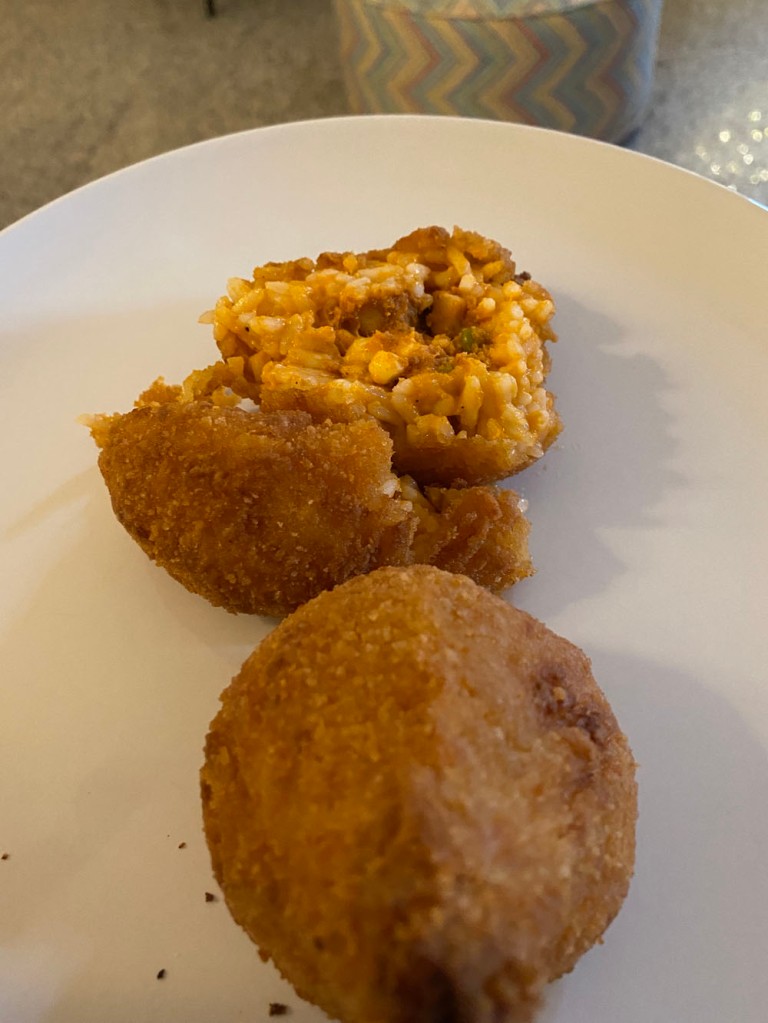
On the way back home, I stopped off for a couple of smallish arancine (stuffed rice balls), as I knew Niamh was going to have some cold cuts and cheeses as a light evening meal.
I enjoyed these meaty ones. I had tomato and cheese ones later in our stay that didn’t blow me away.
Back home, we ate, drank and screenwatched. Niamh went to bed earlier than I, so I streamed ‘Joker’ on Netflix. My third time seeing it – a great movie! Zzzzzzzz.
Thanks for reading – please send any questions and comments my way!
It’s been a while since I posted the first tour route, and so this sceond route is long overdue. This post will use the same concept – I will use larger photos. To view full-sized pics, if you’re on a PC:
Right-click an image and select to open it in a new window or tab;
In the address bar, remove all text to the right of ‘.jpg’, then press enter on your keyboard. Many of the photos are quite large.
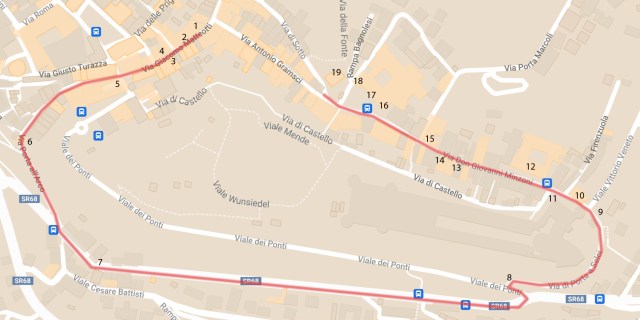
Here’s the route we’ll be following. It’s starts at 1, travels anti-clockwise and ends up at 18.
Note that this will be a lengthy blog with tons of photos.
Andiamo!
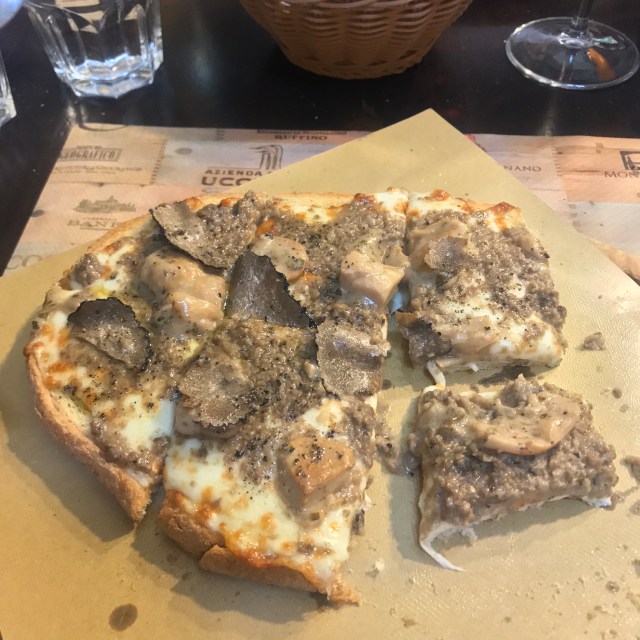
#1: There’s a nice little eaterie right beside the entrance to our apartment building called’ Porgi l’Altra Pancia, which literally means ‘Grow another belly’. With good reason: the portion sizes in here are quite big – certainly pasta dish sizes are bigger than average. They make one of my favourite things in Volterra: a crostino with mushroom and truffle creams, topped with melted cheese and flaked black truffle.
Ah, the deliciousness!
They naturally also have a great selection of wines.
One thing I’ll remember them for is that one of their waiters was really kind to us when our electricity went out, and contacted our building’s super to help us switch it back on (it was just a tripped switch, embarassingly).
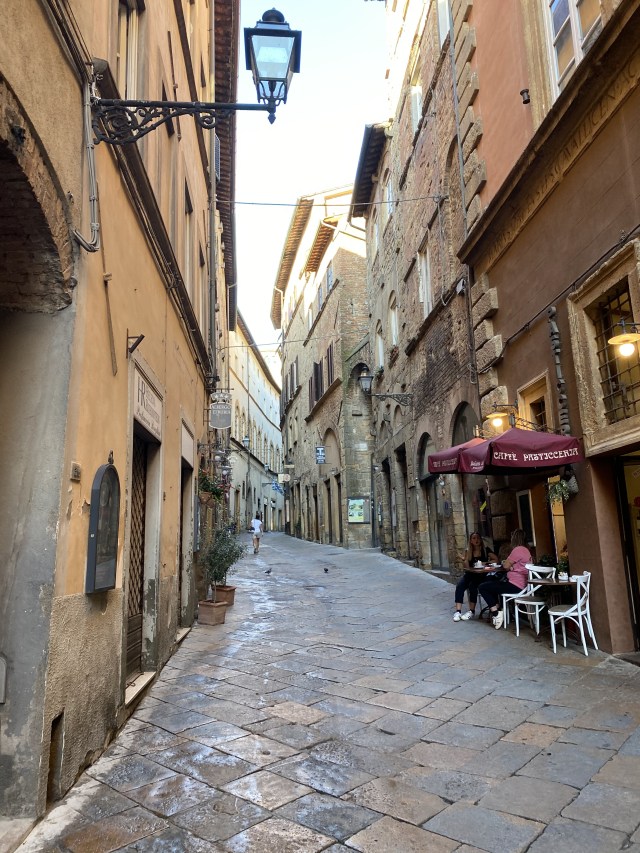
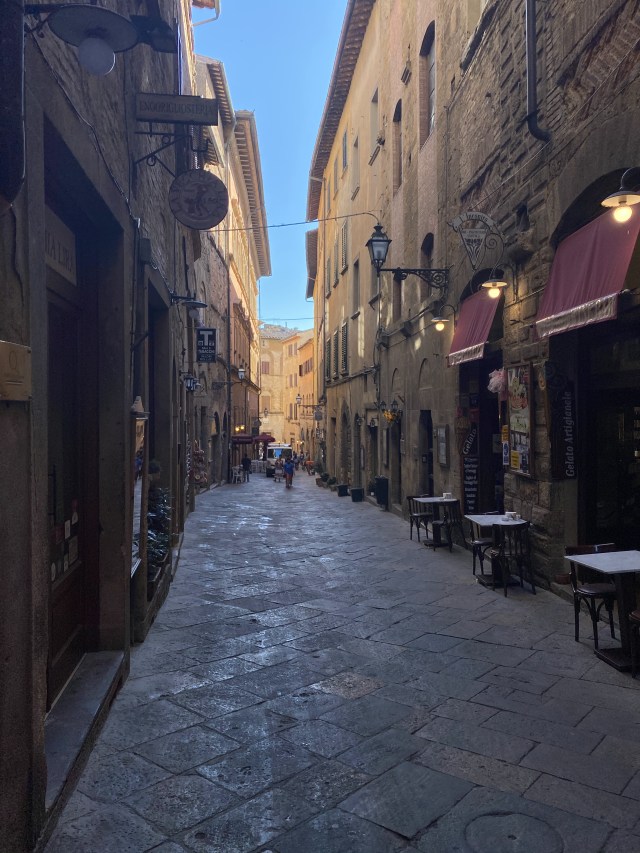
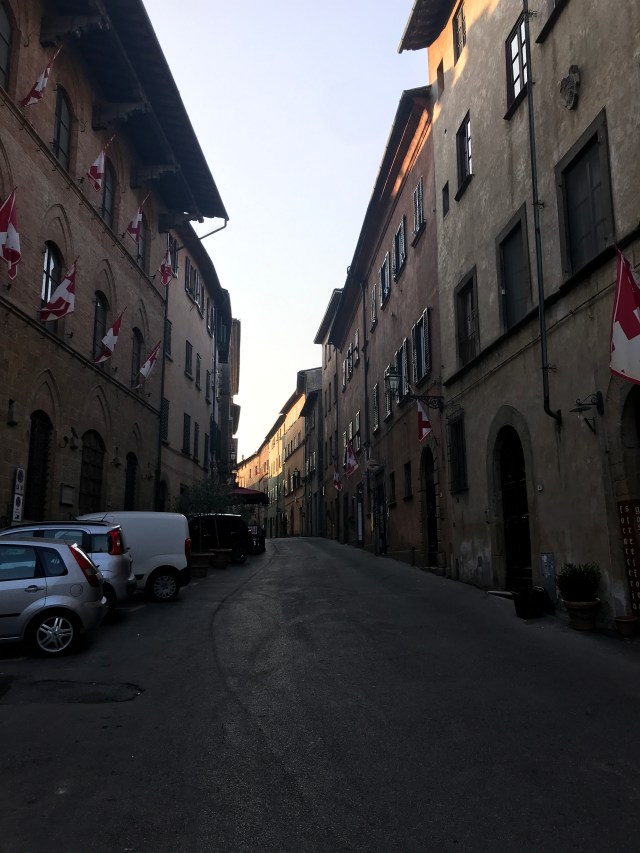
#2: Turning right after leaving the building and heading uphill we pass a pasticceria: Dolceria del Corso, which is one of the three pasticcerie we usually frequent. Unfortunately, the closest thing I have to a photo of it, is one of our street, with the entrance under a burgundy awning.
Looking uphill – the entrance is ahead
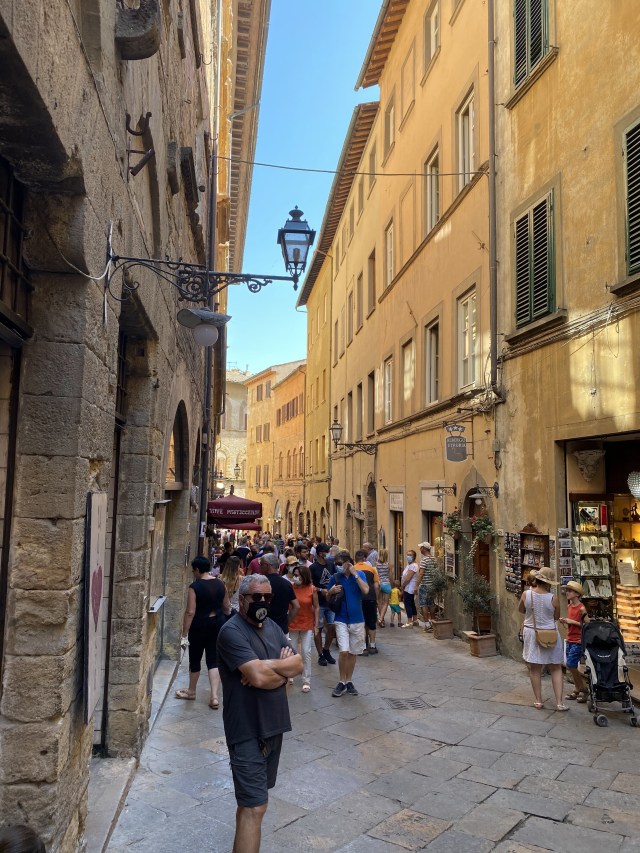
Looking back downhill after passing it – we live on such a lovely street – taken at a different time of the day – lookit those crowds!
Their cakes are yummy, and you have a great selection, especially in the morning – to cater for the typical breakfast over most of Italy: a sweet treat with an espresso. I’m down with the former; never developed a taste for the latter – although I love a good coffee gelato!
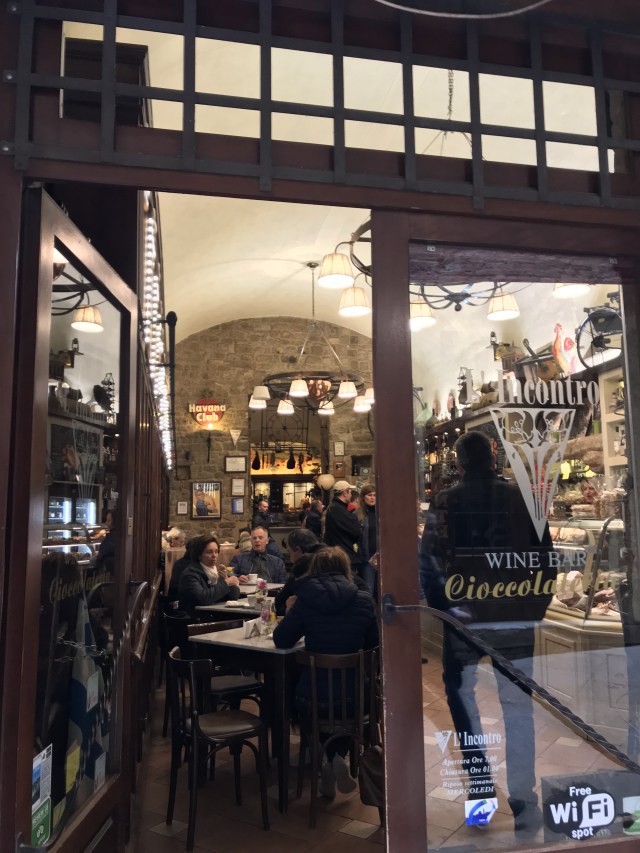
#3: Moving up past Dolceria del Corso, we come across one of the post popular bars in Volterra: L’Incontro. This is a full-on bar, and so has coffee, drinks, is a pasticceria (a good one!) and sells choclolate in the off tourist-season or gelato in-season. I think their gelato is great – maybe second to Isola del Gusto, but still really excellent – and they tend to rotate their flavours a little more often.
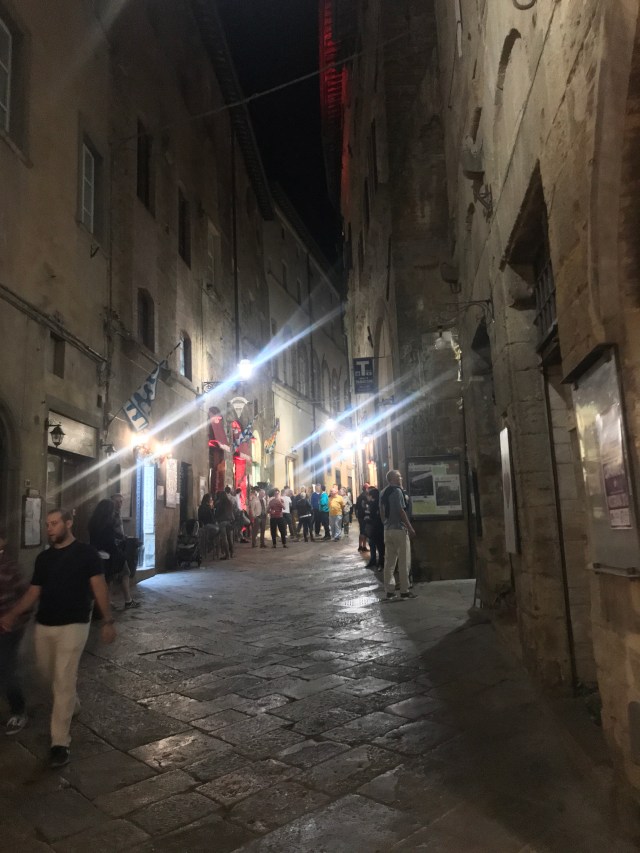
You’ll often see people here hanging around during breakfast, during aperitivo and after dinner hours. It can get really busy. Like with all places that serve coffee, you’ll pay normal rates to drink at the bar, and a little more to sit by a table.
Evening at the bar
Getting busy, dopo cena (after dinner)
Looking backwards again – the bar is just there on the right
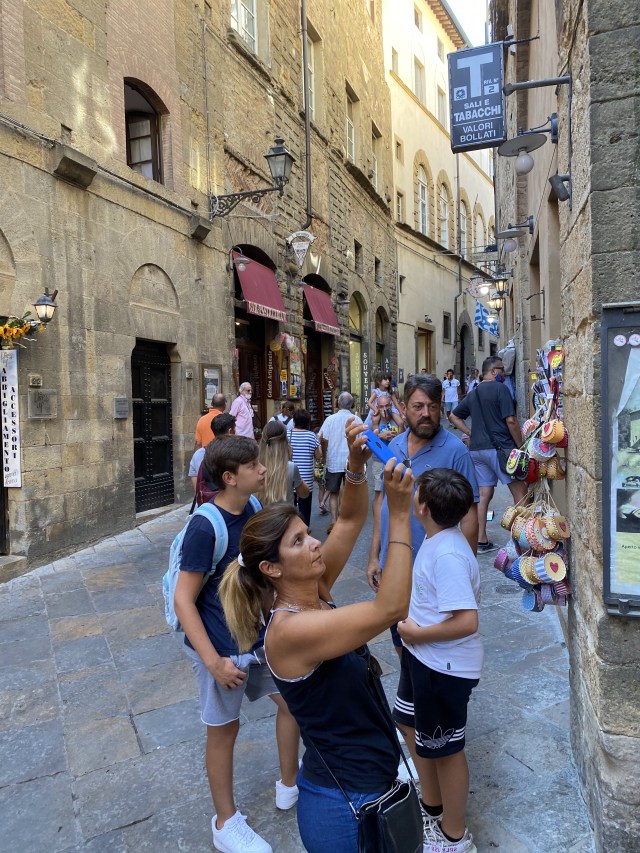
Oh look! A tourist taking a shot of Vicolo delle Prigioni. We wouldn’t have it any other way. There’s l’Incontro in the background.
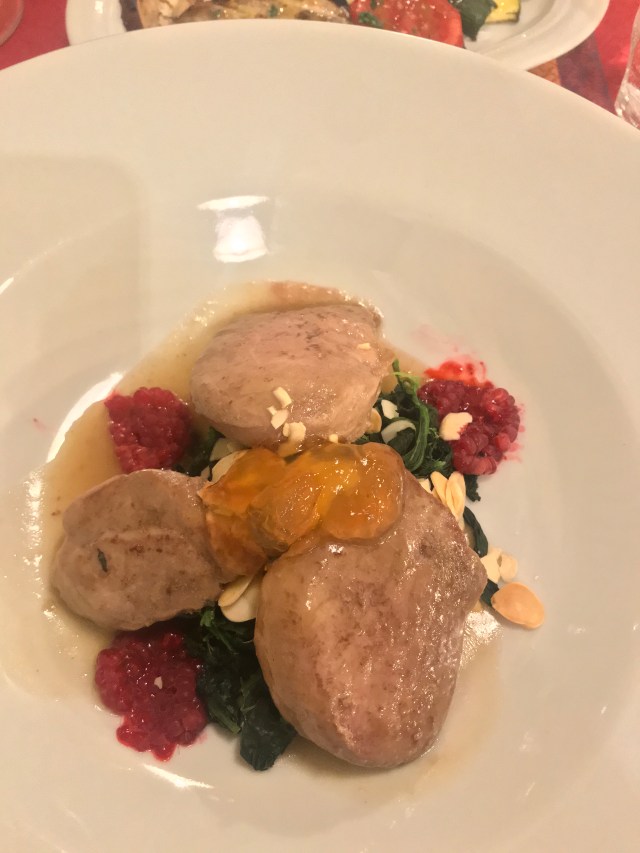
#4: You’ll find a restaurant, La Vecchia Lira, almost opposite l’Incontro. We’ve only eaten here a couple of times, but are always impressed by the enthusiasm of the owner. The menu leans more towards traditional, but they have some modern takes too – and a daily specials board. Definitely give them a go when you’re in town!
These pork medallions with raspberry in a Vin Santo sauce were amazing!
#5: By now our bellies are ridiculously full, but we’re not done yet. Just beyond the crossroads where Via Giacomo Matteotti (the road we were just on) meets with Via dei Marchesi (look right and you’ll see the Palazzo dei Priori), lies the road we’ll be going straight down: Via Porta all’Arco.
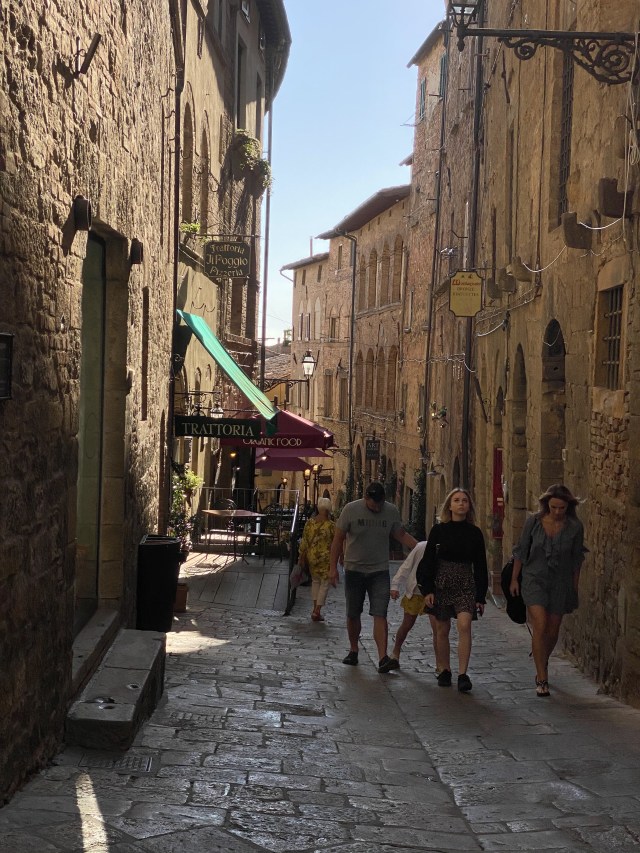
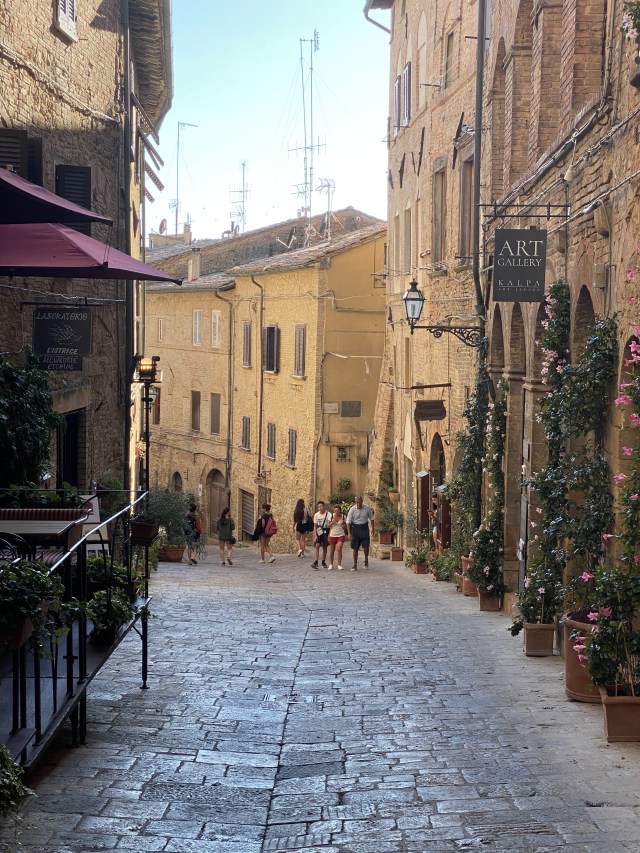
Just a few meters down the road lie two restaurants: Il Poggio and Life Bistro – together they are often the most photographed exteriors in Volterra, due to them being on this beautiful sloping and curving artisan street.
I have to admit to never having eaten in Life Bistro, as it is a purely plant-based restaurant. I am not ethically opposed to this, of course, but there are few world cuisines that turn me on with its vegan offerings, and this includes Italian food. Only food from the Indian subcontinent comes close. However, if this appeals for you then I would say you’re in for a treat, even if just for the restaurant setting itself. I know Niamh wants to give it a go, just to see what it’s like, so we might do next time we’re over.
They seem to have a standard menu, plus a section where you select your own ingredients and ask them to assemble and/or cook them. However, look down, and you’ll see some of the floor is transparent – below it you’ll see some ruins that date all the way back to Etruscan times (2,300 to 2,800 years old).
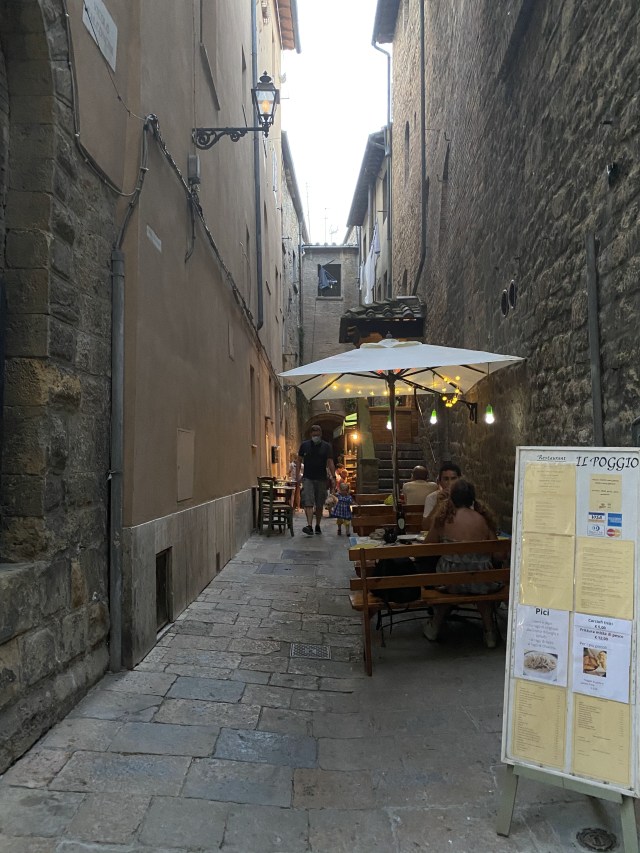
Il Poggio is a more inclusive place, and has a bit of a touristic menu – with pasta, meat and pizza offerings. There are typical traditional dishes too, and if memory serves me correctly, a couple of German plates. The cooking isn’t stellar, but it’s fine to go to for something quick and maybe if you have kids, due to the variety of what’s on offer. In addition, it has some cute outside seating in a lane at the back.
Looks even sweeter when it gets darker
For now, though let’s continue on down this lovely street, to discover why it’s been named the way it has.
As you walk, never forget the golden rule: always look behind you
And there’s the reason!
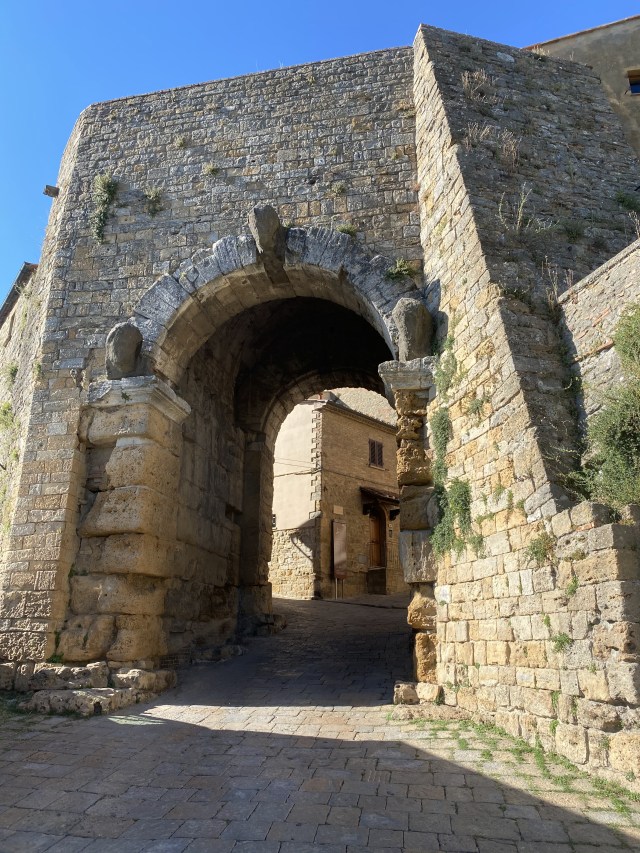
#6: At the bottom of this street lines one of the old gates into the walled town. It’s called Porta all’Arco. Actually, “old” doesn’t really cut it. The larger blocks you can see in the photos below are Etruscan in origin, and are about 2,300 to 2,500 years old.
Big Etruscan blocks!
The three heads at the top, and most probably the arch are Roman. The detail of the busts has worn away over the centuries, but is said to be the heads of three Roman gods, most probably Jupiter along with Castor and Pollux (or Uni and Minerva – let’s not have a debate!).
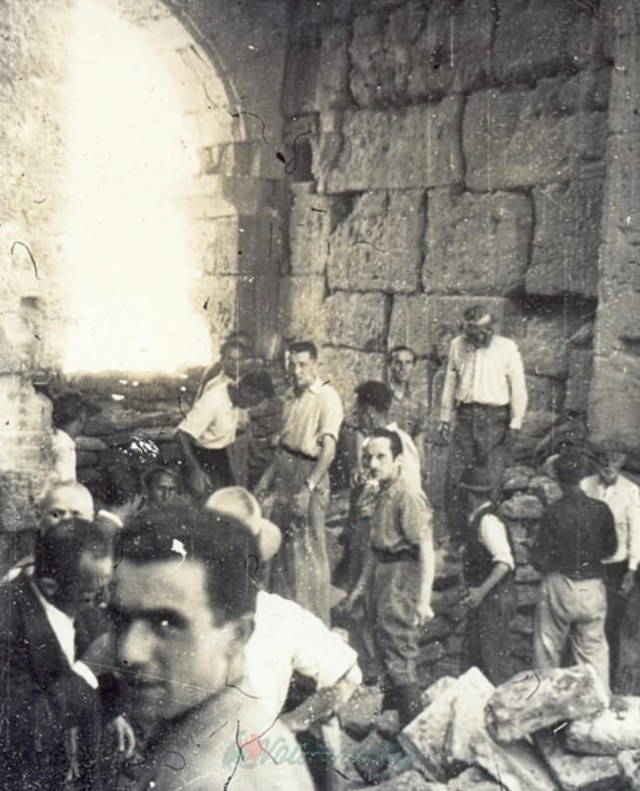
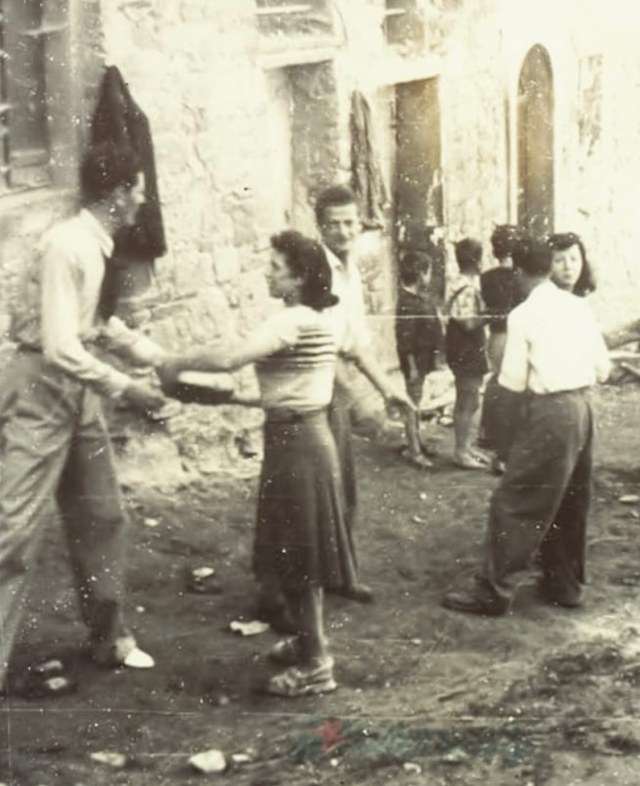
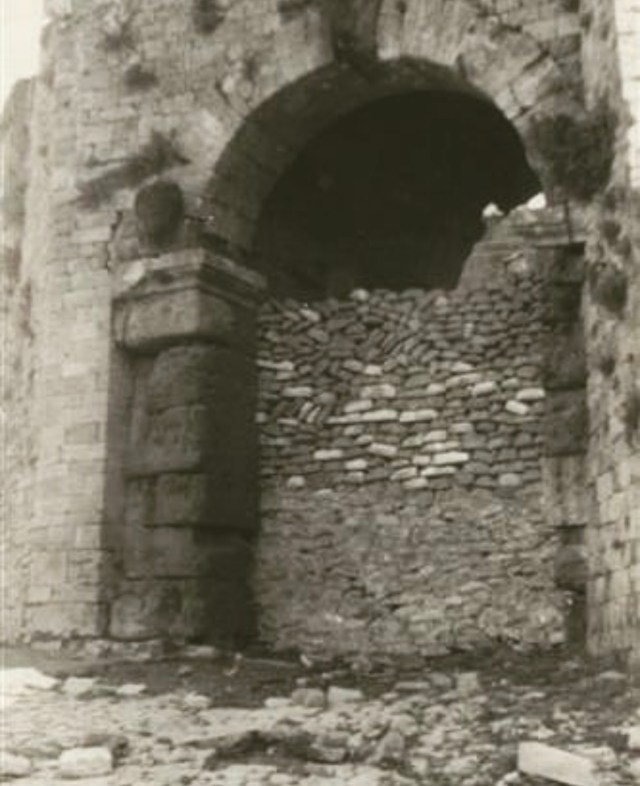
Towards the end of the second World War, the Nazis threatened the gate with destruction during their retreat, in an effort to slow down the Allied advance. The townsfolk pleaded to save their gate, and said that they would instead block it. They were given 24 hours to do this, probably by those who thought “Yeah right, good luck!”. However, they did it by forming a human converyor belt and passing stones from hand to hand, and the gate remains to this day. Here are some photos. They are not mine, so I ask the forgiveness of those who may own the copyright.
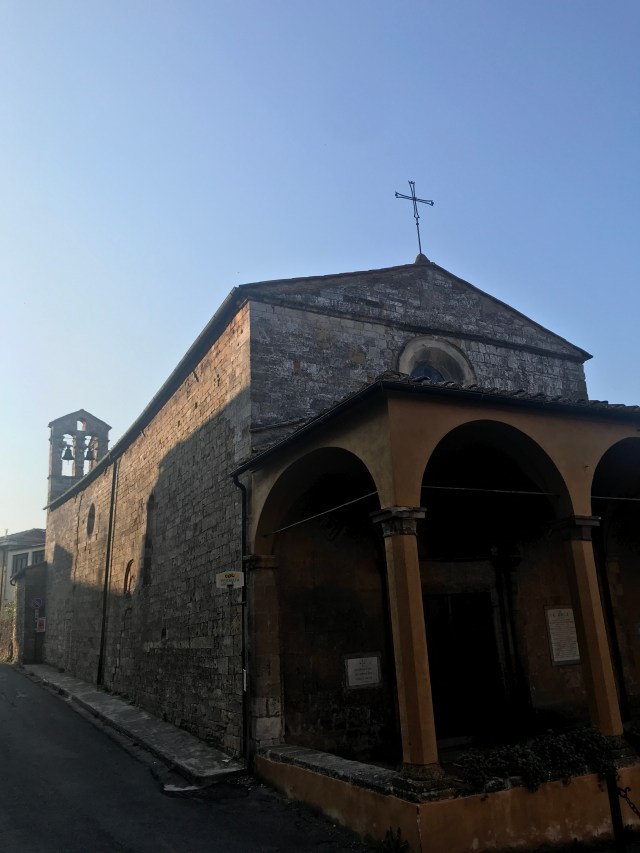
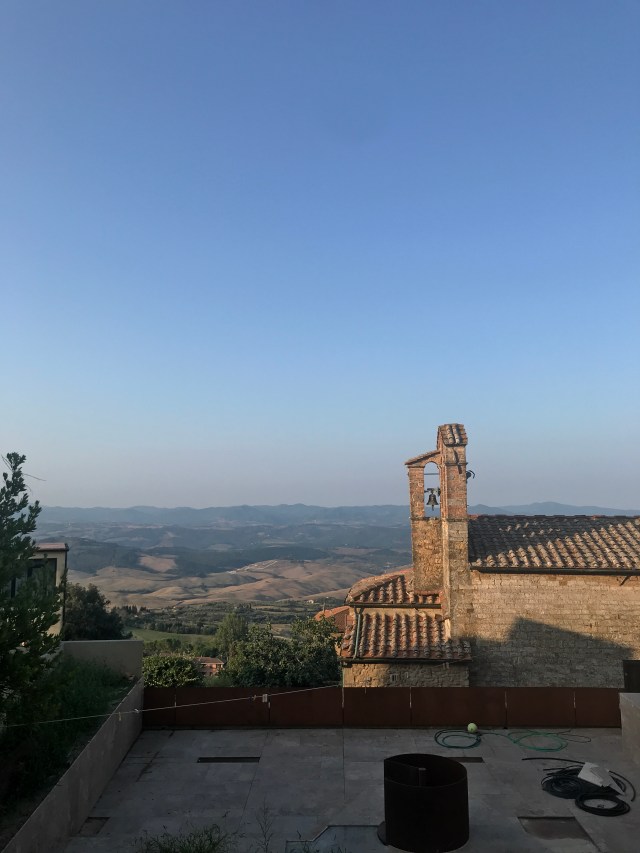
#7: A ramp a little over 100m leads down to the parts of the town outside the walls. Passing a cute little bar (Giordani’s), we head southeast for a few meters, and where the road bends towards the east we pivot to our right to have a look at the belltower of Chiesa di Sant’Alessandro.
The church as seen from the bottom of the steps at Bar Giordani
This is one…
…of my favourite shots…
…in Volterra. Can’t you tell?
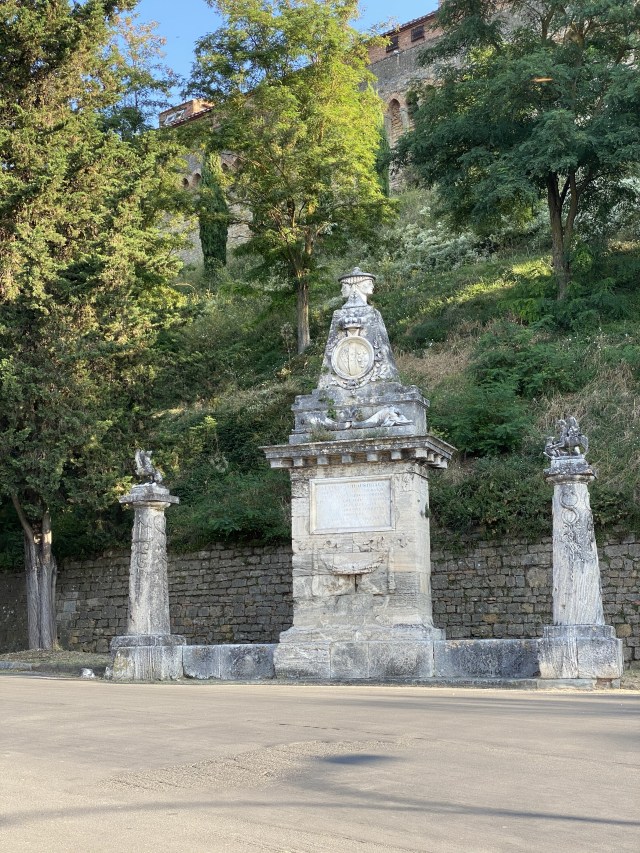
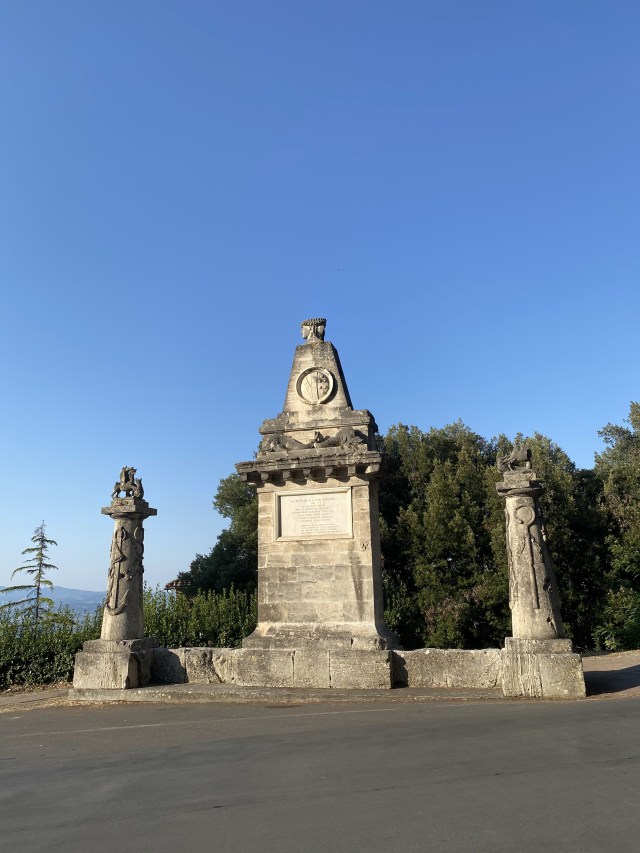
#8: We head uphill for a couple of hundred meters, until we have to cross the road to have a look at the lovely memorials at the bottom of Viale dei Ponti. In Ireland we don’t have an abundance of war memorials, whereas on continental Europe, they’re in a great many towns and villages.
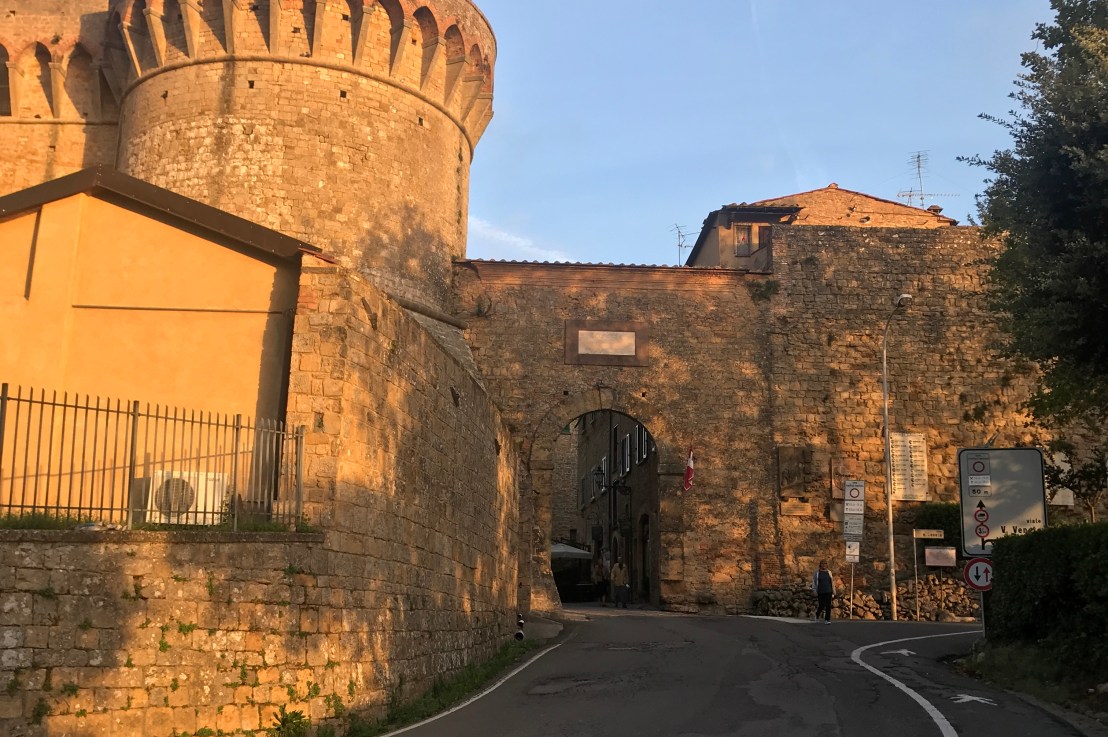
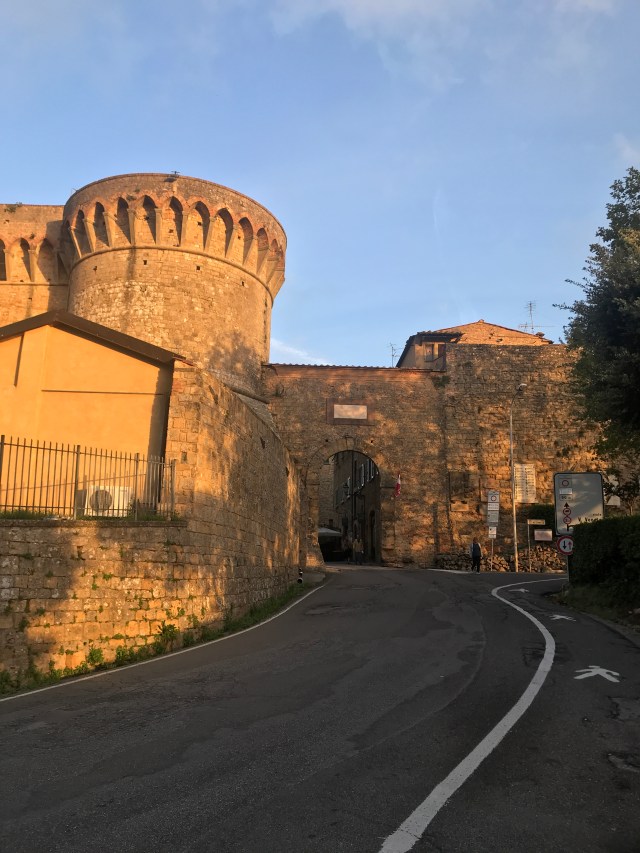
#9: We don’t head up the gently upwards sloping Viale dei Ponti, but take a left then a swift right that curls backwards. We can see the walls of the Medicean Fortress here, and the steep path leads us to one of the main gates to the walled town: Porta a Selci. Caution as a pedestrian, as this the only gate where you might meet traffic coming in both directions.
Porta a Selci
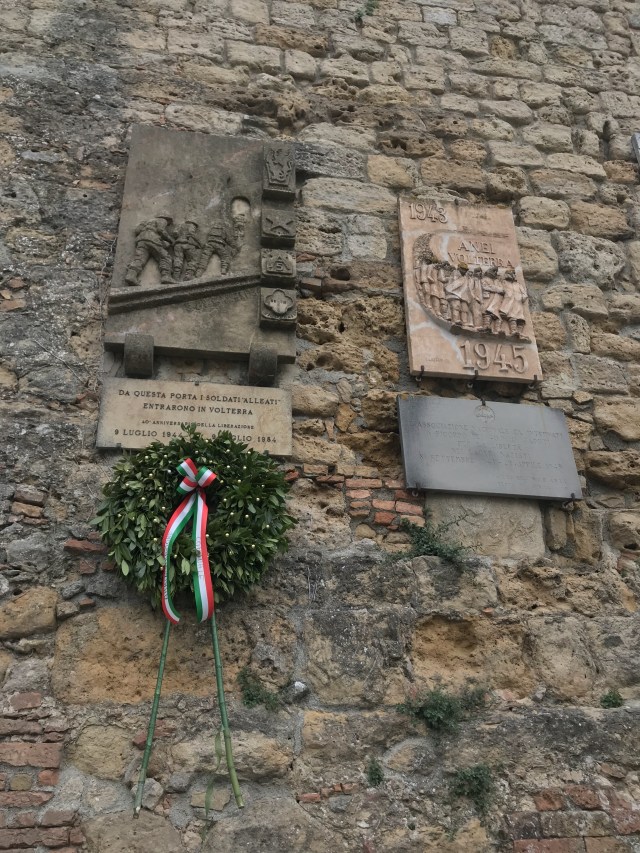
Some war memorials beside the gate
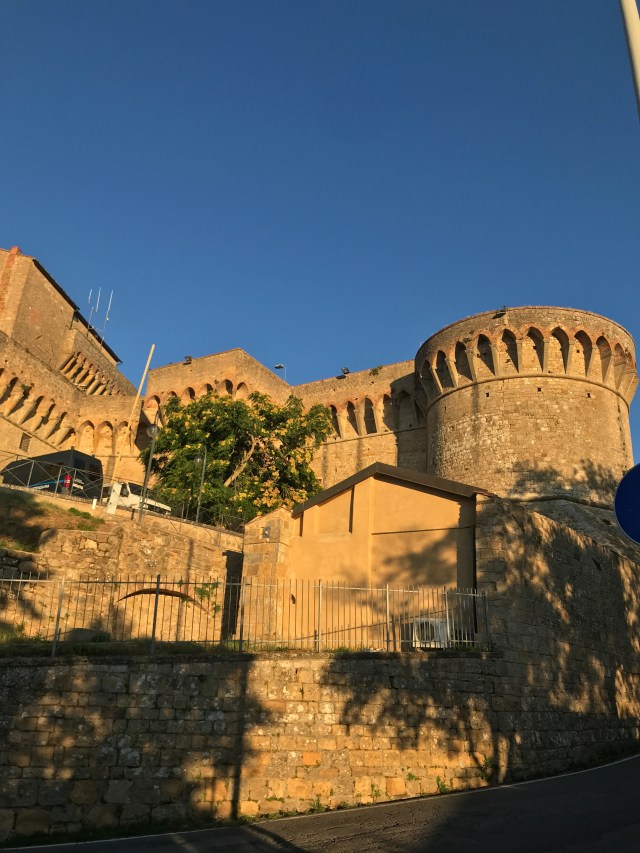
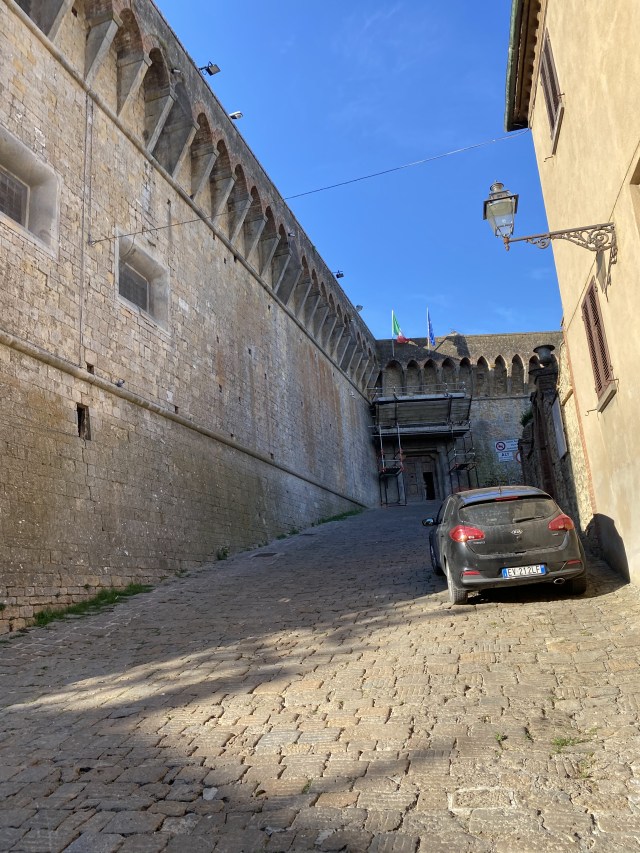
The Medicean Fortress beside the gate
You can see our next foodie destination through the gate now!
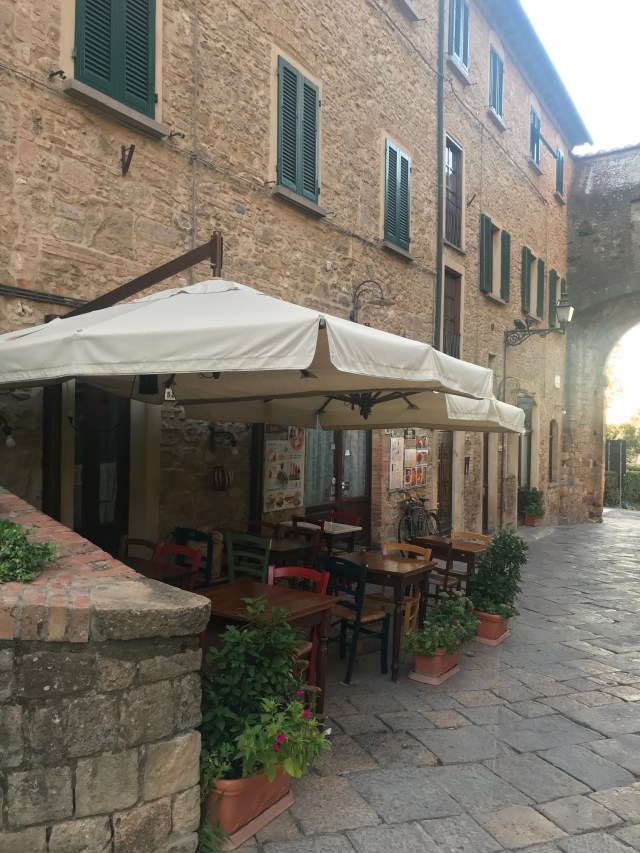
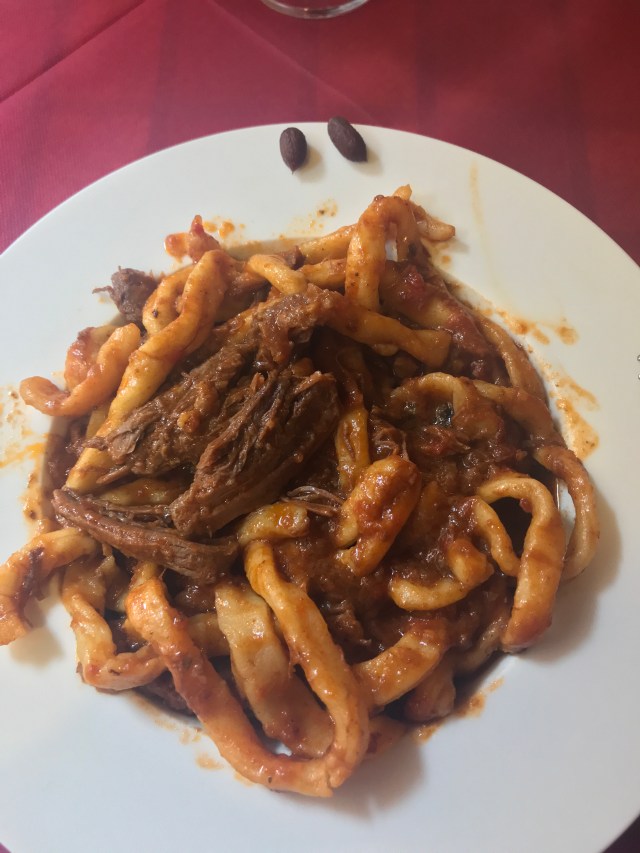
#10: Through the gate and to the right, you’ll find Osteria La Pace. They serve one of the best pasta sauces in Volterra here: wild boar with black olives. I love it especially with pici (pronounced ‘peachy’), a form of thick noodle.
From the outside…
From the inside 😉 Hand-made pici with wild boar and black olives… amazing.
Not pictured is a killer tiramisù, served in a large coffee cup… delicious. This place is definitely worth a visit.
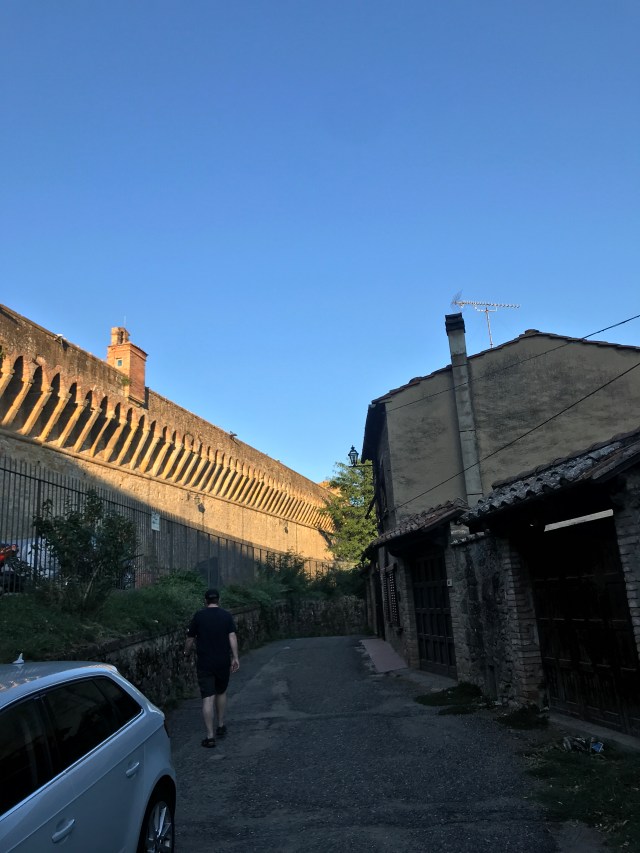
#11: Opposite the restaurant, there is a ramp which leads up to an old fortress, which is still very intact – and necessarily so, as it is a medium security prison. It was originally built in the mid-14th centry, and updated by the Medici in the late 15th.
It’s no ordinary prison, though. Rather than simply confining people for the purposes of punishment, they attempt to rehabilitate. The three major programmes I am aware of are:
Allowing trustee residents to occasionally leave the prison to gain work experience in some of the businesses in the town;
Teach residents how to run a restaurant from top to bottom, by having a chef come in and open up the prison as a restaurant, around once a month. You can book a table here, if you book well in advance. I suspect you’ll have to wait for the current pandemic emergency to be done with too; and
They also run an acting school and dramatic troupe from the fortress, one of the most renowned in Italy. They occasionally put on shows – both normal dramatic pieces, as well as experimental theatre.
I think it’s a wonderful thing to do, rather than simply throwing away the key. It would be interested to see the level of non-recidivism as a result of this.
In 2019, they opened one of the fortress’ towers for tours in September and October. I visited – more on this here. They may revert to doing this every year, pandemic permitting.
#12: If you clicked on the link which detailed the visit to the fortress tower, you will have seen that once a year, in mid-September, they have an arts festival one night. Many museums are free to visit, and many private buildings are opened for visit. It’s a great idea, and it enables you to see parts of the town you would never see otherwise.
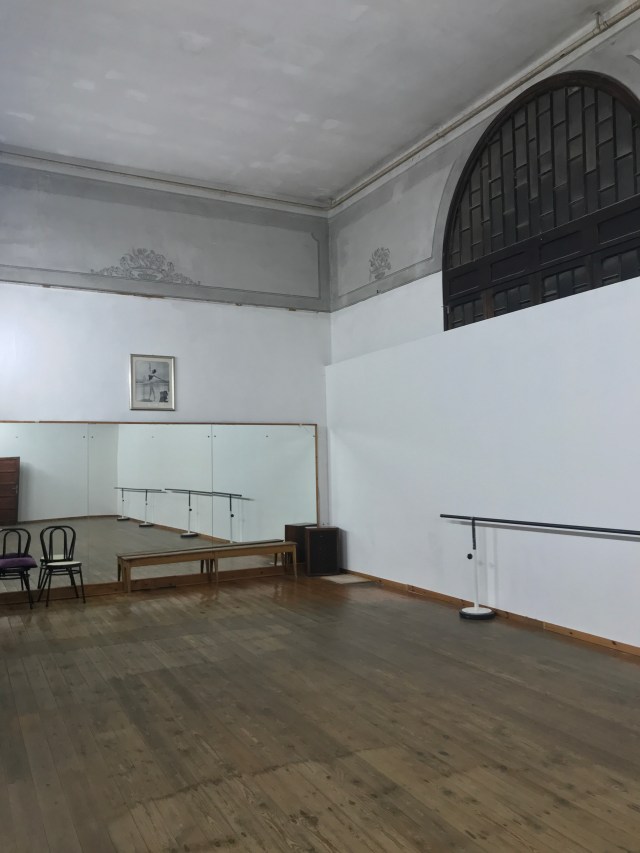
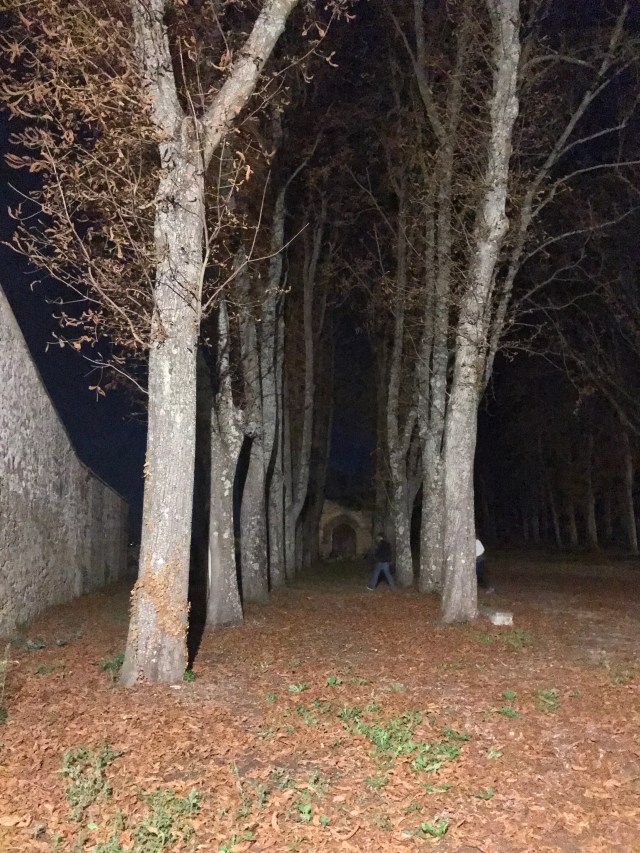
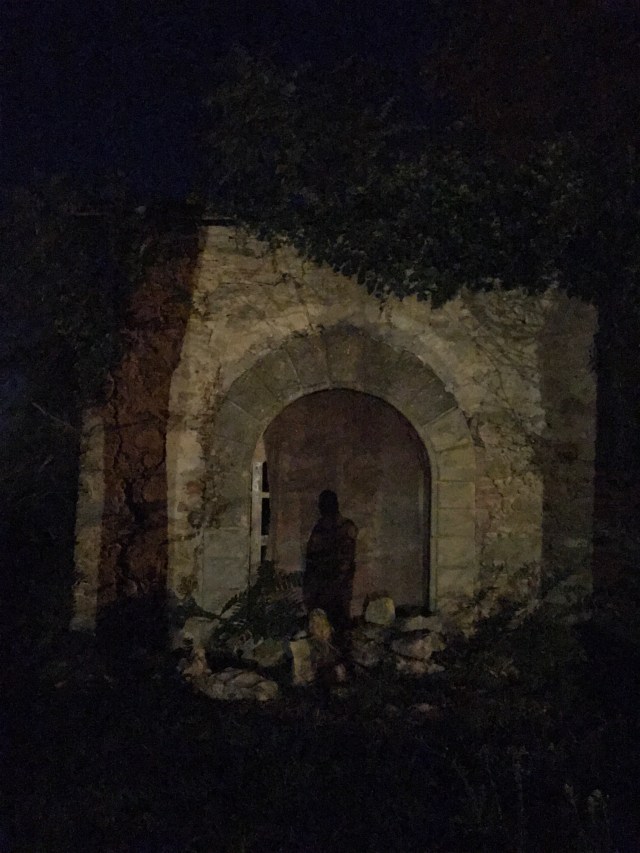
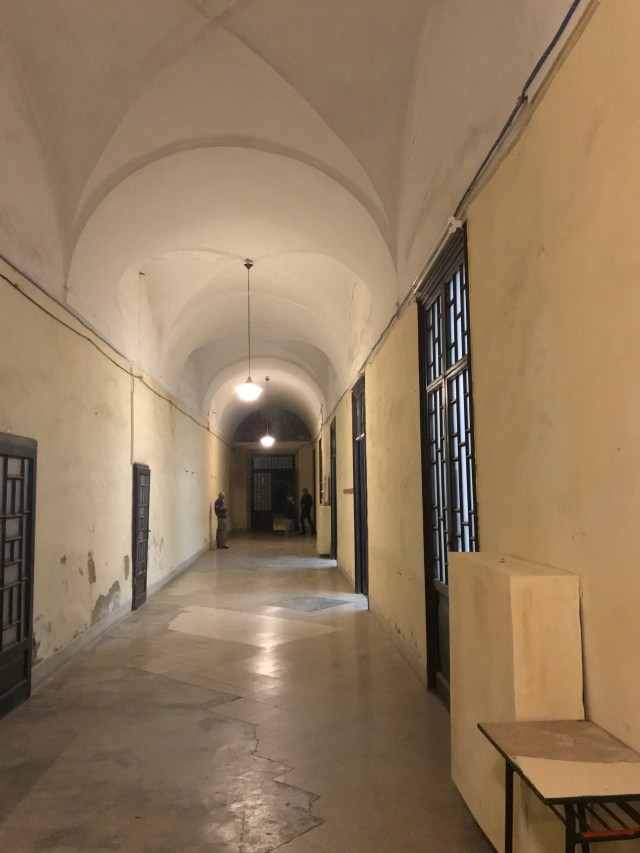
One of these buildings is just up from the Fortress: Centro Danza Classica di Volterra. It’s a dance studio/school. At the back is a large garden, which you would never otherwise see… and it’s kind of spooky at night.
#13: Another 120-150 meters down on the right, you’ll find a gallery: Colpa del Vento, which features the works of Vanna Spagnolo. She’s a lovely, ethusiastic and talented lady who specialises in Tuscan bucolic scenes. Niamh and I, and later on, Niamh’s mother, bought lovely pieces from here. Here’s ours:
As far as I can tell, Vanna doesn’t paint using references, but from memory, and hikes around Volterra frequently for inspiration.
I hear that she may be closing her shop some time in September this year. Niamh and I hope to catch up and maybe add a piece to our apartment from her collection. Good luck, Vanna!
#14: To my regret, I don’t have any photos from La Vena di Vino, a wine bar just beyond Colpa del Vento. I’ve had some amazing fried fish in here, and the owner is always keen to recommend wines to regulars and first-timers alike. The ceiling of the bar is also one of the most notorious in Volterra: it is strewn with brassiers, presumably from ladies volunteering to give them up.
I have not witnessed, nor (thankfully) been asked.
The entrance to Vena di Vino is just opposite the covered seating. This is the view in the opposite direction to the one described in the route. We’re looking back, having passed.
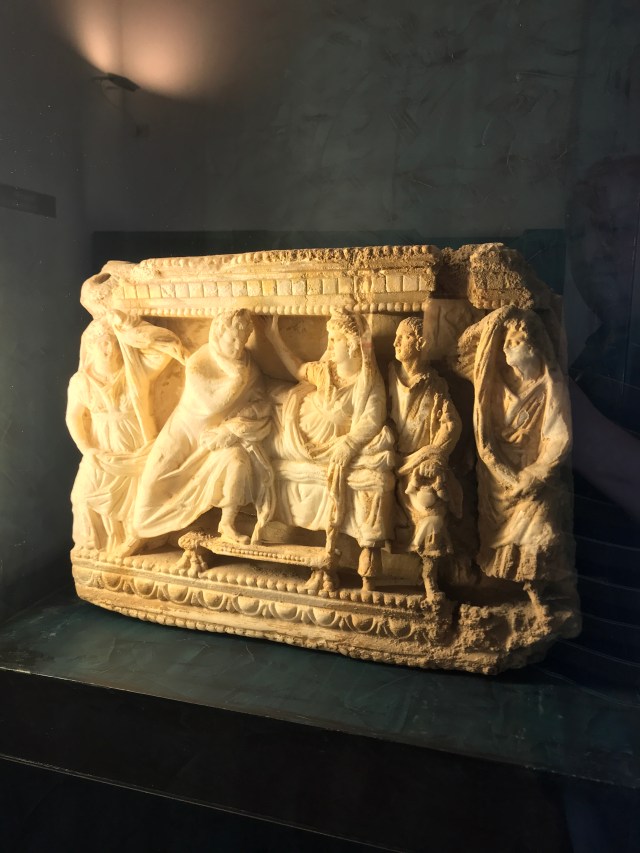
#15: A little farther down on the right lies the entrance to the Guarnacci Etruscan Museum. It is one of the oldest continuously open museums in the world (the pandemic notwithstanding), and has been welcoming visitors since 1761.
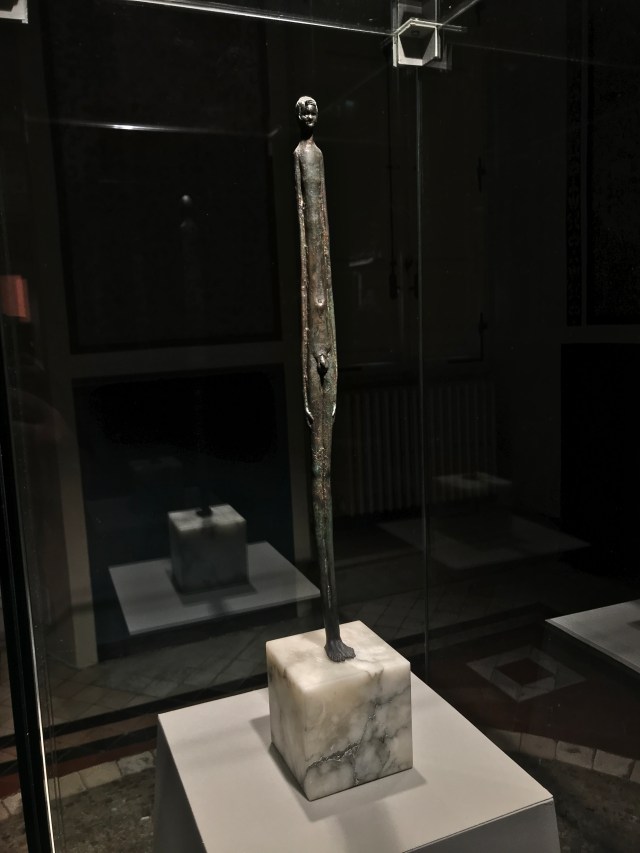
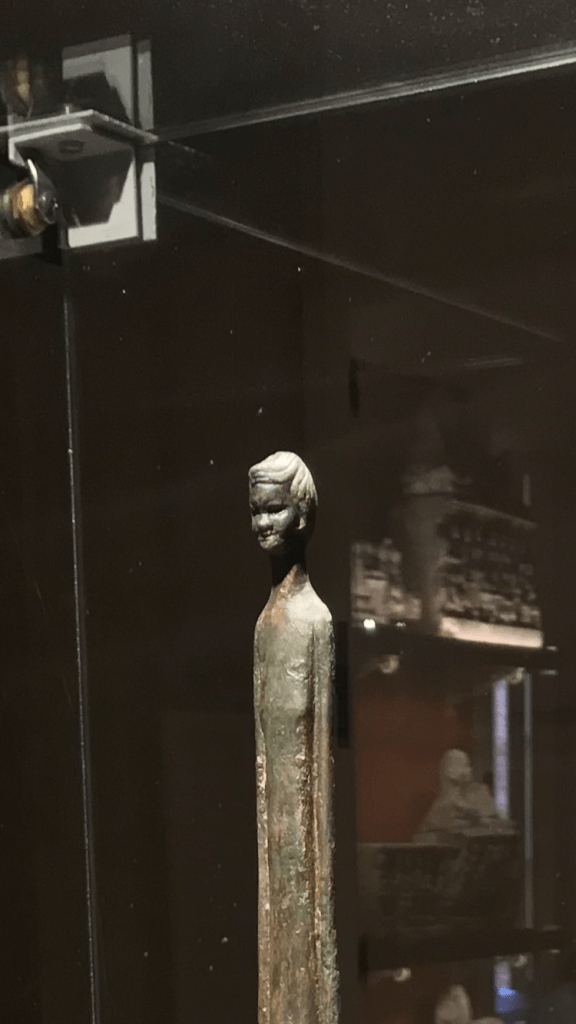
Within lie tons of Etruscan goodies: funerary urns, coins, warrior’s tombs, pottery with Greco influences. It has a couple of masterworks: the funerary urn of the married couple, and a spookily elongated bronze statue of a child called L’Ombra Della Sera.
A little creepy…
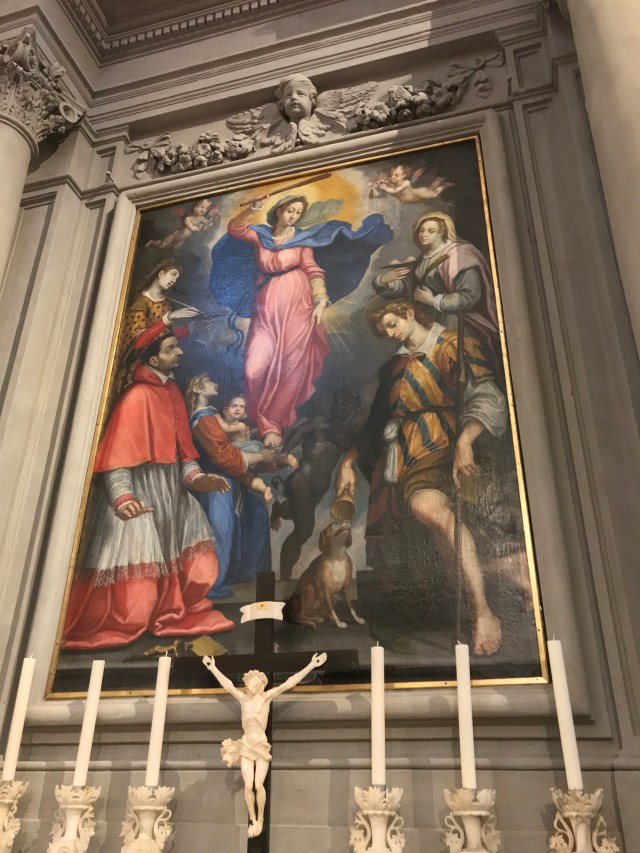
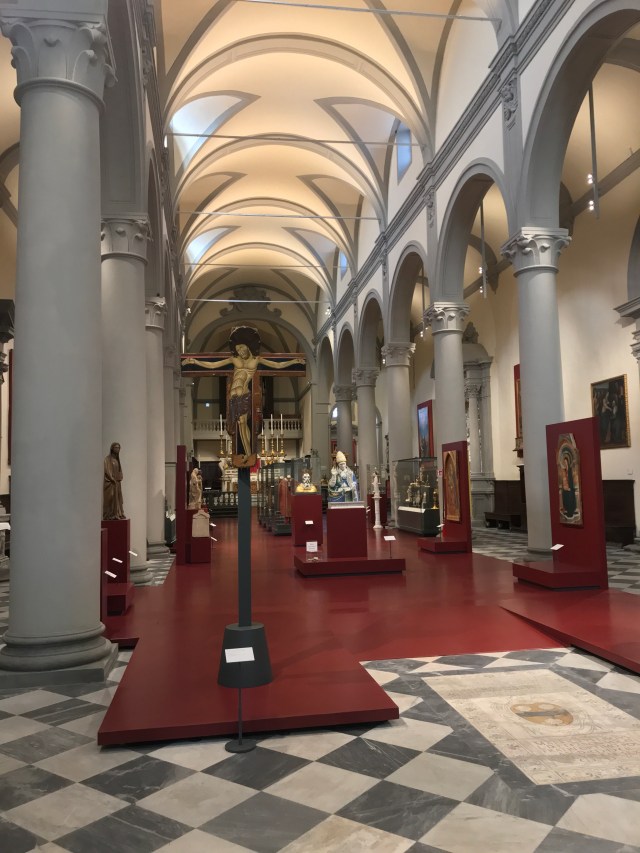
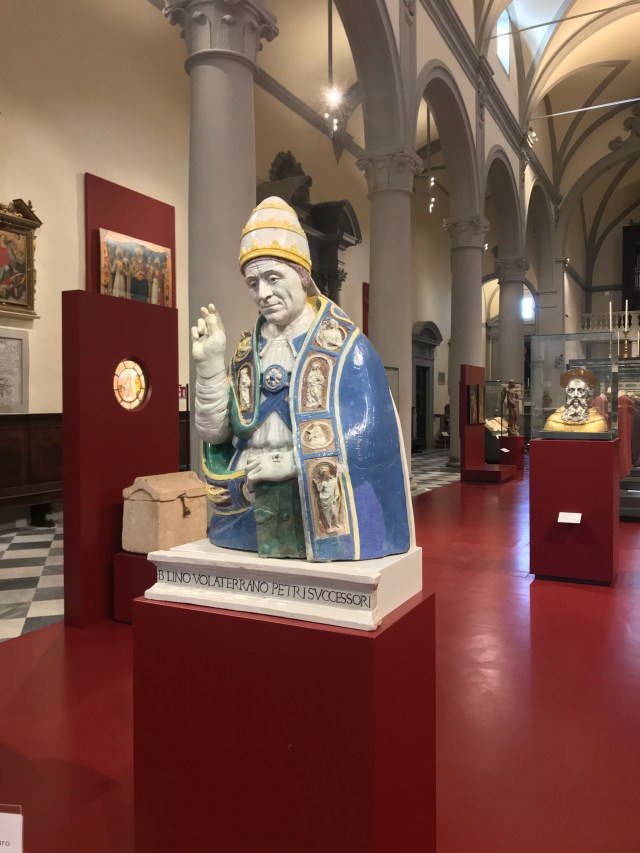
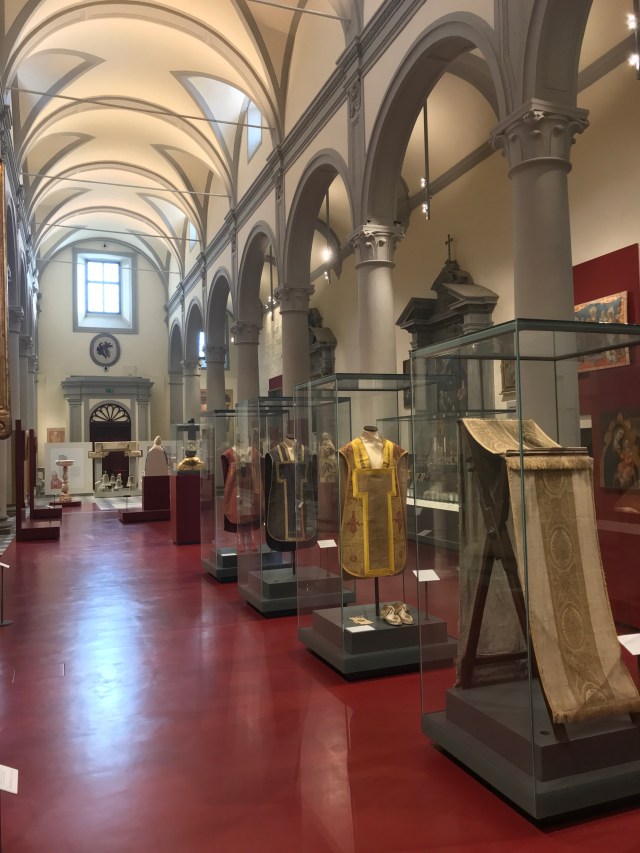
#16: A little beyond the Guarnacci museum, and past Volterra’s library lies the Museum of Sacred Art. It’s worth a quick visit and a stroll around. I have covered this place in another blog post here.
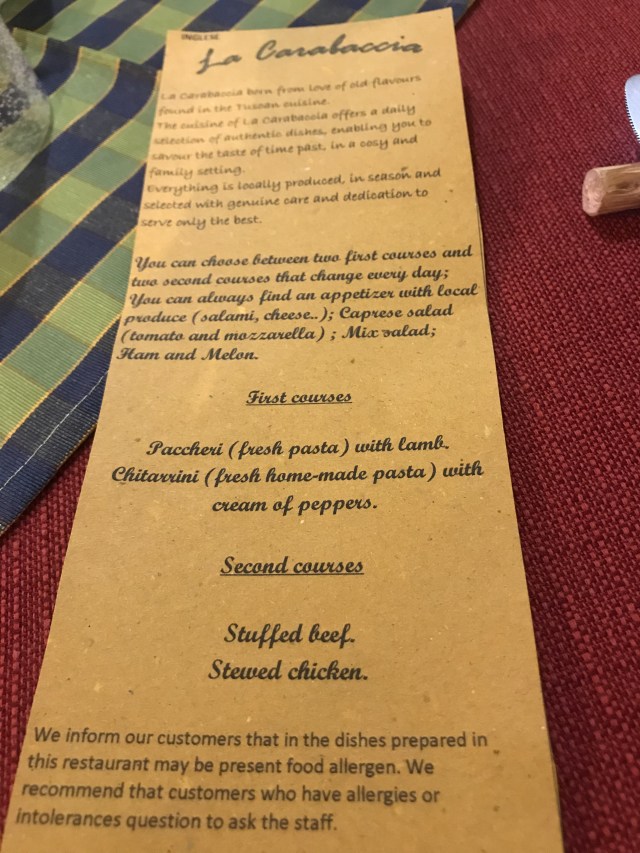
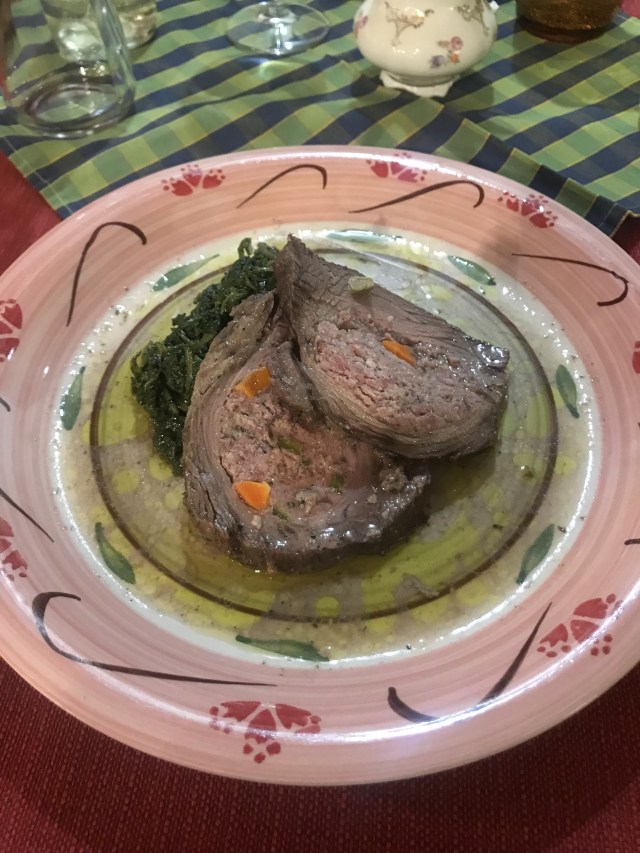
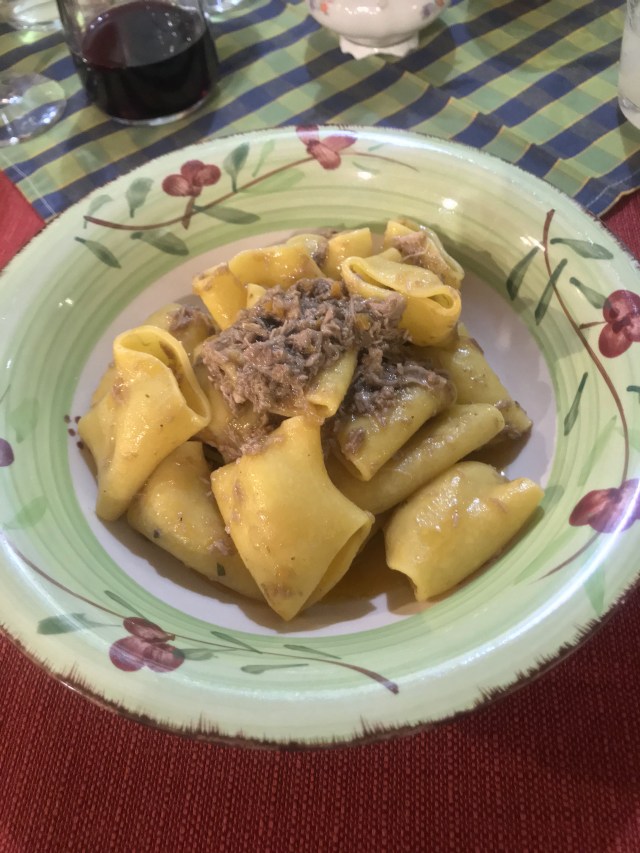
#17: Just as we enter Piazza Settembre XX, we come across another restaurant: La Carabaccia. This place is the very quintessence of the Italian concept of cucina povera (peasant cooking). It is run by three ladies: a woman and her two daughters.
Generally, there is a limited menu of two primi (generally pastas, all homemade) and two secondi (generally meats, but sometimes they have vegetarian options), but they will also put together a lovely antipasto plate for you.
If you can book a table, this is a must-visit. I’ve been dying to try the peposo here (black pepper beef), and I hope to do this on my next visit over. Menus are in English and Italian and change daily.
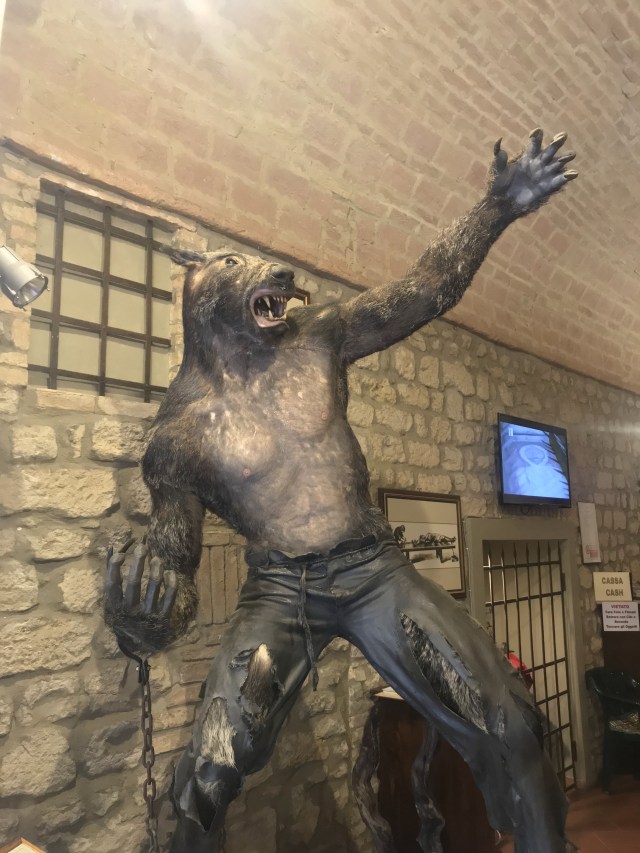
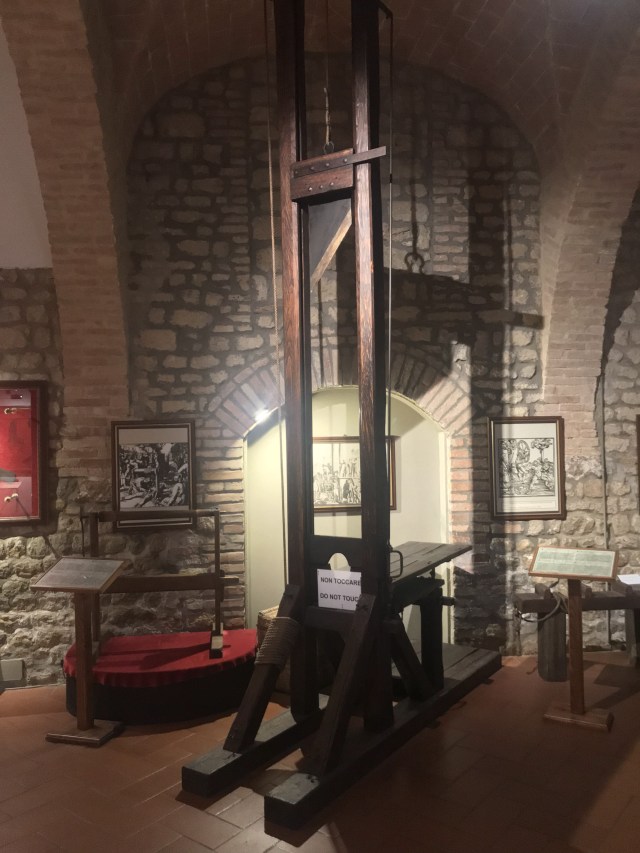
#18: So many towns of decent size in Tuscany seem to have a Torture Museum, and Volterra is no exception. I have visited this place only once, and to be honest, once is enough. It can be draining to see the awful things we used to do to one another in the name of perceived justice.
There (inexplicably) is a werewolf model at the front door, and best of all, is a strong message denouncing torture in all its forms. To be sure: this museum does not glorify torture. You may leave shaken and maybe even a little queasy, especially if you have a good imagination.
Tuscany, when it was a state all its own, was always considered somewhat enlightened. In fact, it was the first ever state to abolish capital punishment in 1786. Anyway, give it a visit… but maybe not too close to, or too soon after eating. Note that the displays aren’t especially graphic, but it’s all down to the power of imagination.
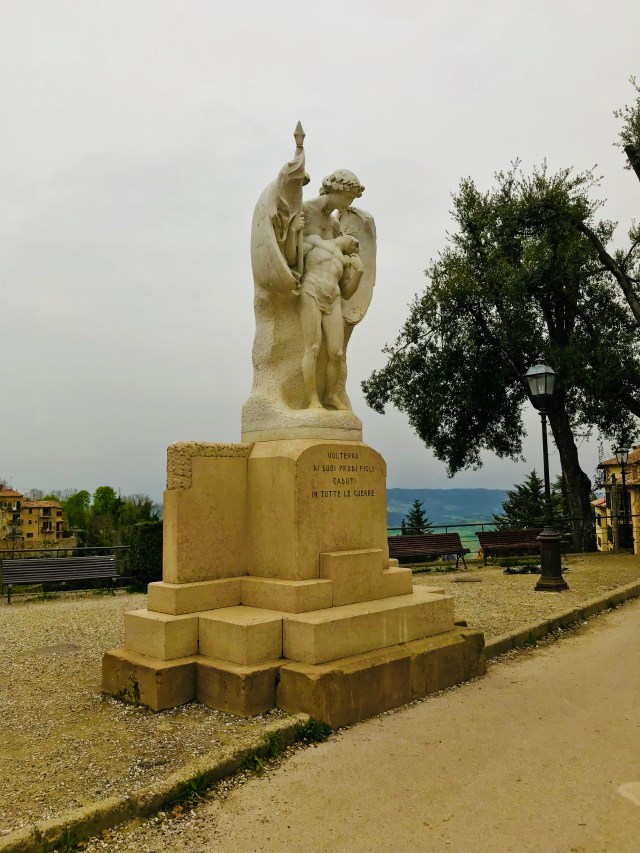
#19: We finish our journey here, in Piazza Settembre XX at the War Memorial and viewpoint. It’s a nice little square, part of which is used to house an ice-rink over the Christmas period. There are some additional restaurants here, but they largely cater to the tourist trade.
There are some lovely views to be seen out over the railing.
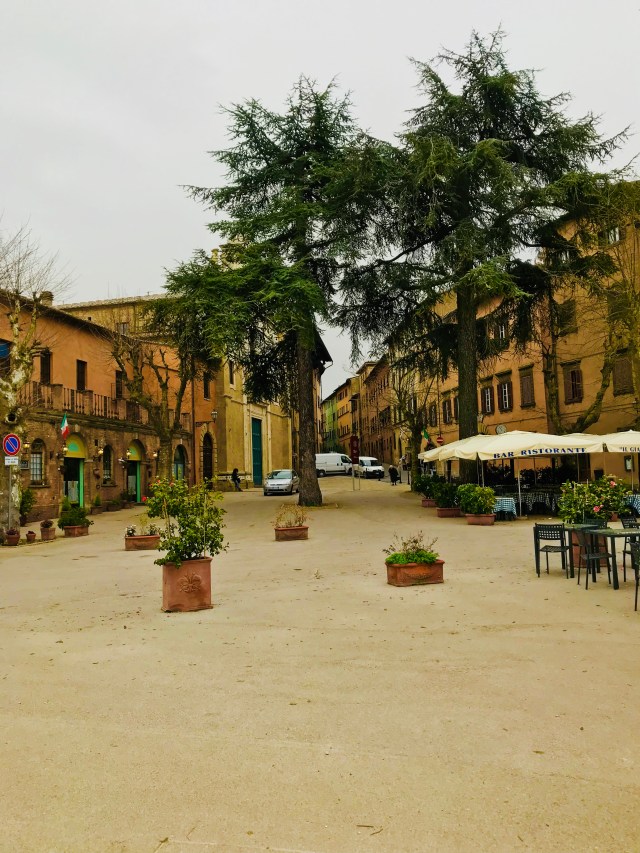
Piazza Settembre XX, looking back, taken on a grey morning in April 2018
Thanks a lot for reading this, if you got this far! I hope it has stirred you into thinking about making a visit to Volterra.
I will have a think about the next route I will take!


















 Our Man In Volterra