Tag: etruscan

Happiness and Disaster (14-16/09/2022)

Happiness and Disaster (14-16/09/2022)

I don’t really split this out using date headers, as the days merged into one another.

Well, it begins. The most trialling sequence of days we’ve had to endure in Volterra yet.

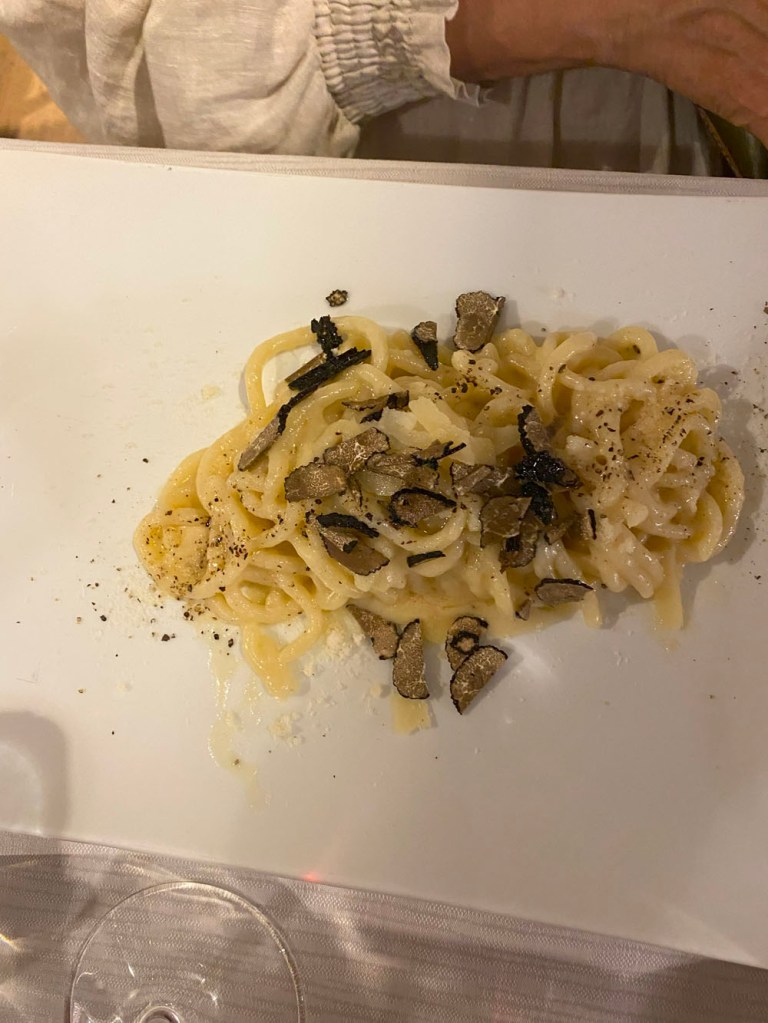
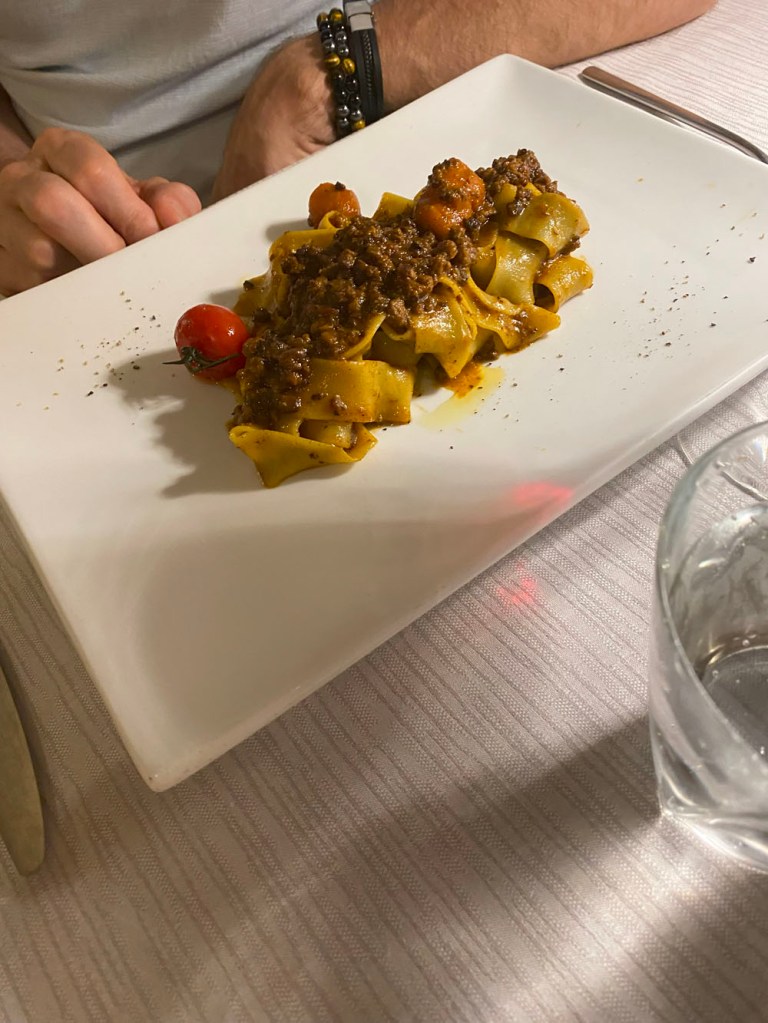
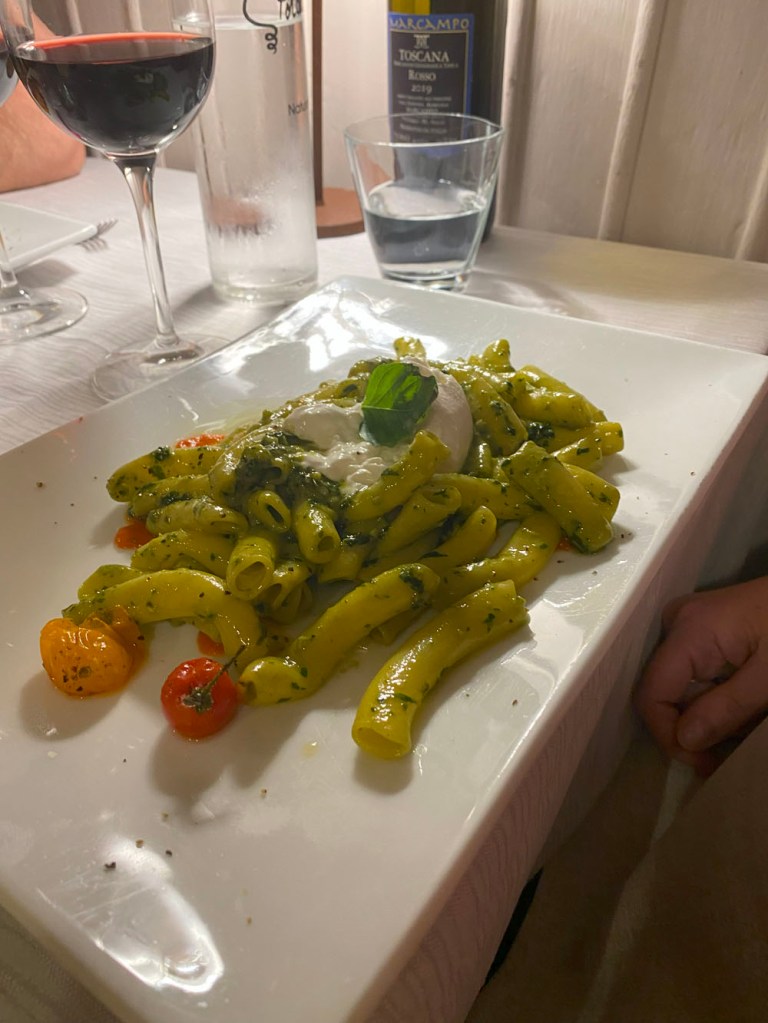
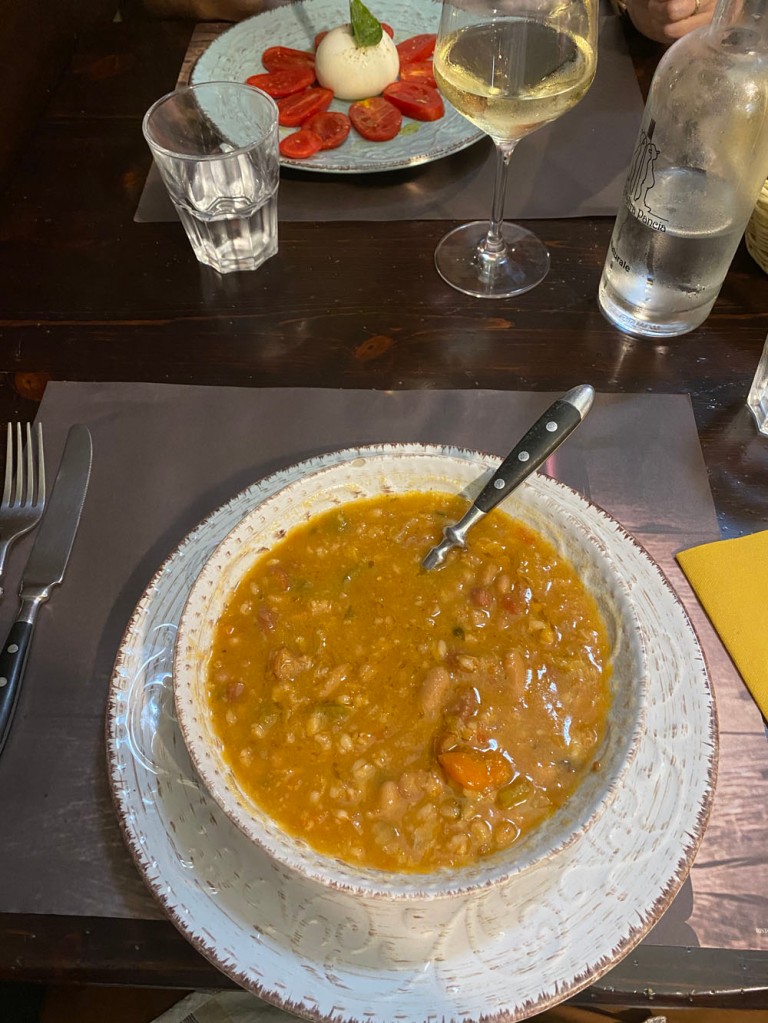
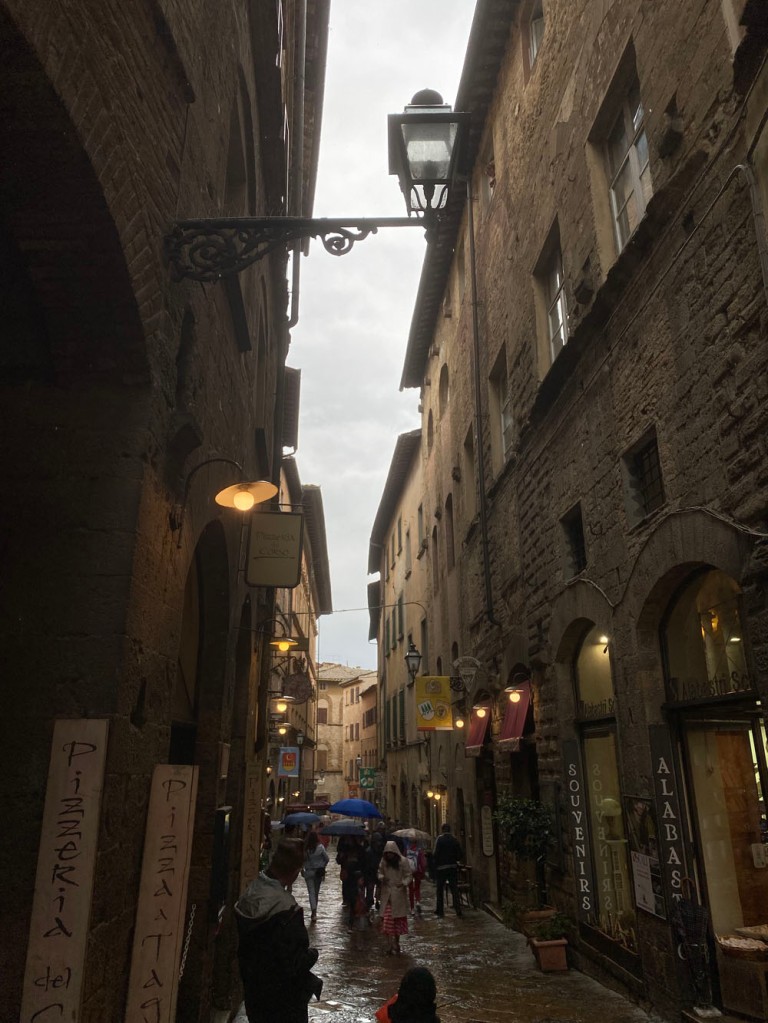
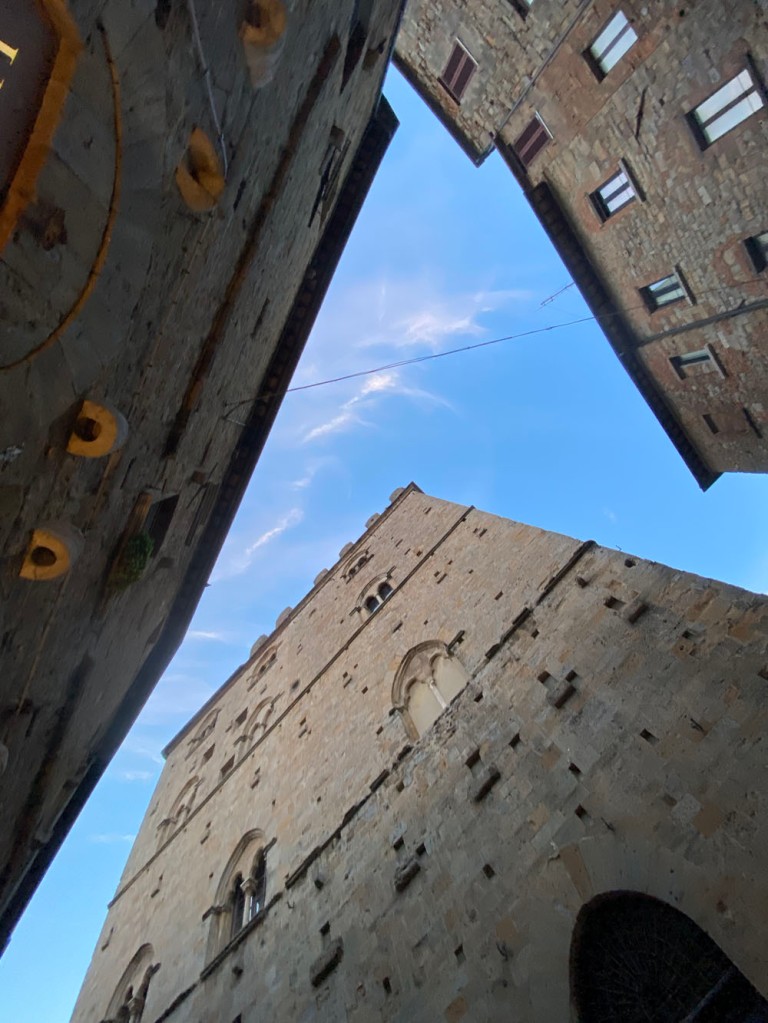
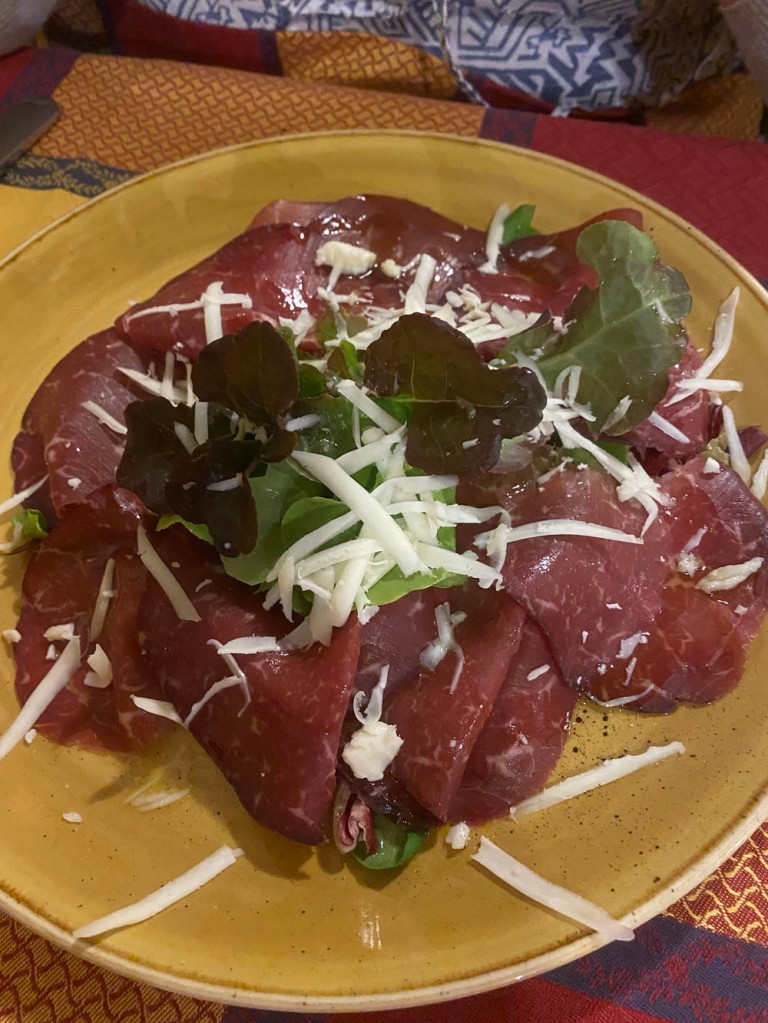
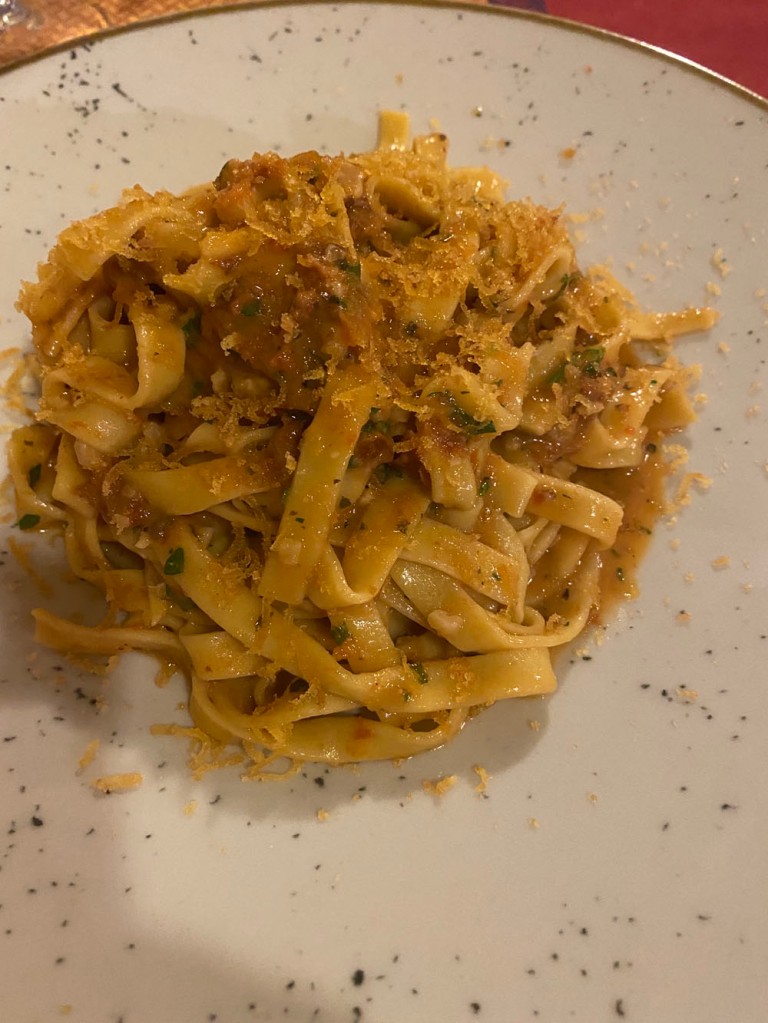
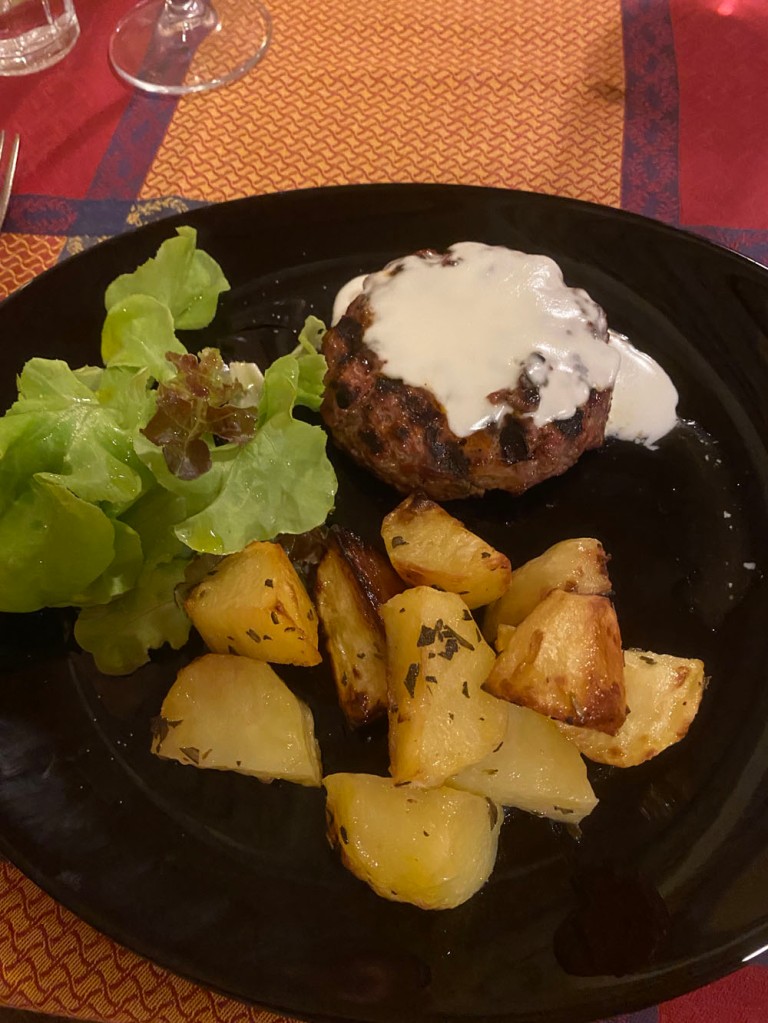
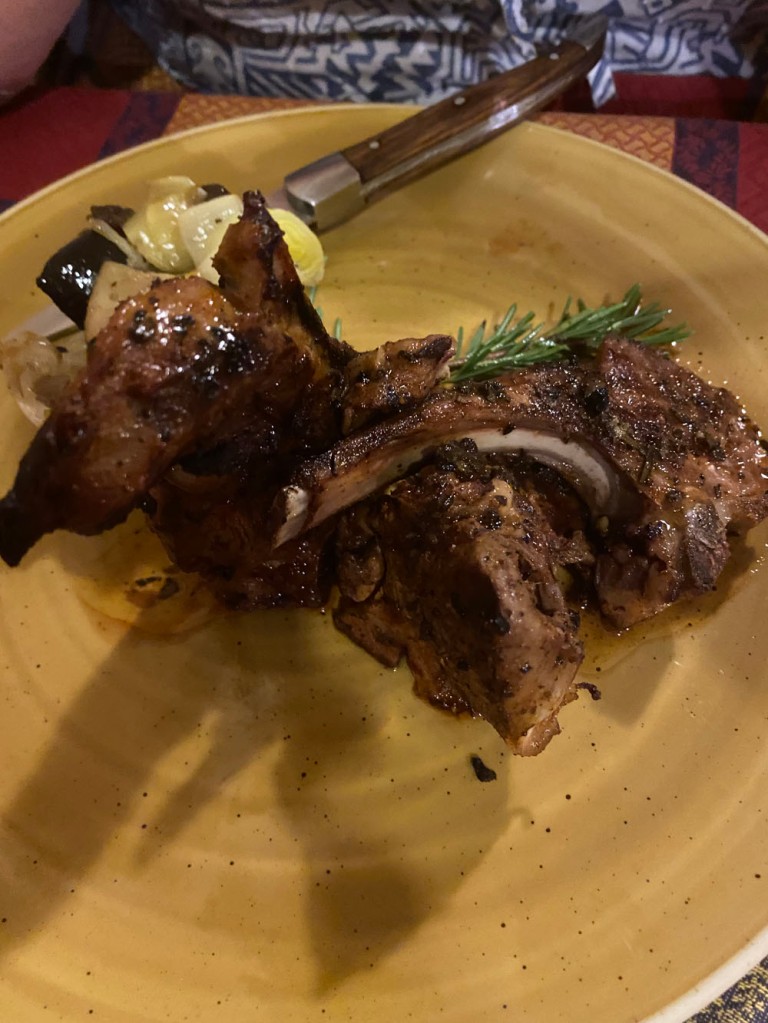
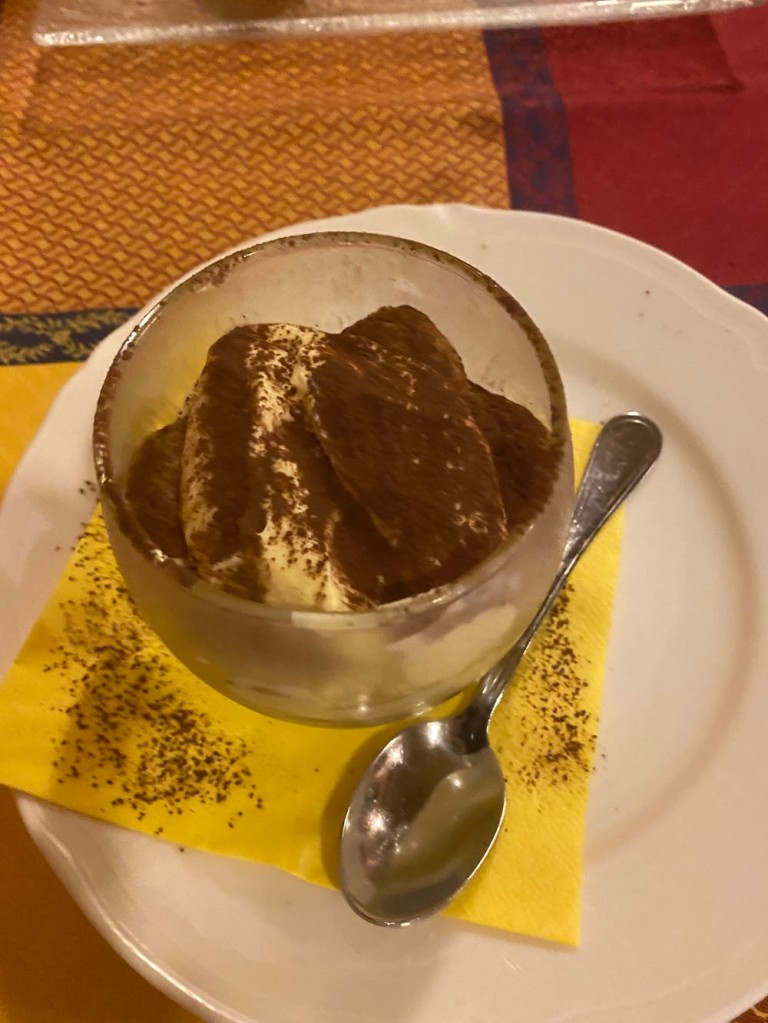
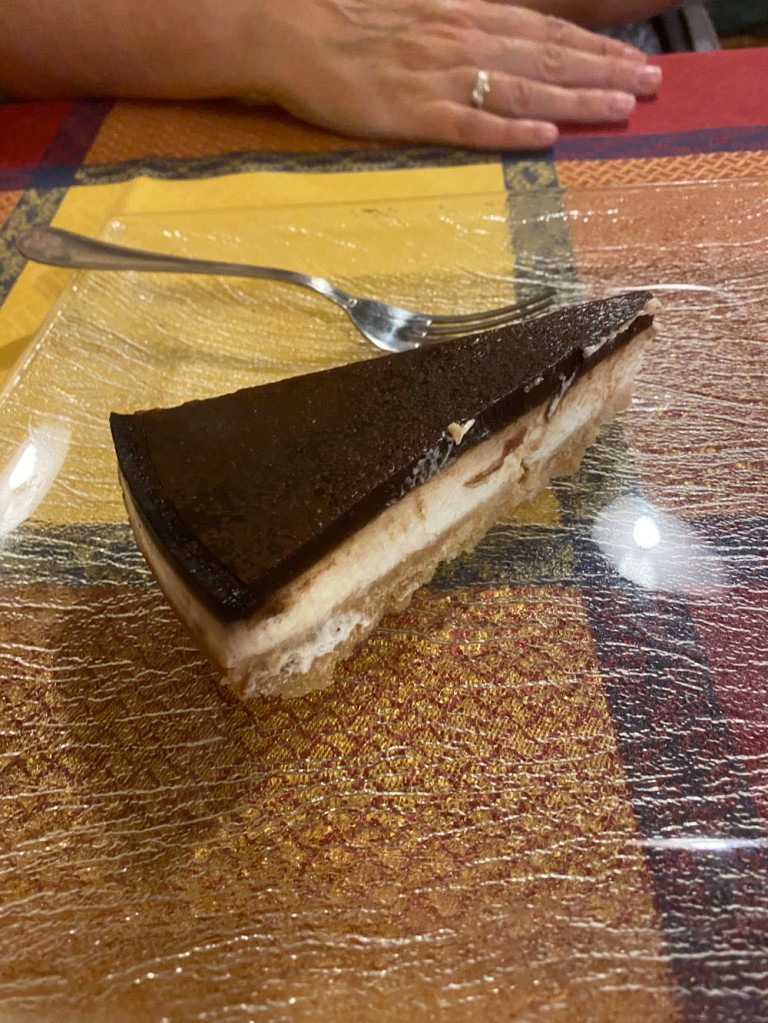
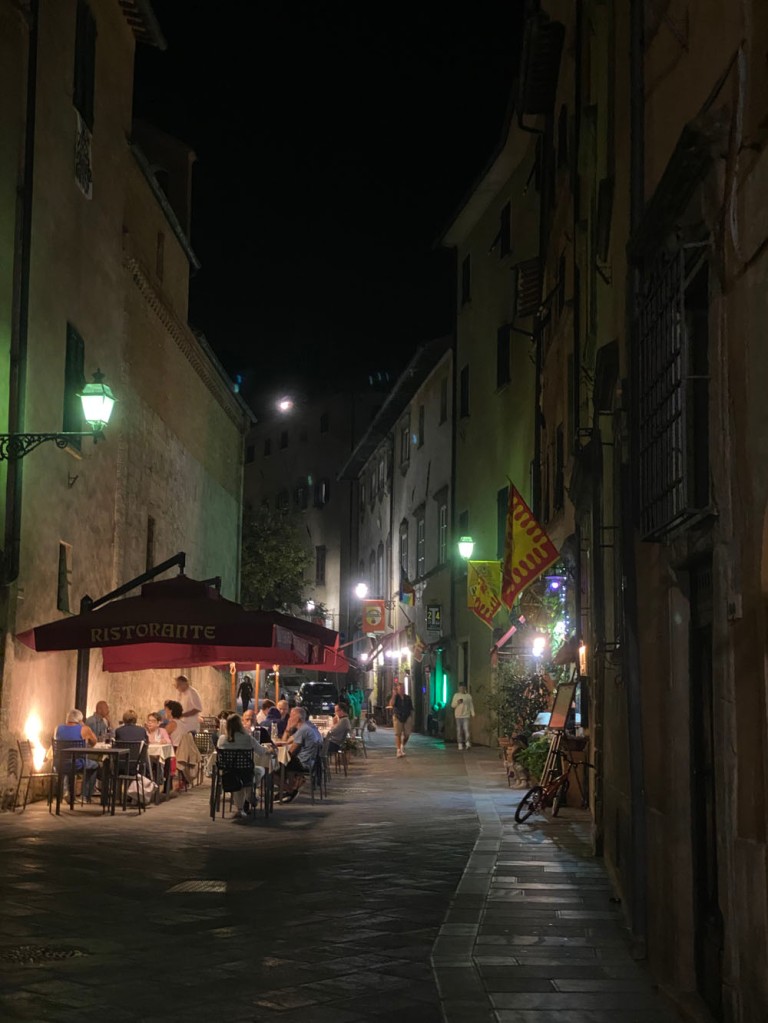
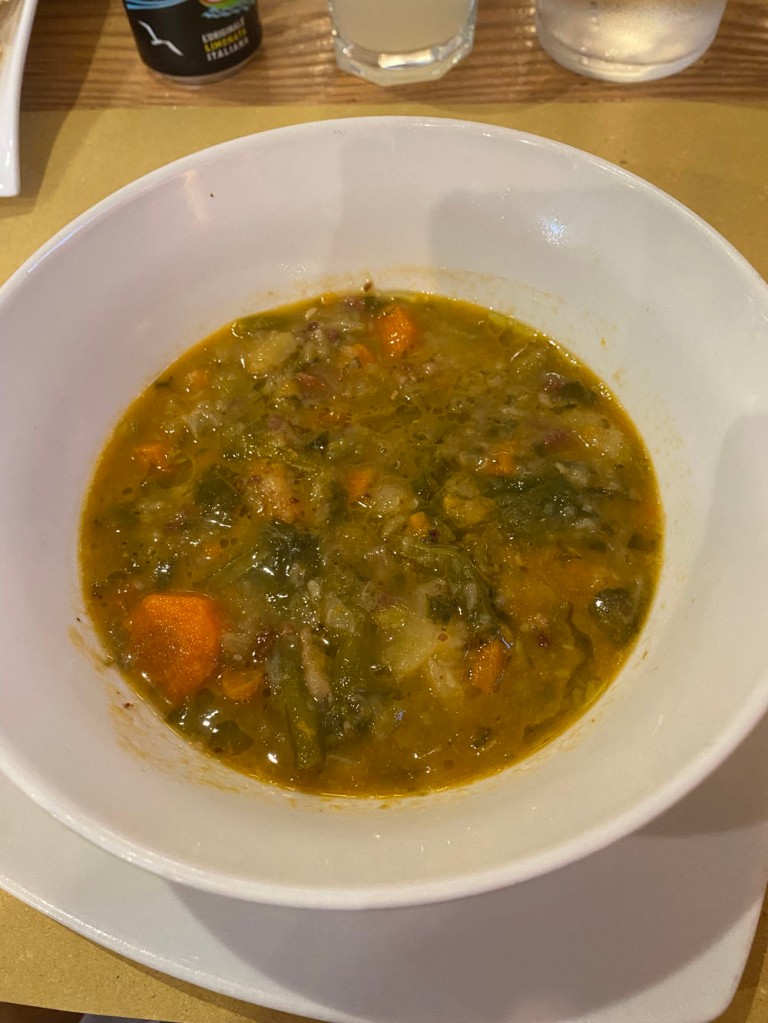
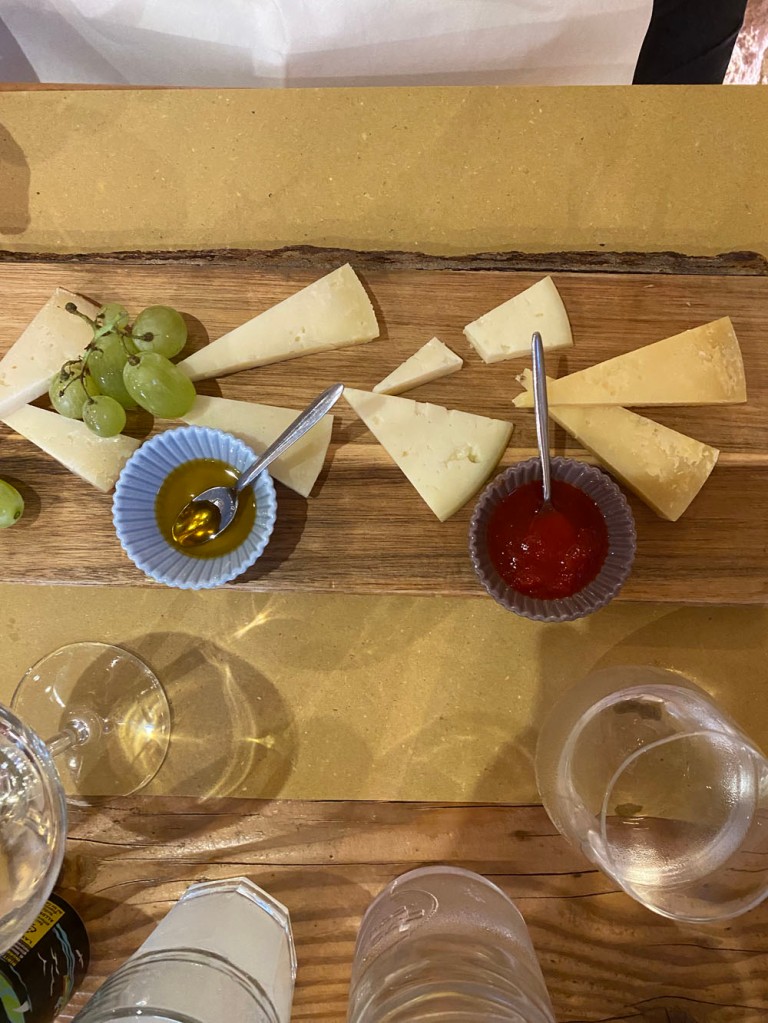
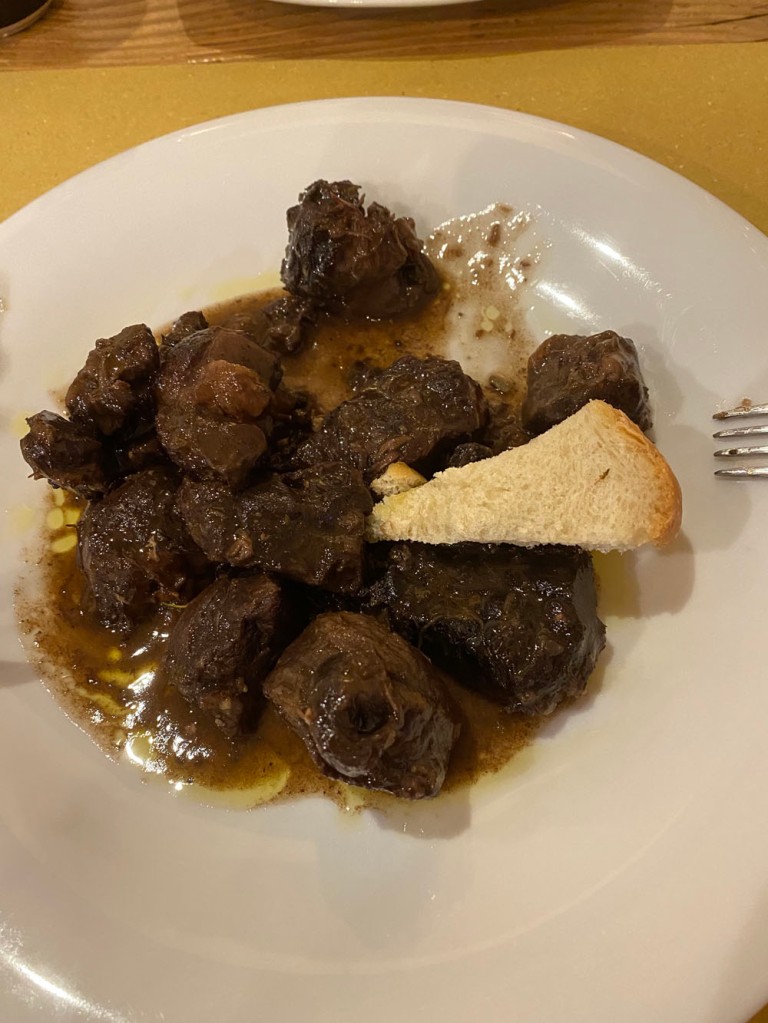
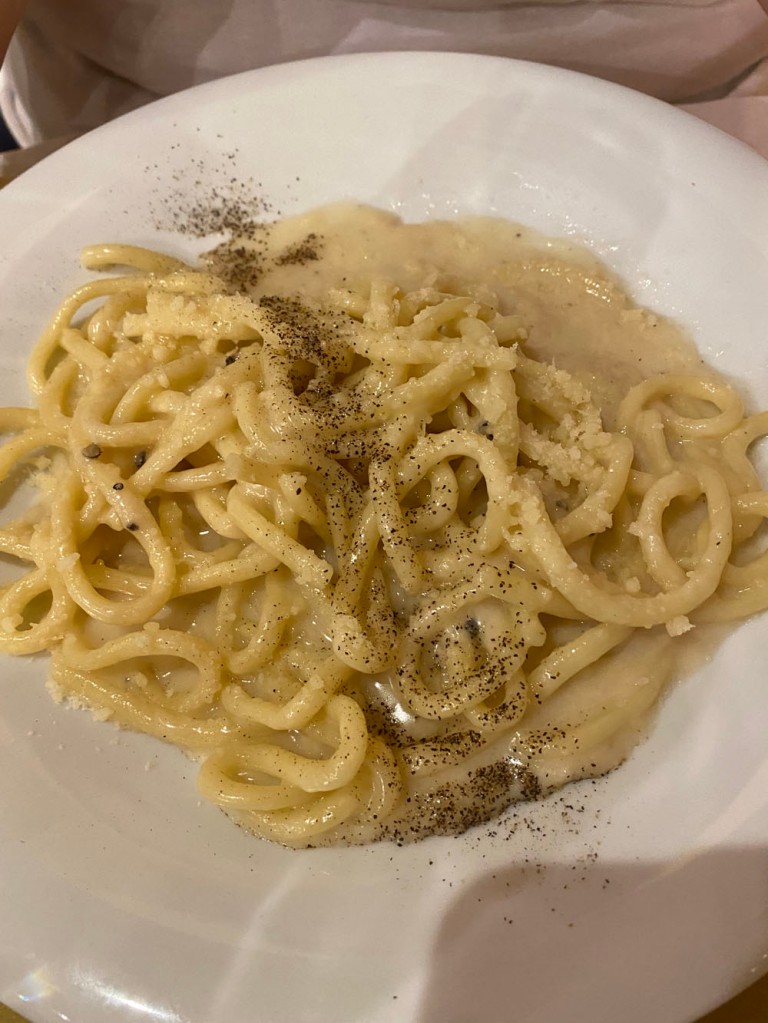
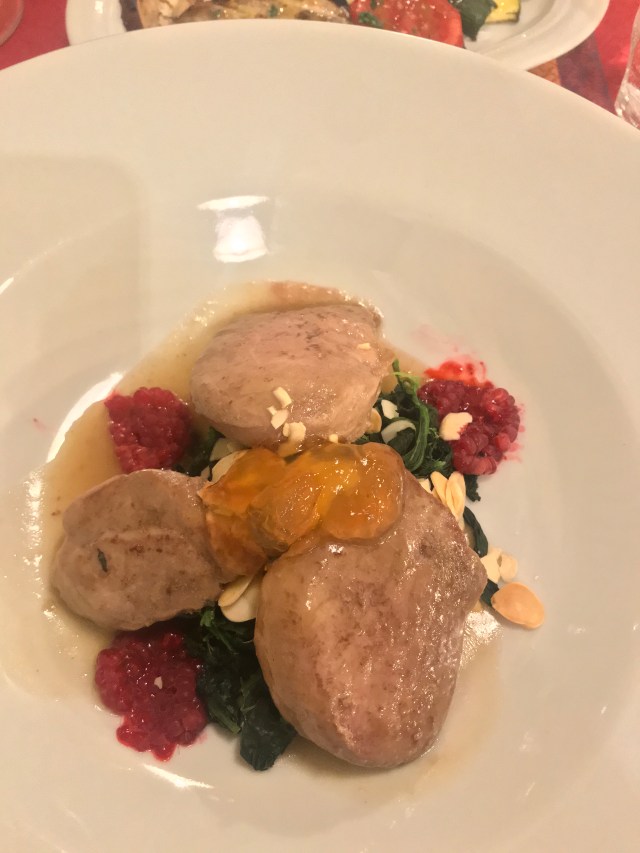
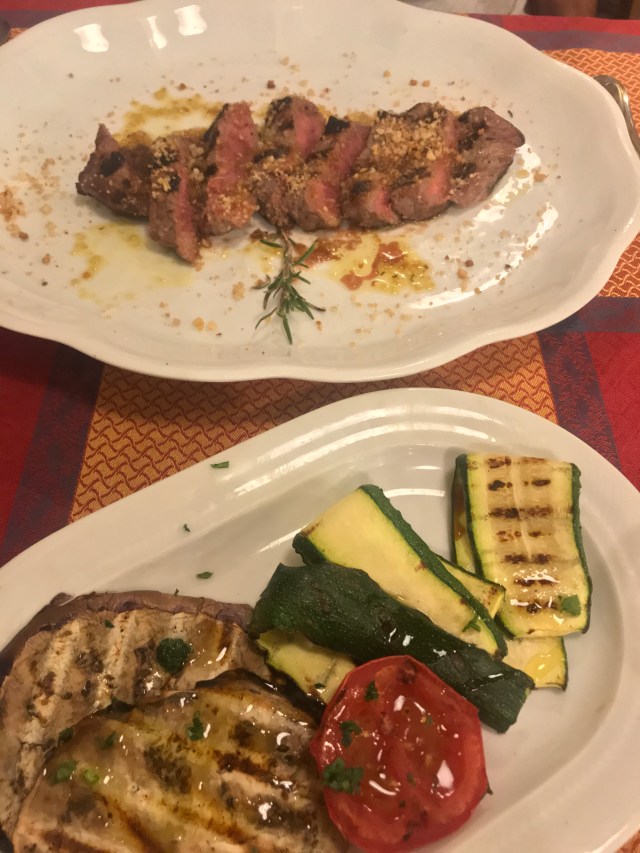
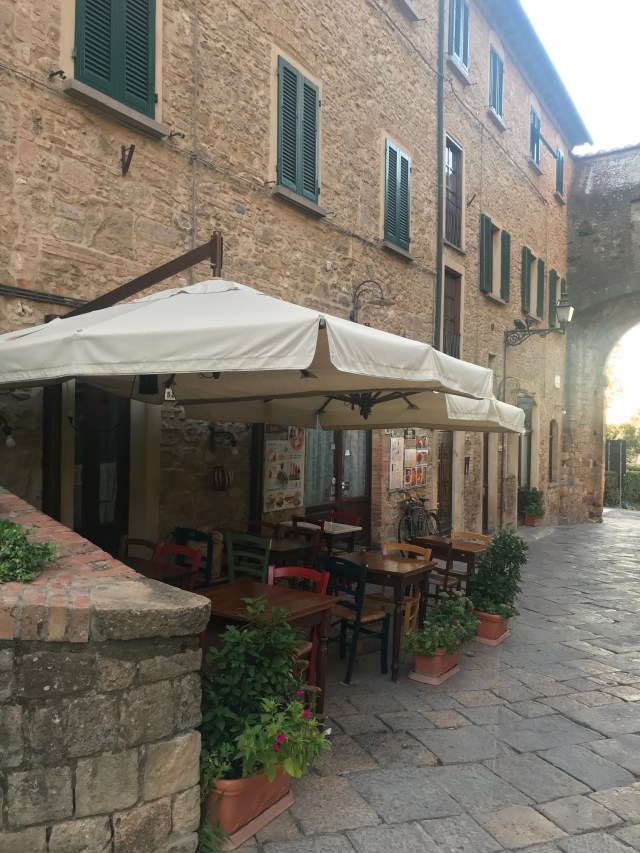
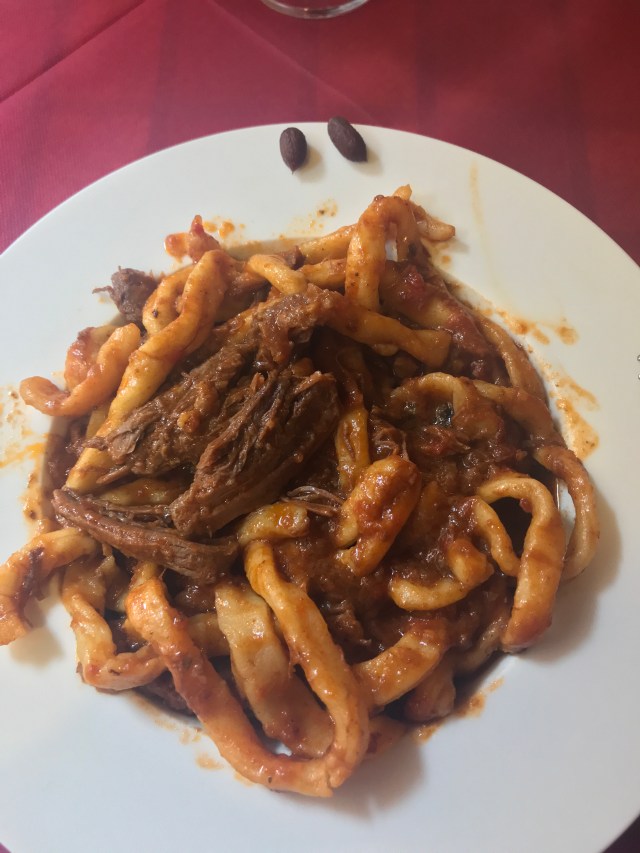
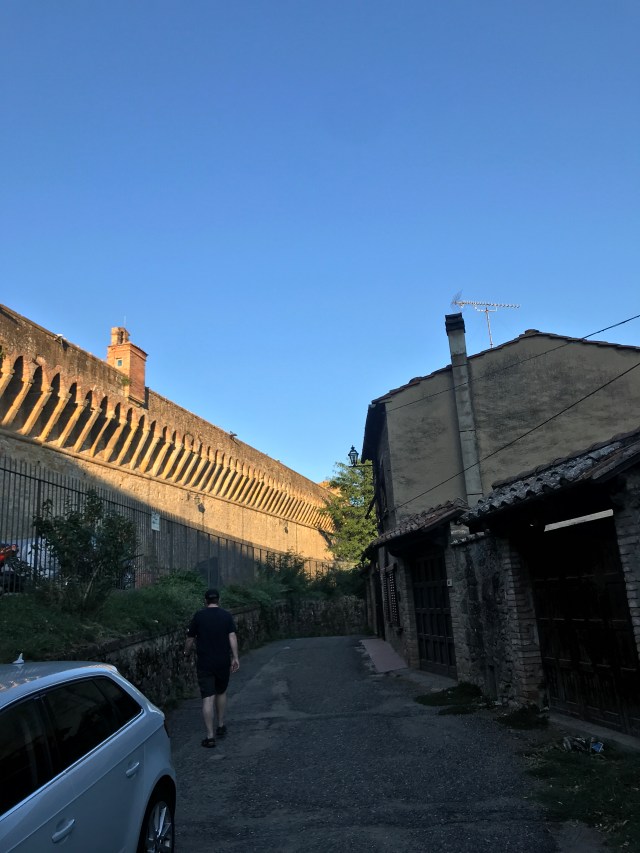
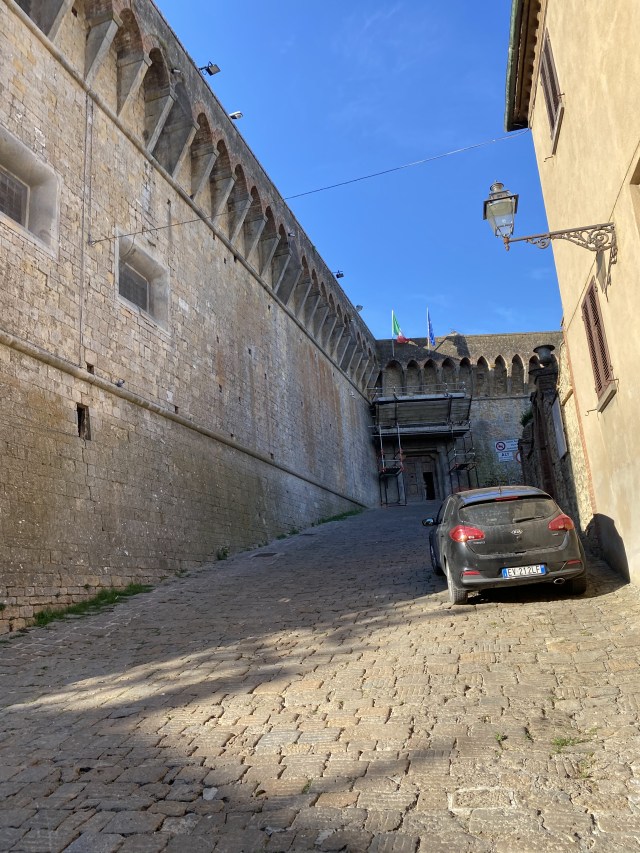
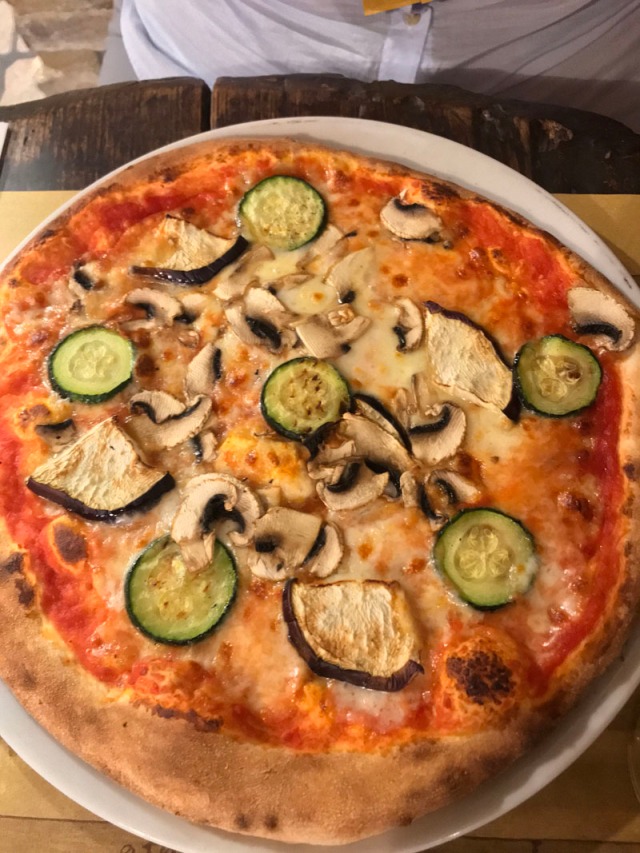
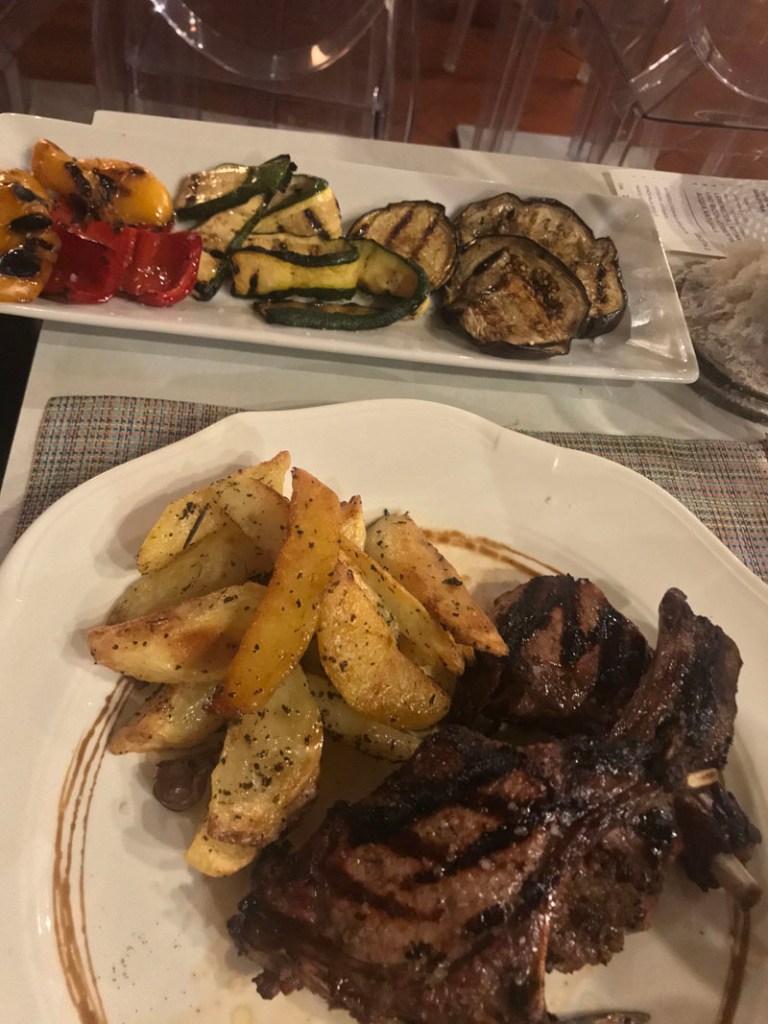
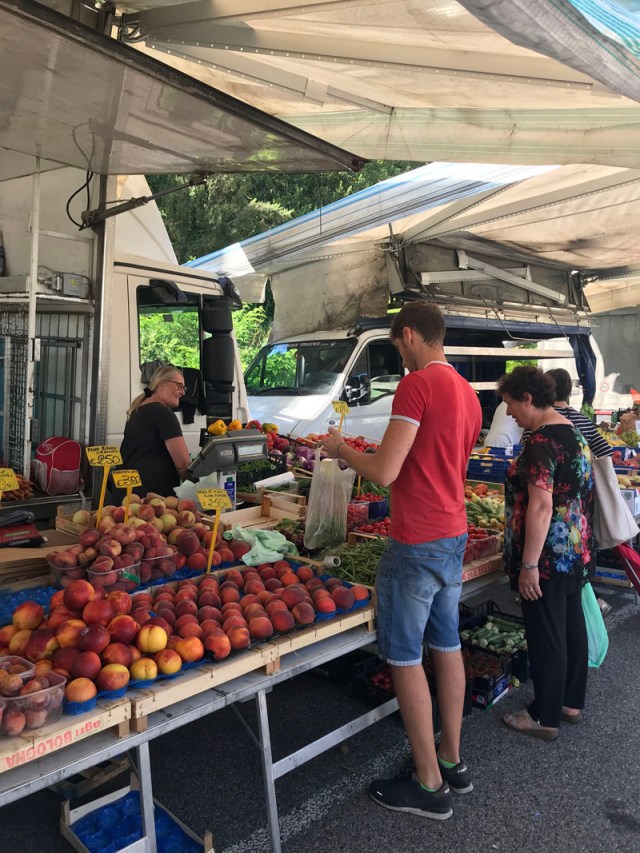
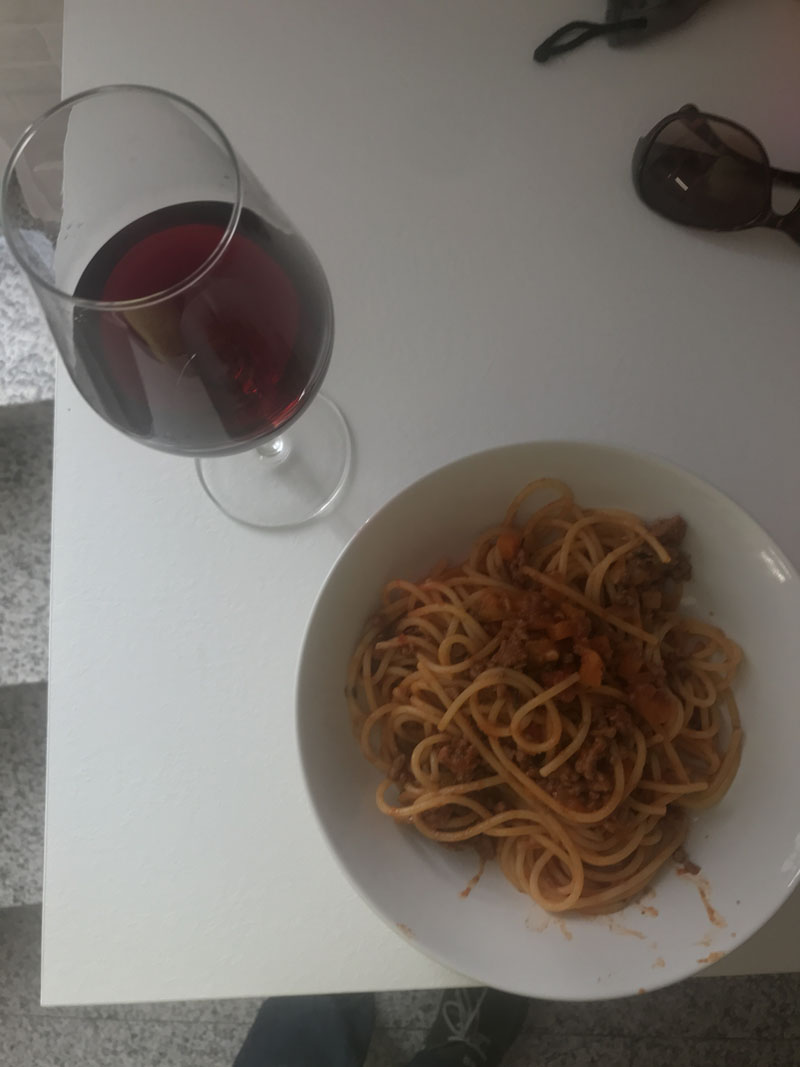
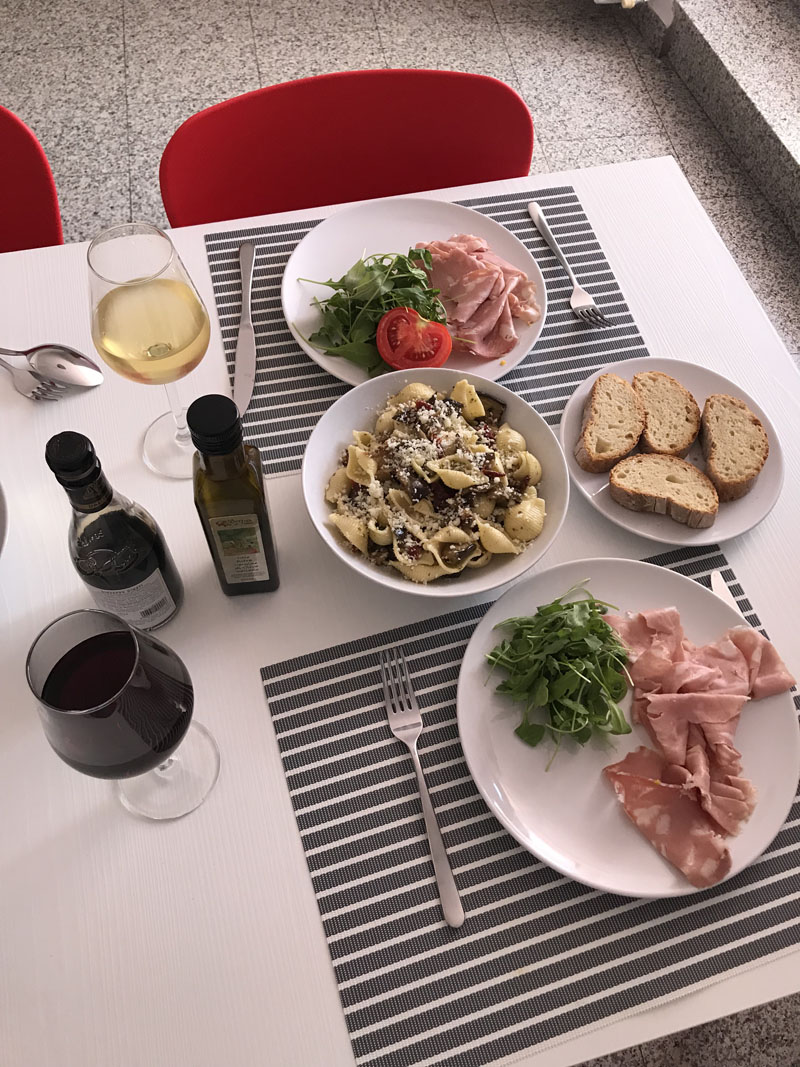
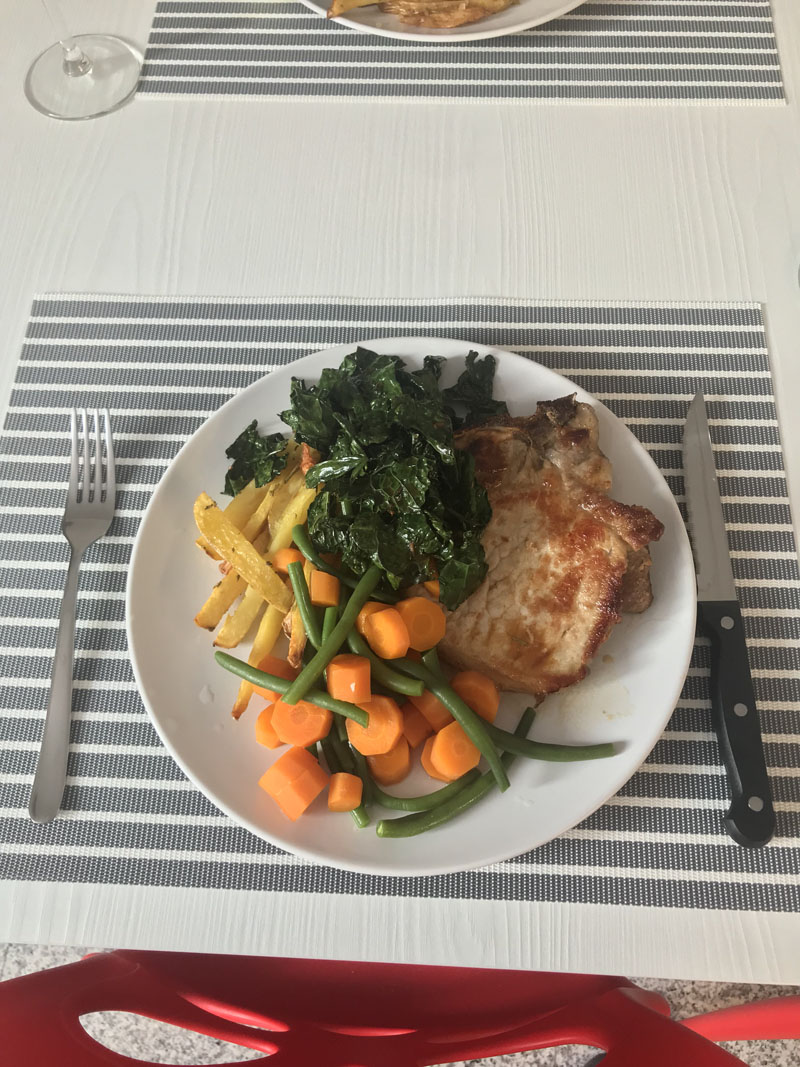
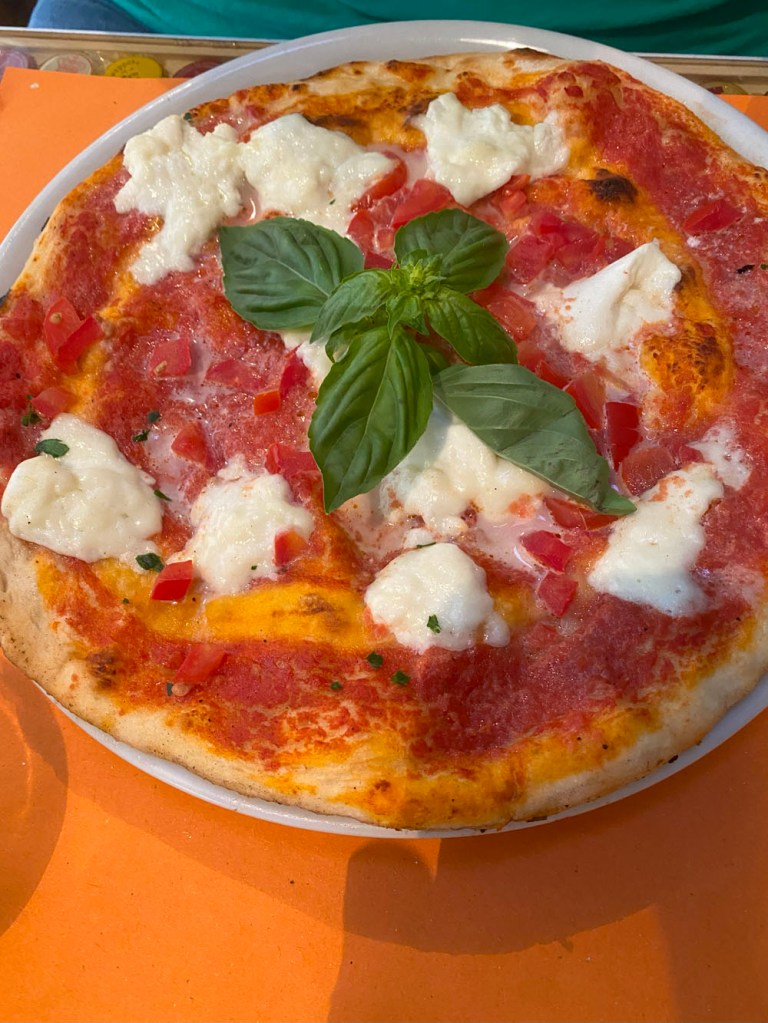
It began well, though. We were having guests that evening! But first, it was a working day, so we had to do our duty. I remember very little of the day up to the evening, I have to admit. The only two photos I have are, unsurprisingly, food-related.
Once work was done, we were to meet Marisa and David at the free car park at Docciola. Bless them, I don’t know how they do it (and I hope I’m not shaming them here, and that they see the funny side of it), but they unfailingly manage to get lost every time they use an app that I’m going to call Schmoogle Maps, coz it sure isn’t Google Maps. It never plays ball. Today was no exception. A call or two later and they were set on the right path.

We parked (a little bit naughtily) near the Docciola gate itself so we could drive them up to town without them having to climb the 200 steps with their luggage. A municipale police car drove past and clocked us. They slowed down, but we indicated that we’d only be there a couple of minutes as a pick-up and they drove one. As well as driving into the carpark by entrances flush with the road, there is a ramped entrance which, if you’re not careful, will cause you to smack the underside of your bumper. A crunching sound announced the arrival David and Marisa. Their white Panda bore the brunt and Niamh and I both winced at the same time. Fortunately, the car didn’t looked marked. Anyway, we greeted with hugs and we drove them up to the resident’s carpark and walked back to the apartment.

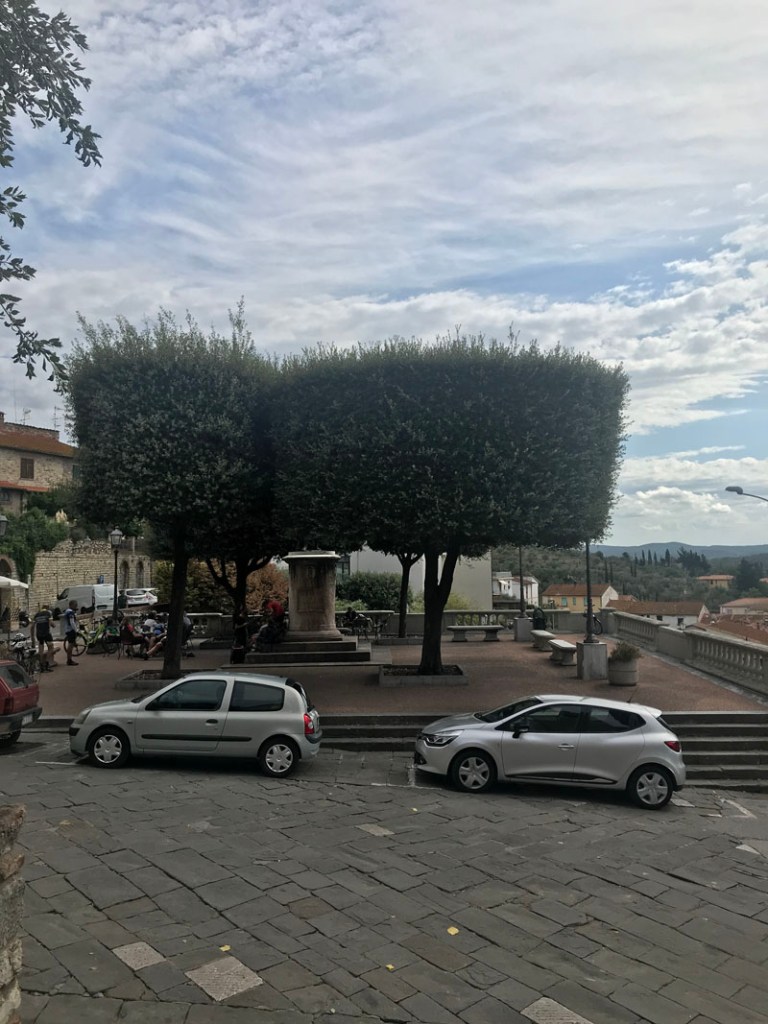
We showed them around the town. They were lovely and suitably enthusiastic. Out by the main panoramic viewpoint at Piazzi dei Martiri, we met our friend Mary. During the course of conversation she mentioned that it was going to rain about 02:00 tomorrow morning. This is important for the happening later on (ooo, foreshadowing!).

I didn’t take many photos of video, as Marisa was filimg for her own channel and I wanted to be a bit more present for that. You can catch her footage here:

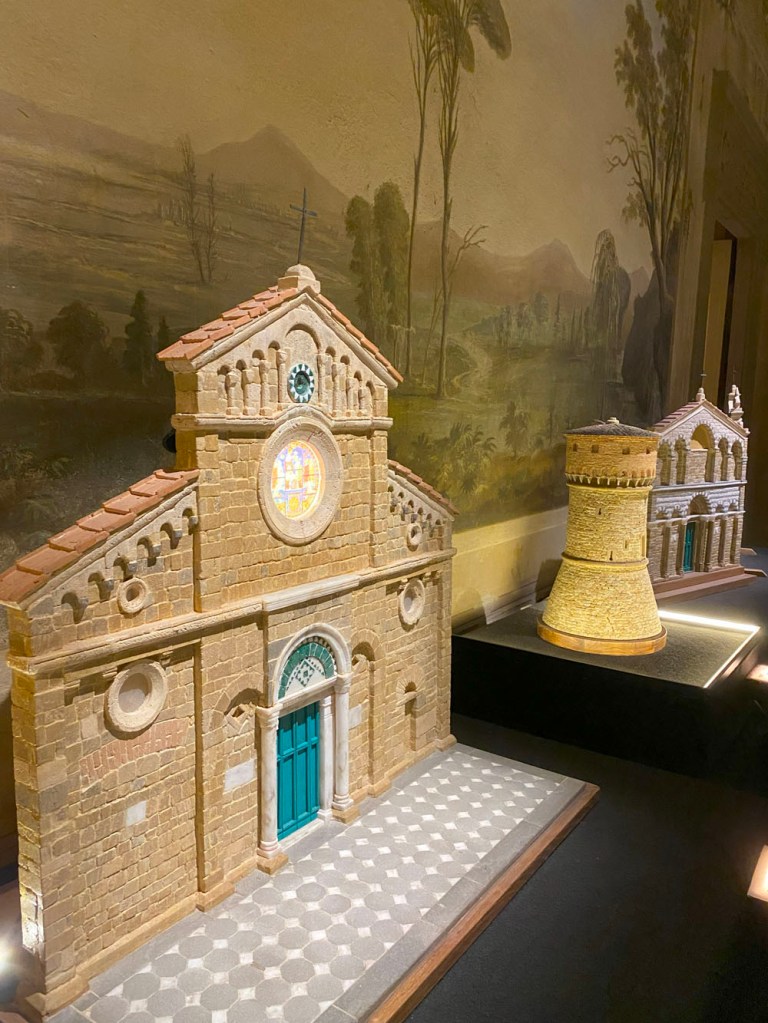
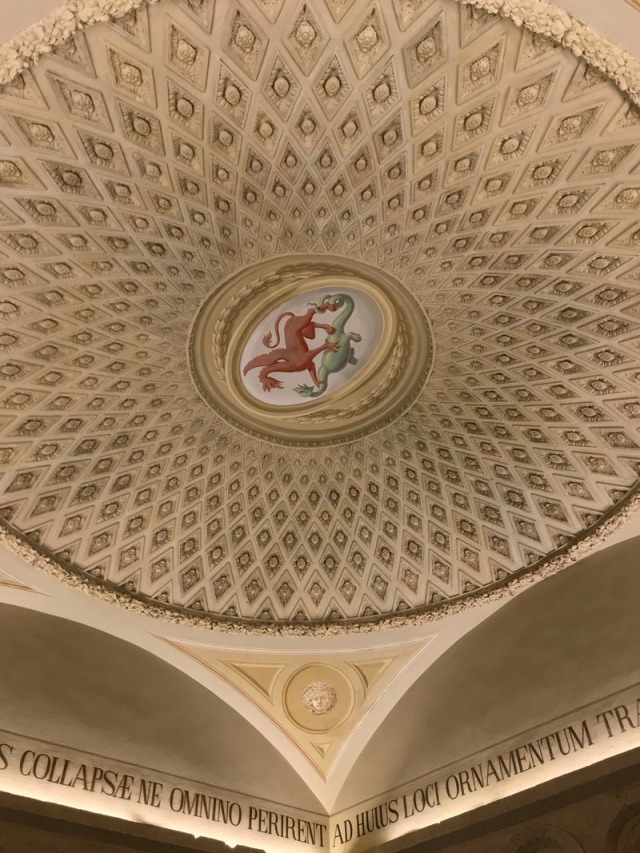
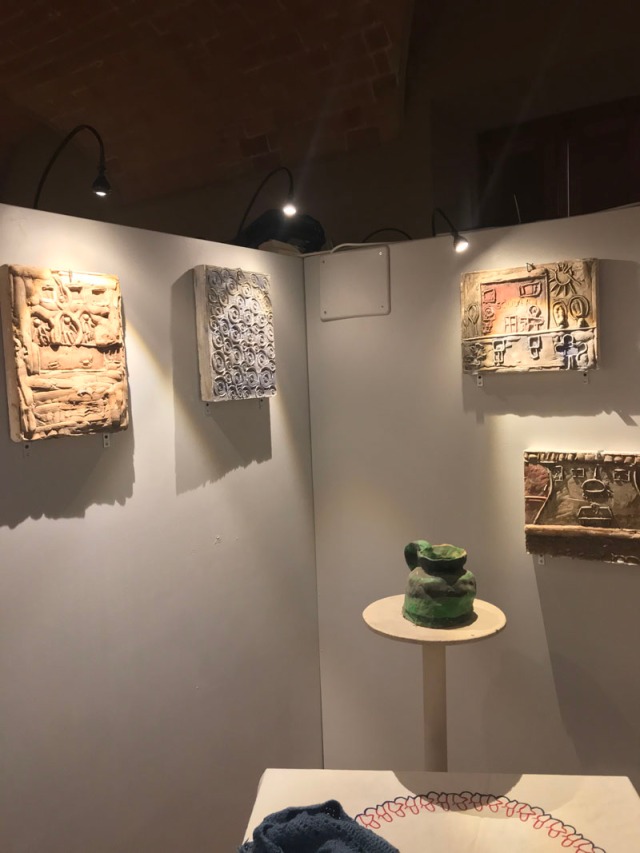
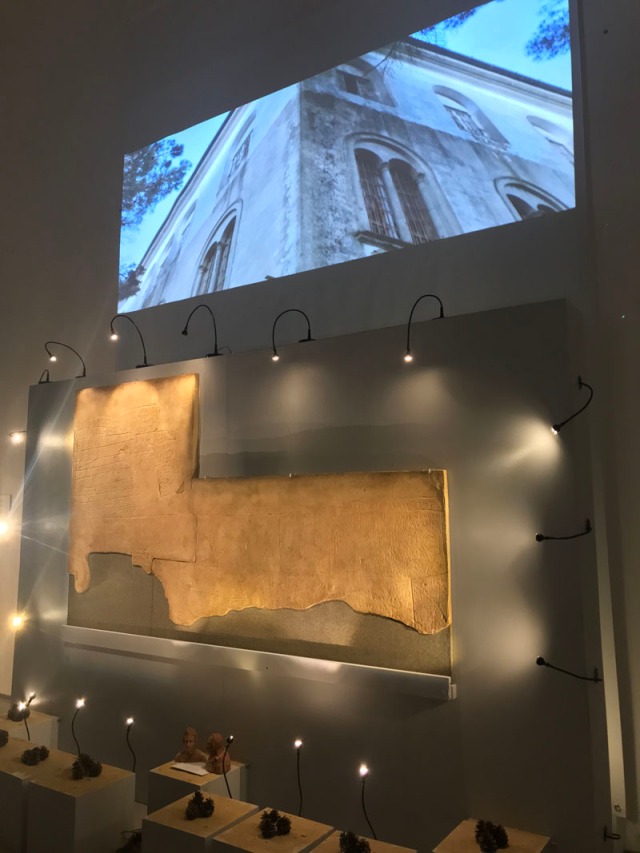
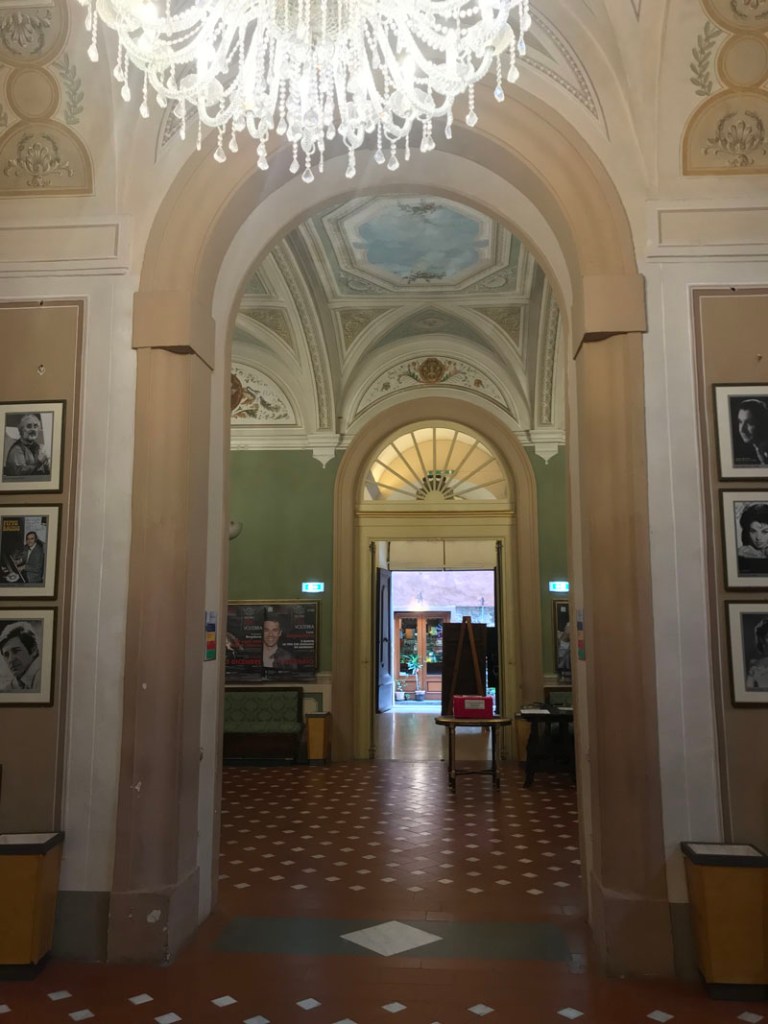
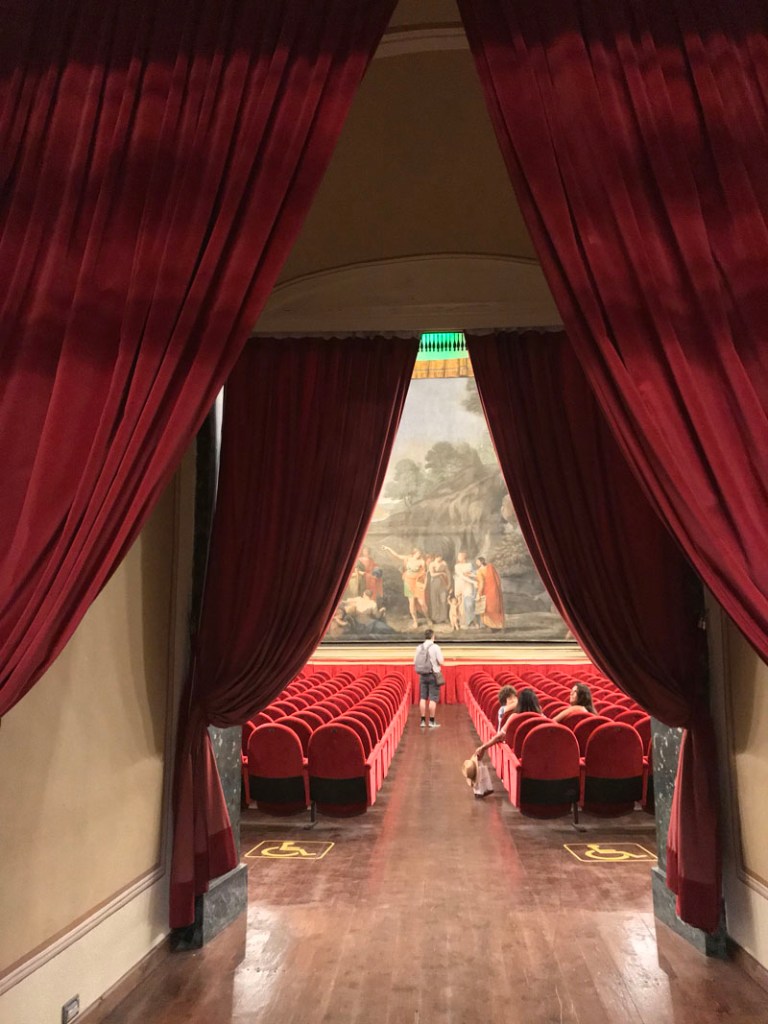
We entered the theatre to check it out, but also to look at the miniatures exhibition I visited with my brother before. I took some pictures of that at least.

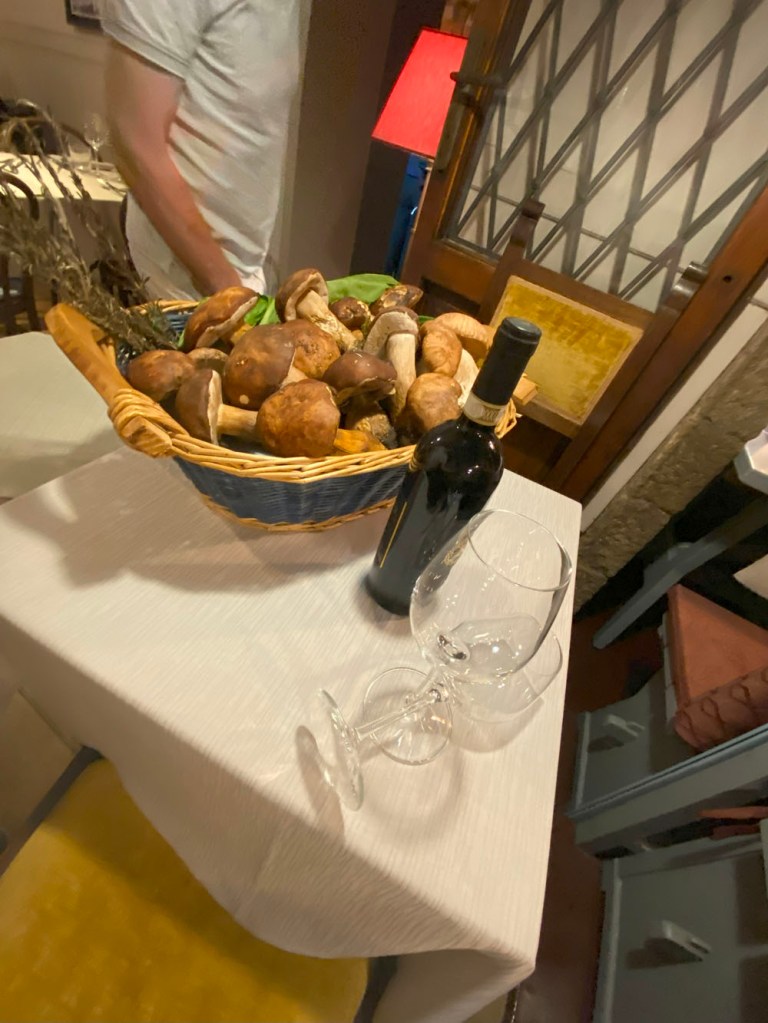
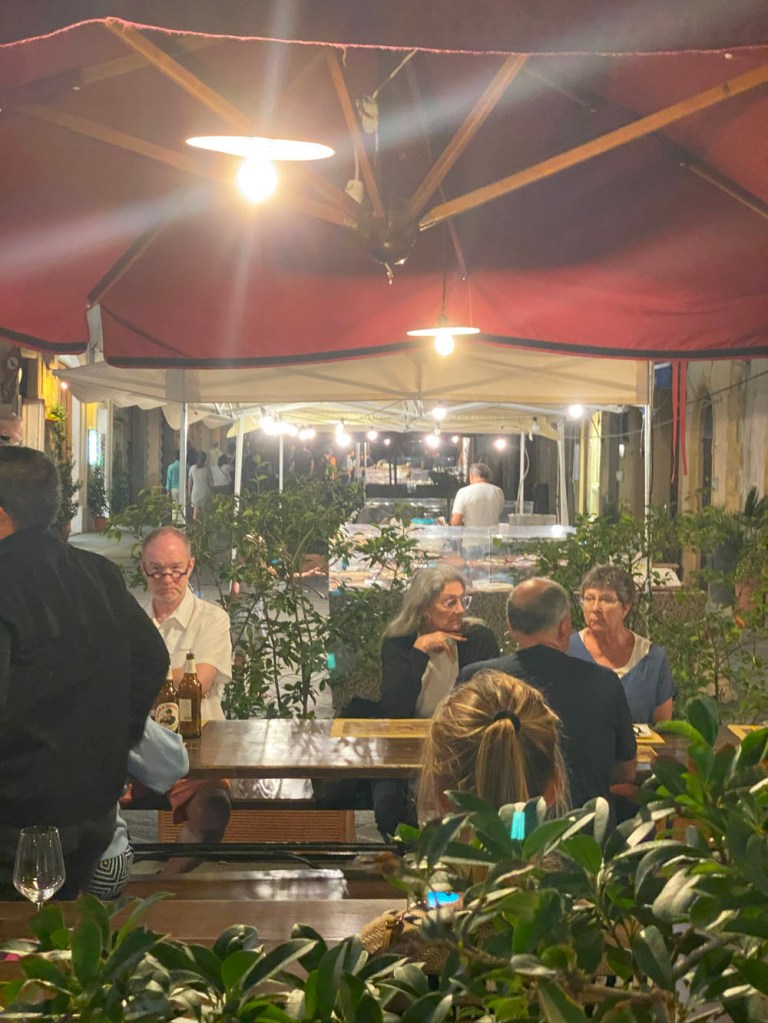
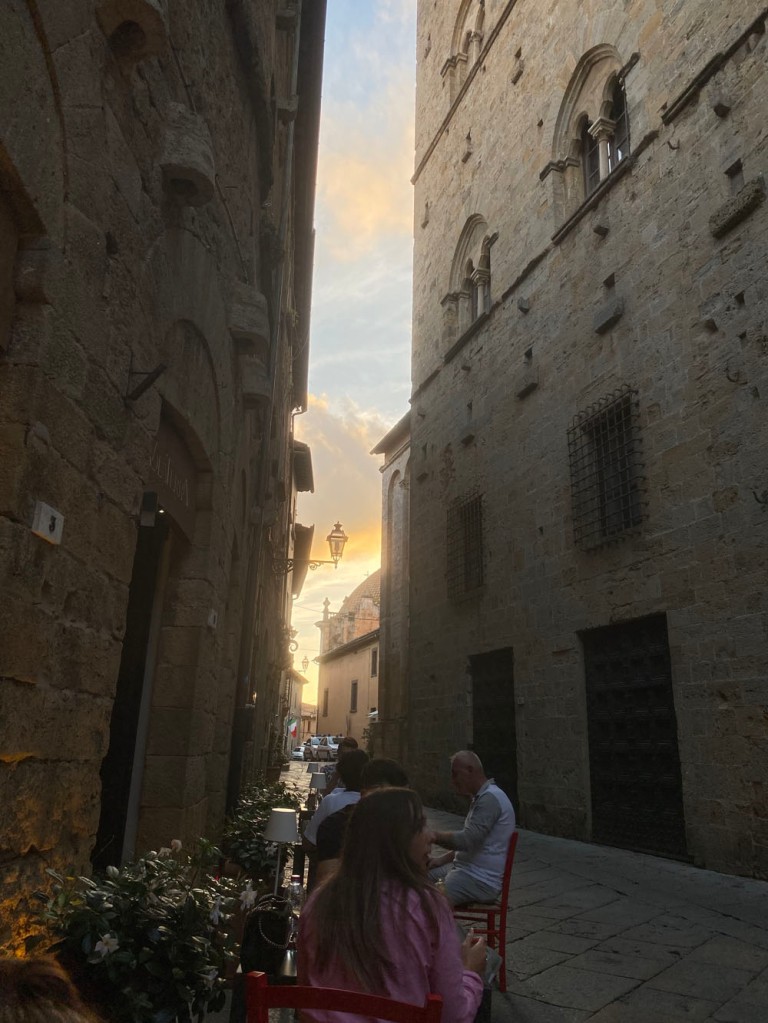
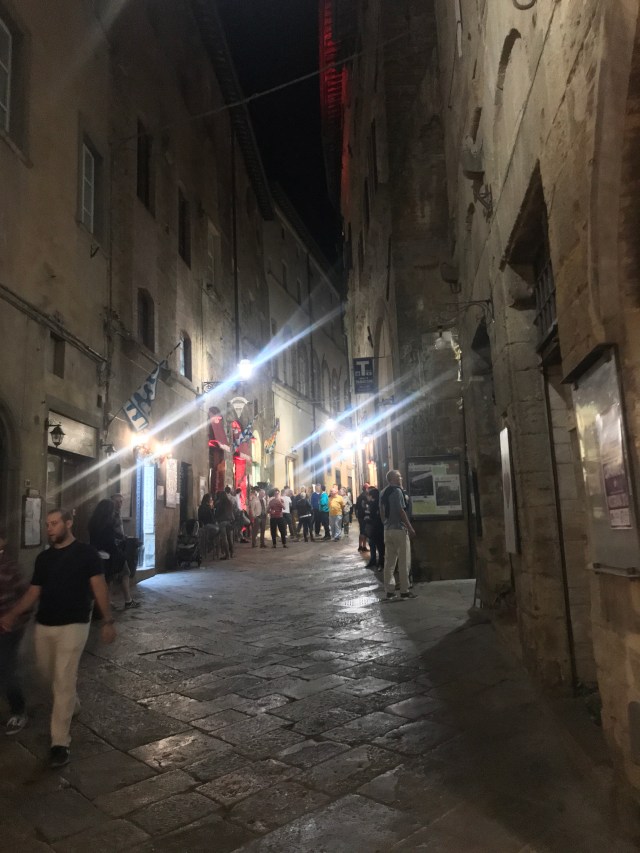
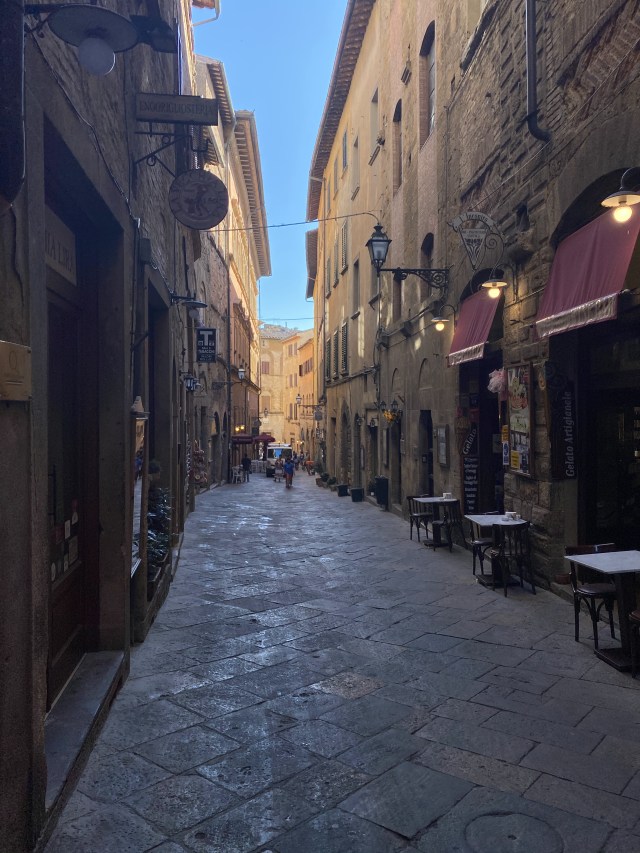
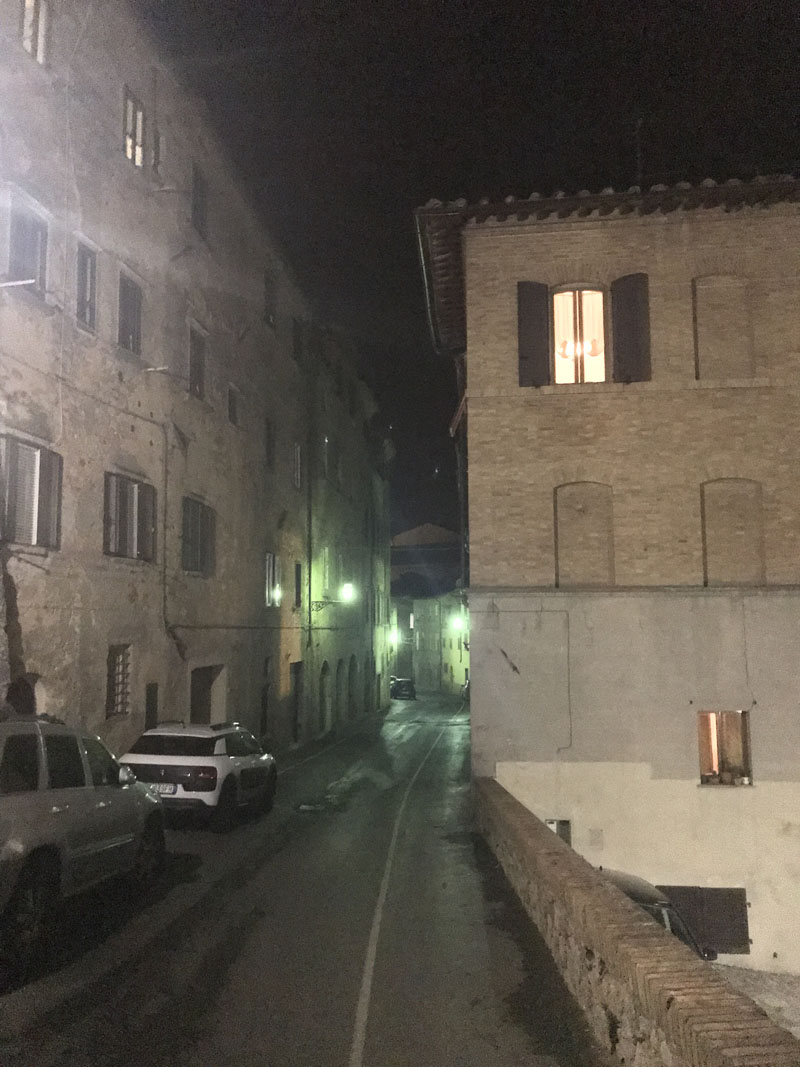
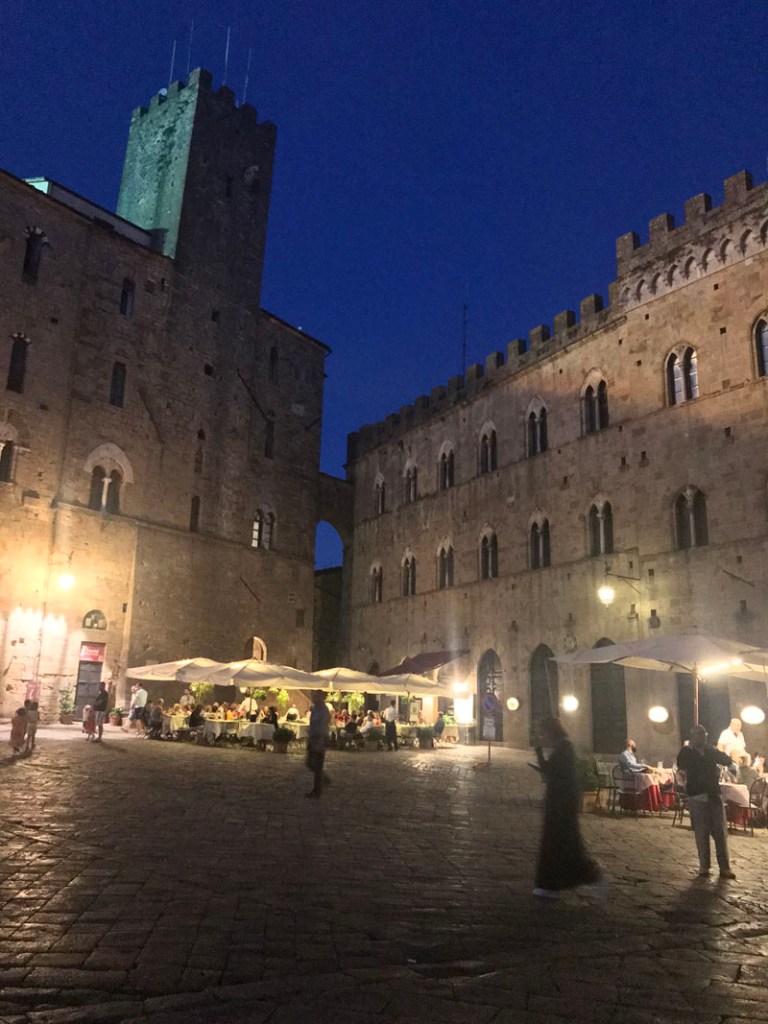
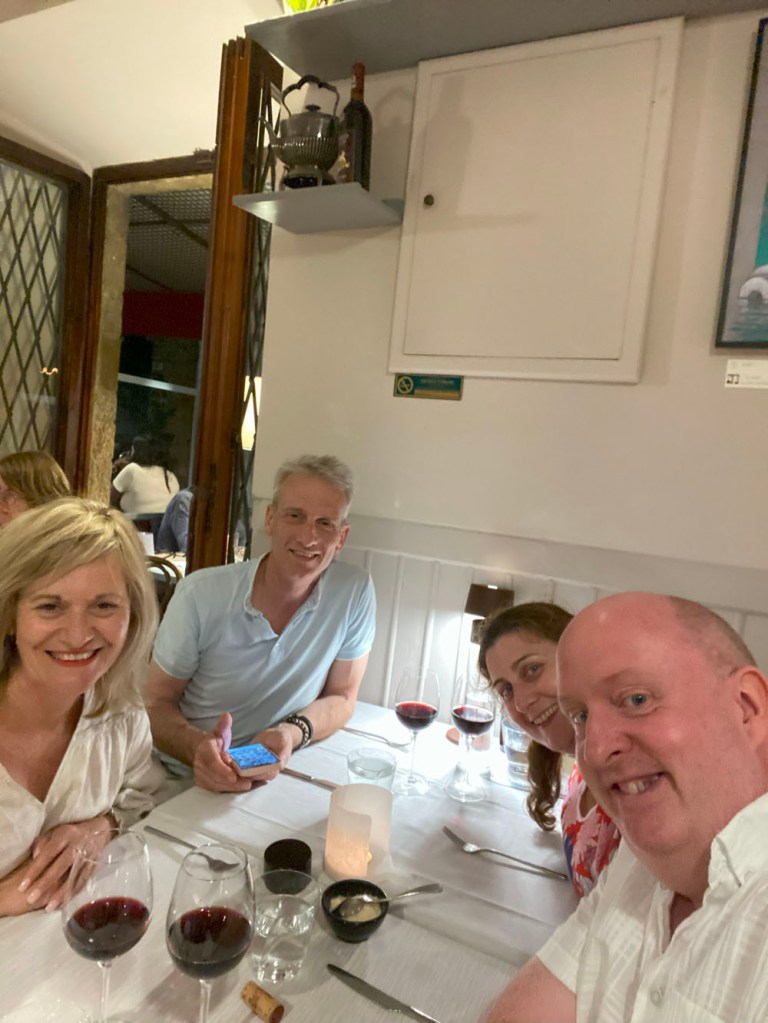
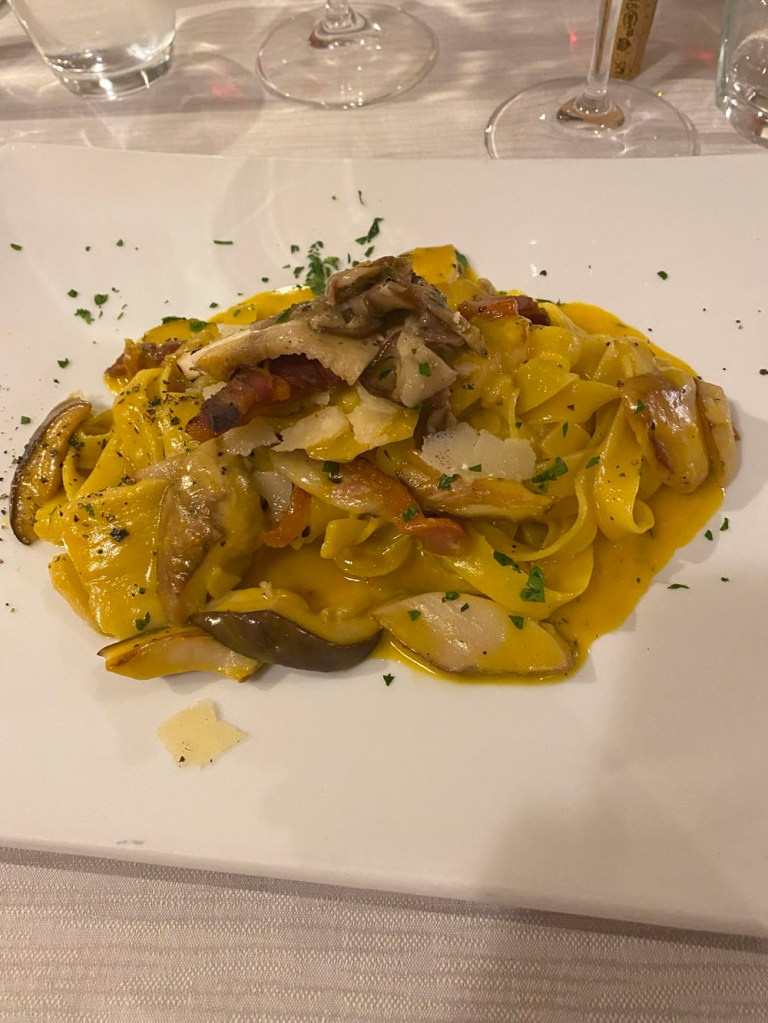
That evening, we went to the seasonal restaurant Torre del Porcellino. The food there is damn good, and if you get a seat on the outside, you’ll have some pretty views of Volterra’s premium laneways. We got a seat inside, but had a fun time regardless. We may have had a few courses. As we were walking out I caught the unmistakeable smell of fresh porcini. The aroma is incredible – you just don’t get it with the dried/reconstituted variety. Another little explore followed, but it was mainly around the square.
And then home, to sleep, perchance to dream. Except something happened.

Not too shortly after 02:00, I was woken by the bedroom door opening, and Niamh gasping as she slowly hopped her way into the room. It frightened the crap out of me, as it really sounded to me that her breathing was laboured. So the light was switched on and it took me a moment or two to clear my mental cobwebs.

I soon realised that it wasn’t catastrophic in the real sense. No heart or pulmonary issue. She was limping heavily, however. Unfortunately, and this is nobody’s fault other than Fate’s, she’d left a nightie out on the washing line on the upper terrace and had remembered that it was going to start raining. So, she got it into her head to go up and grab it off the line to save her having to do another wash. She’d left the lights off and was relying on her nightsight. This was a harsh lesson to learn, in the harshest way possible. She missed one of the steps going from the terrace down into the kitched and fell awkwardly. She thought she heard a crack, and assumed it was a flip-flop hitting the floor (more foreshadowing).

Niamh had sprained her ankle badly once before, and the pain she felt was similar, so she assumed it was a sprain, and said that the hospital wasn’t necessary. She managed to get into bed and take a paracetamol, but then she started to shiver. It was definitely shock, so I threw a blanket over her. Niamh has an uncanny ability to sleep, certainly in comparison to me. Amazingly, she was asleep minutes later. It was me that spent the night catastrophising and being unable to sleep.

We got up and Niamh’s ankle wasn’t any better really. She thought it felt a little better, but there was absolutely no way she could put weight on the bad leg without serious pain. She got dressed with assistance and somehow managed to give our guests breakfast options, and saw them off with me – we had warned them that they’d have to leave the apartment early enough in the morning, as we were due to work that day. They were understandably sympathetic and lovely towards Niamh and wished her the best. At that stage we were both convinced that all she had was a sprained ankle. There were times that she thought it was getting better. We had one eye on the calendar, as we were due to fly back to Ireland in a few days.

We worked through the day, but I had to go to the pharmacy and pick up more painkillers, a pair of crutches, some bandaging and an icebag. I’ll spare you (and Niamh) pictures of the bruising.

Pain would come and go, and Niamh had to tell her work that she’d have to dip in and out as pain would often get the better of her.

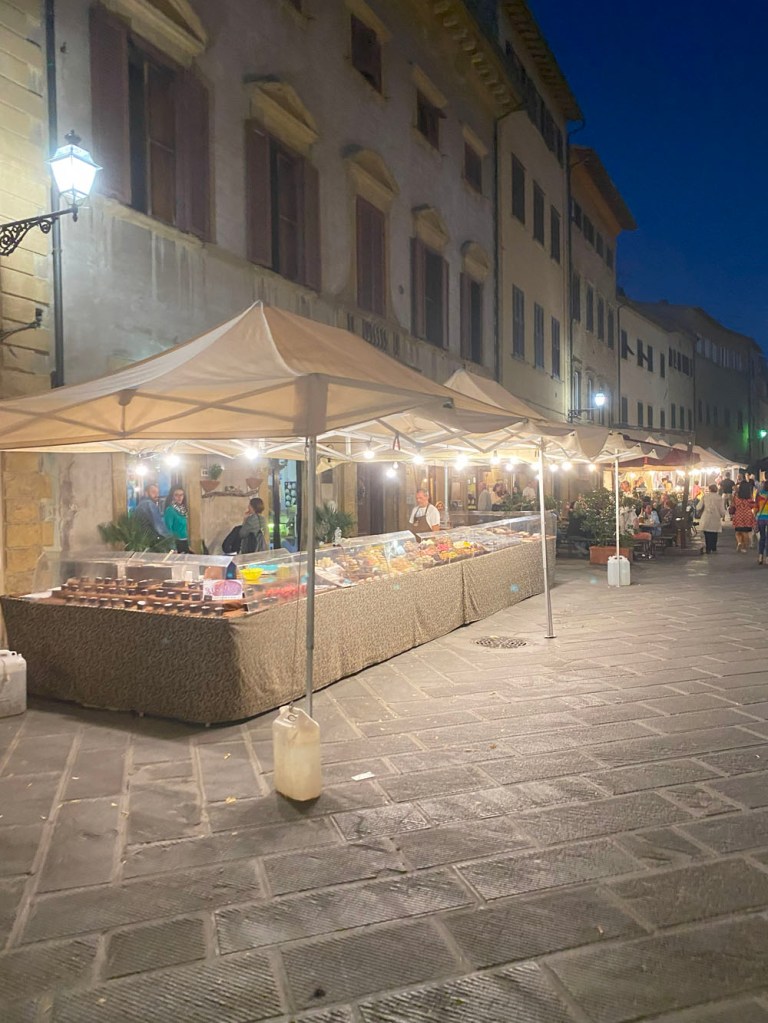
I had to escape the apartment, not least to get food. There was a a Chocolate Fair, and I bought a stack of comfort choccies for us both.
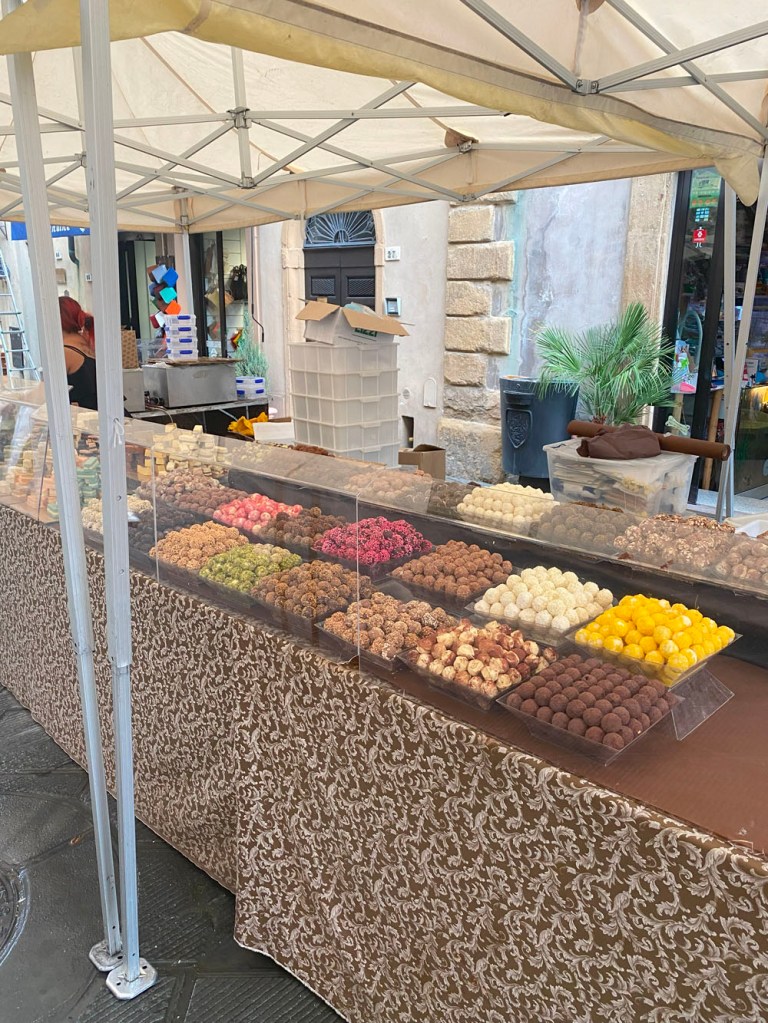
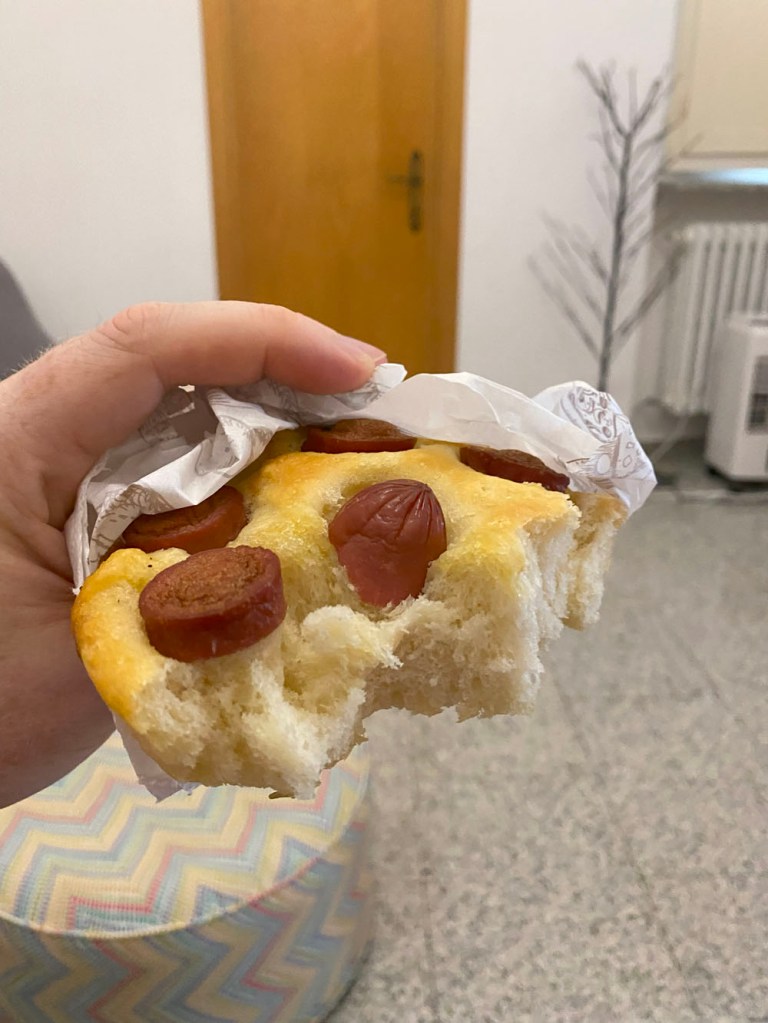
We read up on flying home with an injury, and were informed that we’d have to get a doctor’s note that Niamh was safe to fly. Ok, we were goosed. We’d have to either get to a doctor, or go to A&E (don’t translate directly – it’s known as pronto soccorso in Italian) in Volterra hospital.

We opted on the latter and contacted our property manager to see how best this could be facilitiated, as there was no way Niamh would be able to walk to the car, crutch or no crutch. We were told that the brilliant Misericordia service would bring us by ambulance to the hospital. We agreed a time for that afternoon, and our colleagues in work were very understanding, thankfully.

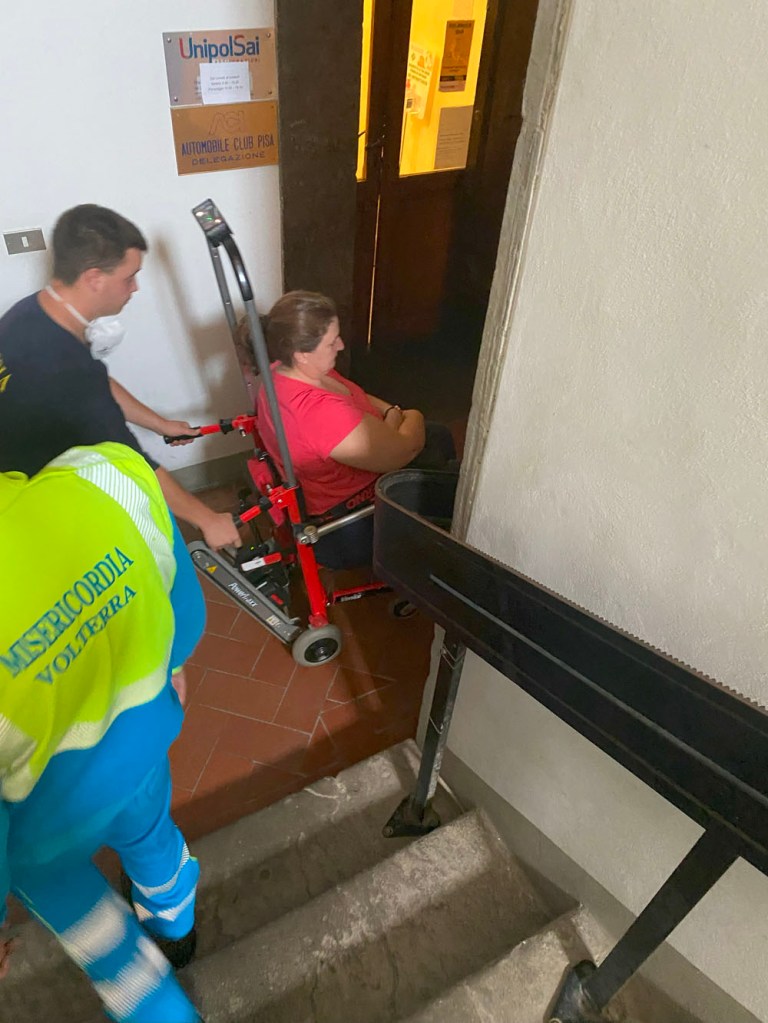
A couple of guys from the Misericordia arrived at the apartment front door, and had a contraption with them. I had seen something like this once before in our apartment block, and assumed that they’d need the same to get Niamh down the 4 floors of stairs. It is essentially a wheelchair, which can also motivate by adjusting caterpillar-style (i.e. tank) threads from the back. The last one of those I saw was powered by combustion engine and it was extremely noisy, especially given the sound could bounce around our cavernous stairwell. Fortunately, this one was electric.

Many towns have their own ‘Misericordia’ – essentially a voluntary ambulance service – and have had for centuries. In fact, there is a mini museum dedicated to the Volterran misericordia next to the cathedral. Anyway, they assisted Niamh into the chair, and off they went!
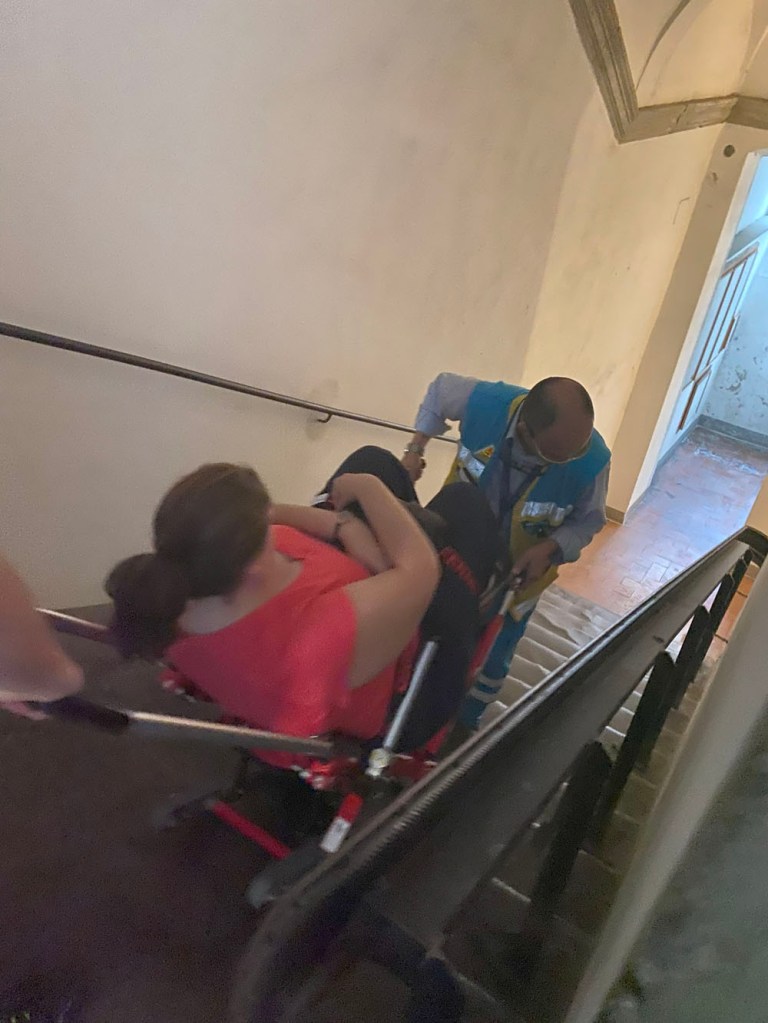
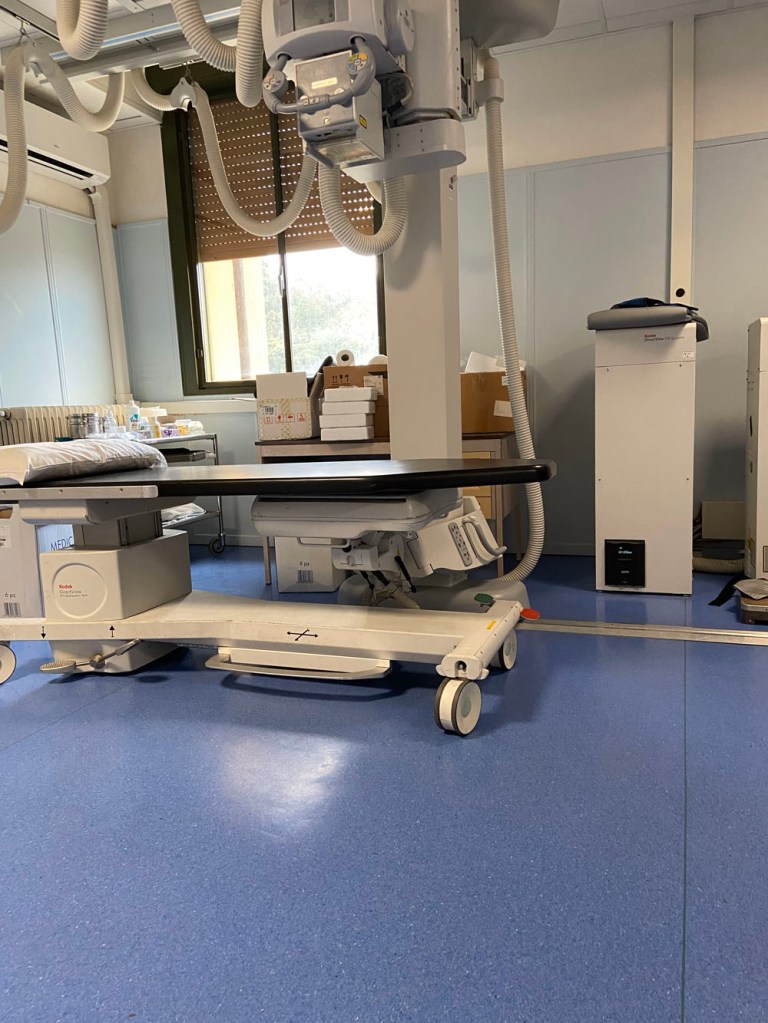
I travelled in the ambulance with her to the side of the hospital grounds we’d never wanted to see!

She was taken inside, while I waited outside. Covid fears were still around, so I couldn’t join her, sadly. Niamh recounts that the whole process only took about 3 hours. I was thinking that this put our own A&E in Ireland to shame, but was informed weeks later by my Italian teacher that Volterra’s pronto soccorso is never as busy, because the town is so small. Anyway, Niamh also remembers them being very gentle and kind.

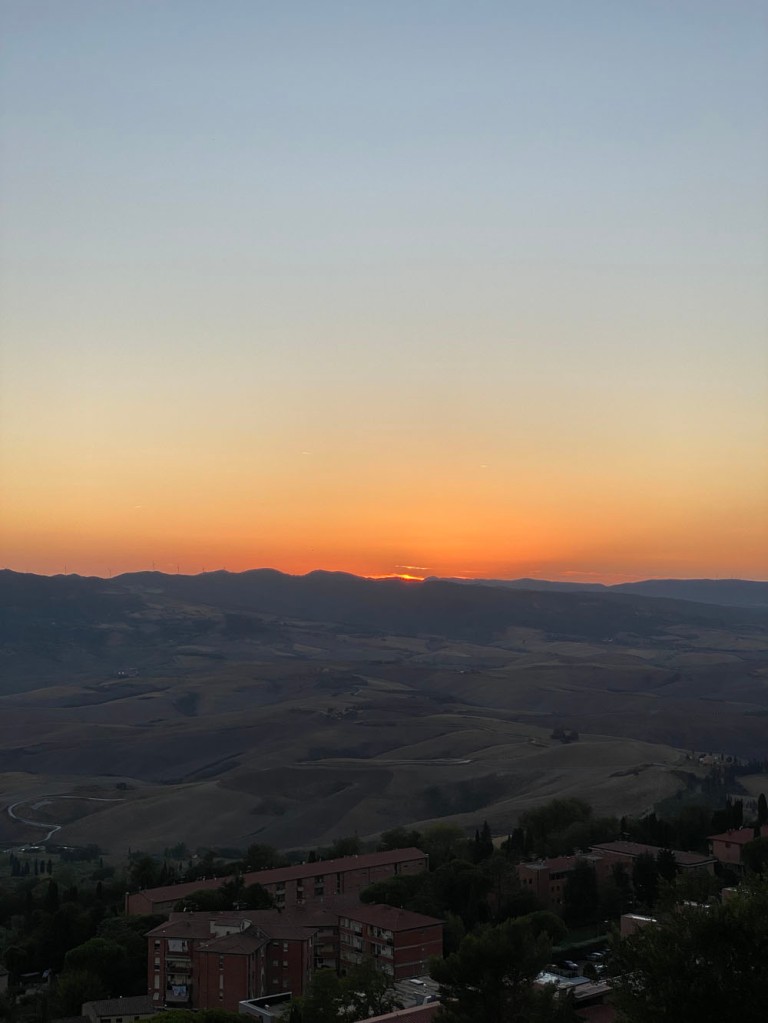
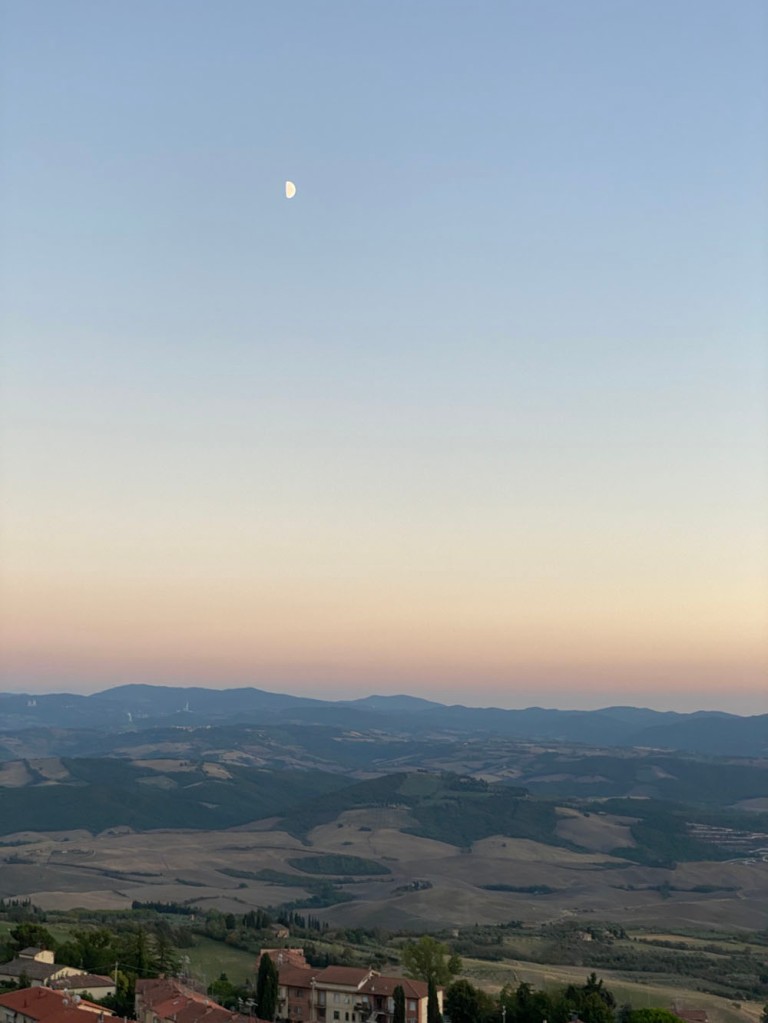
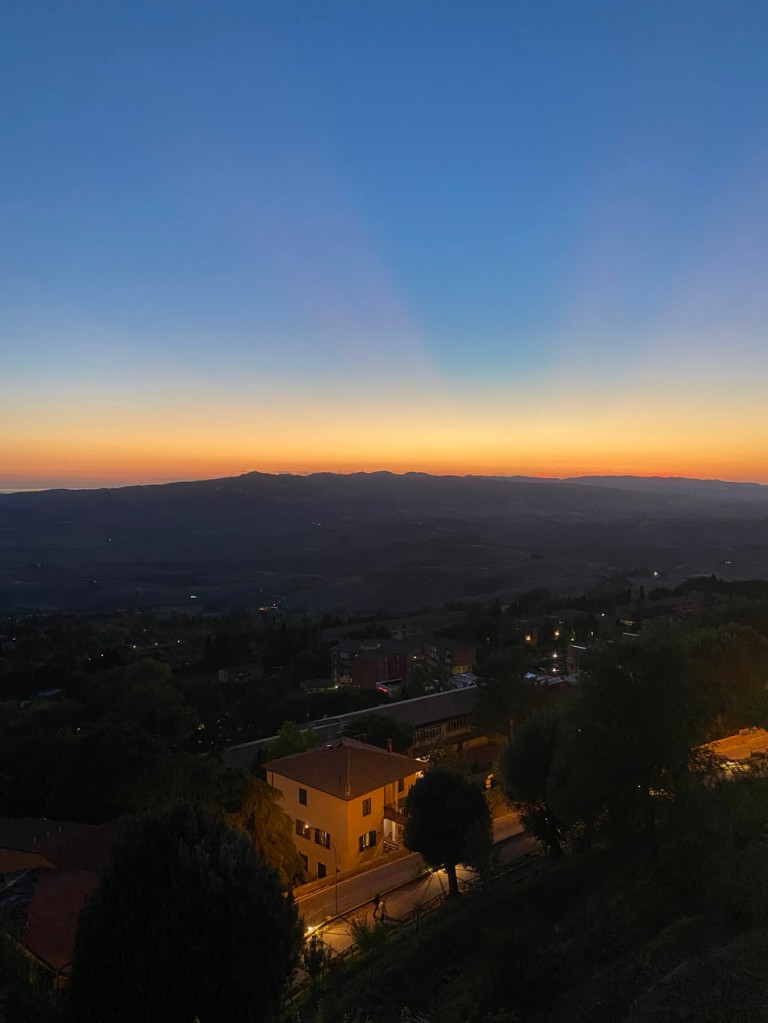
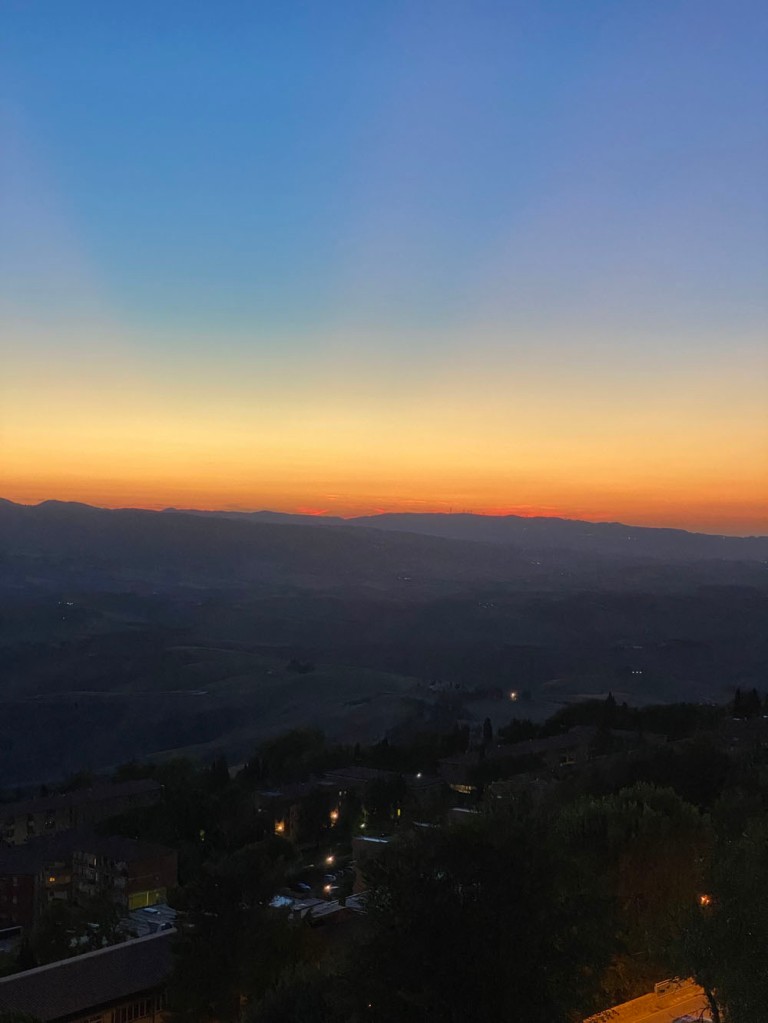
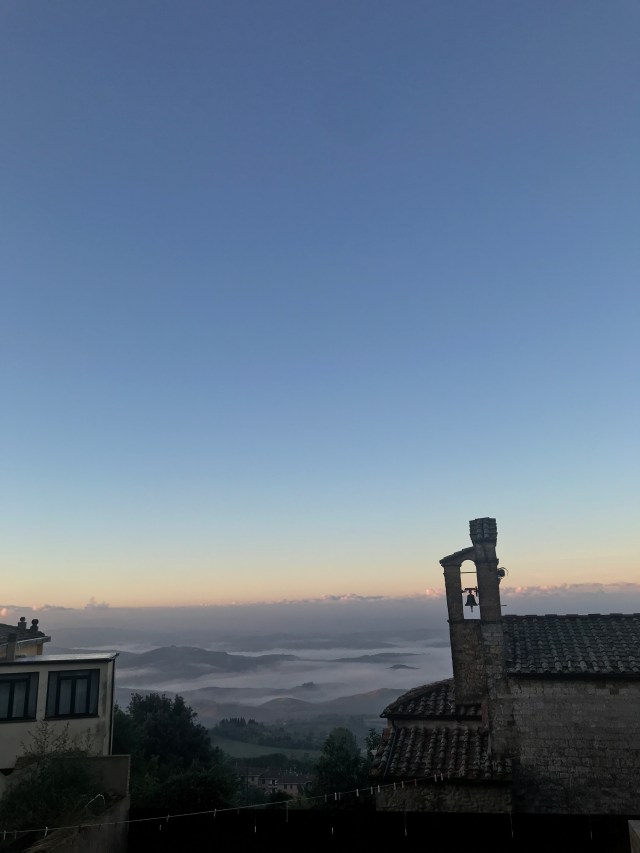
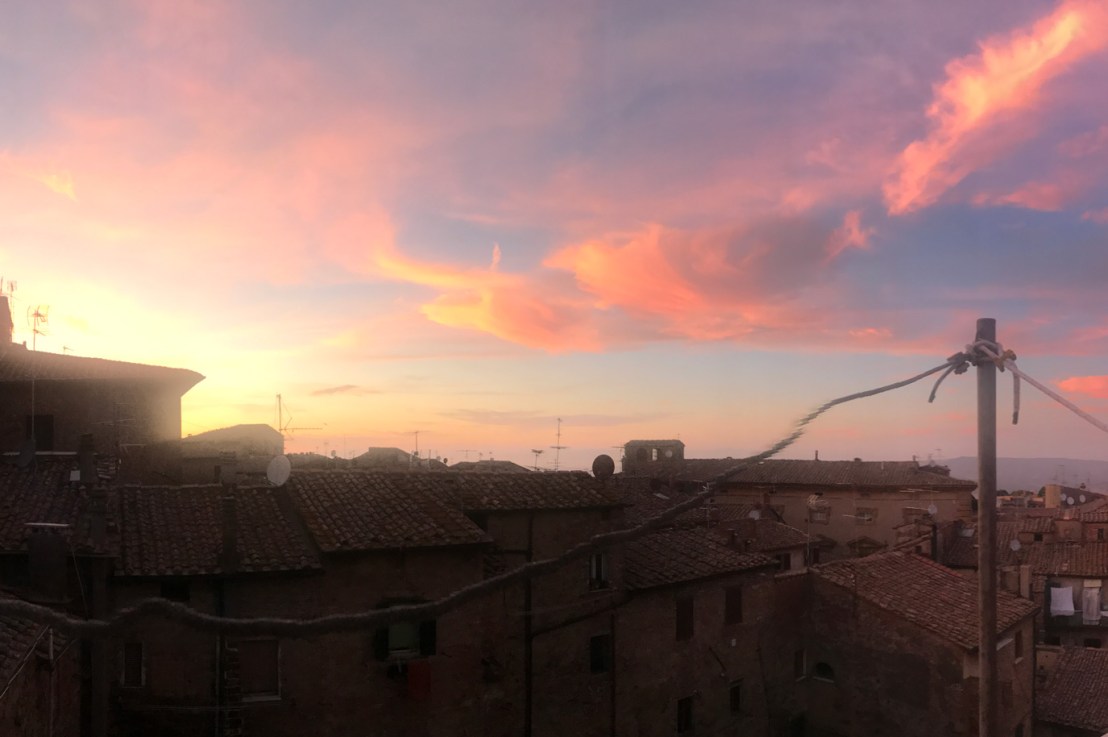
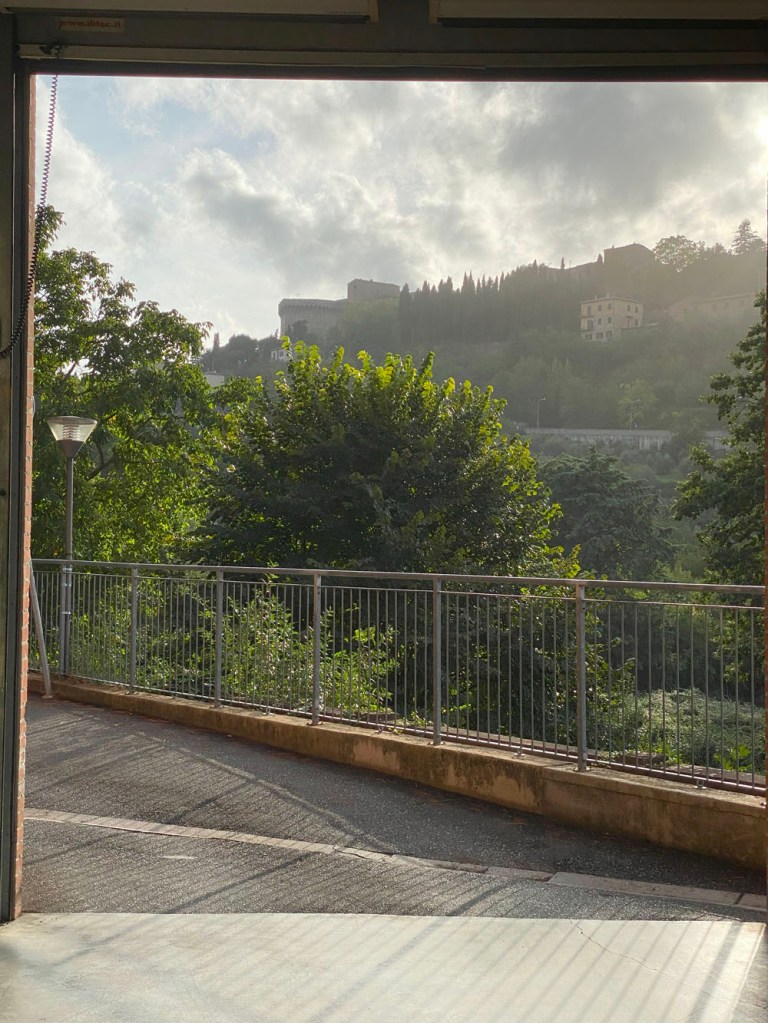
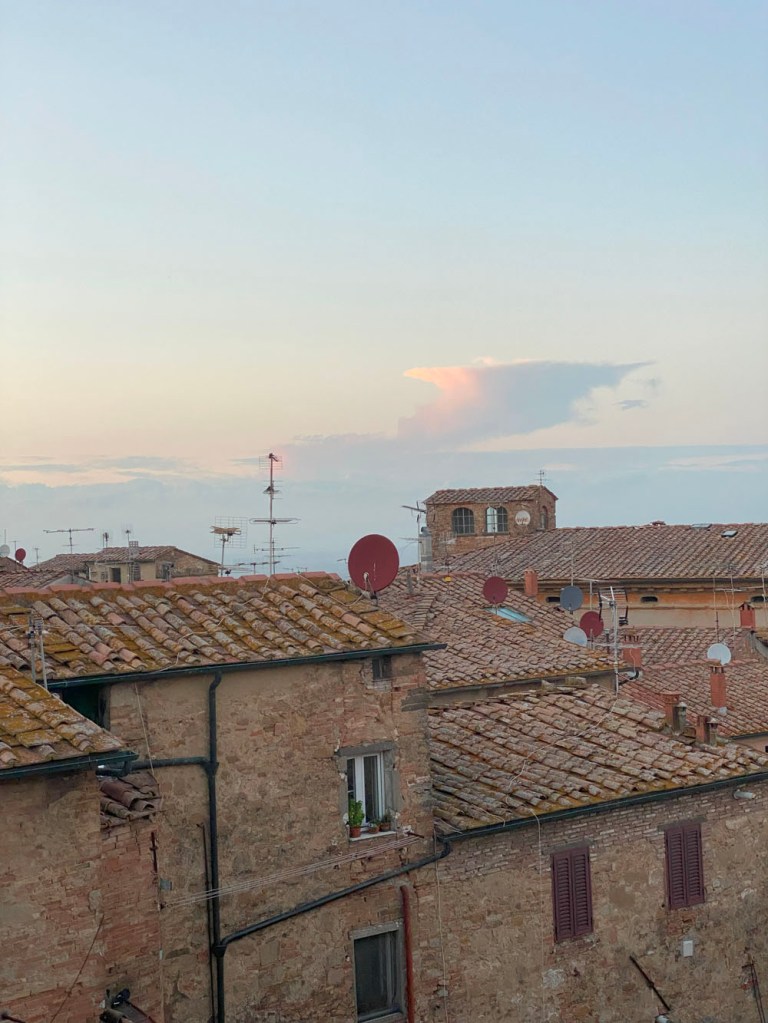
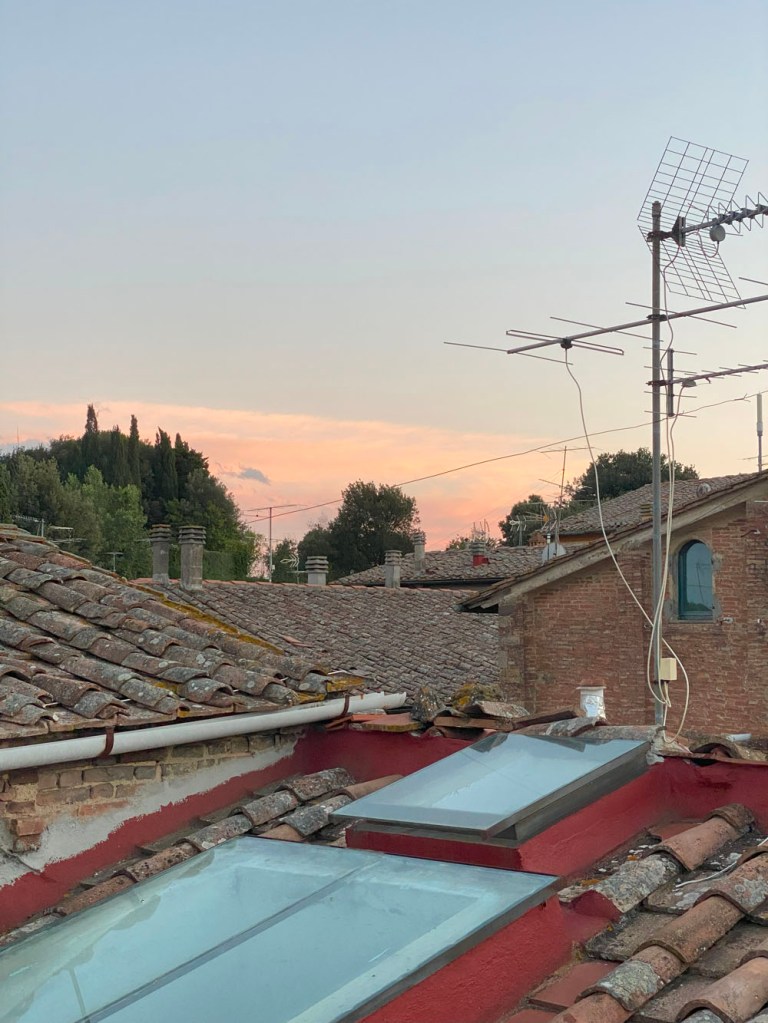
During the three hours, I messaged her and watched the sky turn some glorious colours.
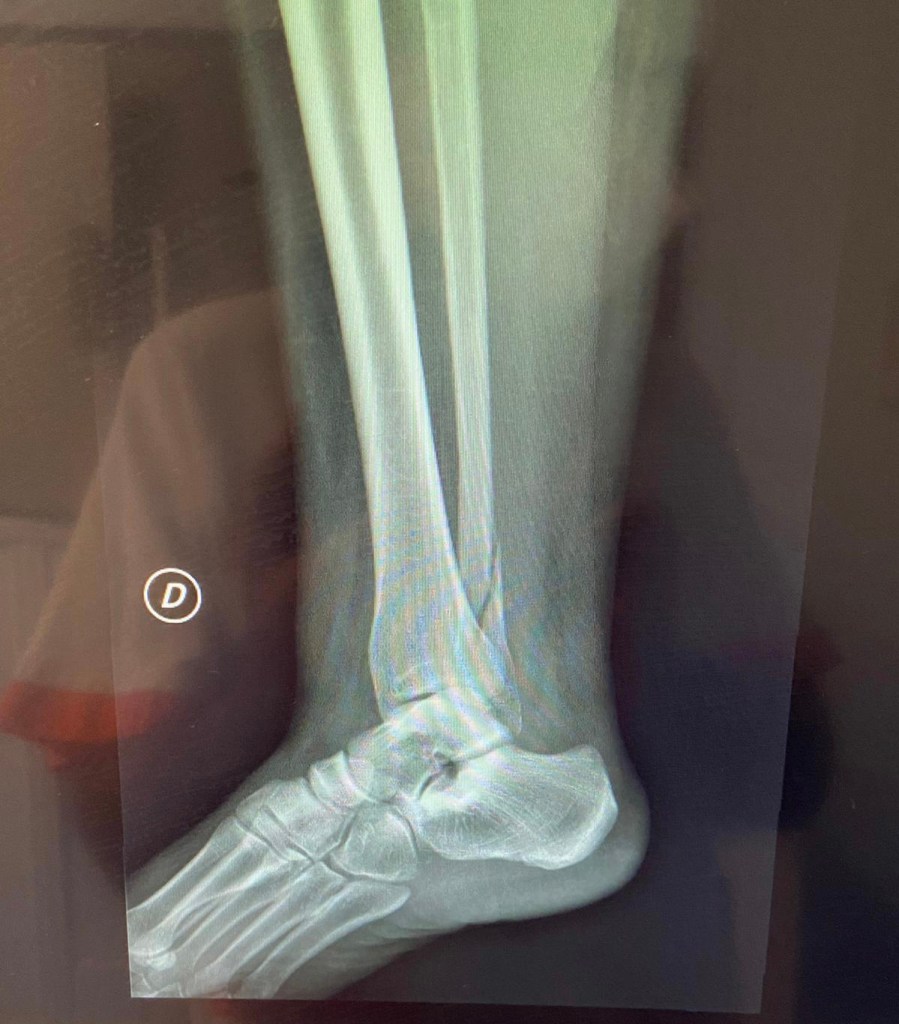
The photos that Niamh came out with, however, were as interesting, on of them far more interesting!
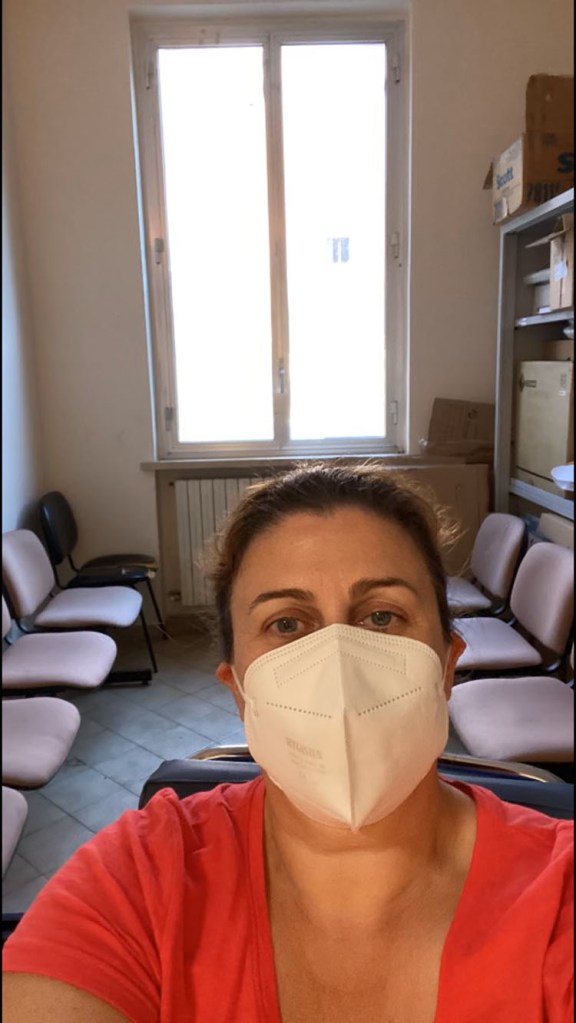
Yep, her leg was broken – the fibula was, to be precise. They put her in a backslab cast so movement would be restricted.

We’d also have to go back the next morning, as the specialist wasn’t there to give her the note she needed to fly. We were delivered back to the apartment, including the upstairs climb, and paid the guys €50 (€25 per trip!). Well worth the money.

Soooo, we went back the next day. Same The specialist was busy, and so Niamh had to content with being left on her own for over an hour while other patients came and went. She didn’t quite know what was happening, and didn’t have sufficient of the language to be able to find out, so it began to be a little upsetting. Eventually an order/nurse took her to the specialist who typed up the letter for flying, plus a diagnosis for specialsts back home. He also said he could operate in one or two days. Niamh seriously considered it, but thought she’d find being back in Ireland more comfortable.

With a few clicks of a button, and a modicum of pride, he produced the letter and handed it to Niamh. She had a look at it, and couldn’t understand it. But she also could. It took her a few moments to realise the letter was in Irish – I guess translation was a feature of the tool he was using. Niamh had to inform him that most Irish people didn’t speak Irish, and so the nearby staff all had a good laugh at his expense. He good naturedly re-printed the letter in English and then sent her on her way.

Where was I? Well, I decided to walk certain areas around the hospital and on nearby roads to explore. I’m like a cat that way.
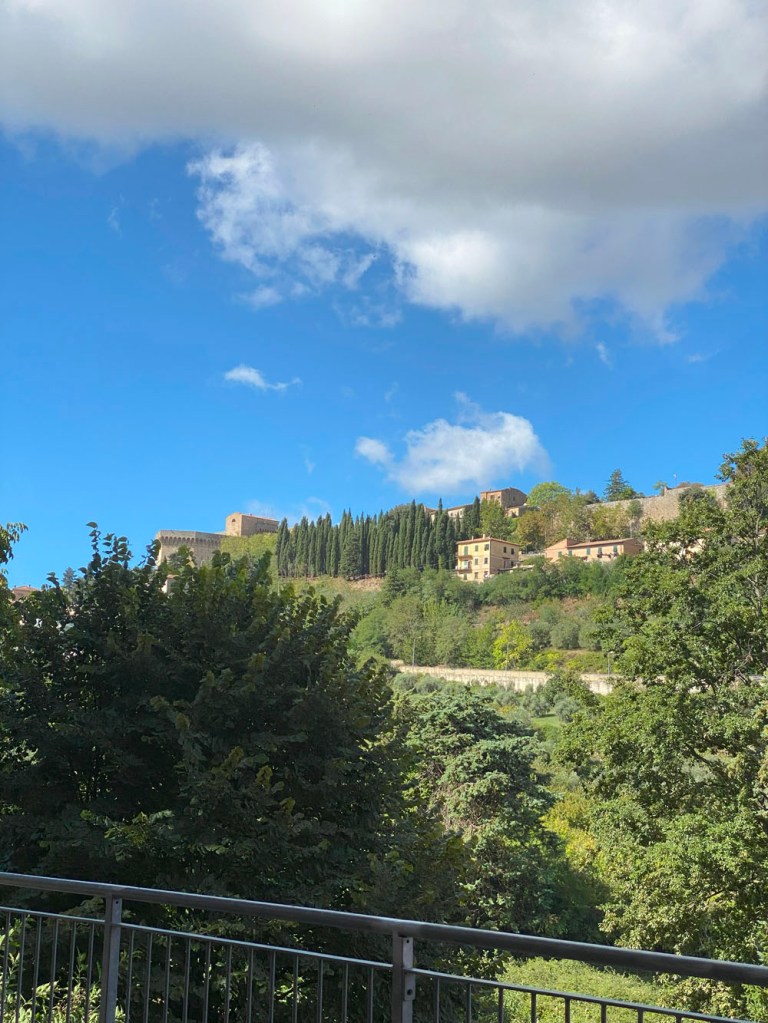
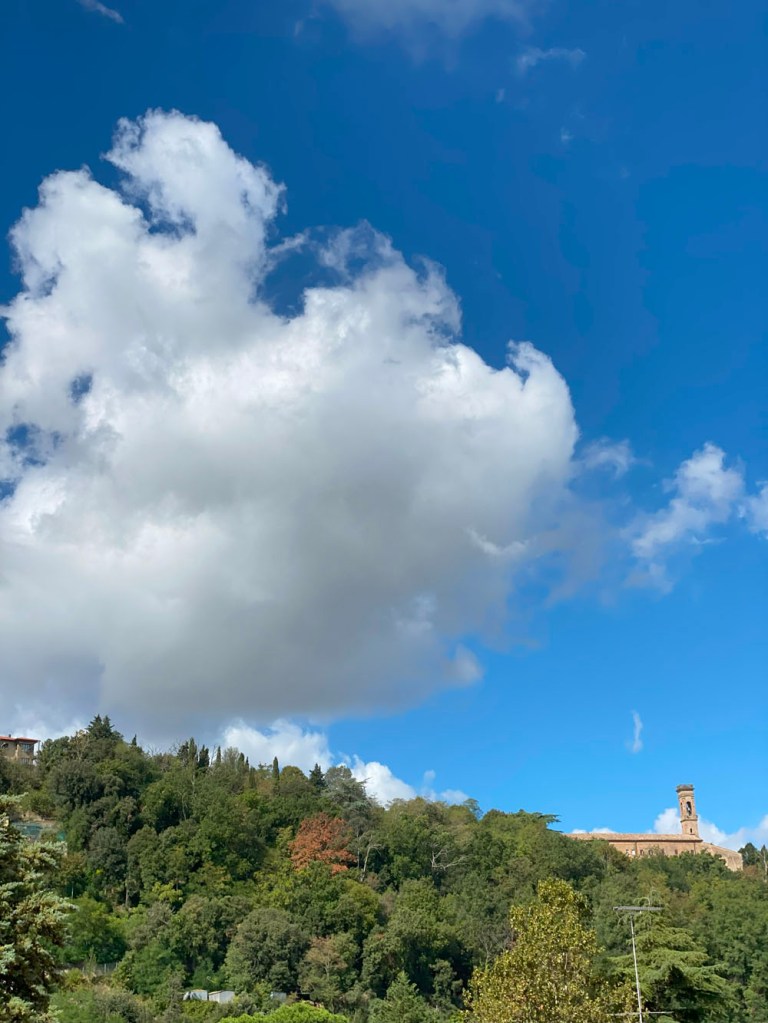
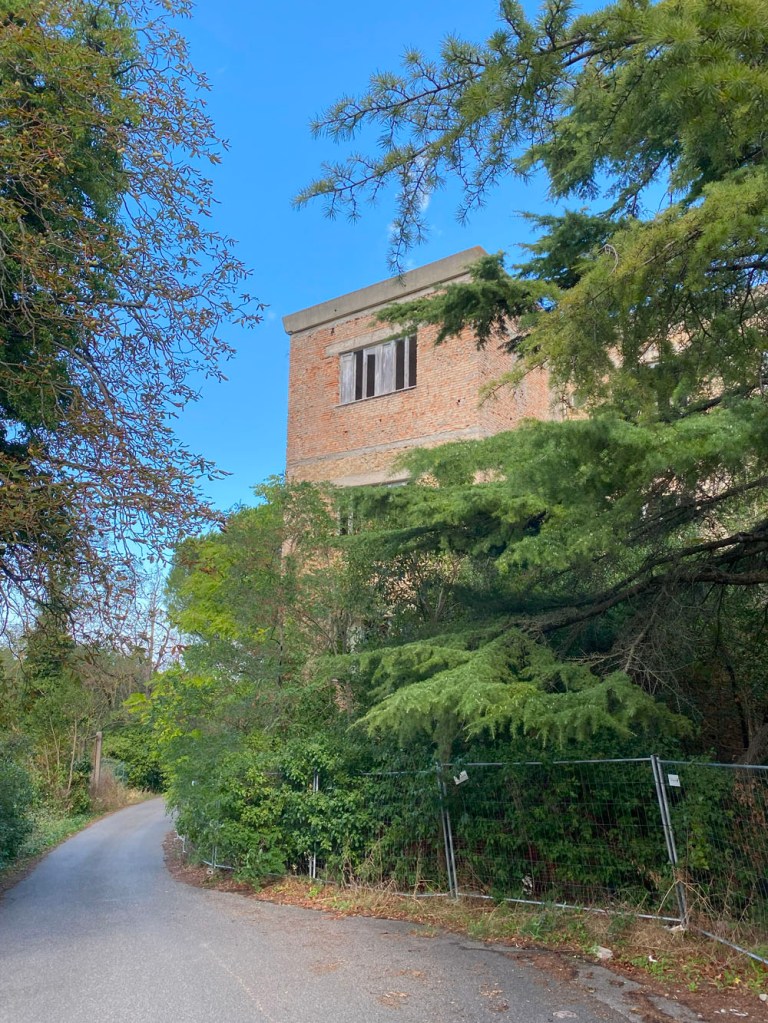
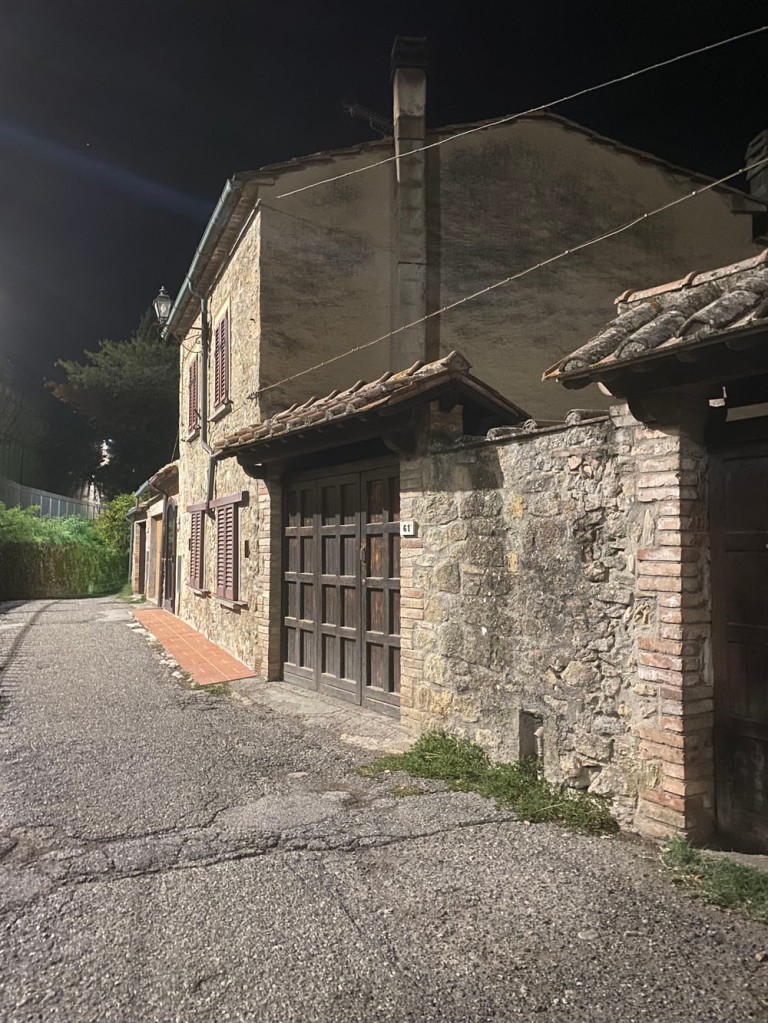
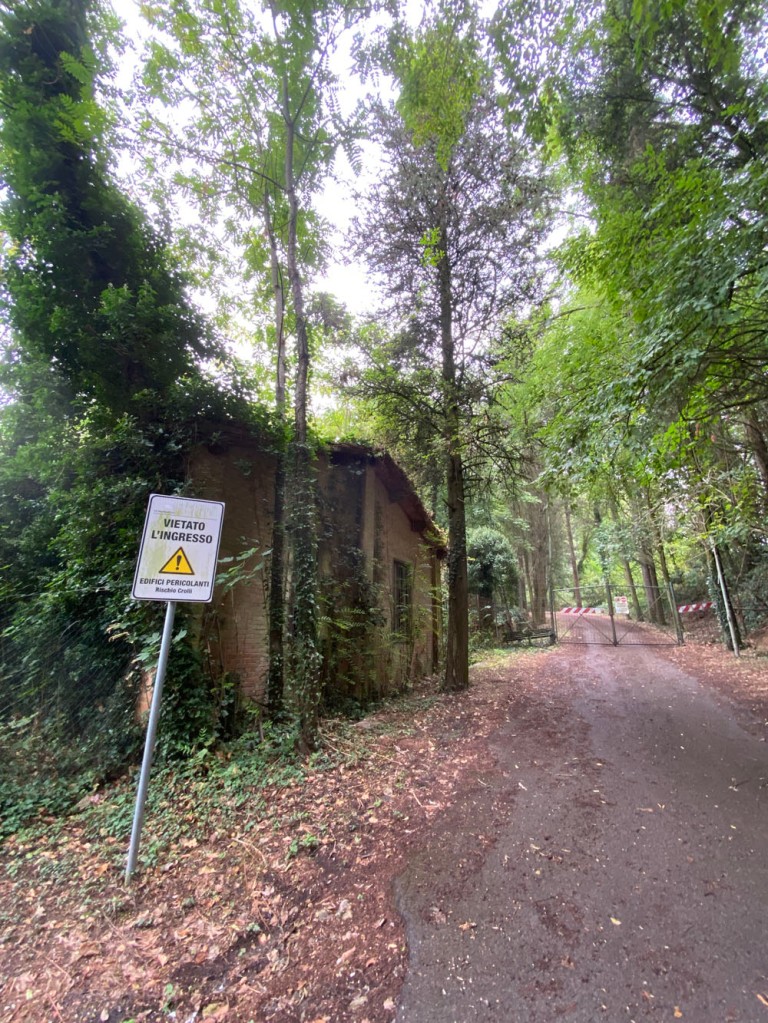
Then I began to walk some lonely roads indeed. I think my anxiety was a little above normal, thinking about Niamh’s predicament, hoping she was ok, and not least because some of these areas that were new to me had delapidated, sad looking buildings.

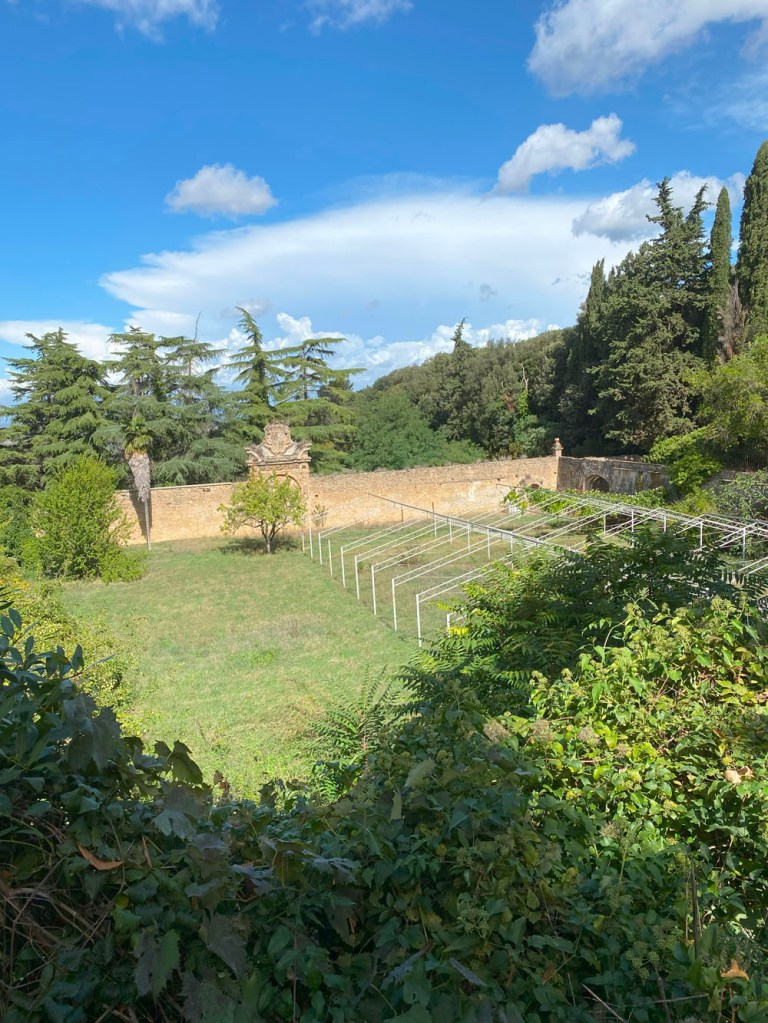
At the end of this particular road which was lovely, despite the collection of dead buildings, there lay a large house that was actually in-use and which had a garden attaching. I think you can hire parts of it to run new-age and alternative therapy sessions.
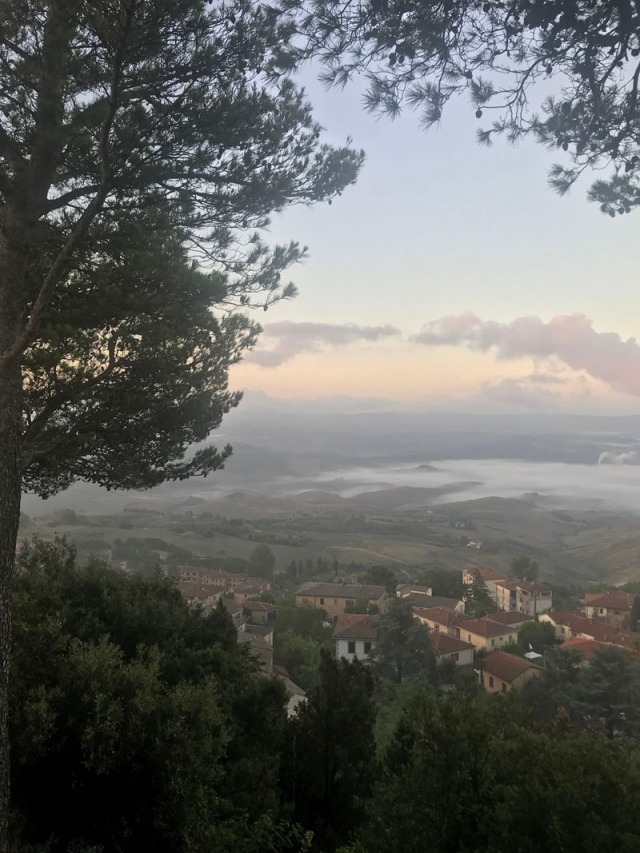
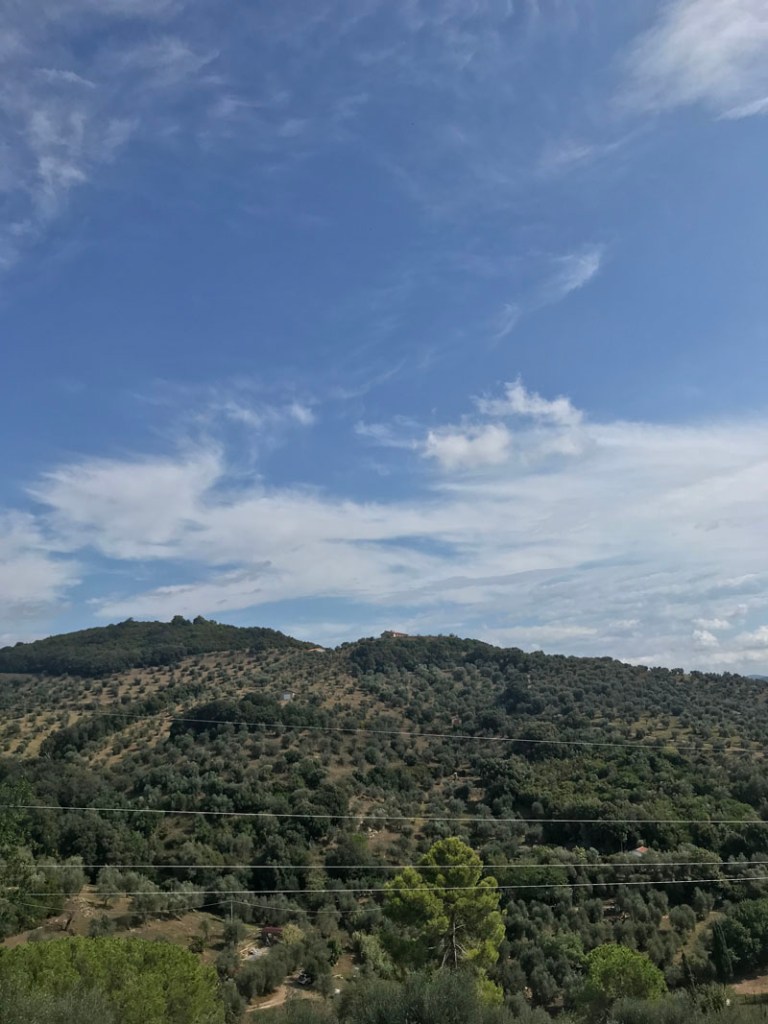
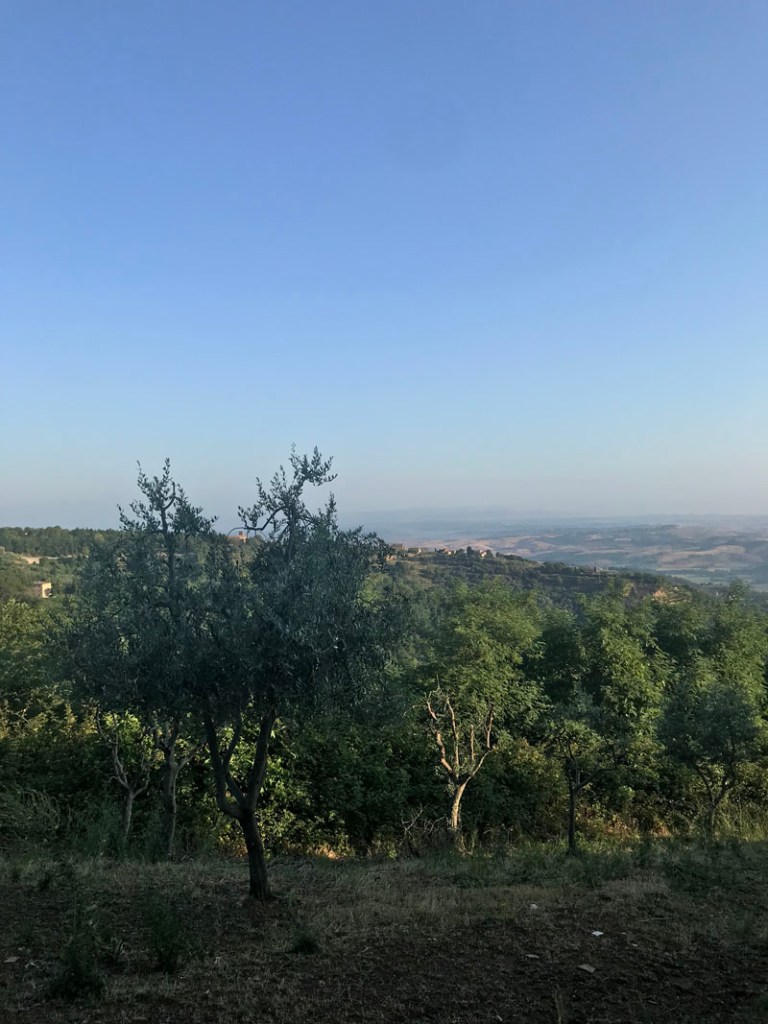
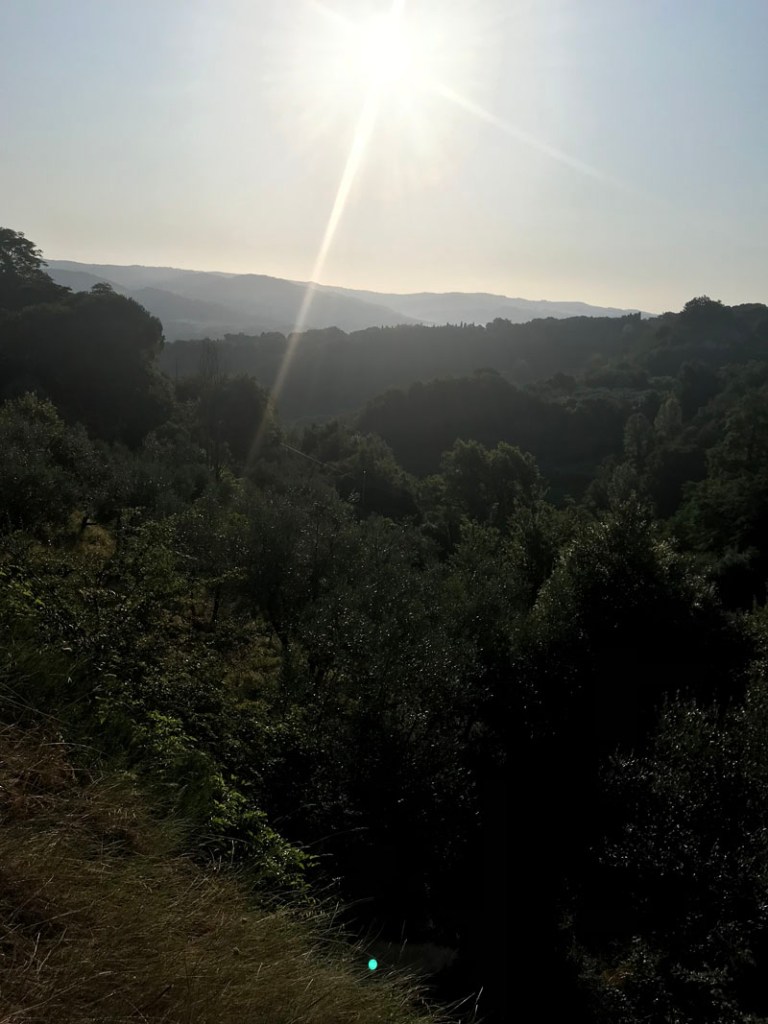
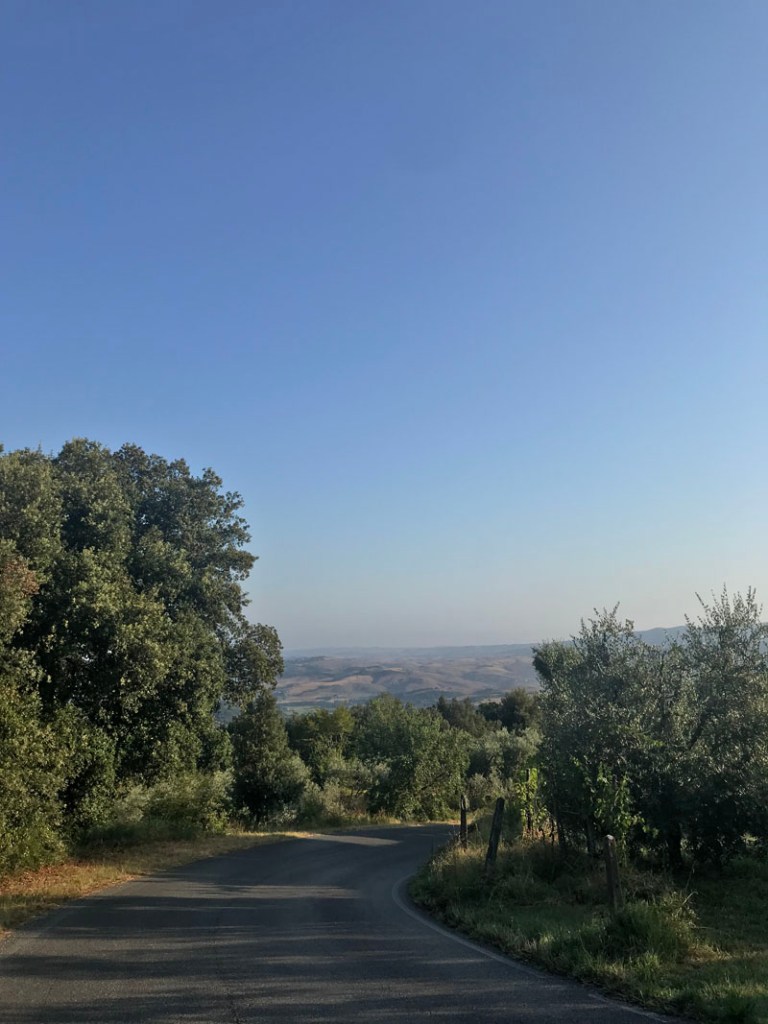
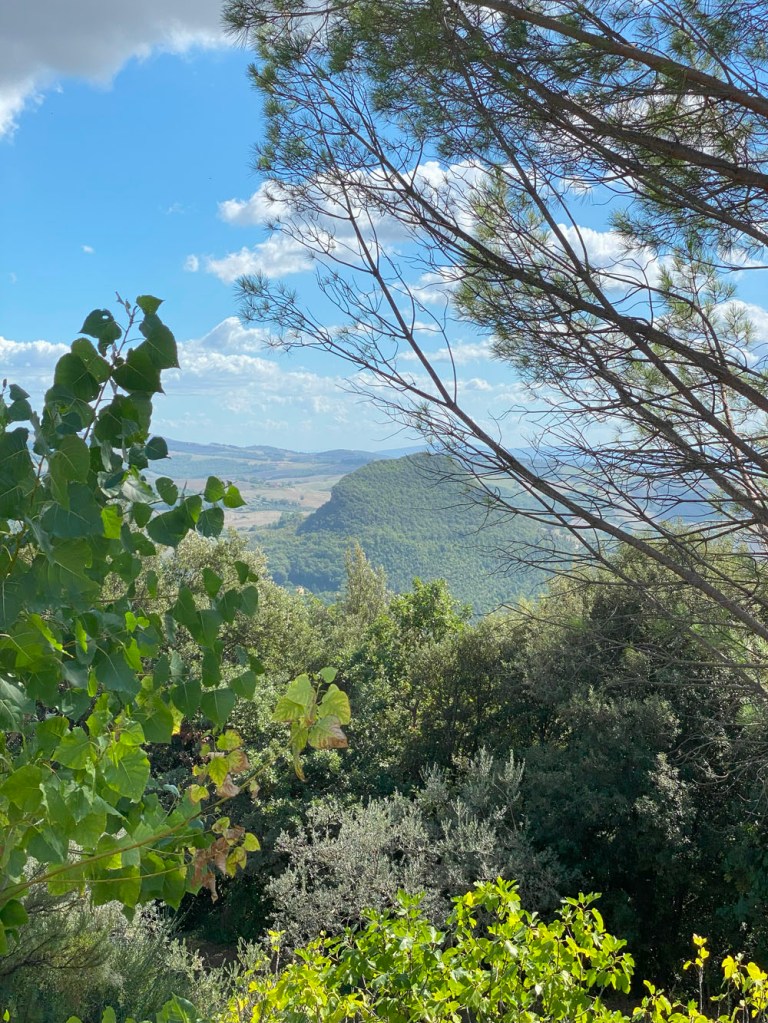
I took a different road back to the hospital area, and got some fab views of Monte Voltraio and the Val d’Elsa beyond.
I went back to the hospital, and picked Niamh up (metaphorically) and went back to the apartment.

Our friend, Mary, who gave us the weather portents of doom visited us with more chocolate gifts. We weren’t complaining. She also gave us some suggestions to promote healing. It was a very kind-hearted gesture. I’d texted all our Tuscan friends about our predicament, and they were so supportive – thanks, guys!

That evening, I took a stroll just to get out again, and for dinner I grabbed a couple of pastas for takeaway from Porgi l’Altra Pancia – it just lies at the apartment building entrance. We munched on that and spent our time screen-watching ’til bedtime.
The next blog is the last accounting of our time in Volterra that September, and will recall the last day, and the tortuous journey home, but until then thanks a lot for reading.

Please leave a comment or question – I’d love to hear from you.
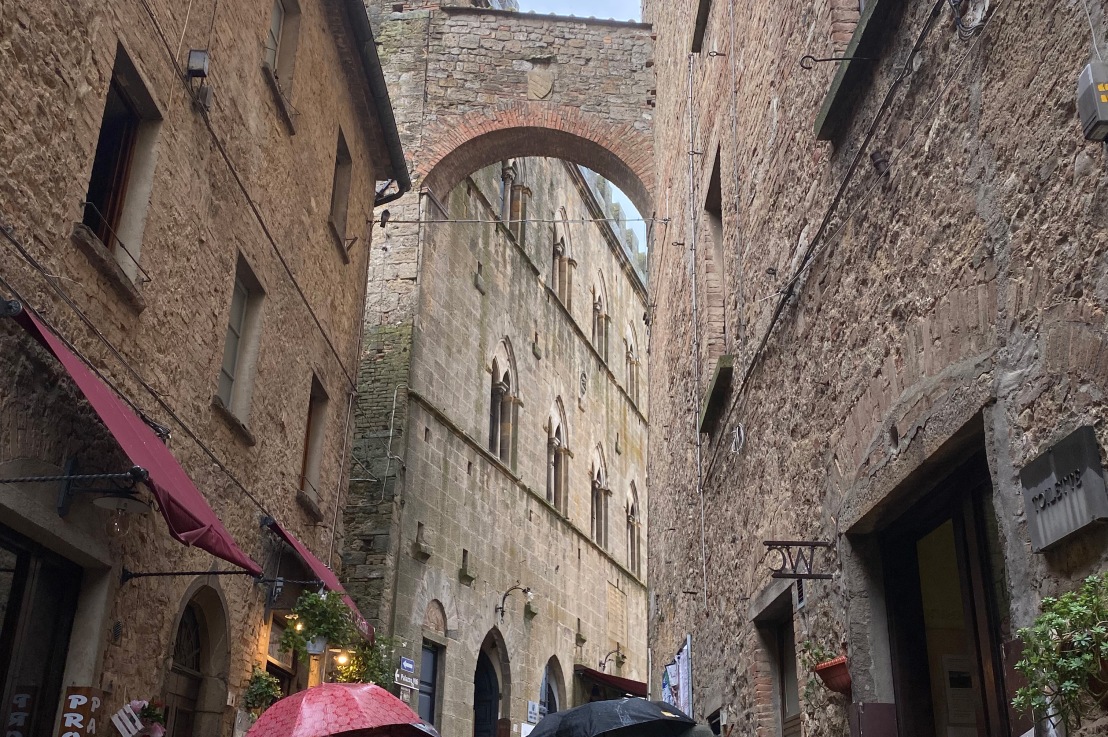
A Saturday to Forget, a Sunday to Help Remember (03+04/09/2022)

A Saturday to Forget, a Sunday to Help Remember (03+04/09/2022)

Saturday, September 3rd

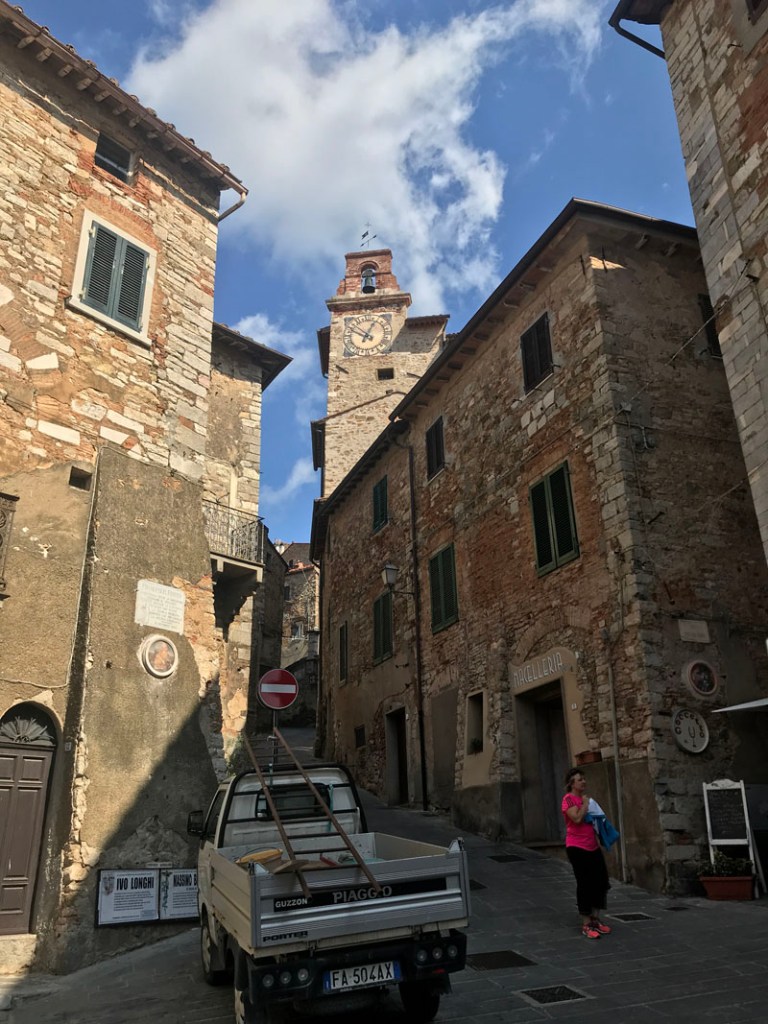
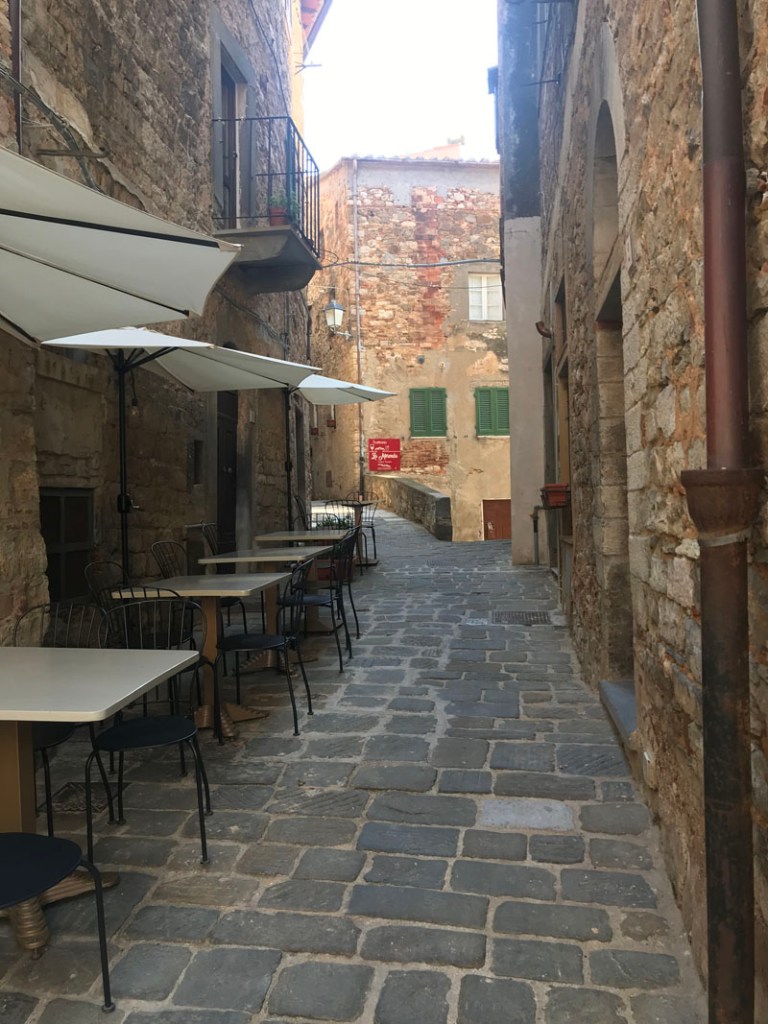
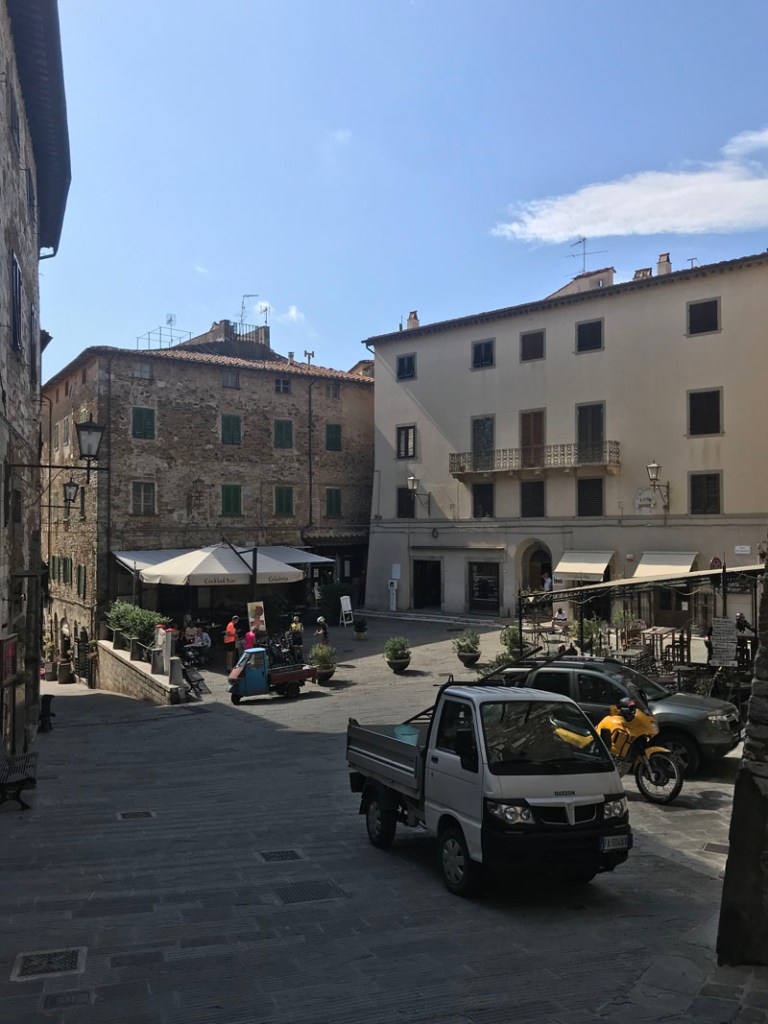
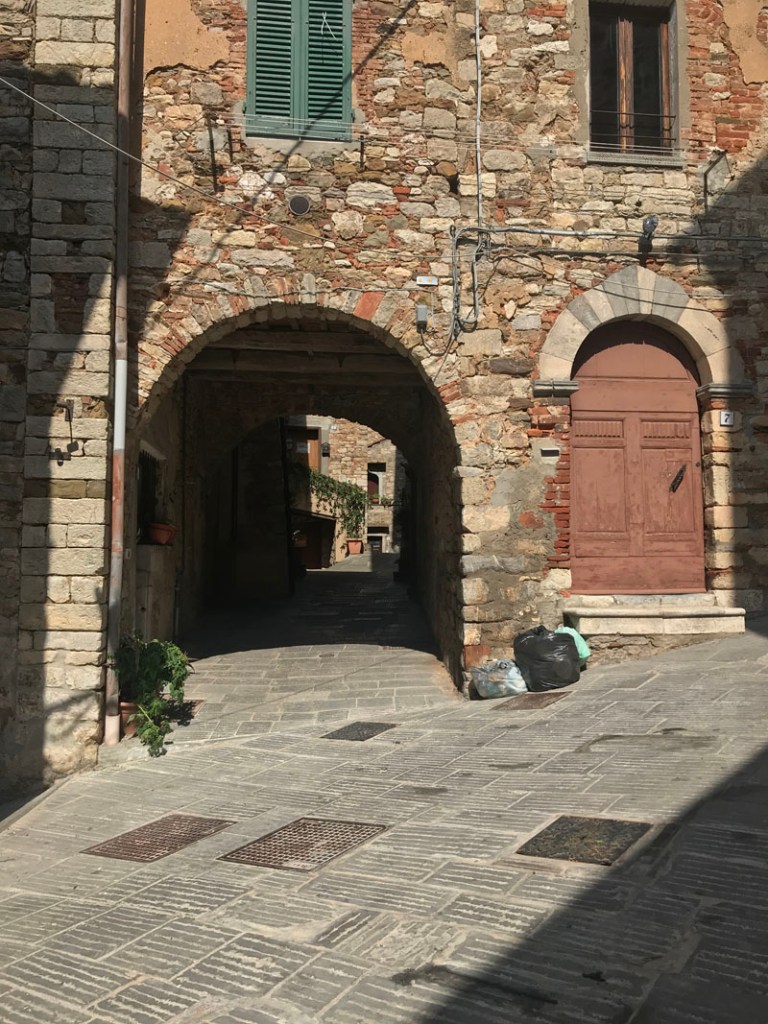
This weekend was a weird one and no mistake. I genuinely have next to no memory of what we did that day. I see the photos, but they are something of an abstract collection. I know we stayed in Volterra and had something to eat. That is the extent of my memory of that Saturday.

Here are some photos. Make of them what you will.

Sunday, September 4th

Ok, this day was more like it!

I got up and walked to the entrance of the abandoned psychiatric hospital. I didn’t take many photos because, by golly, I filmed the walk instead. It was actually shorter than I thought it would be.

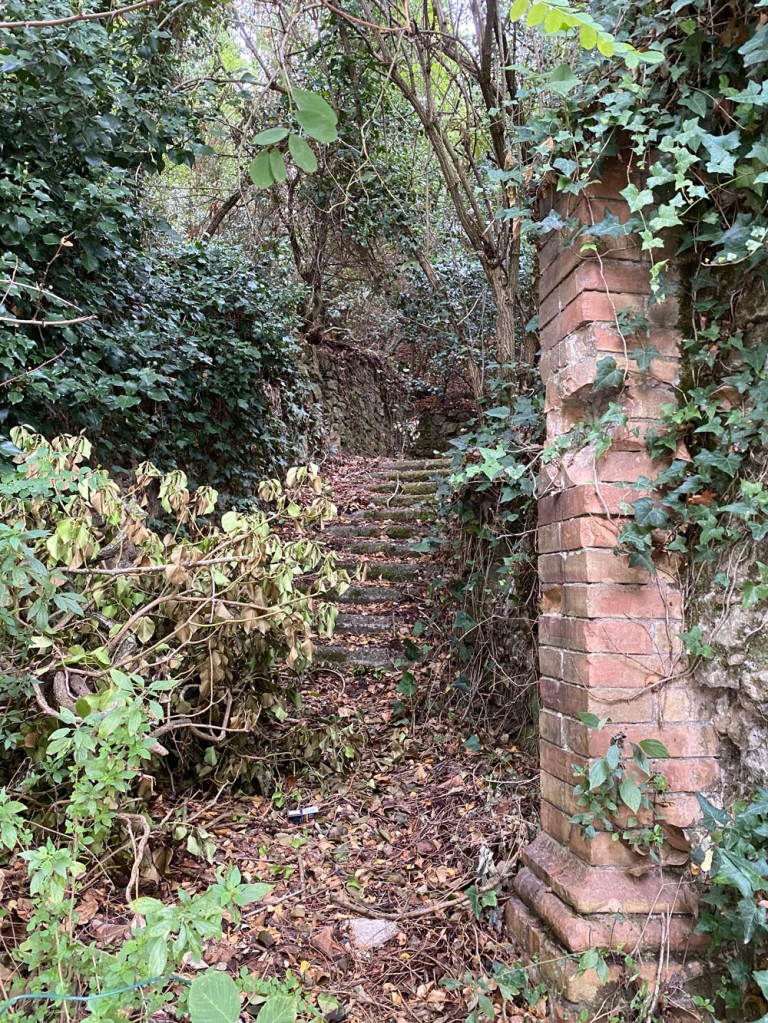
So that was cool, but what would be cooler is if I finally somehow make it inside the grounds. The stairs pictured above I’m pretty sure lead there, but what isn’t pictured is a collapsed fence which might be only slightly tricky to climb over on the way up, but would be a total cow on the way back.

It is possible to arrange a tour at least to the inner grounds, but I simply haven’t done so yet. Some day, I swear!

Anyway, as handy as it was getting there, I would have to climb back…

After I’d tidied myself up and hung around ’til lunch time we went to La Sosta del Priore – they have a new website, with a shopping area! Congratulations, Ilenia!

You can’t go wrong here – the burger was so yum. Hard to imagine that soy mayonnaise would taste so good!

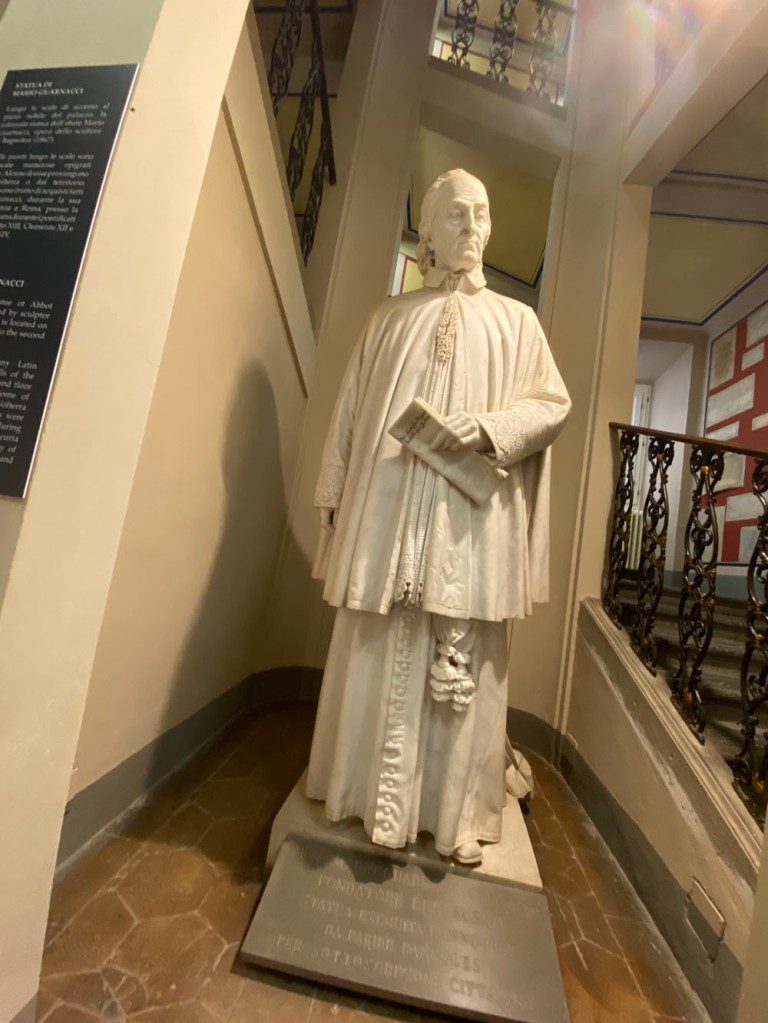
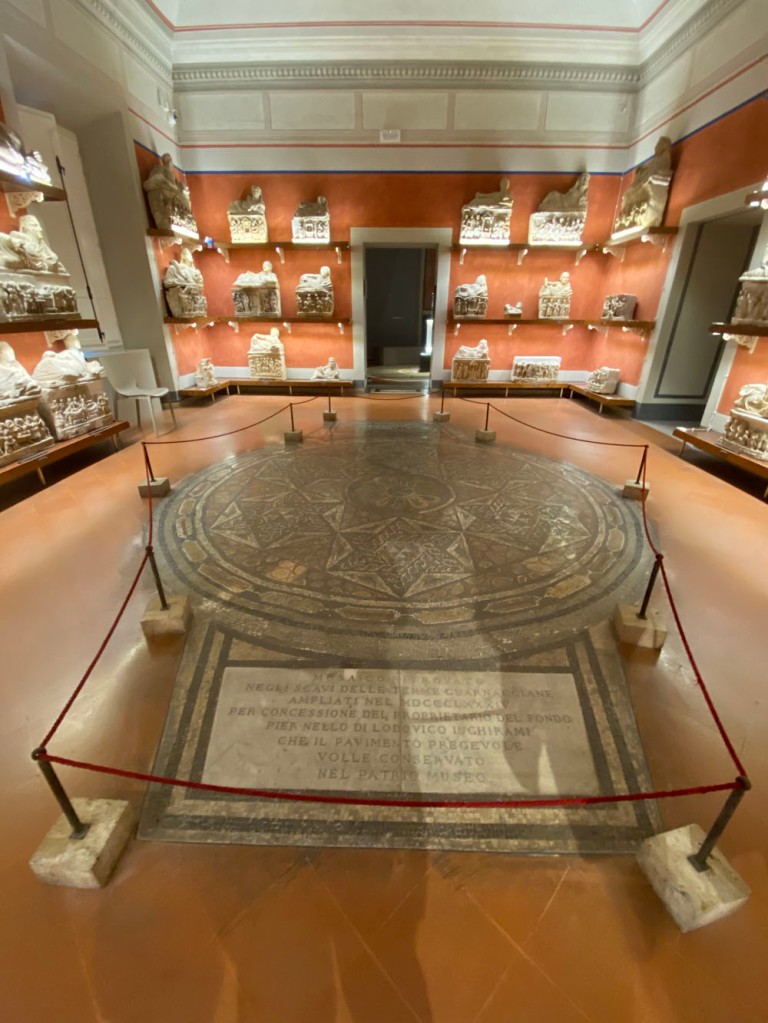
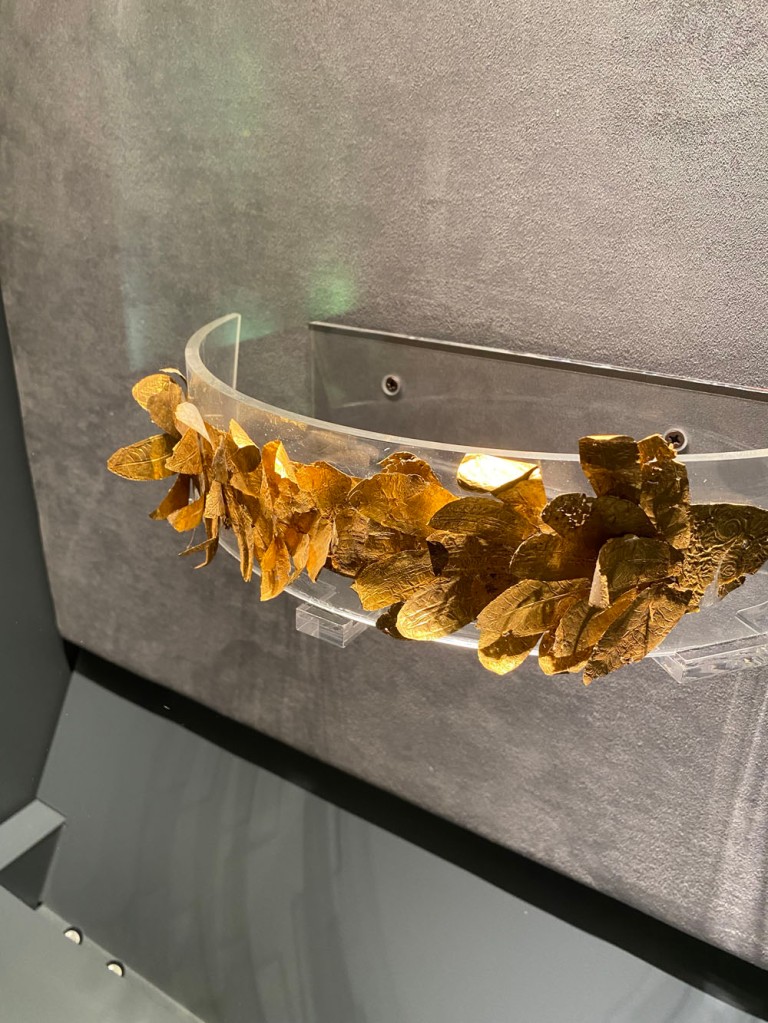
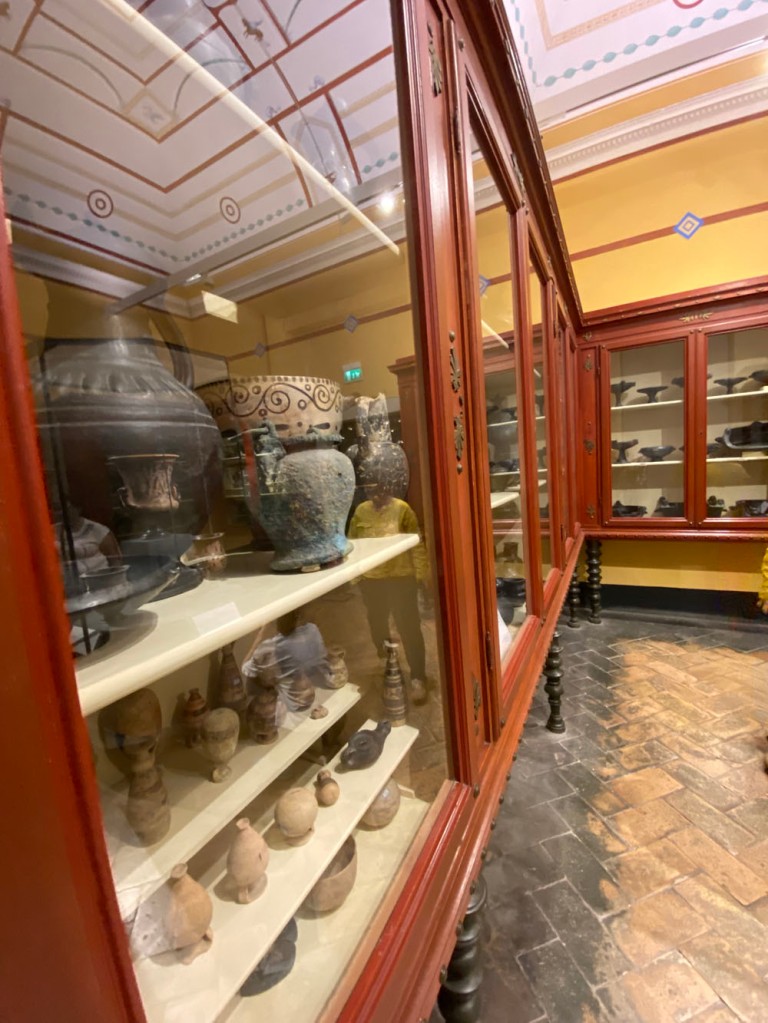
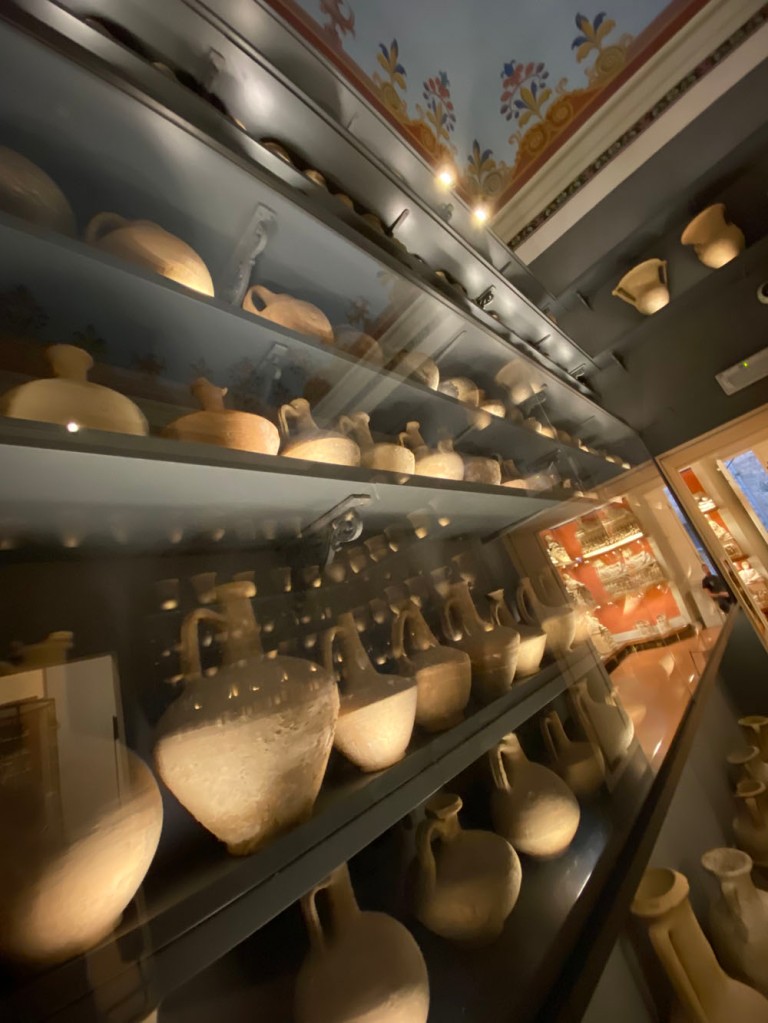
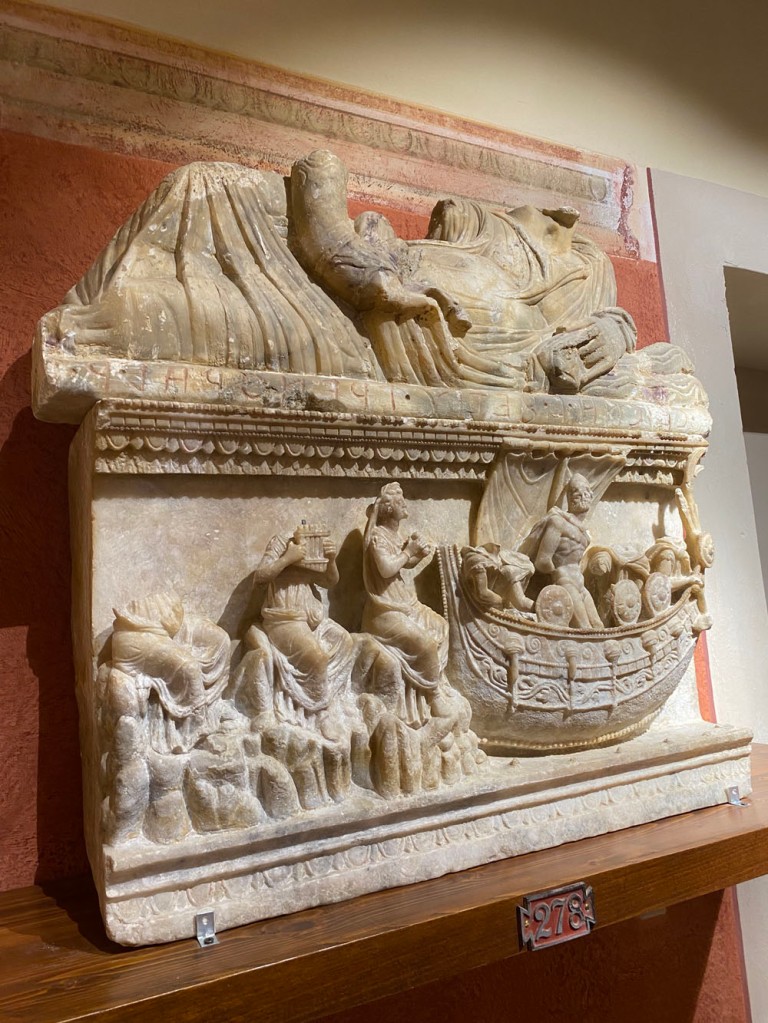
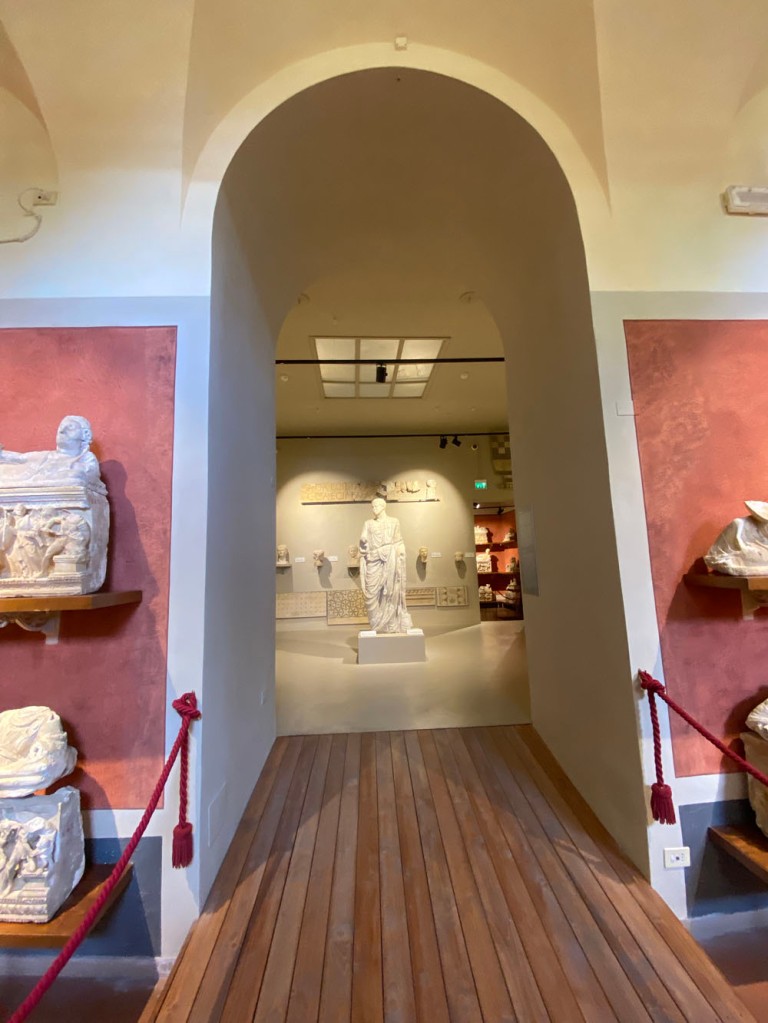
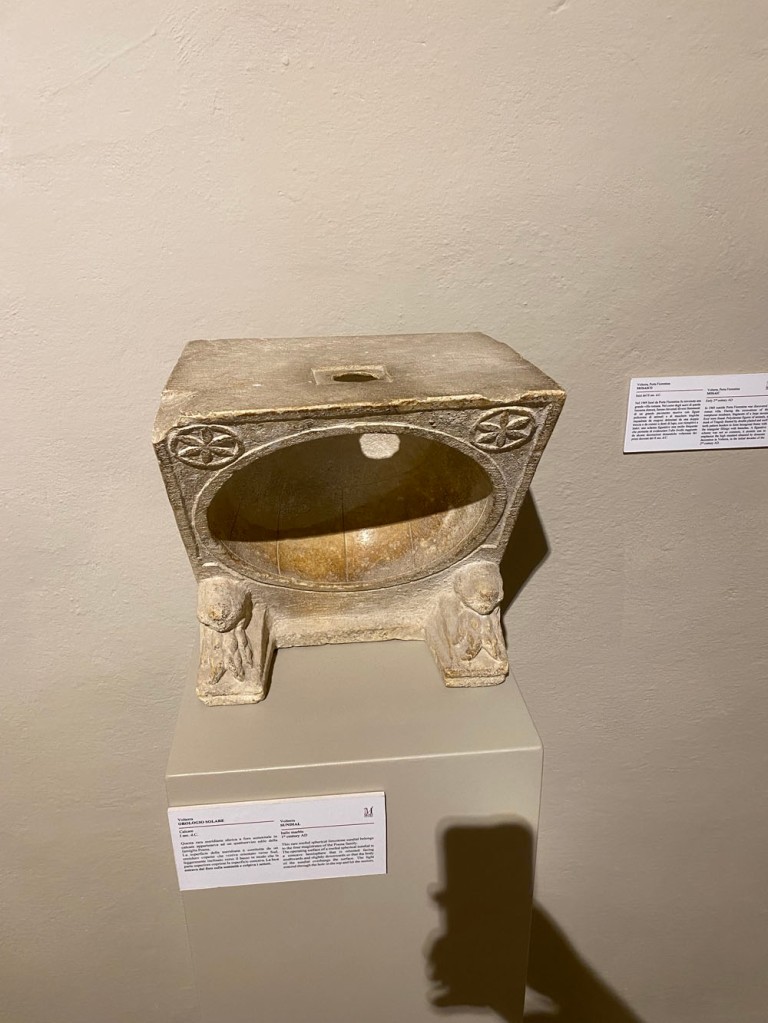
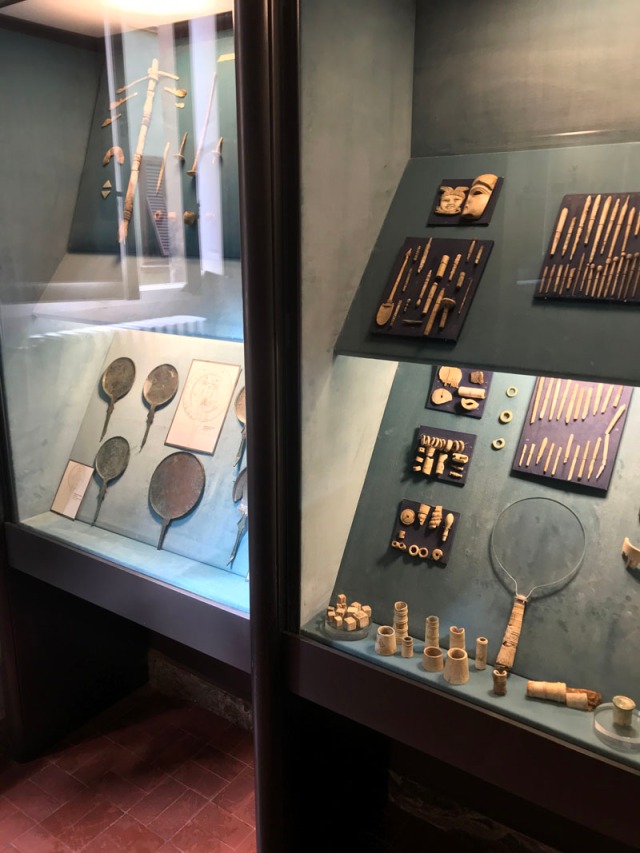
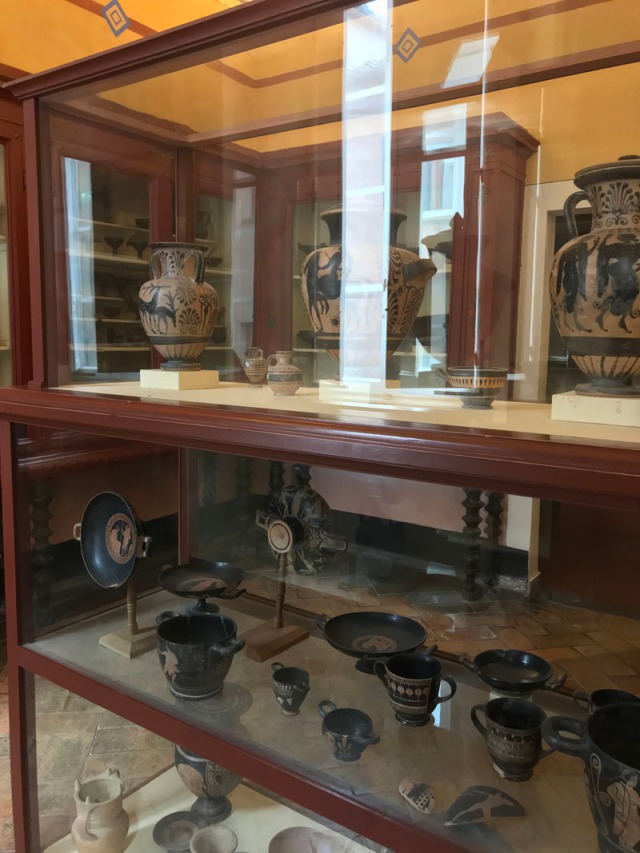
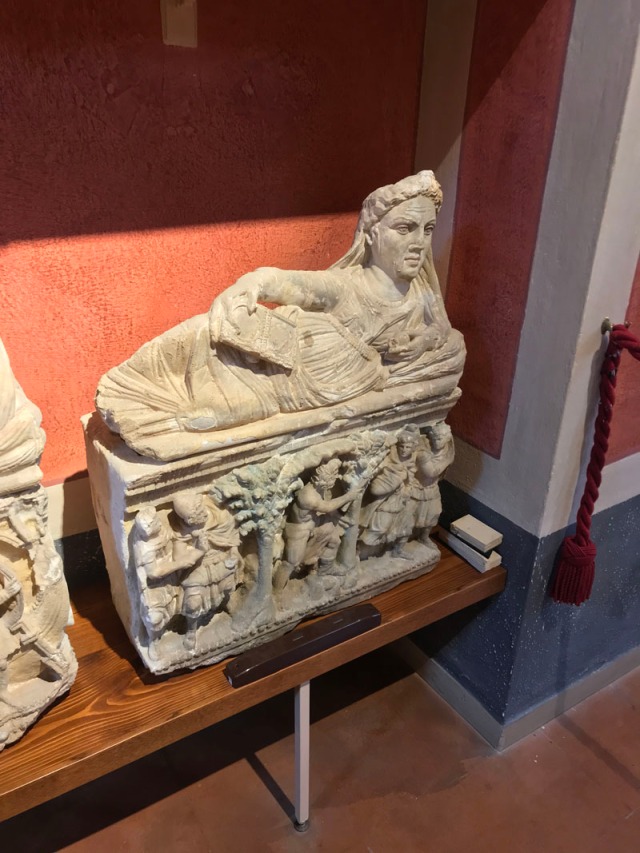
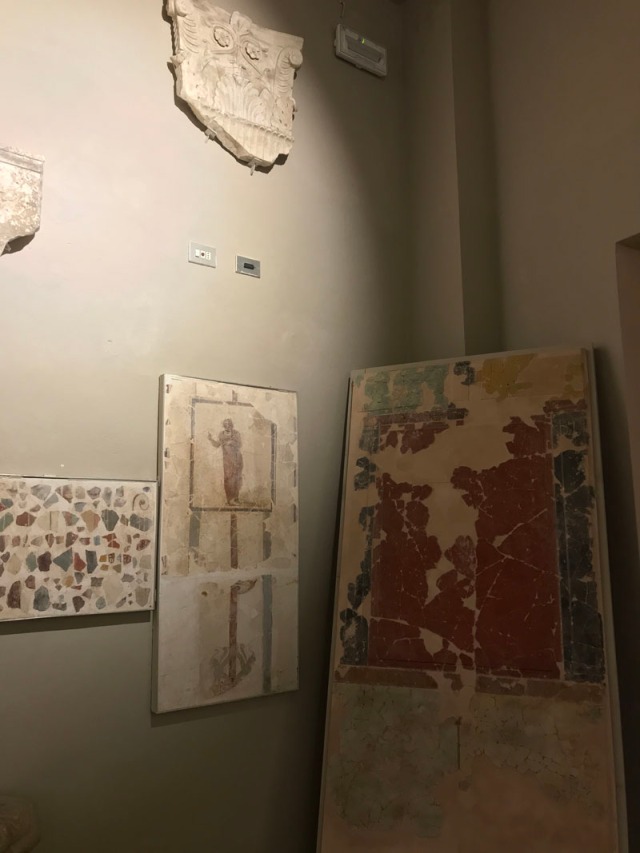
The Etruscan museum (aka the Guarnacci Museum) is one of the oldest museums in Europe, and also one of the most important Etruscan museums. It had been renovated recently, and I wanted to return to it to show my support. It’s lovelier than ever now, and besides having Etruscan artefacts, it also houses pre-historic and Roman era goodies.

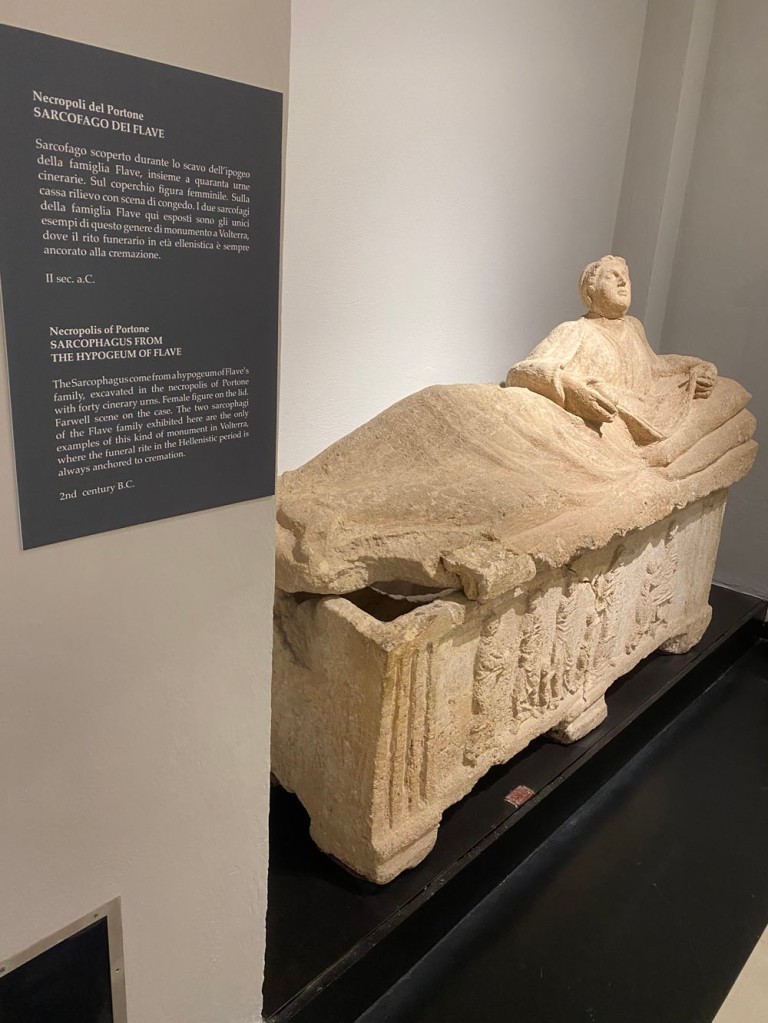
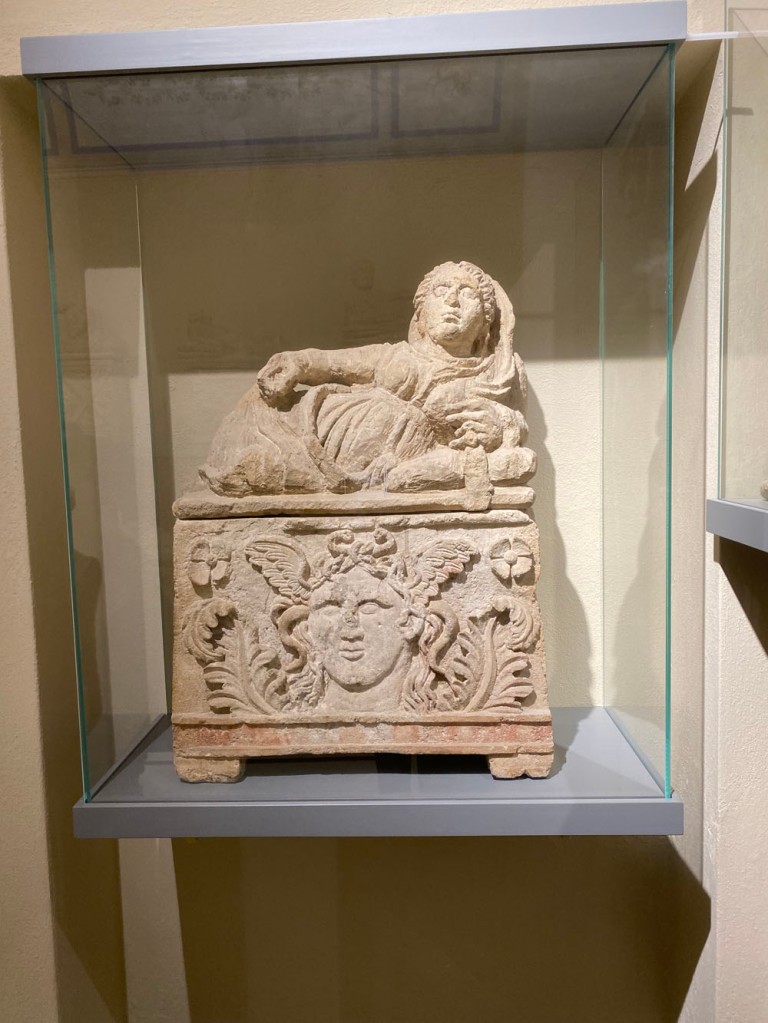
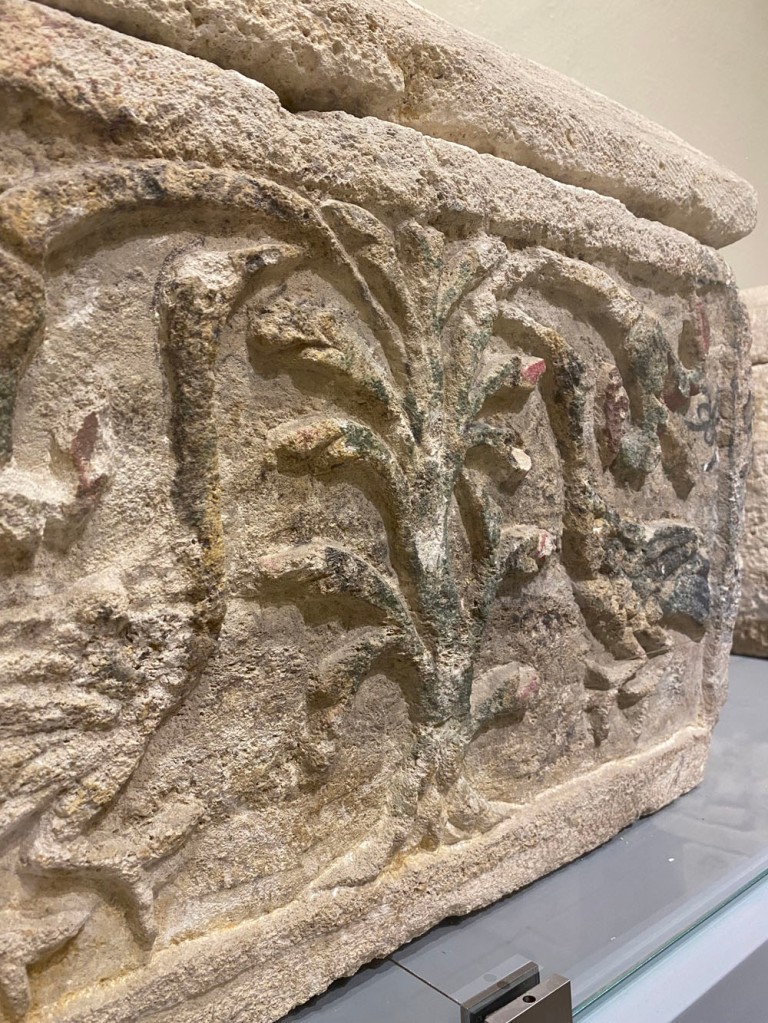
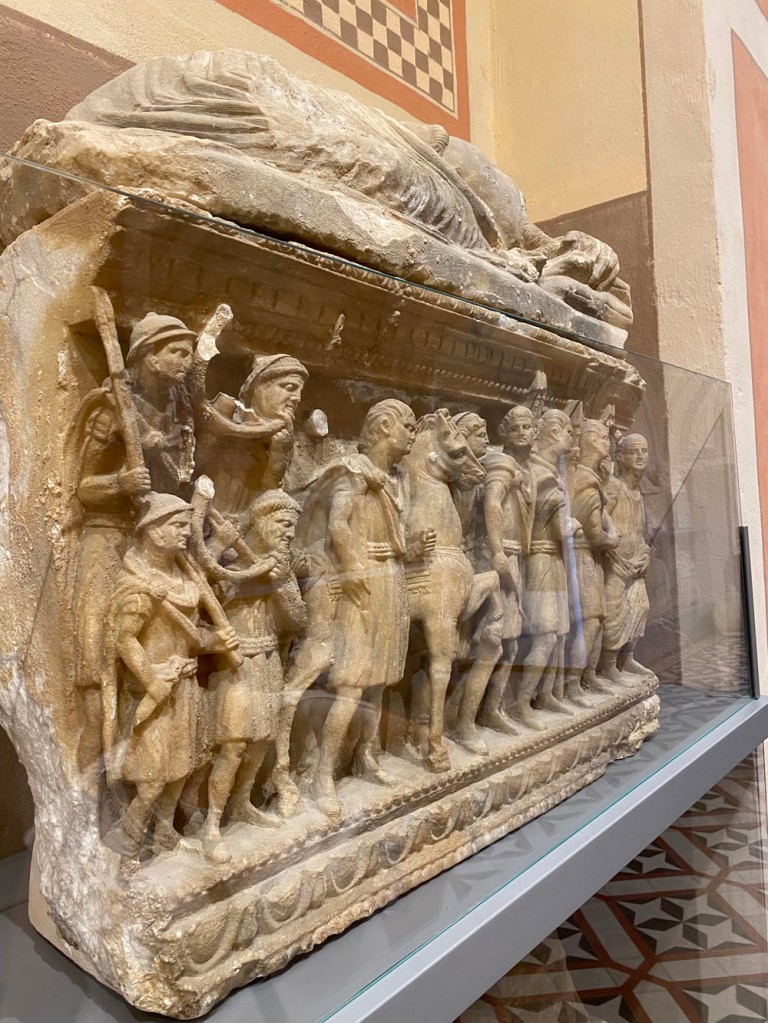
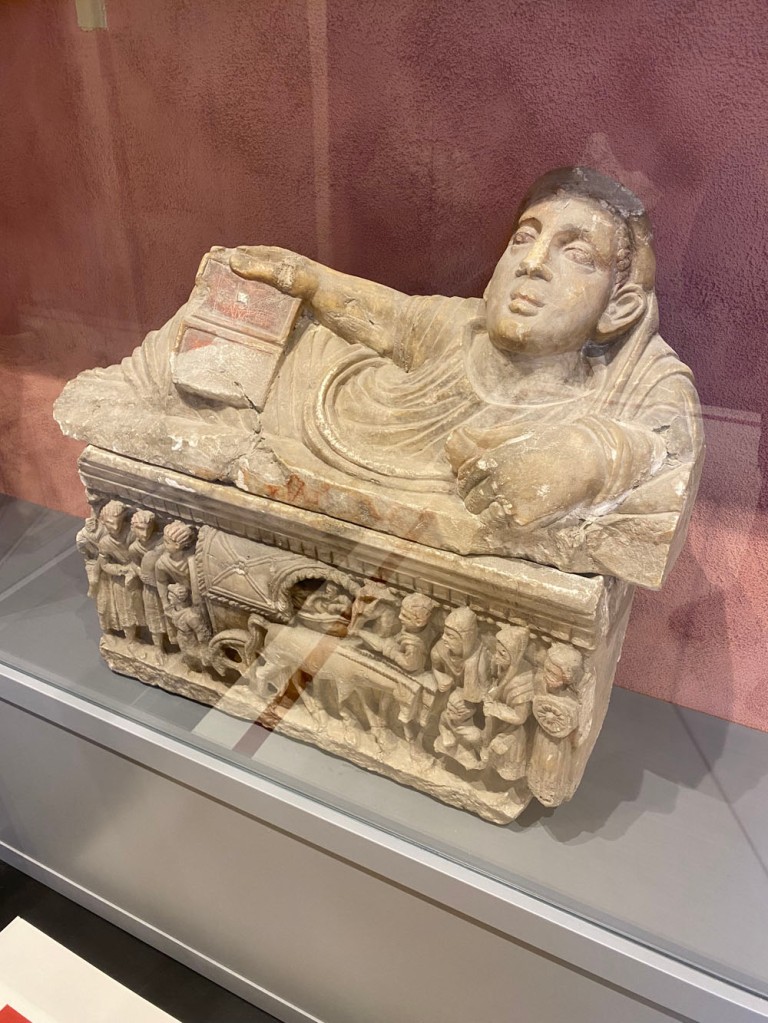
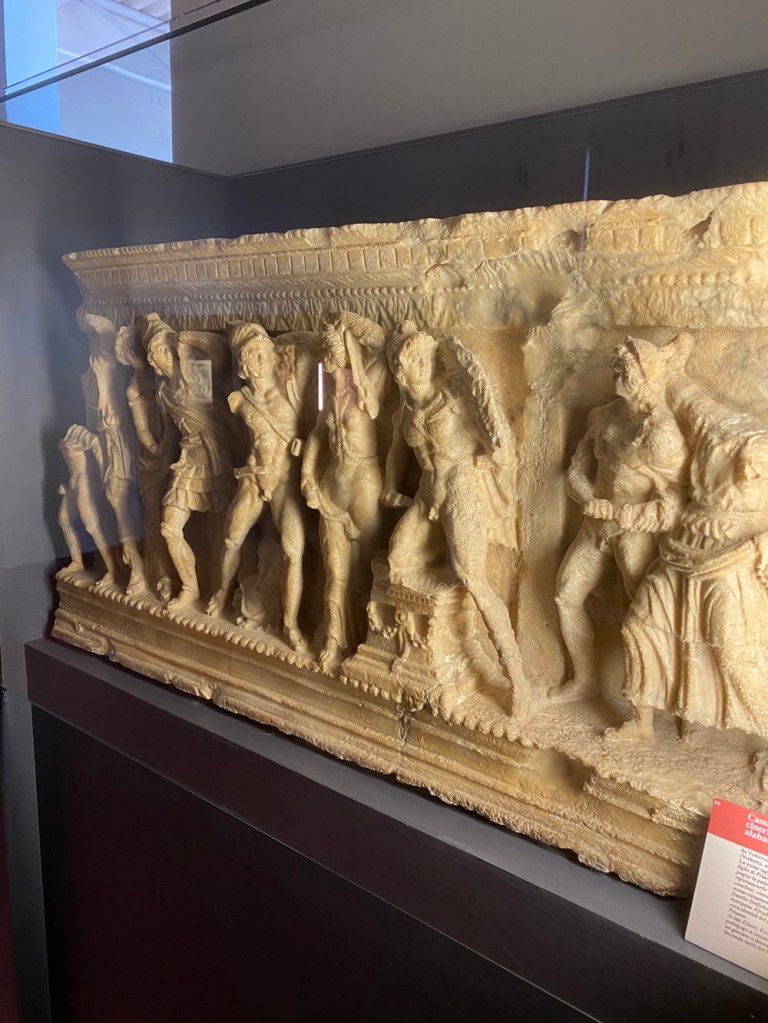
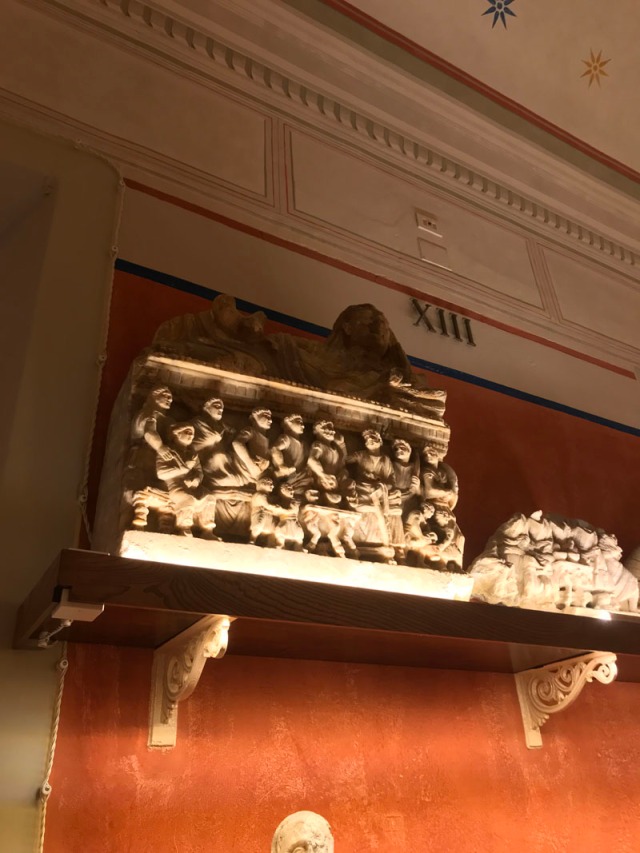
There are still rather a lot of Etruscan sarcophagi/funerary urns, but it’s interesting to see how they progressed from actual urns, to mini-sarcophagi, and became more and more intricately carved.

I have been before, so I won’t expand any further on it, except to say that it is a must-visit and is one of the attractions covered by the Volterra visitors card. You can pick this card up at either of the tourist information offices in Piazza dei Priori. It allows you to visit a bundle of places at a discounted rate.

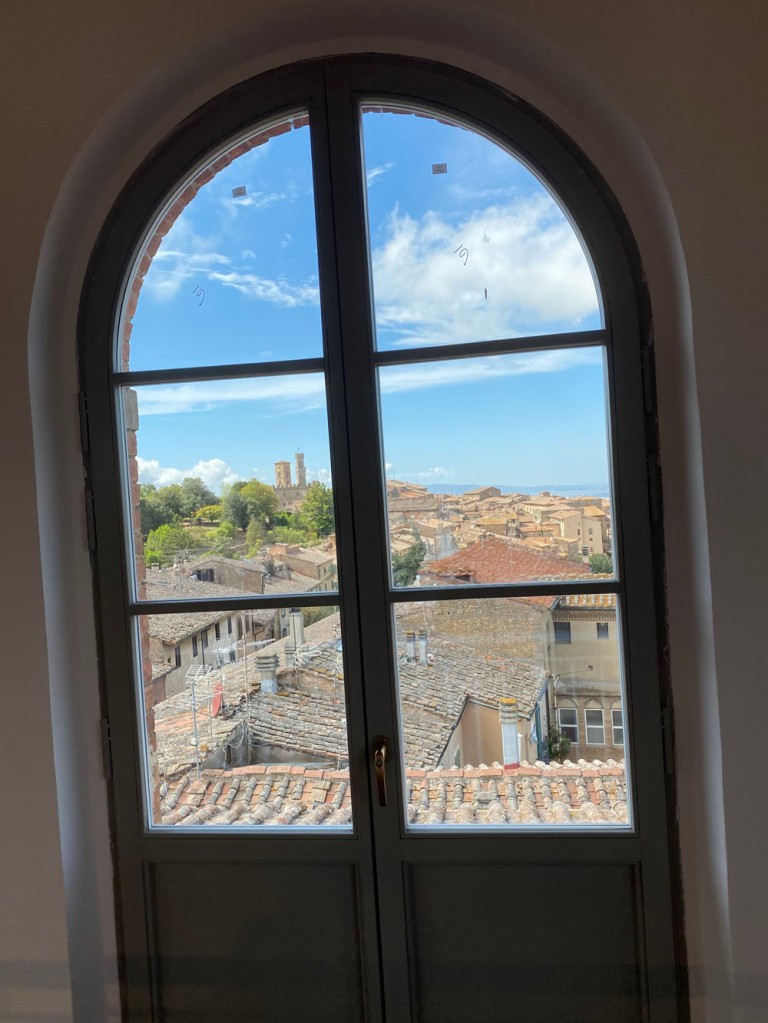
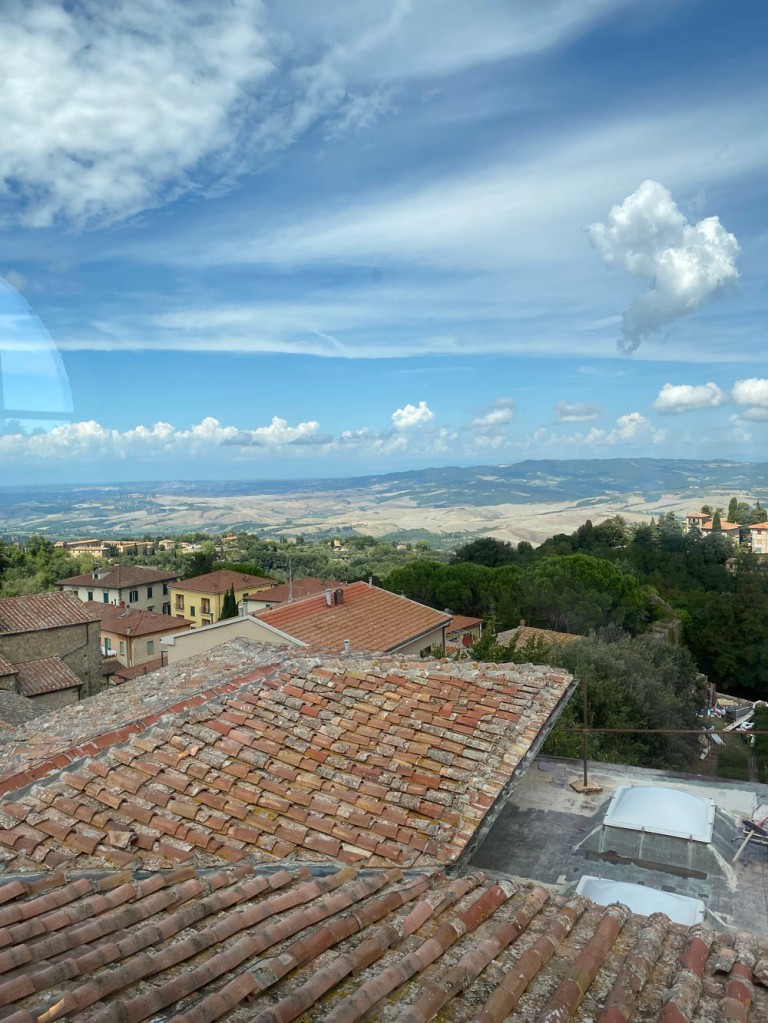
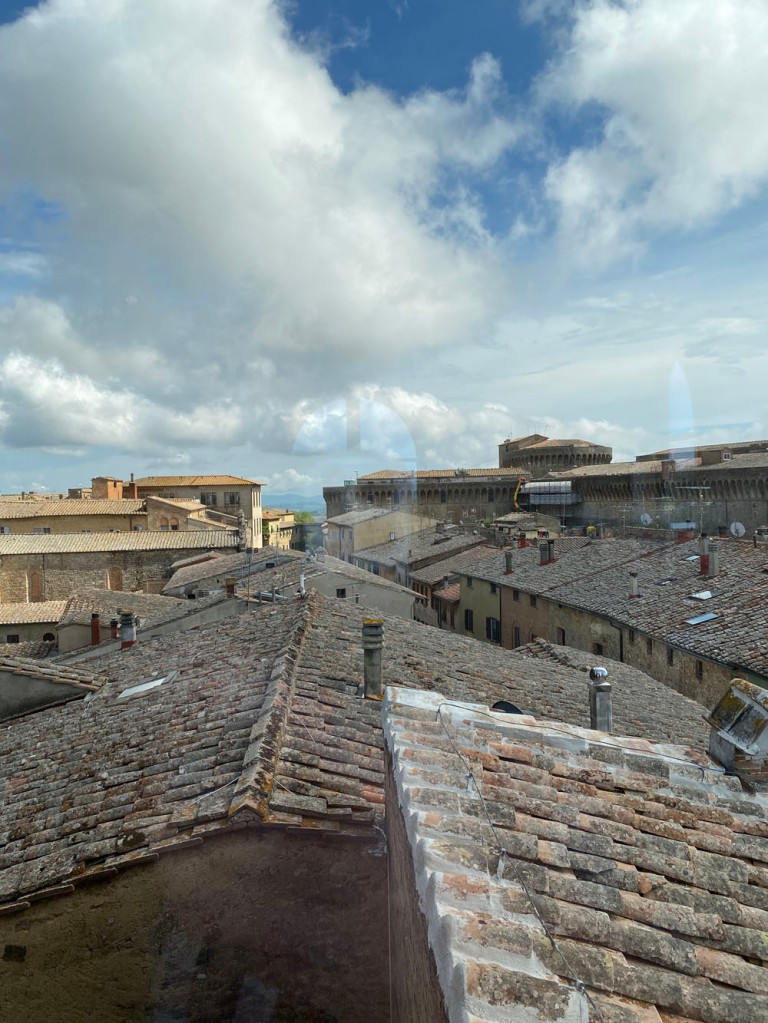
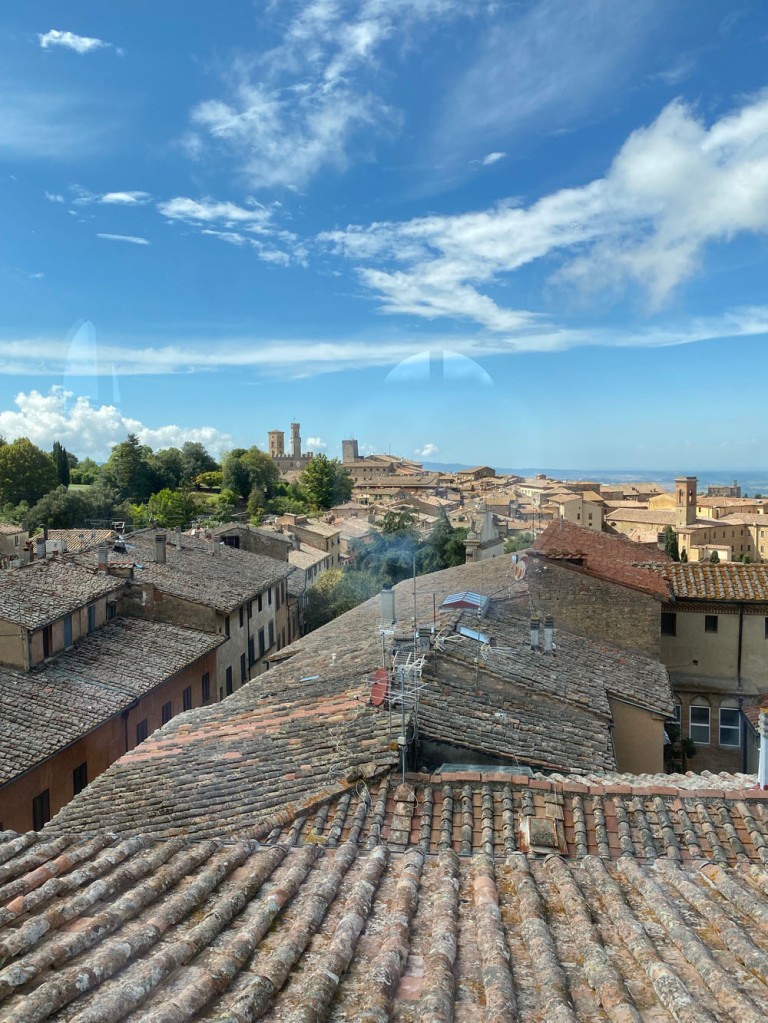
However, they did have a couple of new things: items from the new dig site of the Roman Amphitheatre and the a kick-ass attic room, which affords you some fab views from above much of the city.

But we didn’t stop there for the day, oh no!

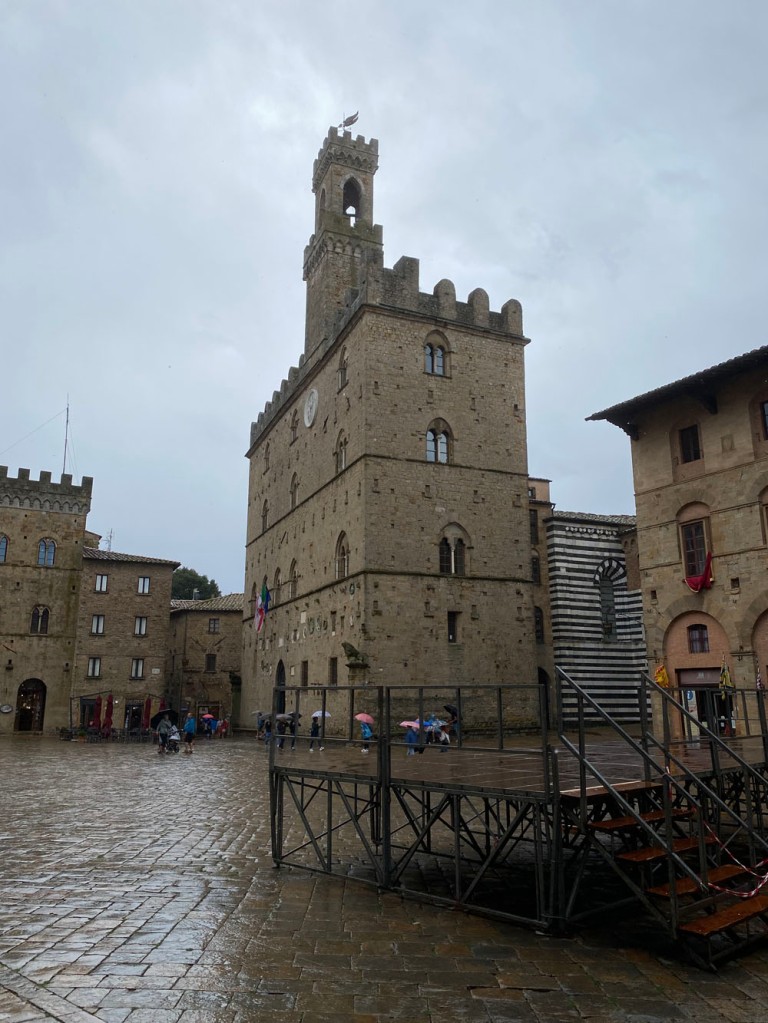
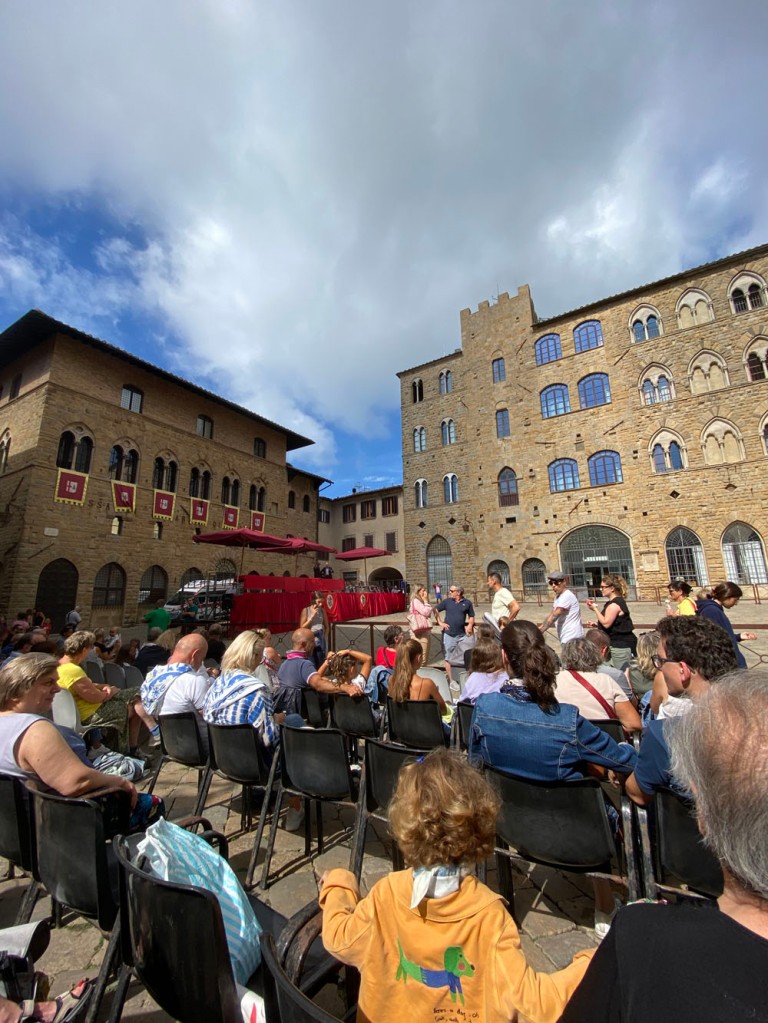
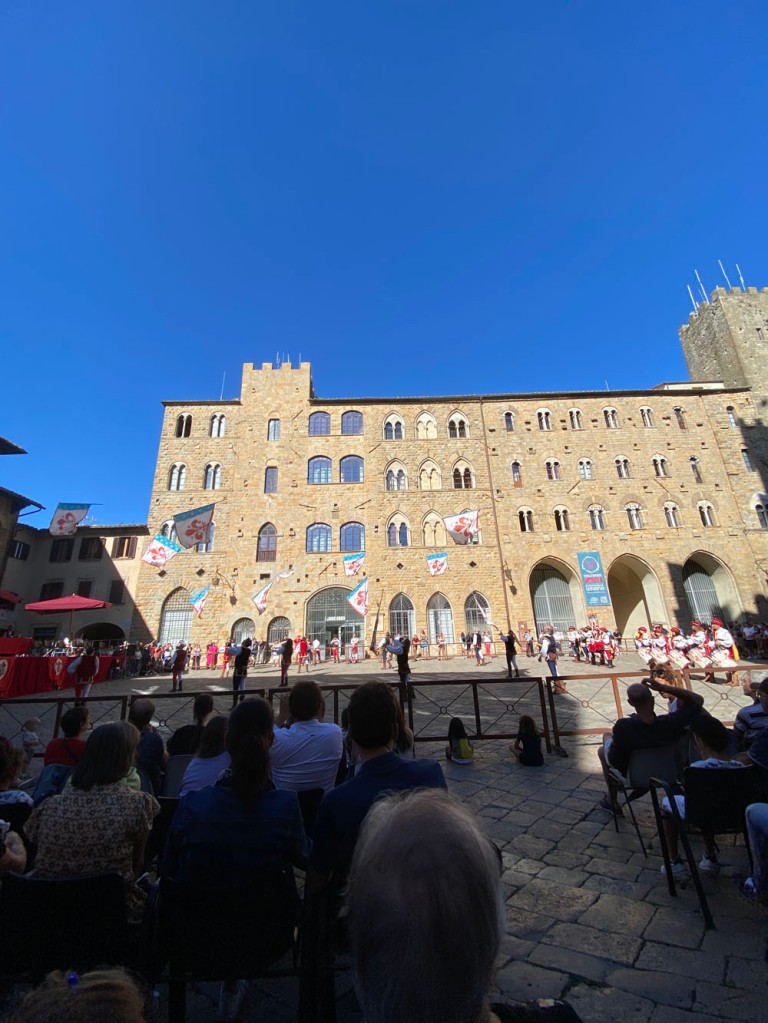
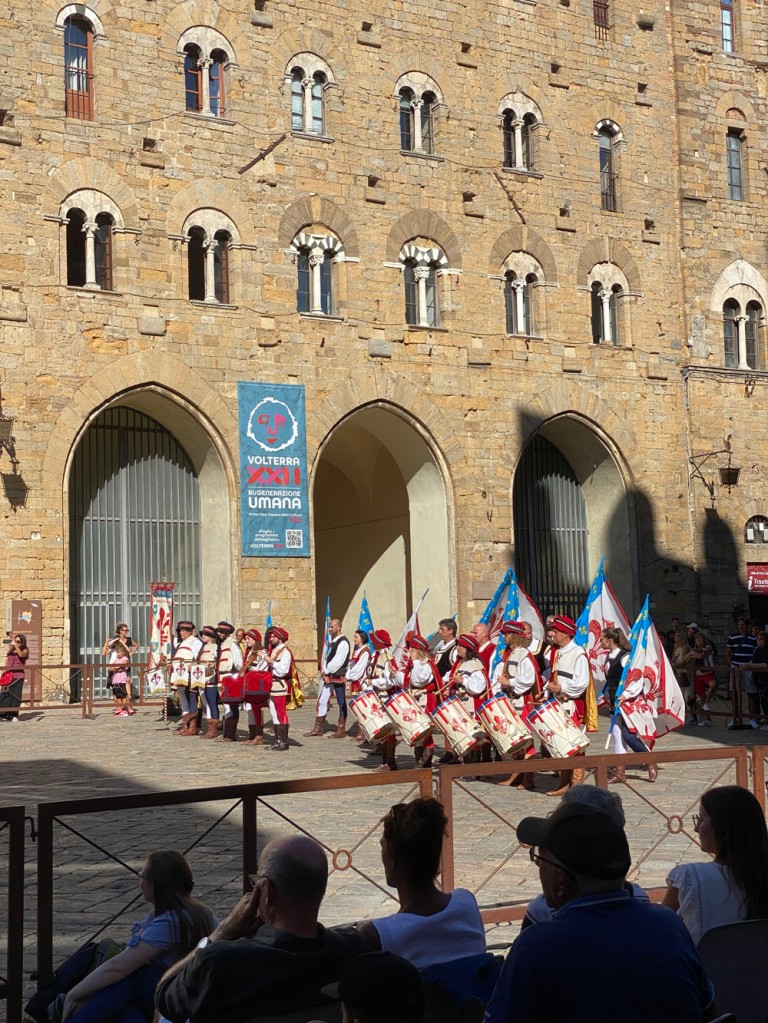
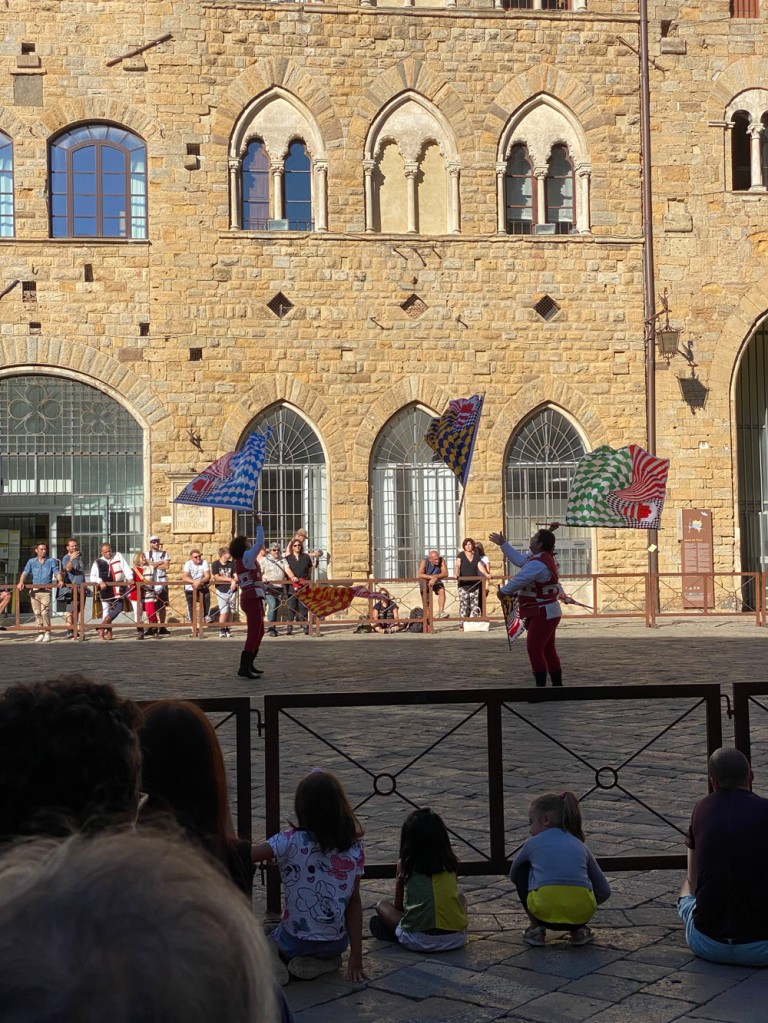
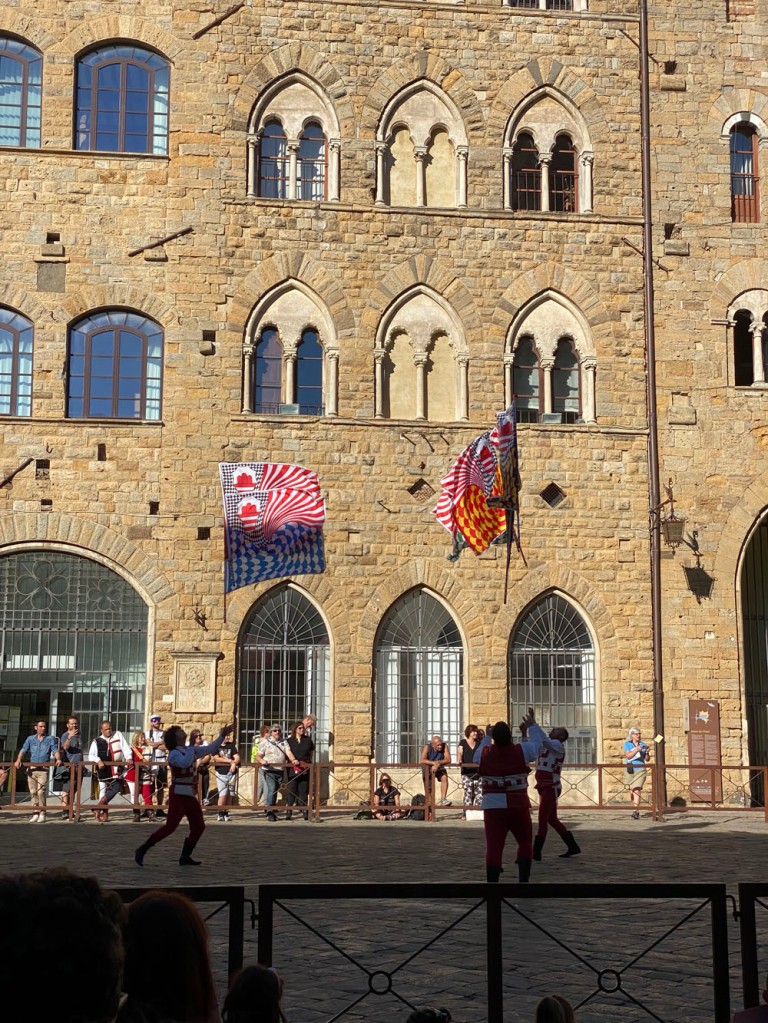
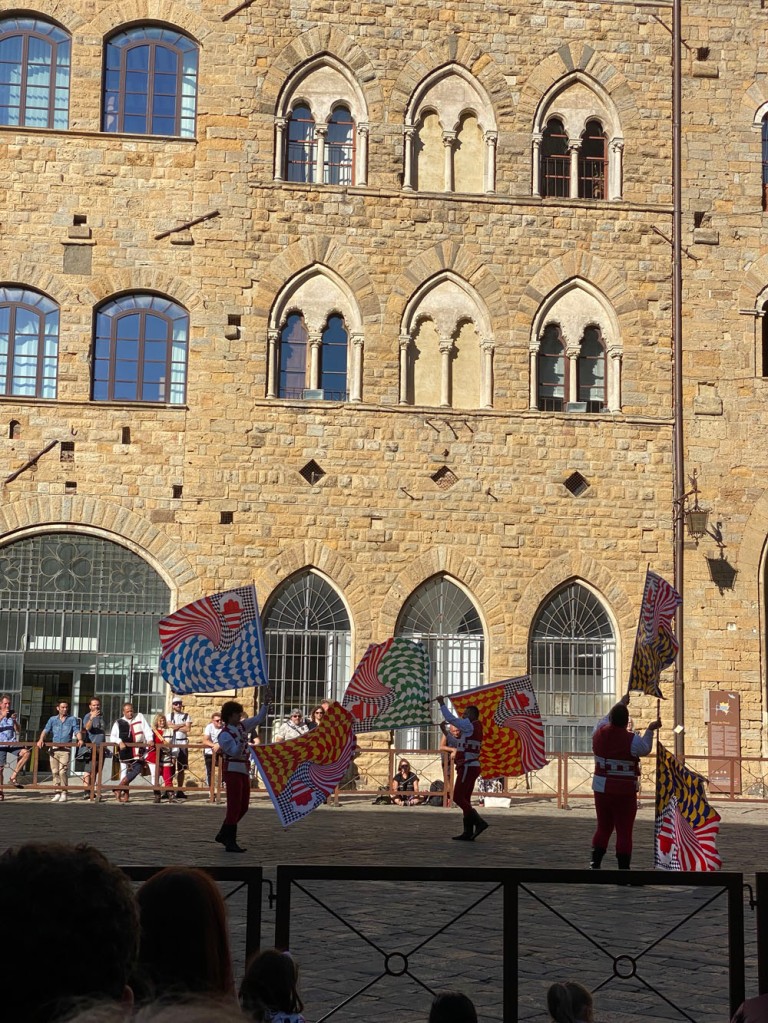
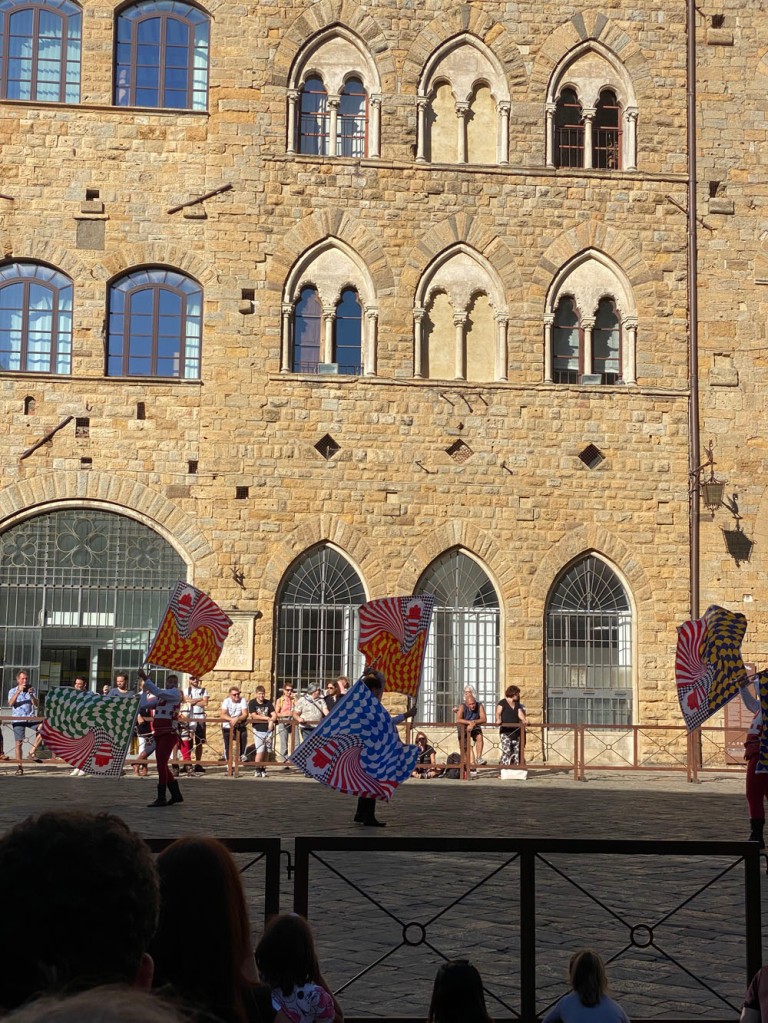
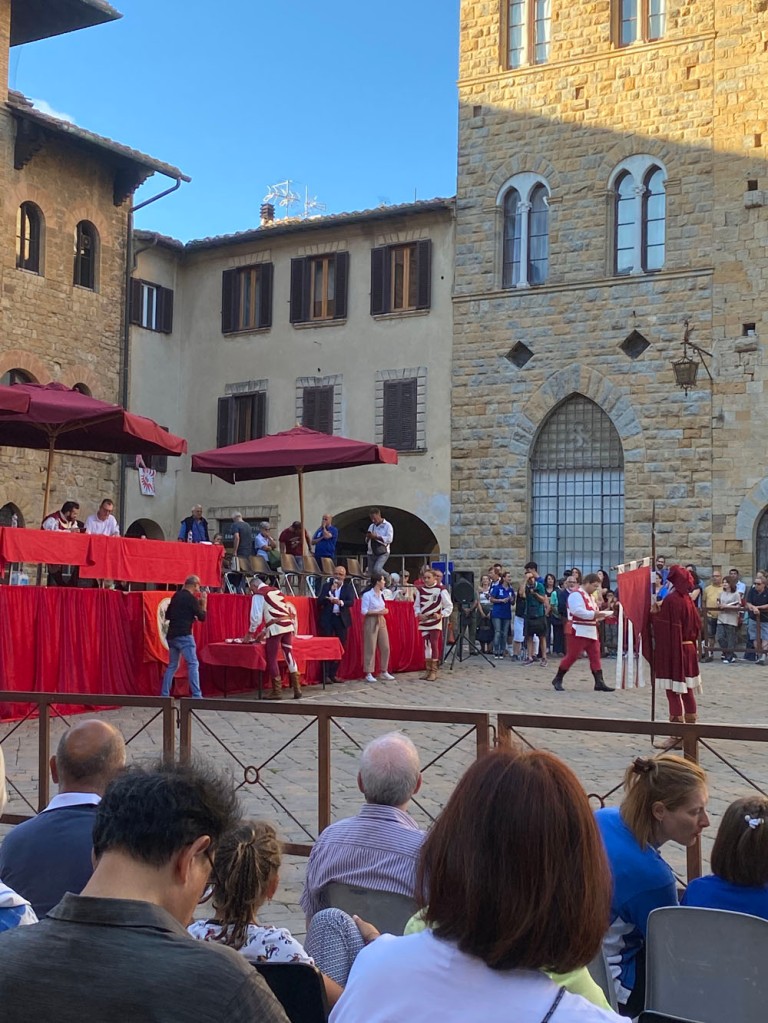
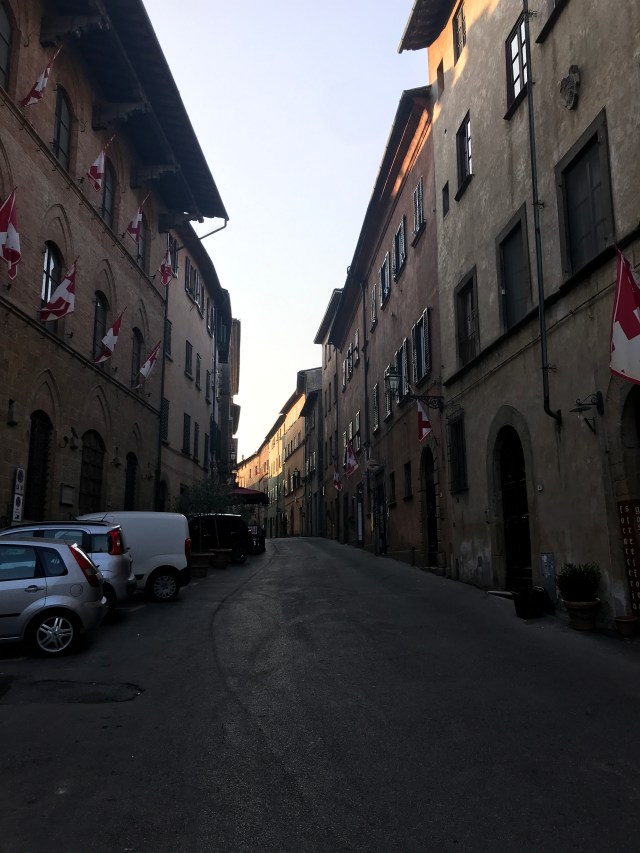
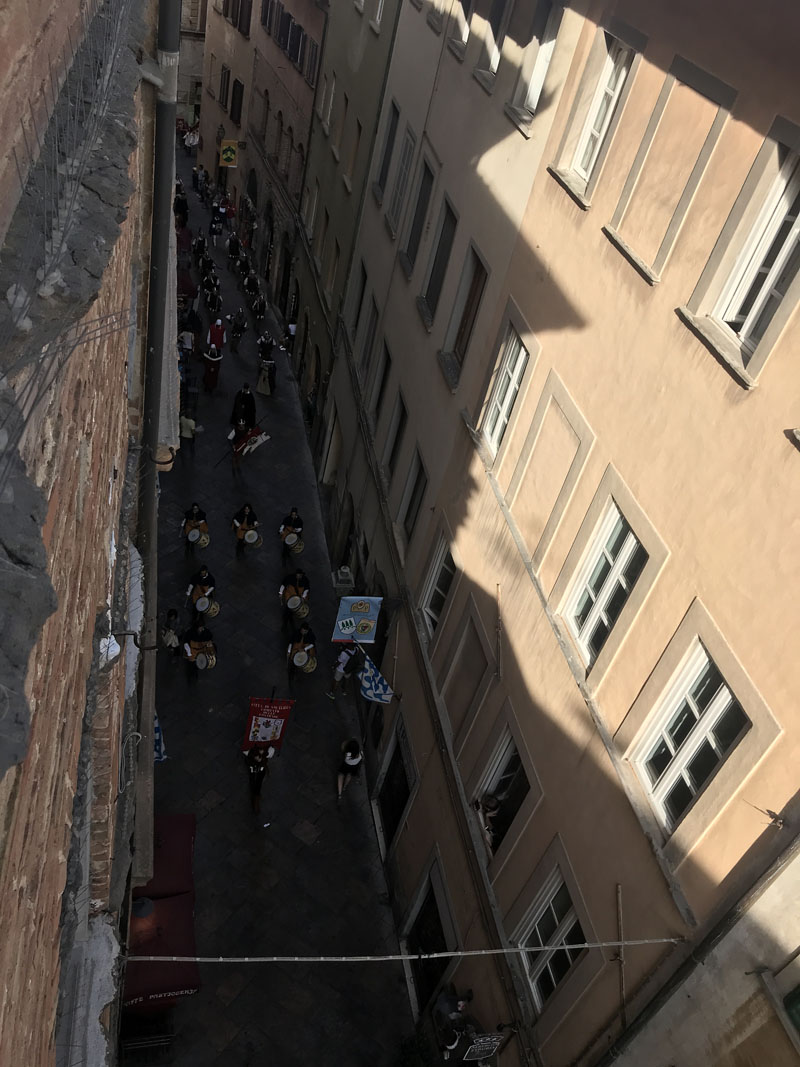
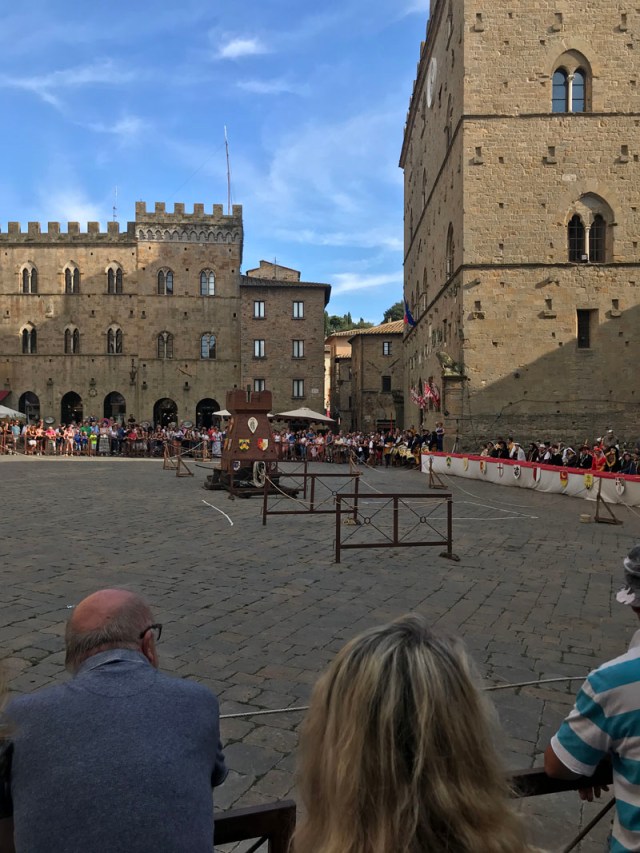
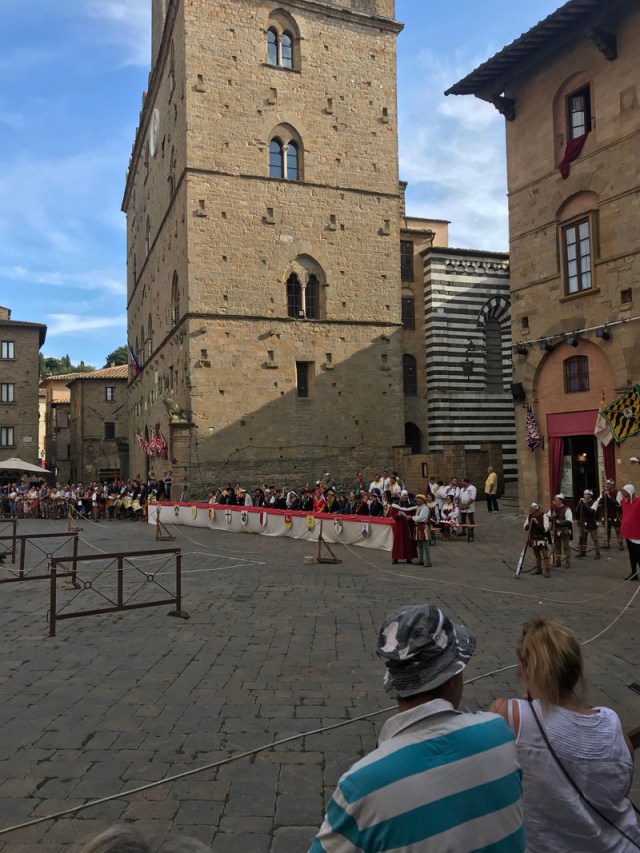
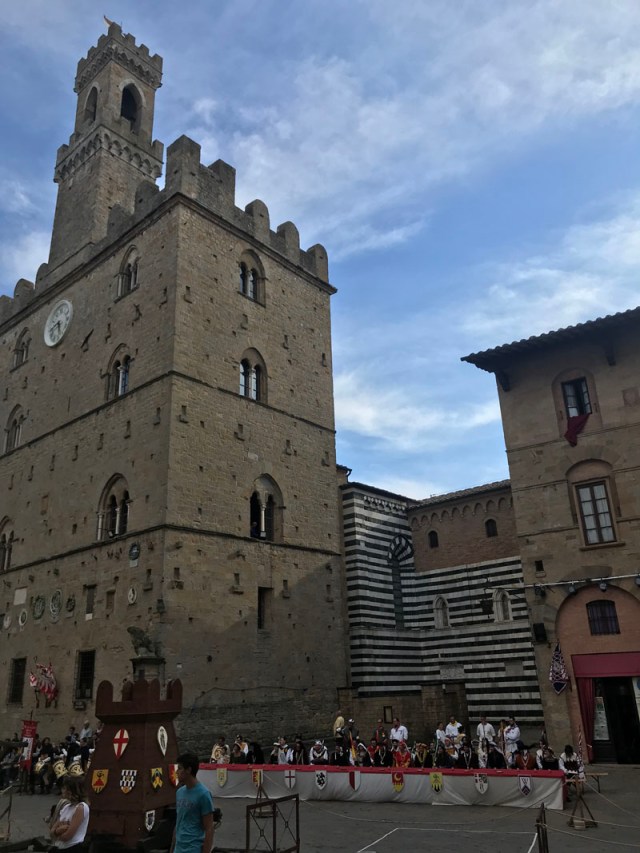
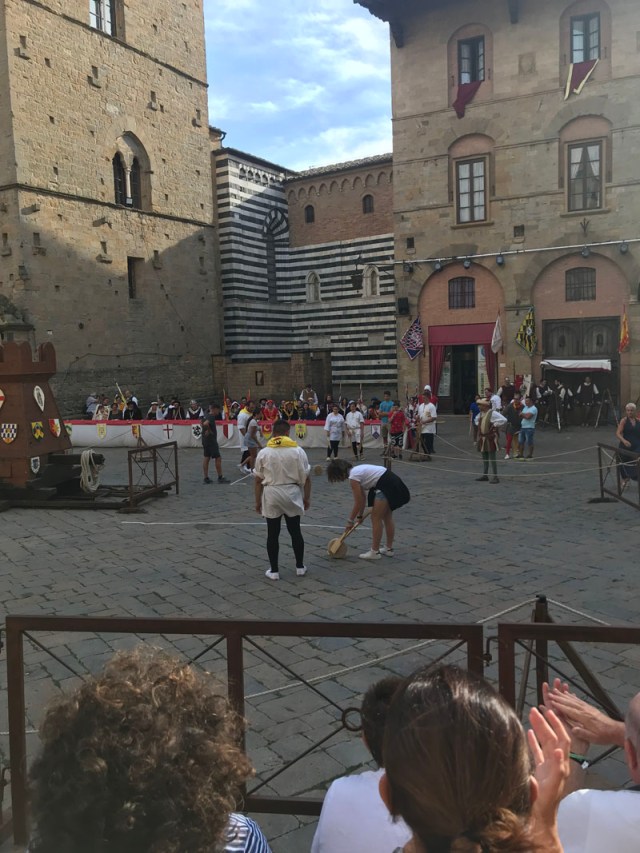
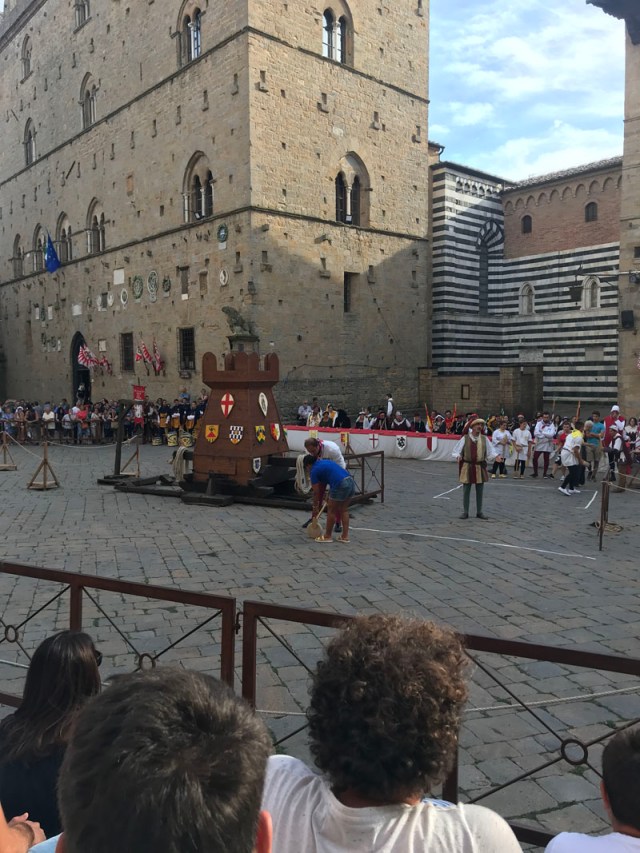
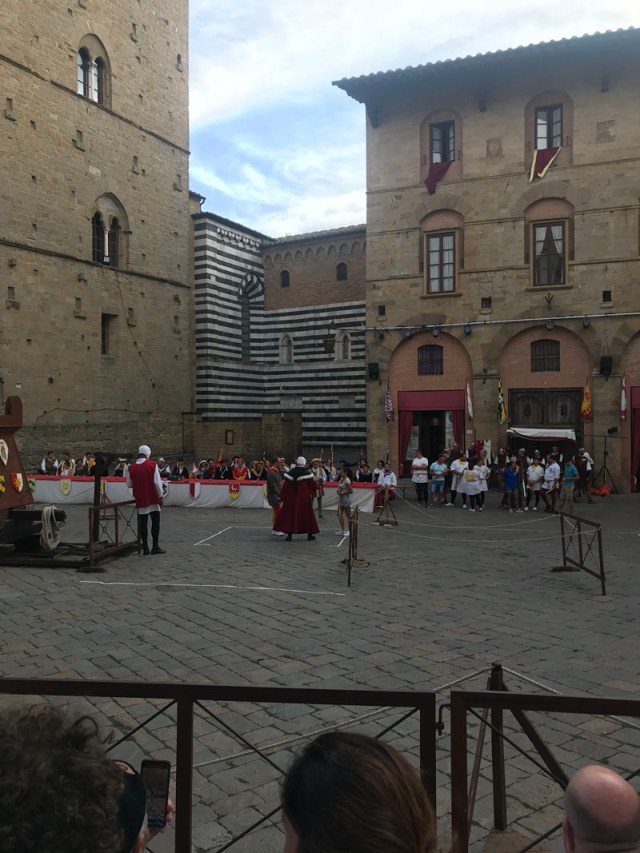
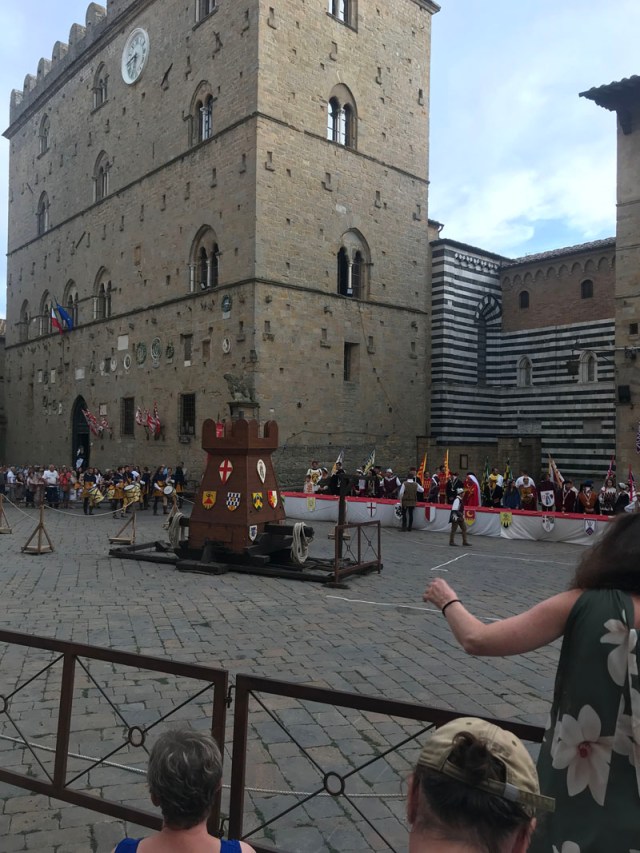
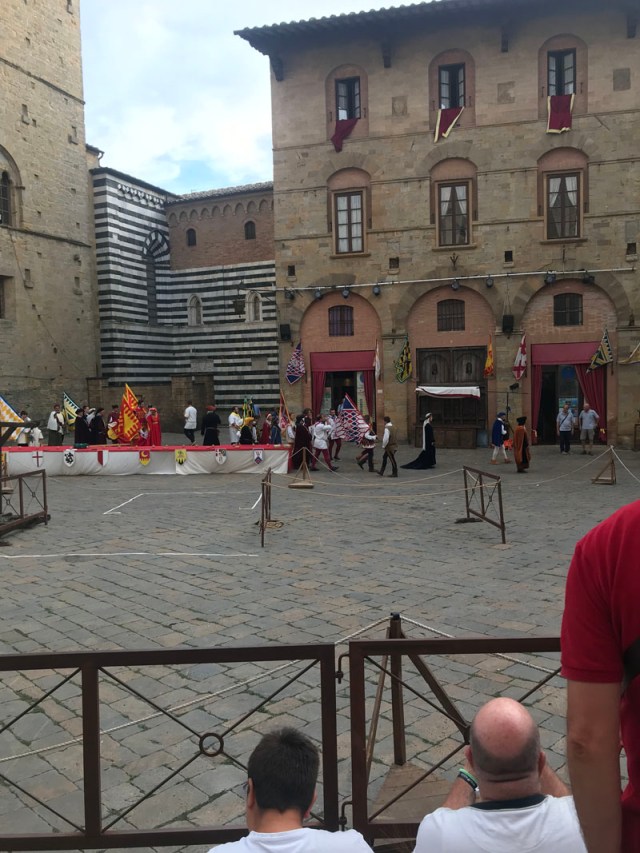
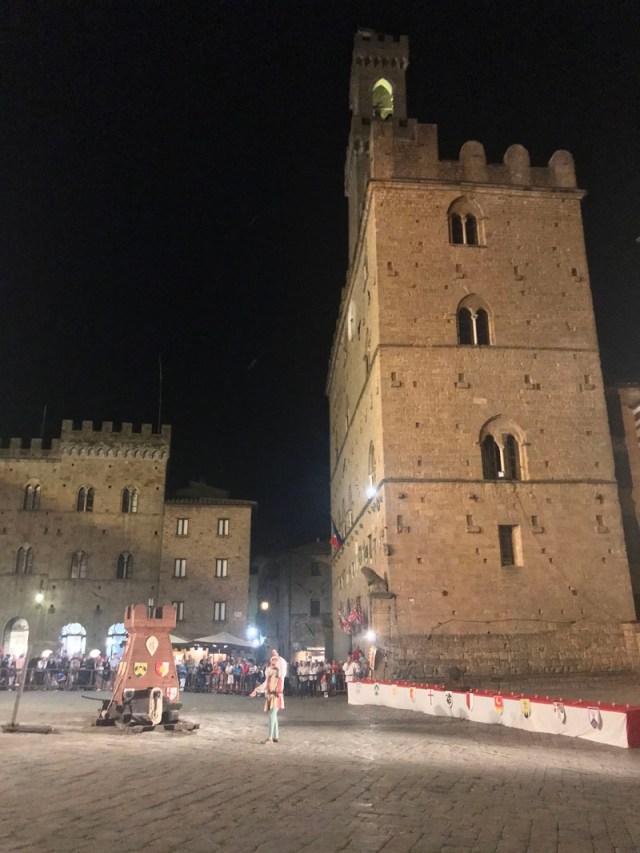
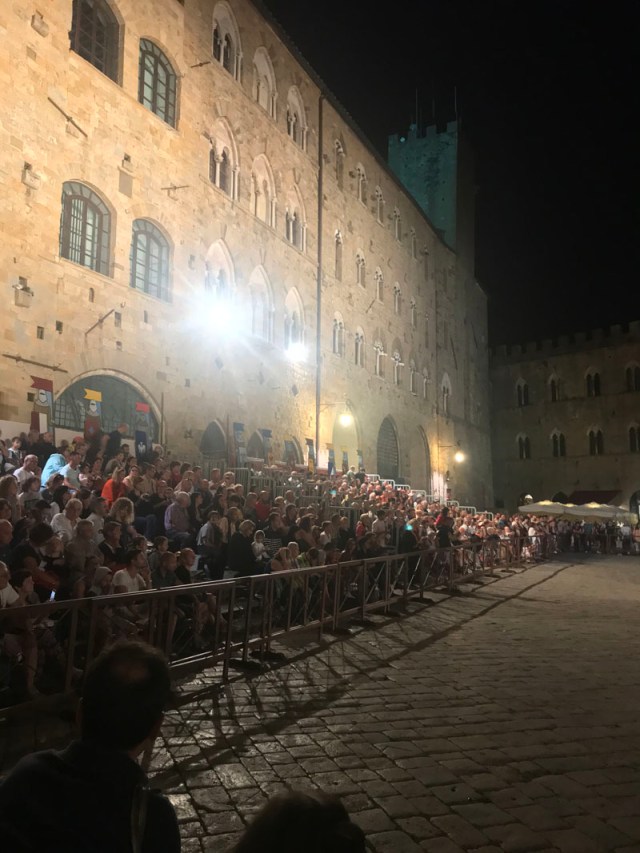
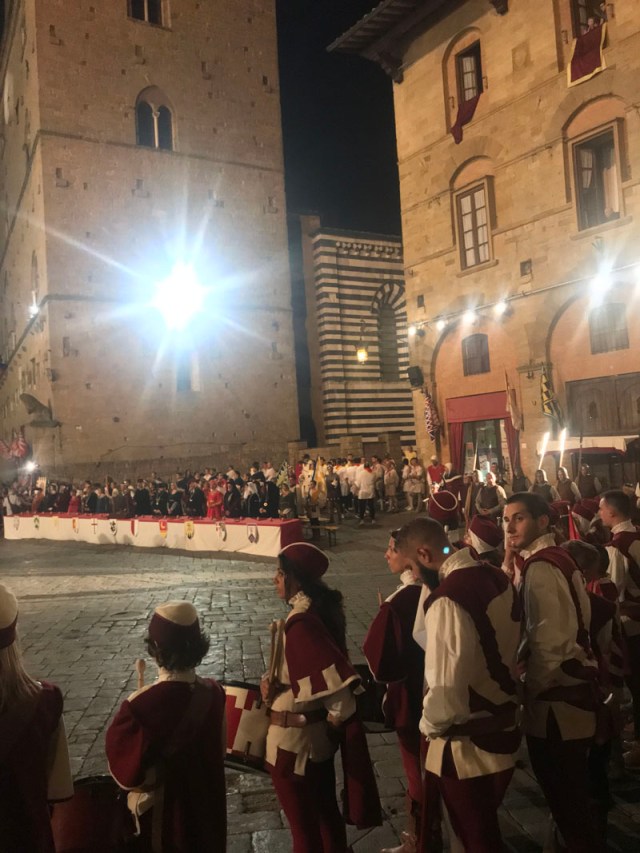
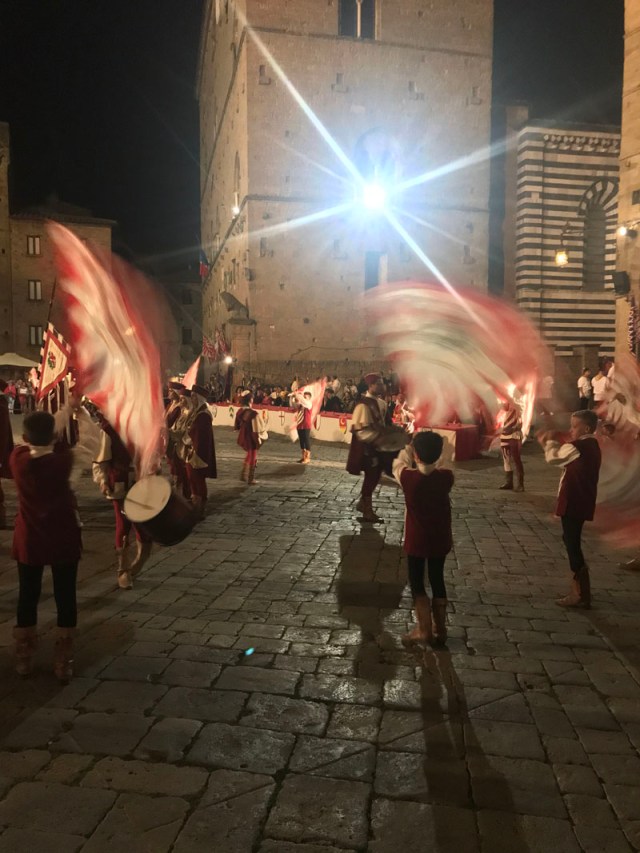
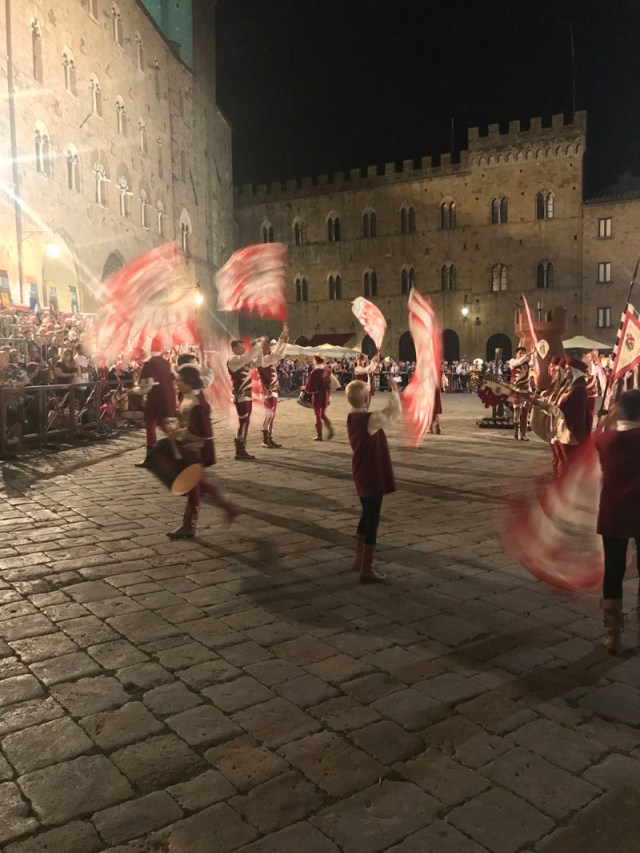
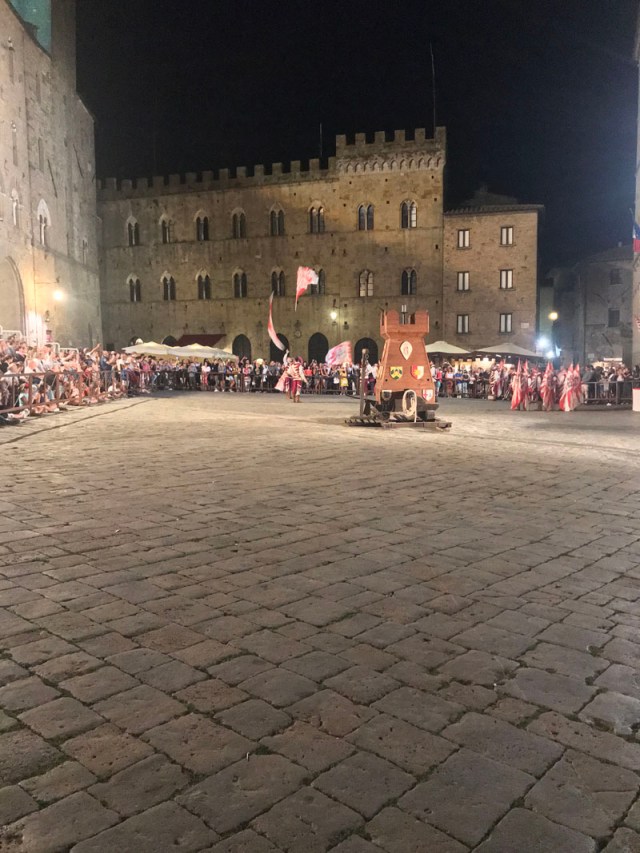
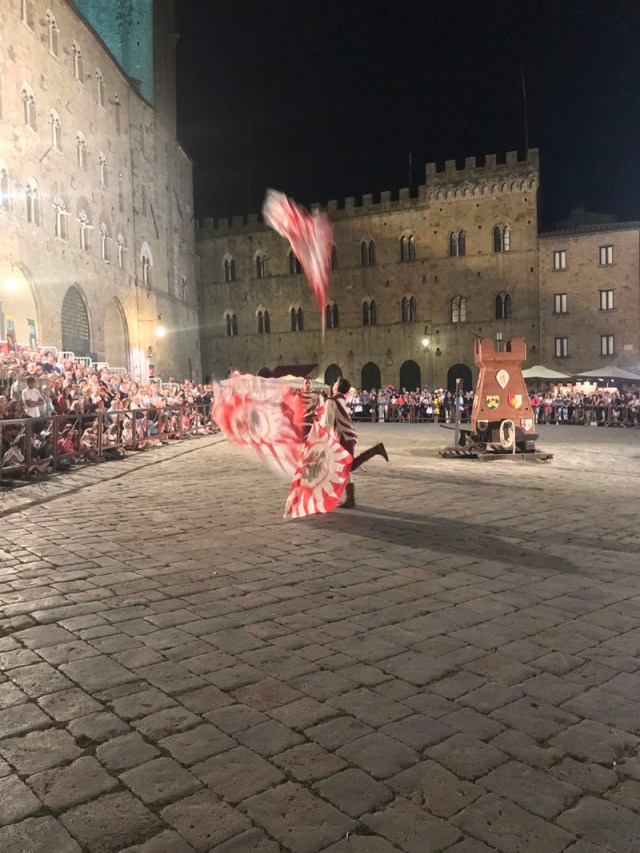
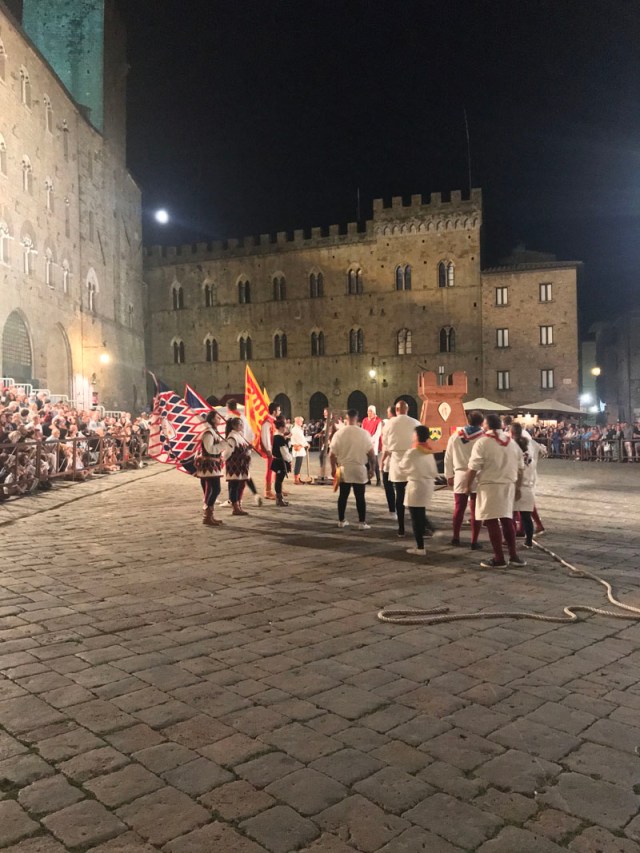
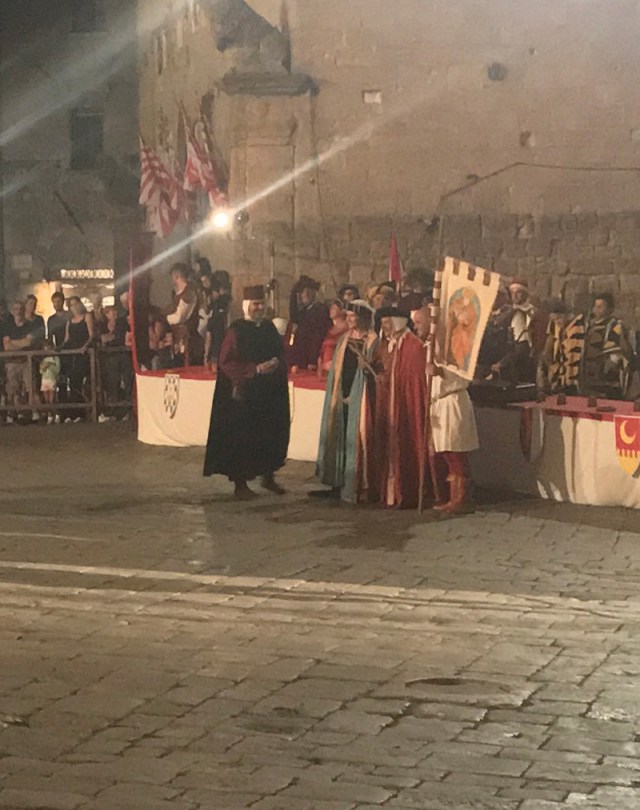
The Astiludio is a medieval-style, flag waving/juggling competition held between cities. Volterra’s team are actually pretty dang good at it. We managed to grab some seats at a temporary set of bleachers and watch the opening ceremony as the teams marched into the square. There were a senior and junior categories. I don’t think Volterra won either category this time around, although it looked to us that the senior squad were the best on offer that day. Sure what do we know?

As you will see in the live-streamed videos below, the Volterran’s are really into it and are proud of their squad.

You’ll also see a special appearance by Geralt of Rivia. Hehe.

And there are a smattering of pics too.

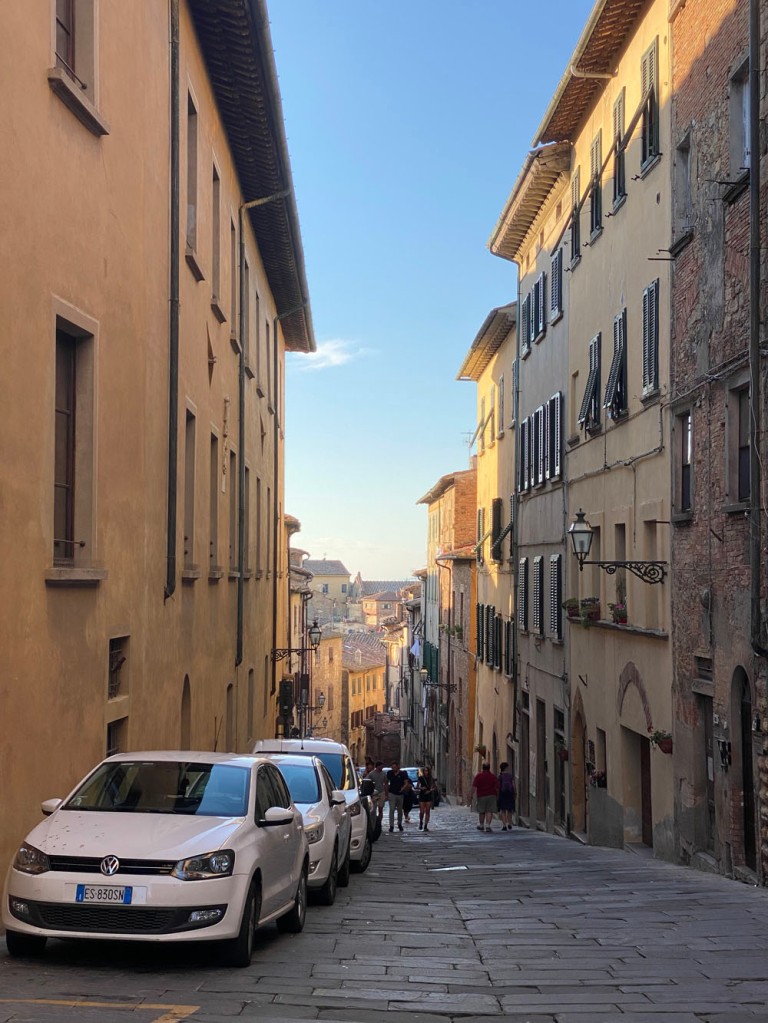
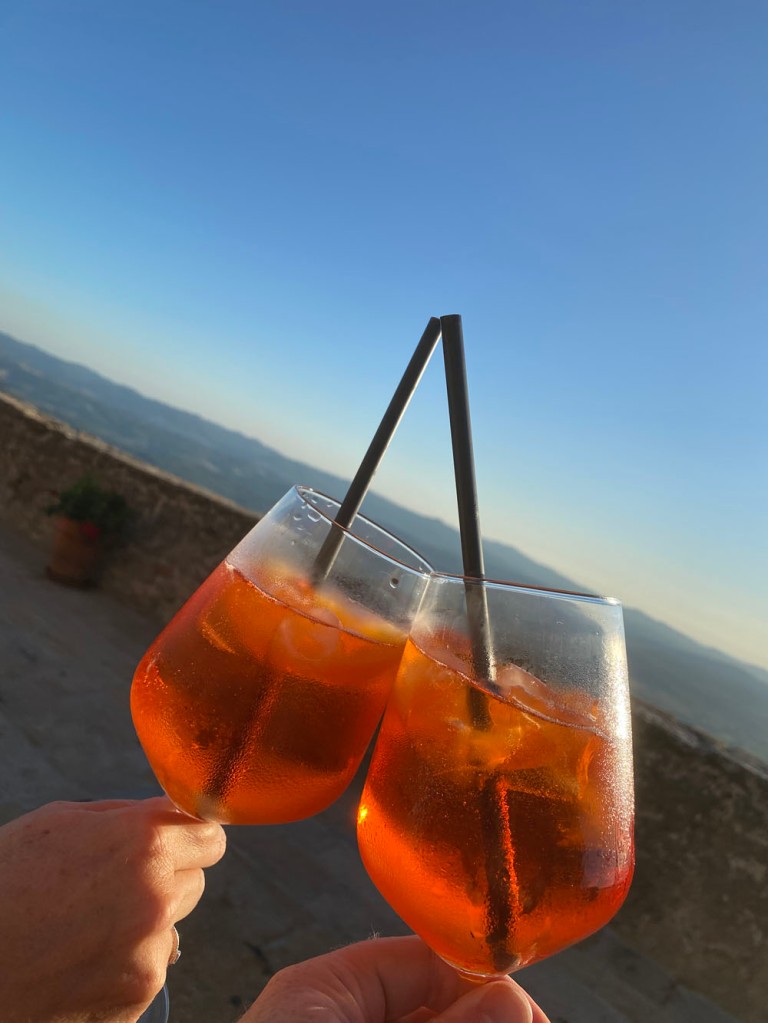
Afterwards, we went for a little stroll and enjoyed aperitivi at Osteria dei Fornelli, the prime spot for enjoying the sunset in Volterra.

Of course, we had food there too, with me occasionally running out to grab some snaps of the slowly-descending sun.

Afterwards, we strolled through the night to our beds.

I hope you enjoyed the read, and watch! Let me know what you think!

Virtual Tour of Volterra #2

Virtual Tour of Volterra #2

It’s been a while since I posted the first tour route, and so this sceond route is long overdue. This post will use the same concept – I will use larger photos. To view full-sized pics, if you’re on a PC:

  1. Right-click an image and select to open it in a new window or tab;
  2. In the address bar, remove all text to the right of ‘.jpg’, then press enter on your keyboard. Many of the photos are quite large.

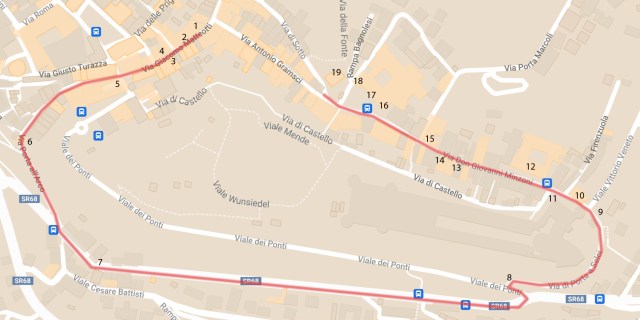
Here’s the route we’ll be following. It’s starts at 1, travels anti-clockwise and ends up at 18.

Note that this will be a lengthy blog with tons of photos.

Andiamo!

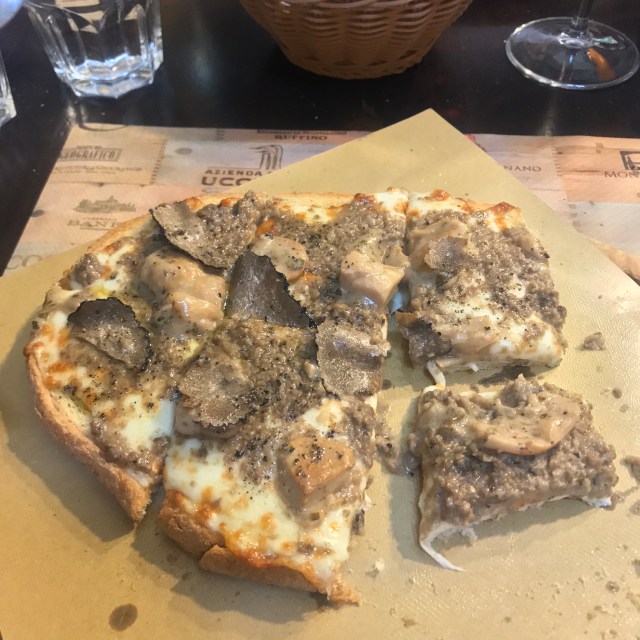
#1: There’s a nice little eaterie right beside the entrance to our apartment building called’ Porgi l’Altra Pancia, which literally means ‘Grow another belly’. With good reason: the portion sizes in here are quite big – certainly pasta dish sizes are bigger than average. They make one of my favourite things in Volterra: a crostino with mushroom and truffle creams, topped with melted cheese and flaked black truffle.

They naturally also have a great selection of wines.

One thing I’ll remember them for is that one of their waiters was really kind to us when our electricity went out, and contacted our building’s super to help us switch it back on (it was just a tripped switch, embarassingly).

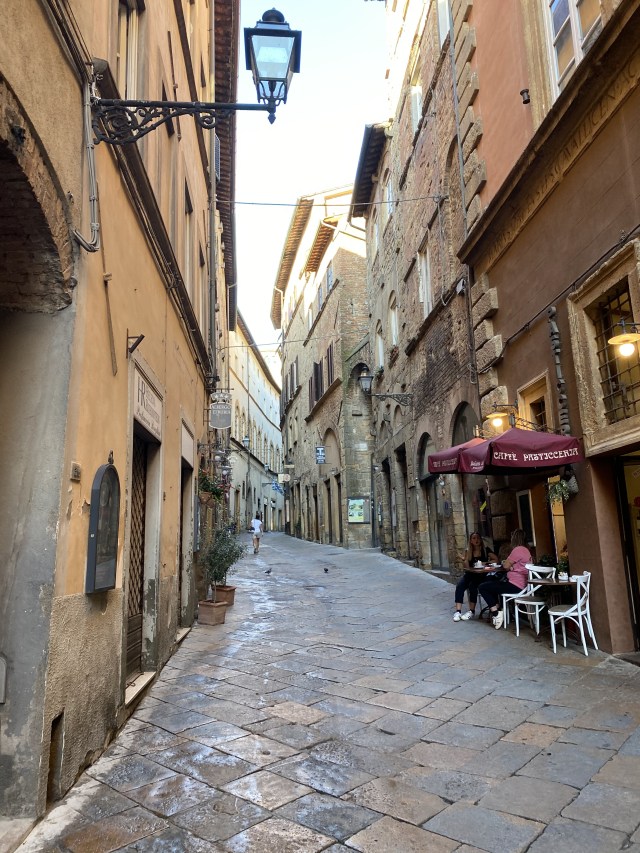
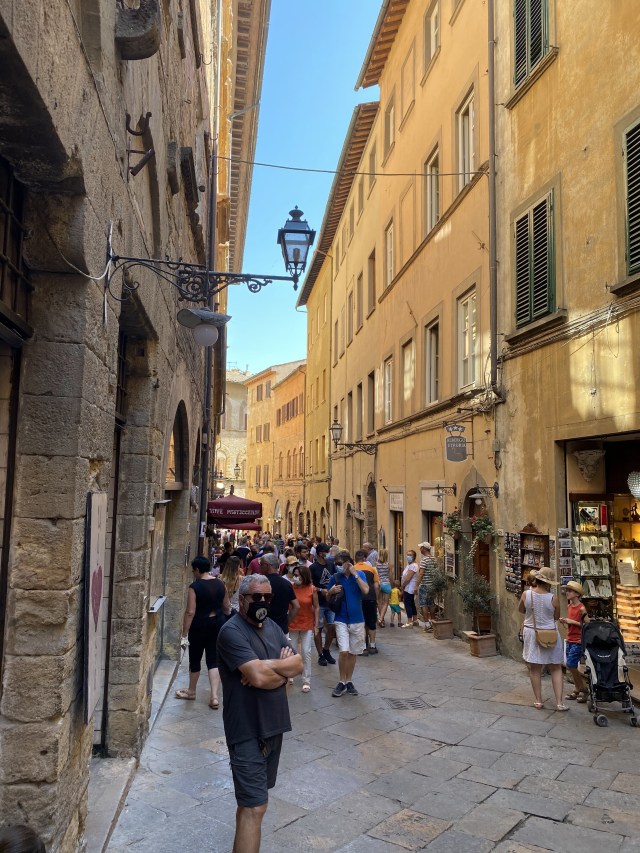
#2: Turning right after leaving the building and heading uphill we pass a pasticceria: Dolceria del Corso, which is one of the three pasticcerie we usually frequent. Unfortunately, the closest thing I have to a photo of it, is one of our street, with the entrance under a burgundy awning.

Their cakes are yummy, and you have a great selection, especially in the morning – to cater for the typical breakfast over most of Italy: a sweet treat with an espresso. I’m down with the former; never developed a taste for the latter – although I love a good coffee gelato!

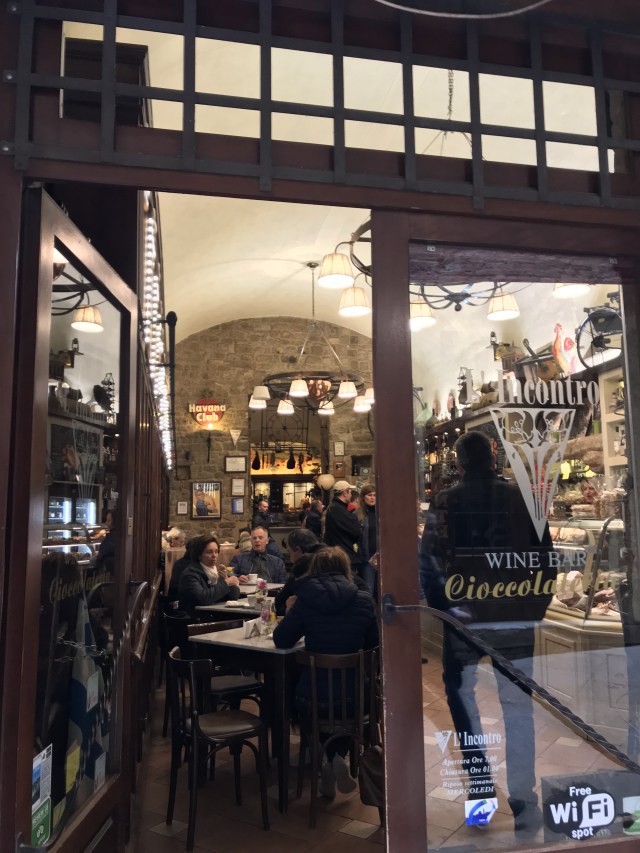
#3: Moving up past Dolceria del Corso, we come across one of the post popular bars in Volterra: L’Incontro. This is a full-on bar, and so has coffee, drinks, is a pasticceria (a good one!) and sells choclolate in the off tourist-season or gelato in-season. I think their gelato is great – maybe second to Isola del Gusto, but still really excellent – and they tend to rotate their flavours a little more often.

You’ll often see people here hanging around during breakfast, during aperitivo and after dinner hours. It can get really busy. Like with all places that serve coffee, you’ll pay normal rates to drink at the bar, and a little more to sit by a table.

#4: You’ll find a restaurant, La Vecchia Lira, almost opposite l’Incontro. We’ve only eaten here a couple of times, but are always impressed by the enthusiasm of the owner. The menu leans more towards traditional, but they have some modern takes too – and a daily specials board. Definitely give them a go when you’re in town!

#5: By now our bellies are ridiculously full, but we’re not done yet. Just beyond the crossroads where Via Giacomo Matteotti (the road we were just on) meets with Via dei Marchesi (look right and you’ll see the Palazzo dei Priori), lies the road we’ll be going straight down: Via Porta all’Arco.

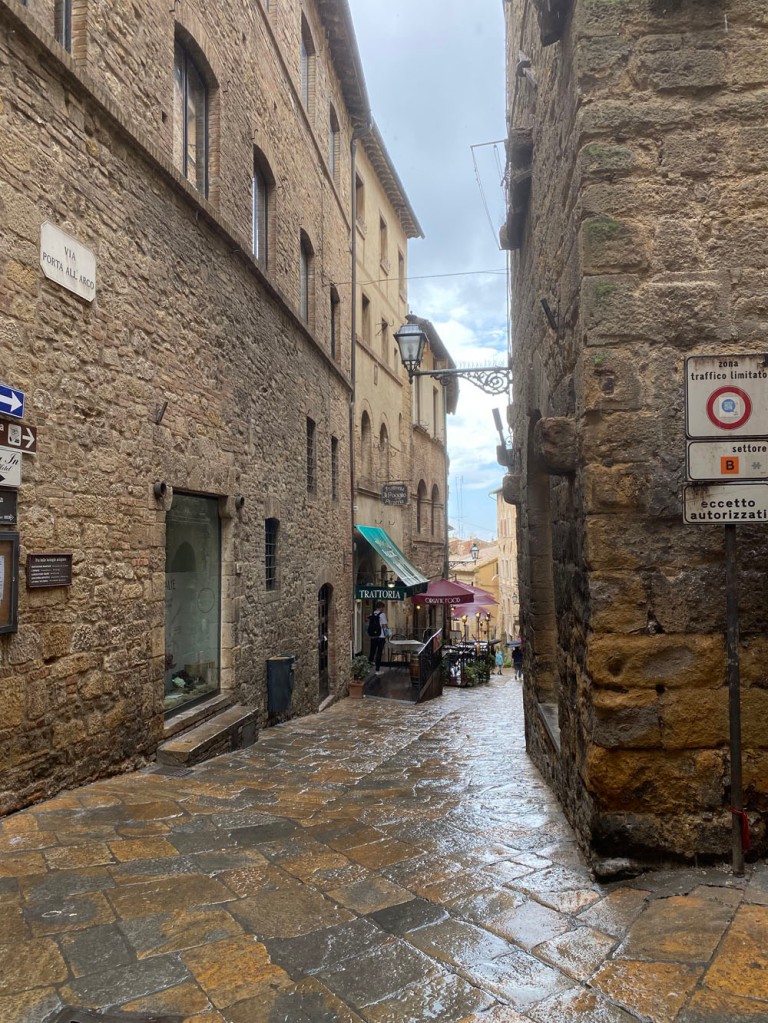
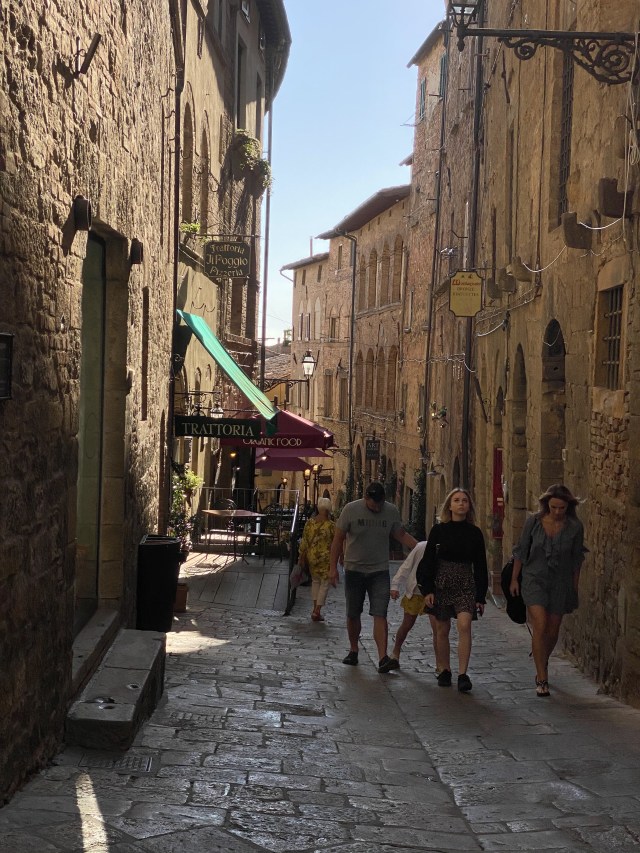
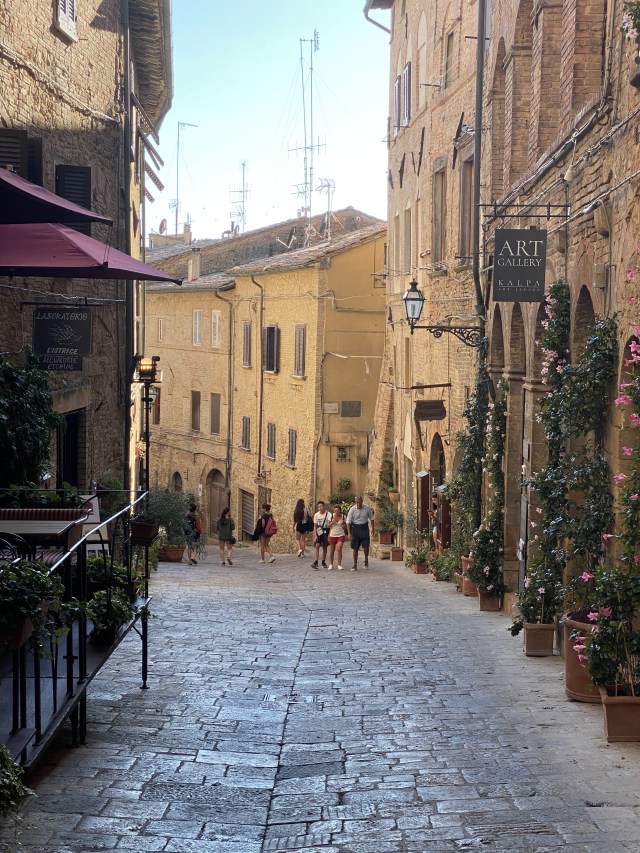
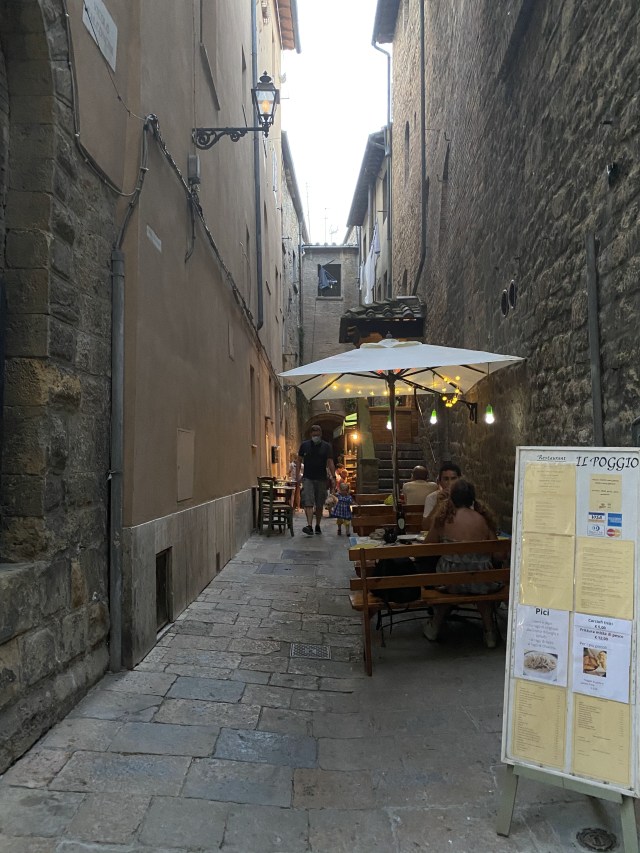
Just a few meters down the road lie two restaurants: Il Poggio and Life Bistro – together they are often the most photographed exteriors in Volterra, due to them being on this beautiful sloping and curving artisan street.

I have to admit to never having eaten in Life Bistro, as it is a purely plant-based restaurant. I am not ethically opposed to this, of course, but there are few world cuisines that turn me on with its vegan offerings, and this includes Italian food. Only food from the Indian subcontinent comes close. However, if this appeals for you then I would say you’re in for a treat, even if just for the restaurant setting itself. I know Niamh wants to give it a go, just to see what it’s like, so we might do next time we’re over.

They seem to have a standard menu, plus a section where you select your own ingredients and ask them to assemble and/or cook them. However, look down, and you’ll see some of the floor is transparent – below it you’ll see some ruins that date all the way back to Etruscan times (2,300 to 2,800 years old).

Il Poggio is a more inclusive place, and has a bit of a touristic menu – with pasta, meat and pizza offerings. There are typical traditional dishes too, and if memory serves me correctly, a couple of German plates. The cooking isn’t stellar, but it’s fine to go to for something quick and maybe if you have kids, due to the variety of what’s on offer. In addition, it has some cute outside seating in a lane at the back.

For now, though let’s continue on down this lovely street, to discover why it’s been named the way it has.

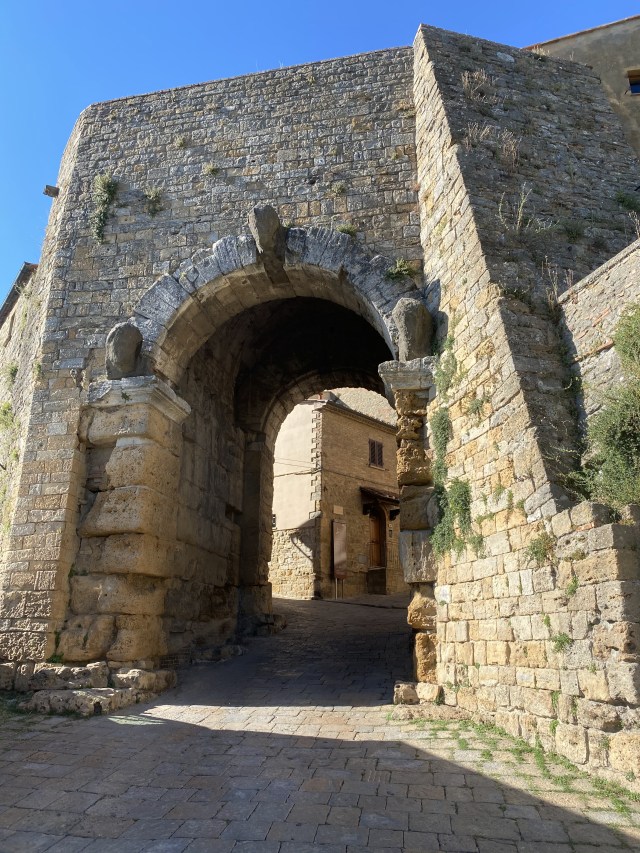
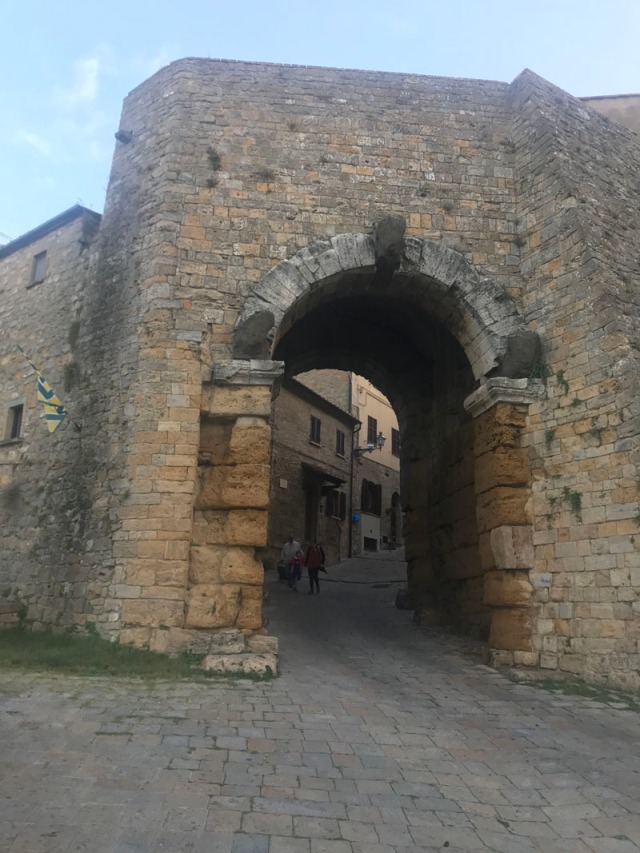
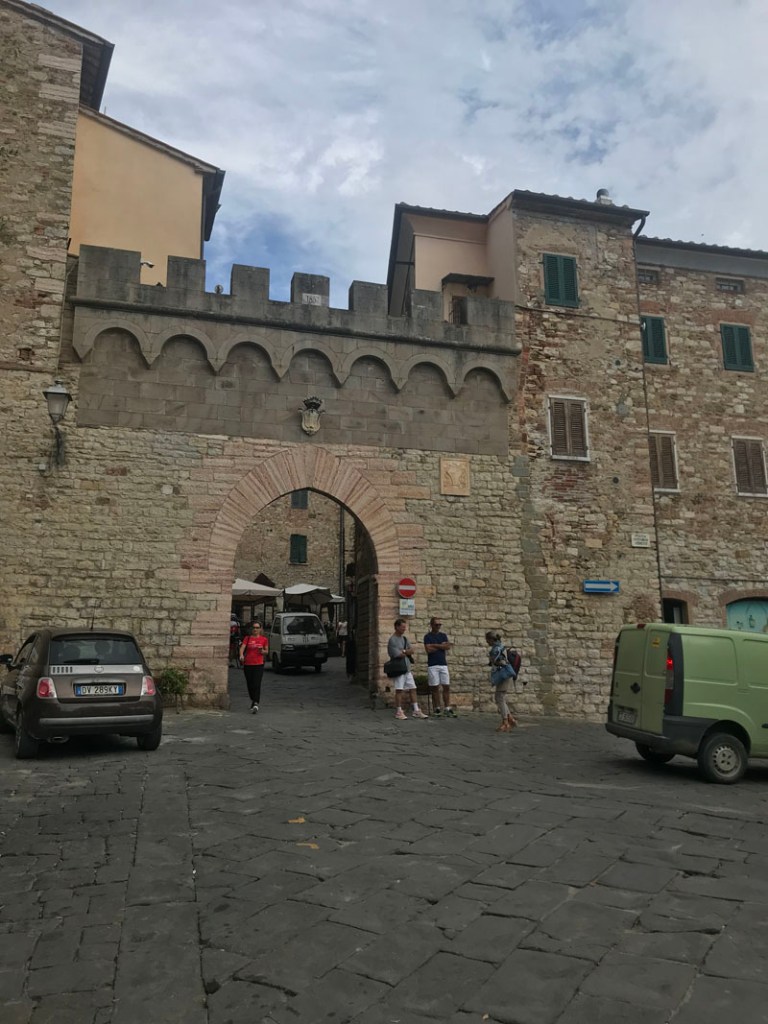
#6: At the bottom of this street lines one of the old gates into the walled town. It’s called Porta all’Arco. Actually, “old” doesn’t really cut it. The larger blocks you can see in the photos below are Etruscan in origin, and are about 2,300 to 2,500 years old.

The three heads at the top, and most probably the arch are Roman. The detail of the busts has worn away over the centuries, but is said to be the heads of three Roman gods, most probably Jupiter along with Castor and Pollux (or Uni and Minerva – let’s not have a debate!).

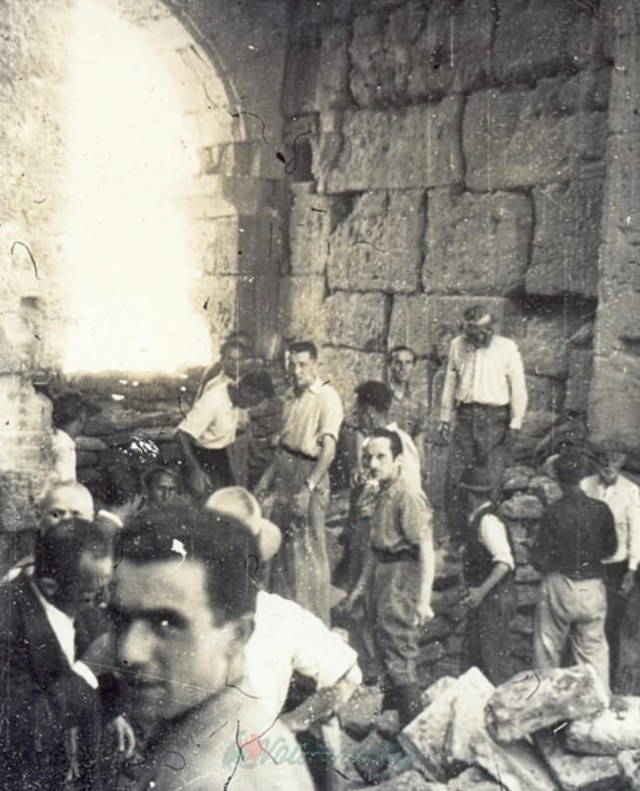
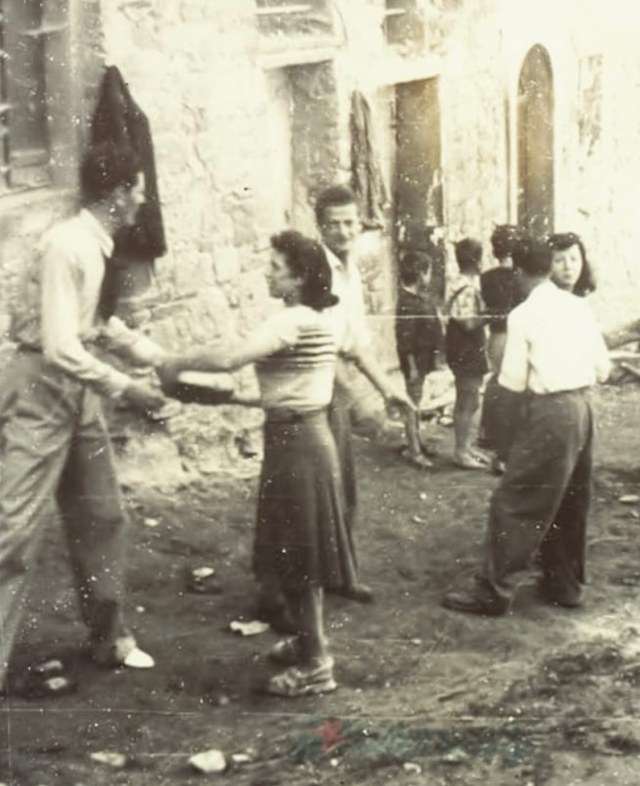
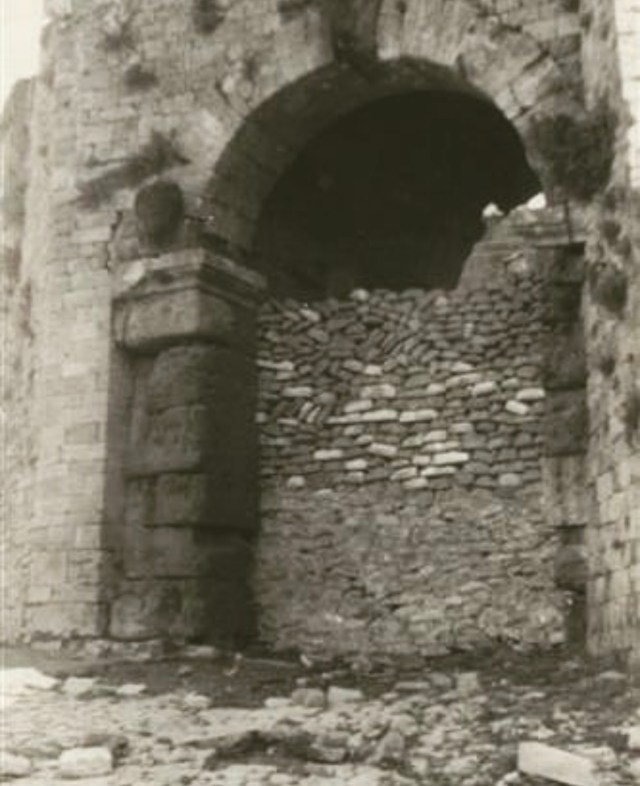
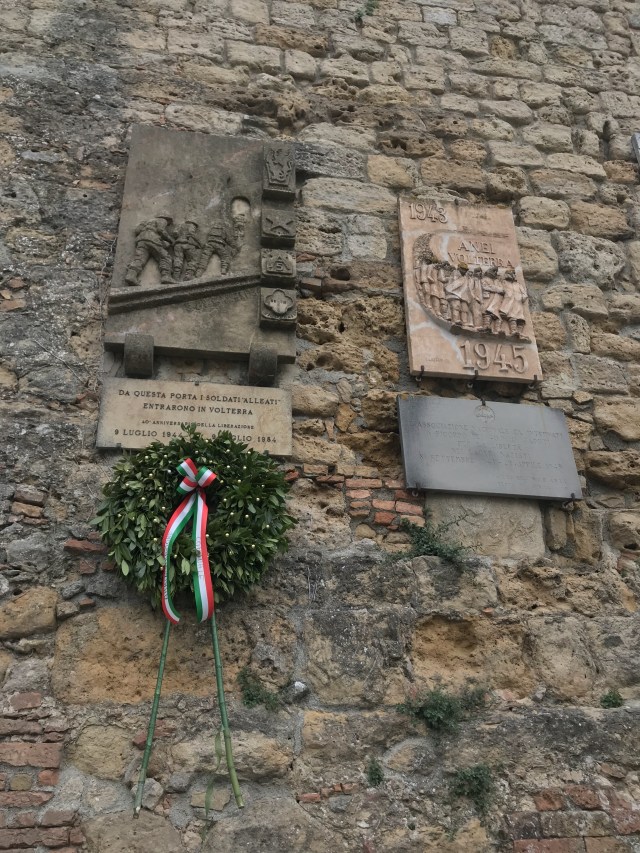
Towards the end of the second World War, the Nazis threatened the gate with destruction during their retreat, in an effort to slow down the Allied advance. The townsfolk pleaded to save their gate, and said that they would instead block it. They were given 24 hours to do this, probably by those who thought “Yeah right, good luck!”. However, they did it by forming a human converyor belt and passing stones from hand to hand, and the gate remains to this day. Here are some photos. They are not mine, so I ask the forgiveness of those who may own the copyright.

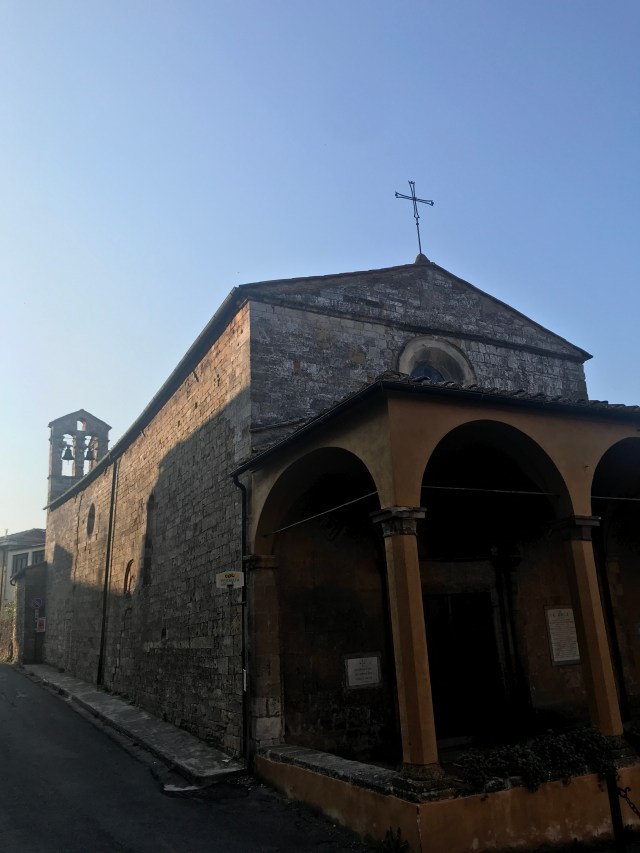
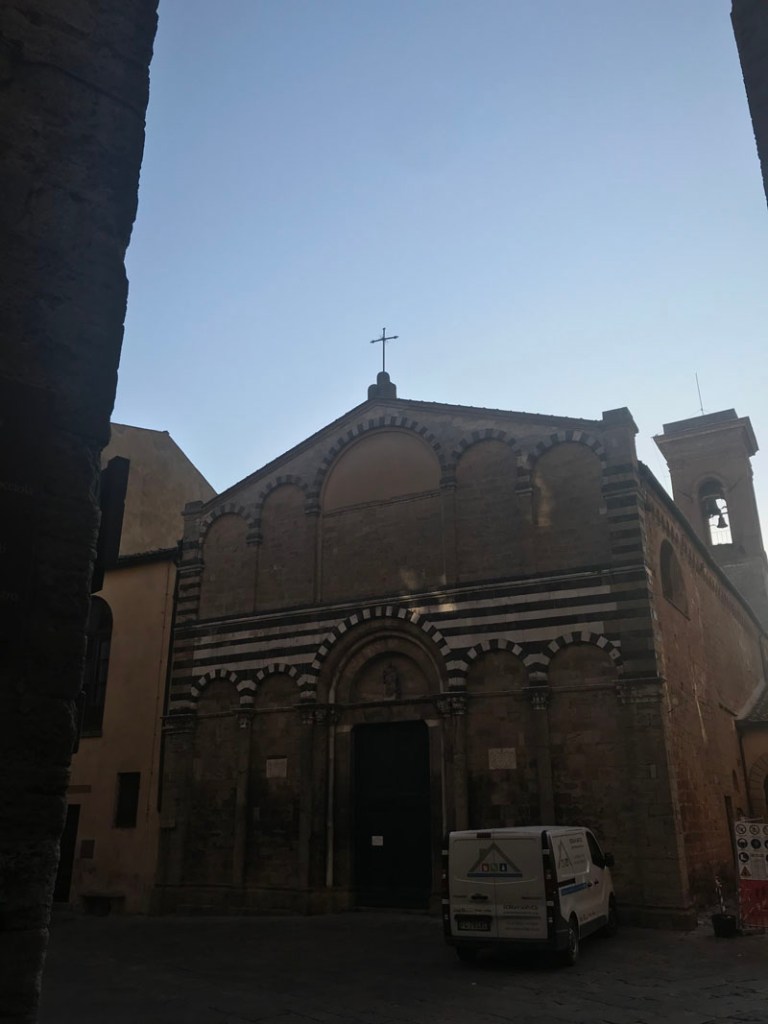
#7: A ramp a little over 100m leads down to the parts of the town outside the walls. Passing a cute little bar (Giordani’s), we head southeast for a few meters, and where the road bends towards the east we pivot to our right to have a look at the belltower of Chiesa di Sant’Alessandro.

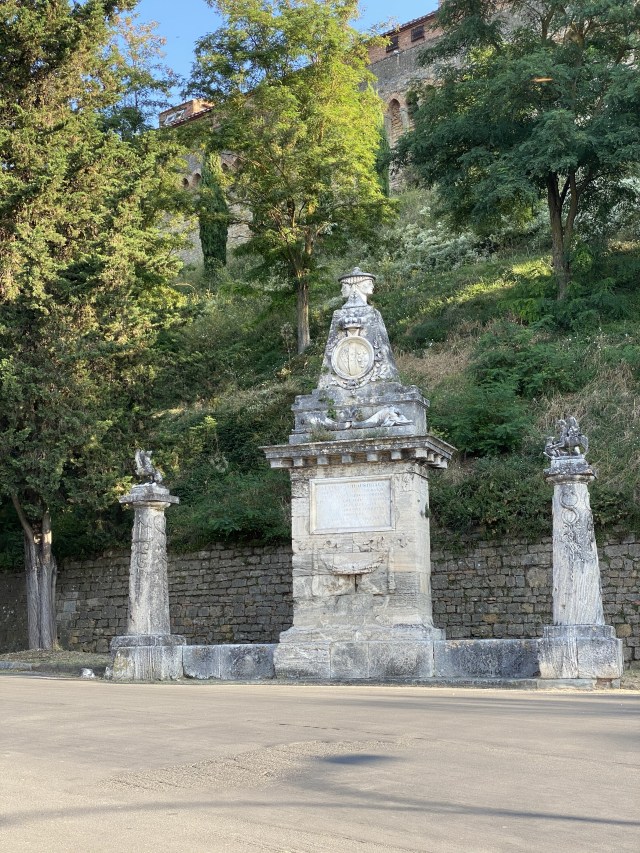
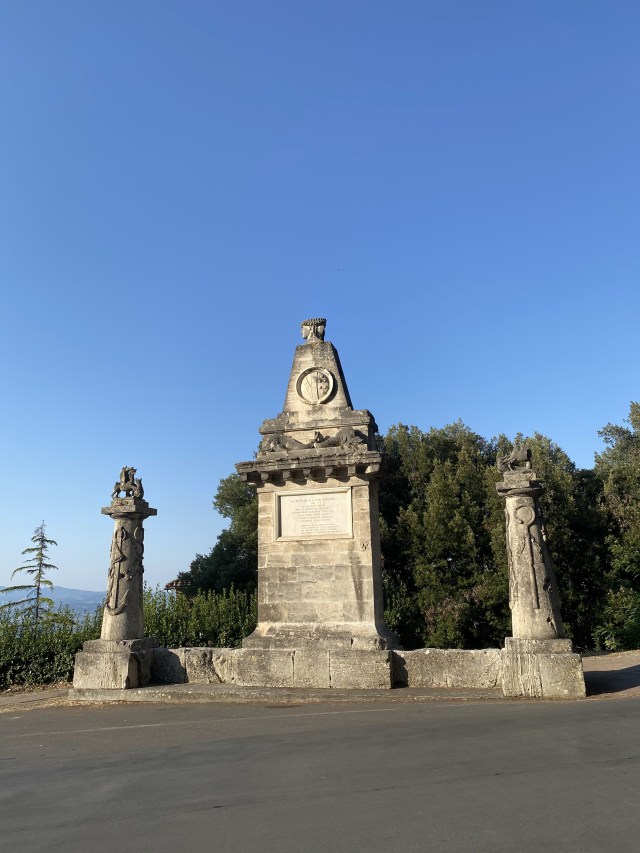
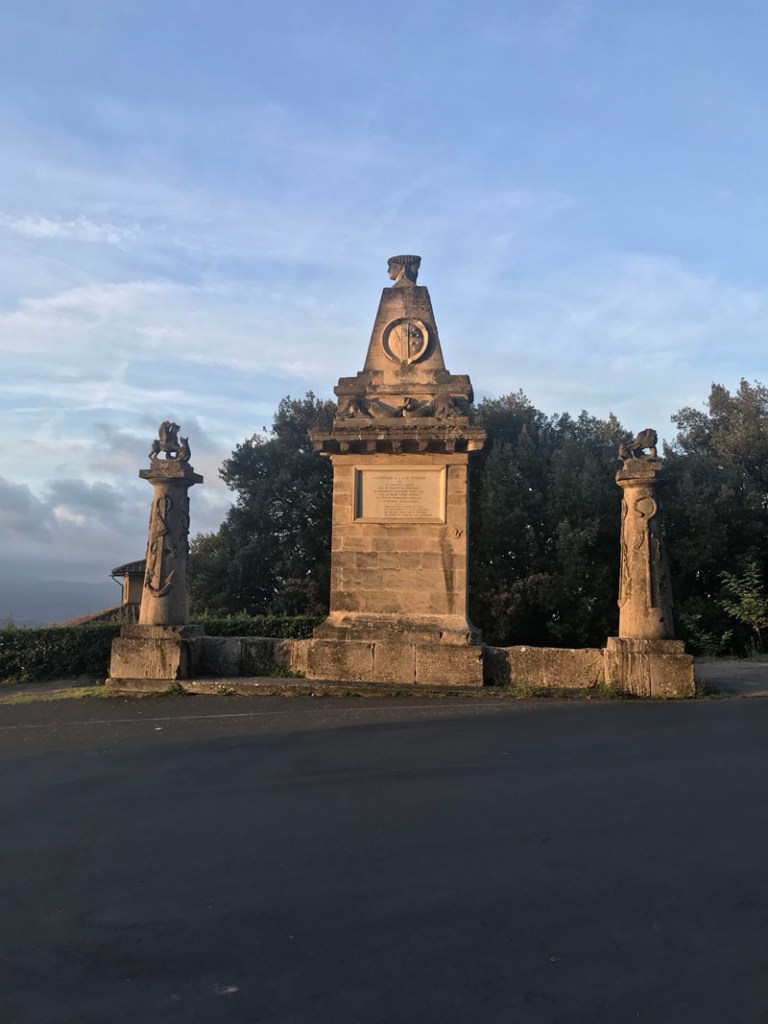
#8: We head uphill for a couple of hundred meters, until we have to cross the road to have a look at the lovely memorials at the bottom of Viale dei Ponti. In Ireland we don’t have an abundance of war memorials, whereas on continental Europe, they’re in a great many towns and villages.

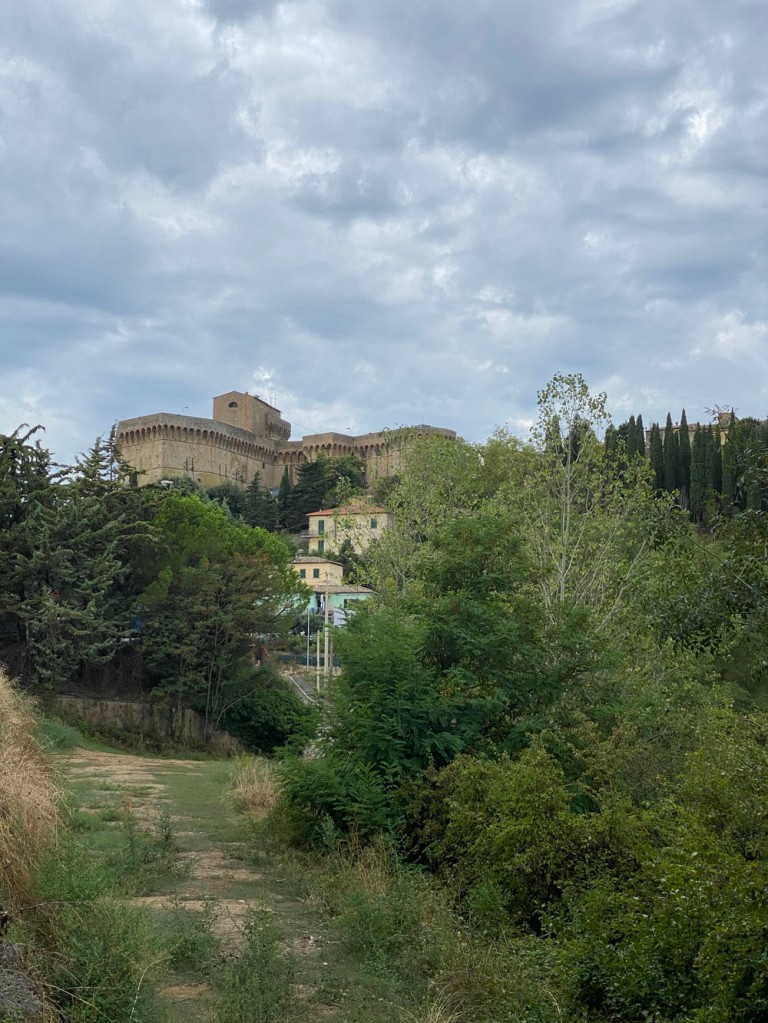
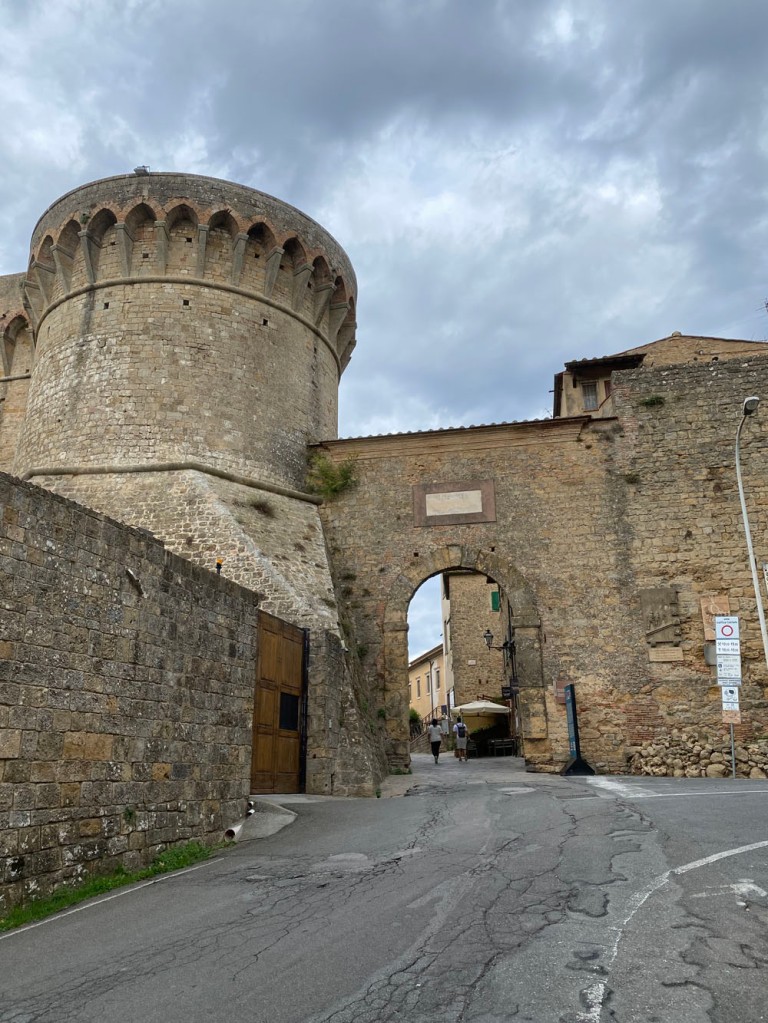
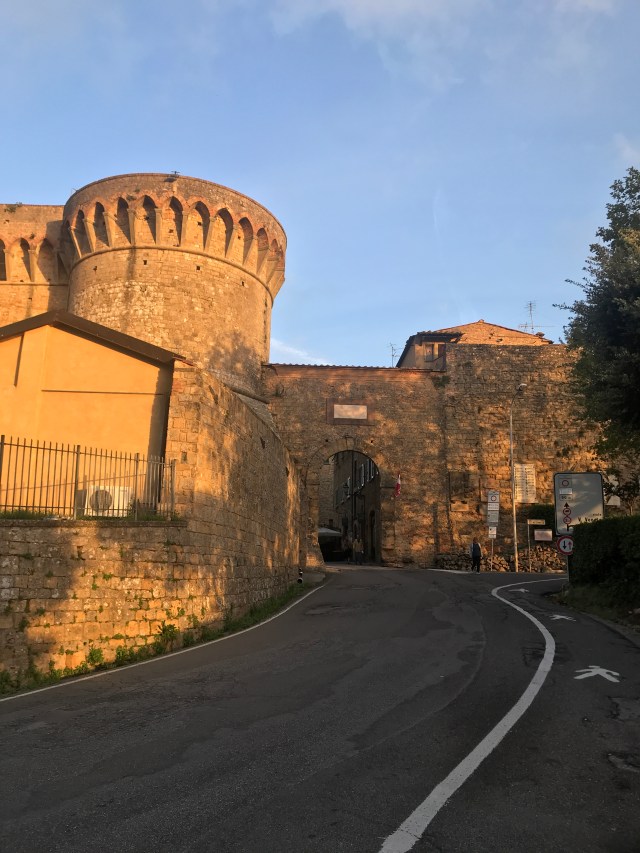
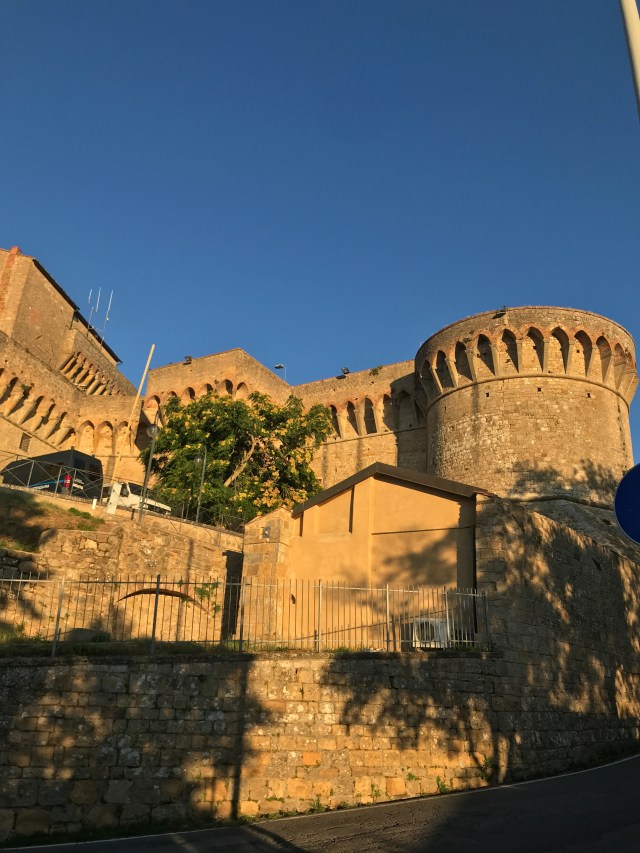
#9: We don’t head up the gently upwards sloping Viale dei Ponti, but take a left then a swift right that curls backwards. We can see the walls of the Medicean Fortress here, and the steep path leads us to one of the main gates to the walled town: Porta a Selci. Caution as a pedestrian, as this the only gate where you might meet traffic coming in both directions.

#10: Through the gate and to the right, you’ll find Osteria La Pace. They serve one of the best pasta sauces in Volterra here: wild boar with black olives. I love it especially with pici (pronounced ‘peachy’), a form of thick noodle.

Not pictured is a killer tiramisù, served in a large coffee cup… delicious. This place is definitely worth a visit.

#11: Opposite the restaurant, there is a ramp which leads up to an old fortress, which is still very intact – and necessarily so, as it is a medium security prison. It was originally built in the mid-14th centry, and updated by the Medici in the late 15th.

It’s no ordinary prison, though. Rather than simply confining people for the purposes of punishment, they attempt to rehabilitate. The three major programmes I am aware of are:

  1. Allowing trustee residents to occasionally leave the prison to gain work experience in some of the businesses in the town;
  2. Teach residents how to run a restaurant from top to bottom, by having a chef come in and open up the prison as a restaurant, around once a month. You can book a table here, if you book well in advance. I suspect you’ll have to wait for the current pandemic emergency to be done with too; and
  3. They also run an acting school and dramatic troupe from the fortress, one of the most renowned in Italy. They occasionally put on shows – both normal dramatic pieces, as well as experimental theatre.

I think it’s a wonderful thing to do, rather than simply throwing away the key. It would be interested to see the level of non-recidivism as a result of this.

In 2019, they opened one of the fortress’ towers for tours in September and October. I visited – more on this here. They may revert to doing this every year, pandemic permitting.

#12: If you clicked on the link which detailed the visit to the fortress tower, you will have seen that once a year, in mid-September, they have an arts festival one night. Many museums are free to visit, and many private buildings are opened for visit. It’s a great idea, and it enables you to see parts of the town you would never see otherwise.

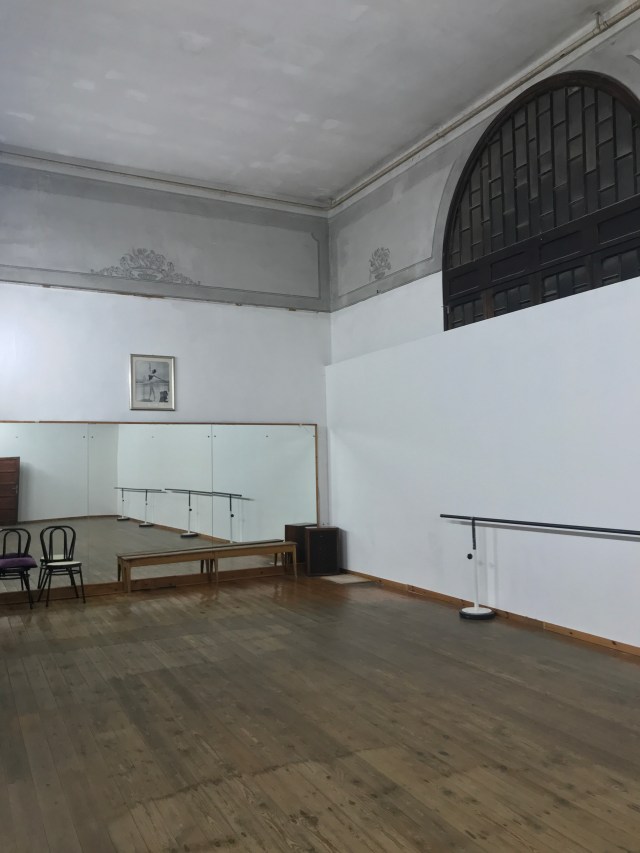
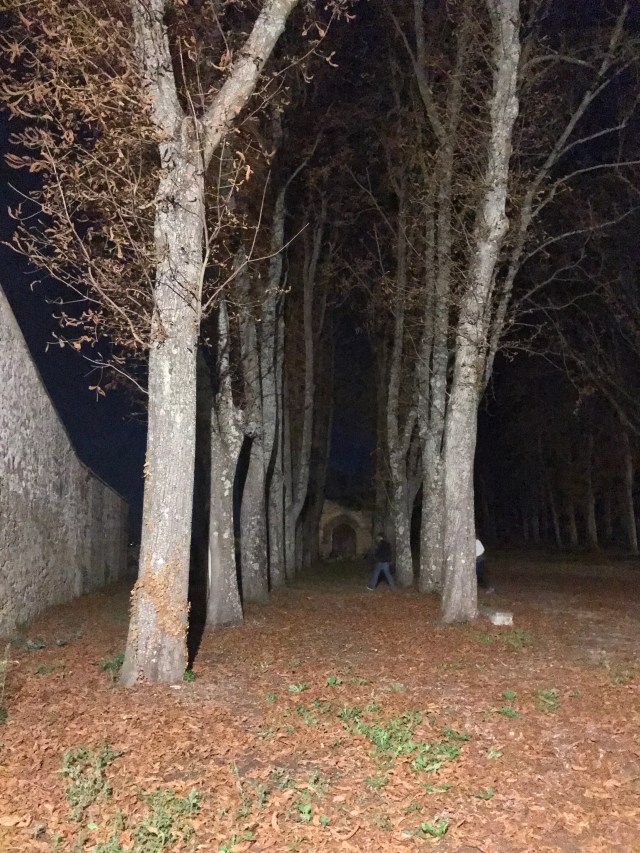
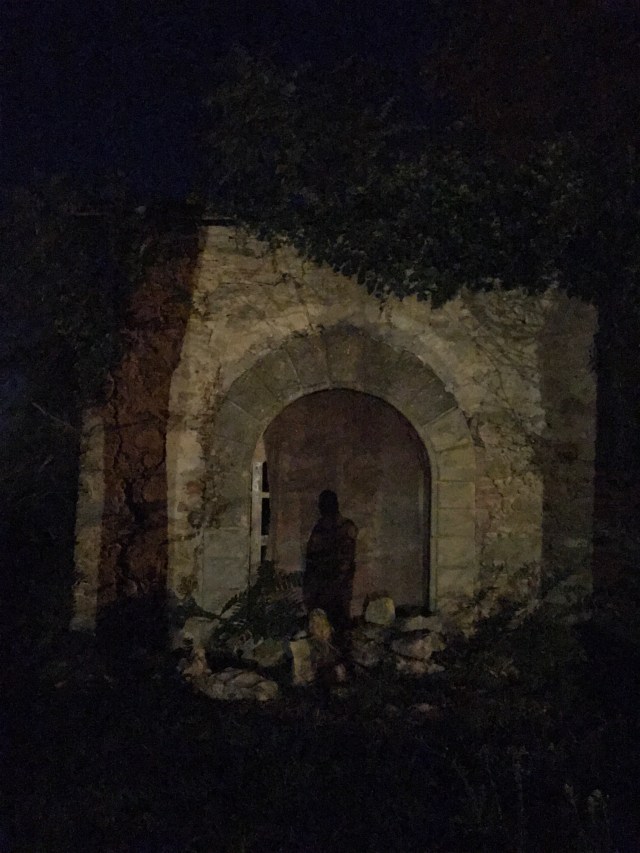
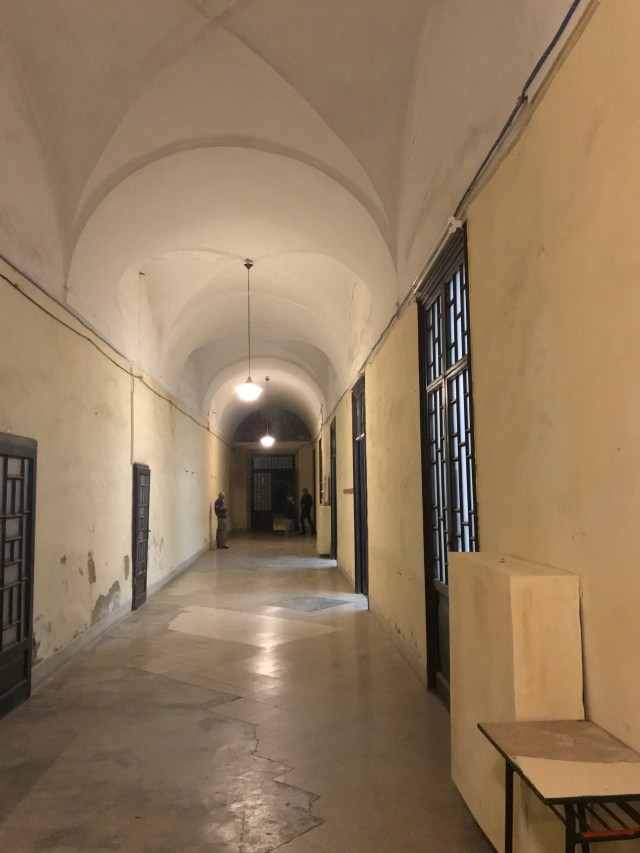
One of these buildings is just up from the Fortress: Centro Danza Classica di Volterra. It’s a dance studio/school. At the back is a large garden, which you would never otherwise see… and it’s kind of spooky at night.

#13: Another 120-150 meters down on the right, you’ll find a gallery: Colpa del Vento, which features the works of Vanna Spagnolo. She’s a lovely, ethusiastic and talented lady who specialises in Tuscan bucolic scenes. Niamh and I, and later on, Niamh’s mother, bought lovely pieces from here. Here’s ours:

As far as I can tell, Vanna doesn’t paint using references, but from memory, and hikes around Volterra frequently for inspiration.

I hear that she may be closing her shop some time in September this year. Niamh and I hope to catch up and maybe add a piece to our apartment from her collection. Good luck, Vanna!

#14: To my regret, I don’t have any photos from La Vena di Vino, a wine bar just beyond Colpa del Vento. I’ve had some amazing fried fish in here, and the owner is always keen to recommend wines to regulars and first-timers alike. The ceiling of the bar is also one of the most notorious in Volterra: it is strewn with brassiers, presumably from ladies volunteering to give them up.

I have not witnessed, nor (thankfully) been asked.

#15: A little farther down on the right lies the entrance to the Guarnacci Etruscan Museum. It is one of the oldest continuously open museums in the world (the pandemic notwithstanding), and has been welcoming visitors since 1761.

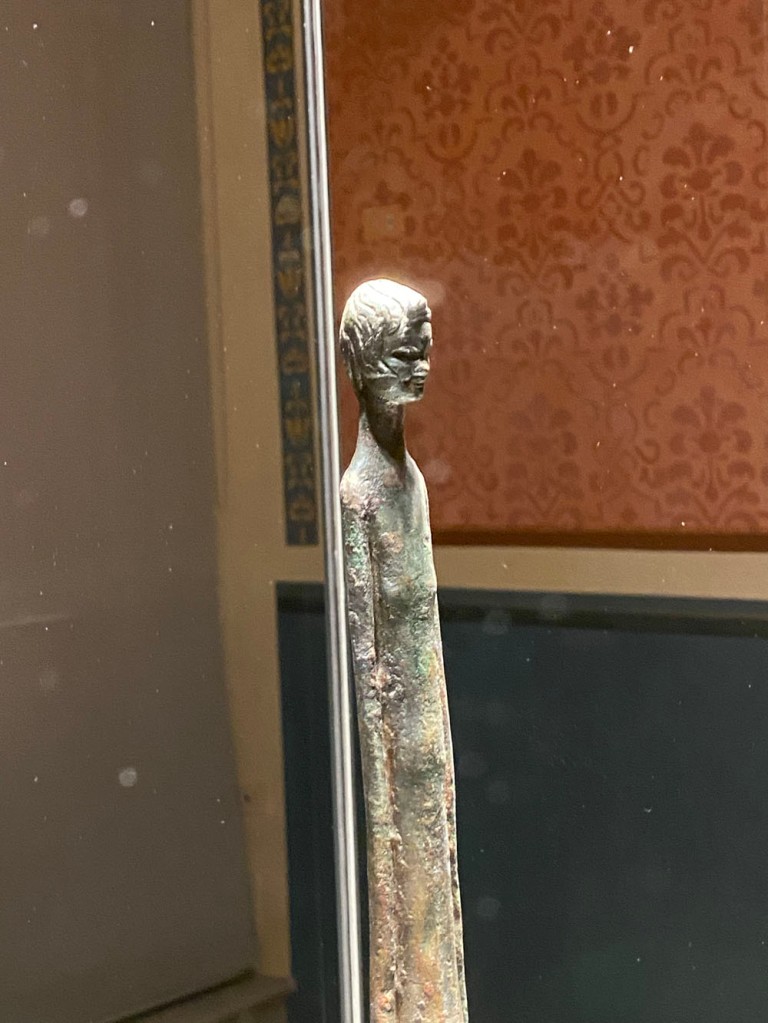
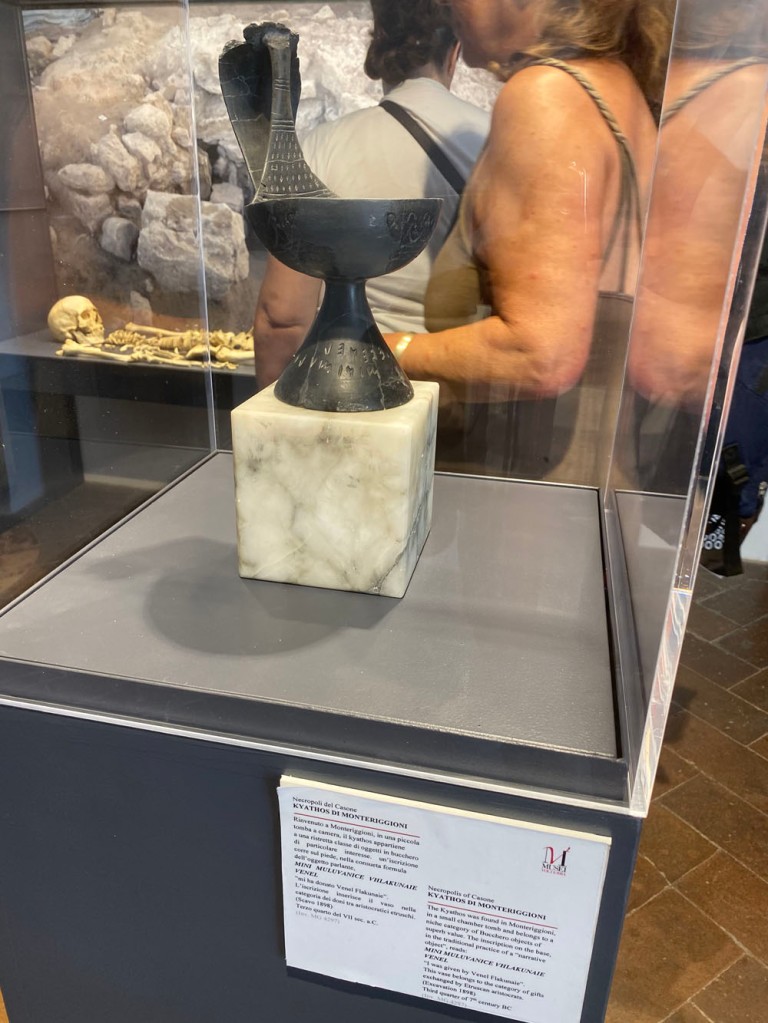
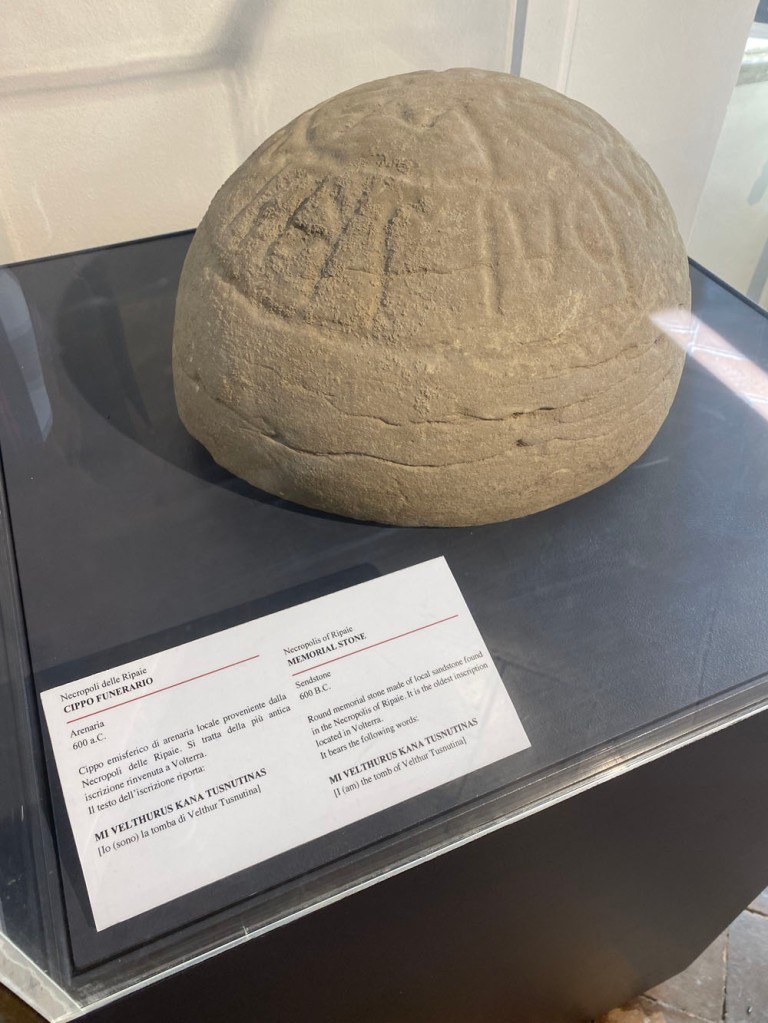
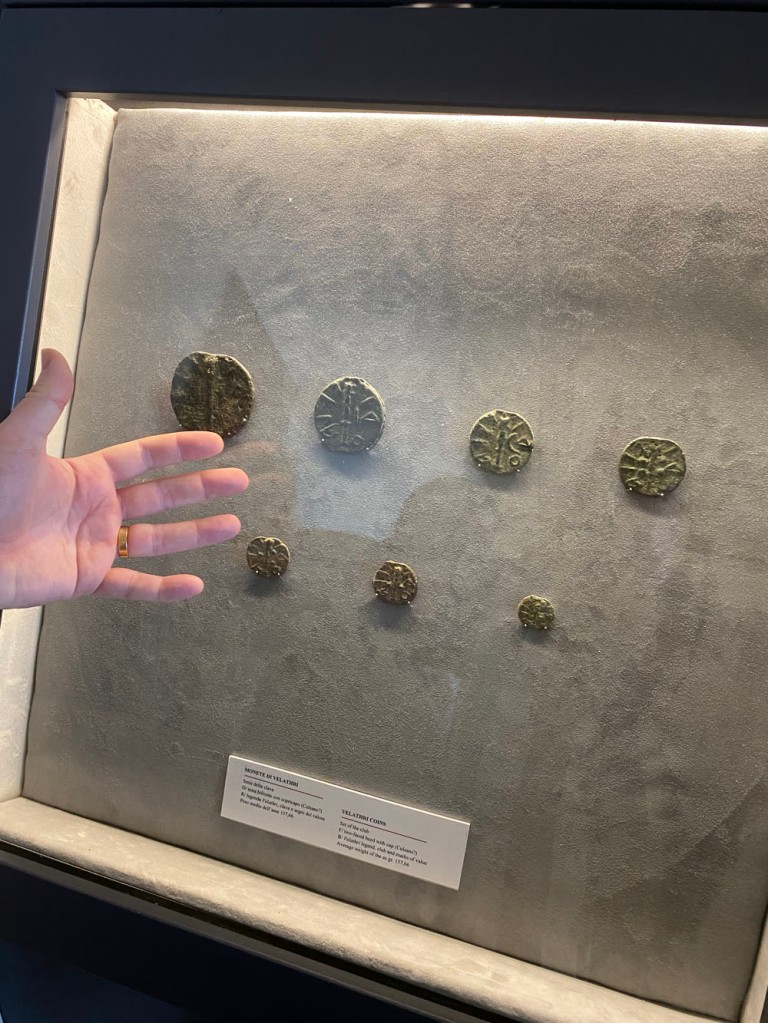
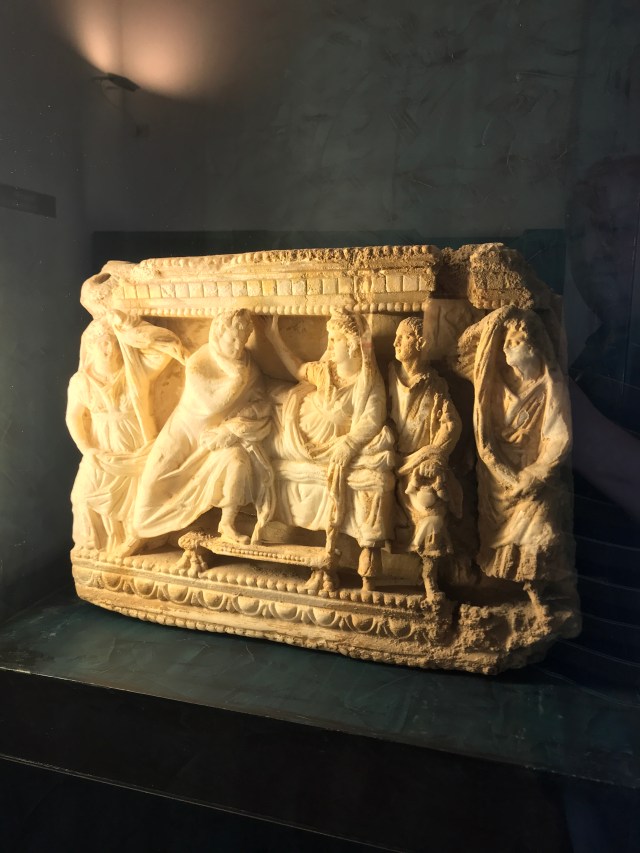
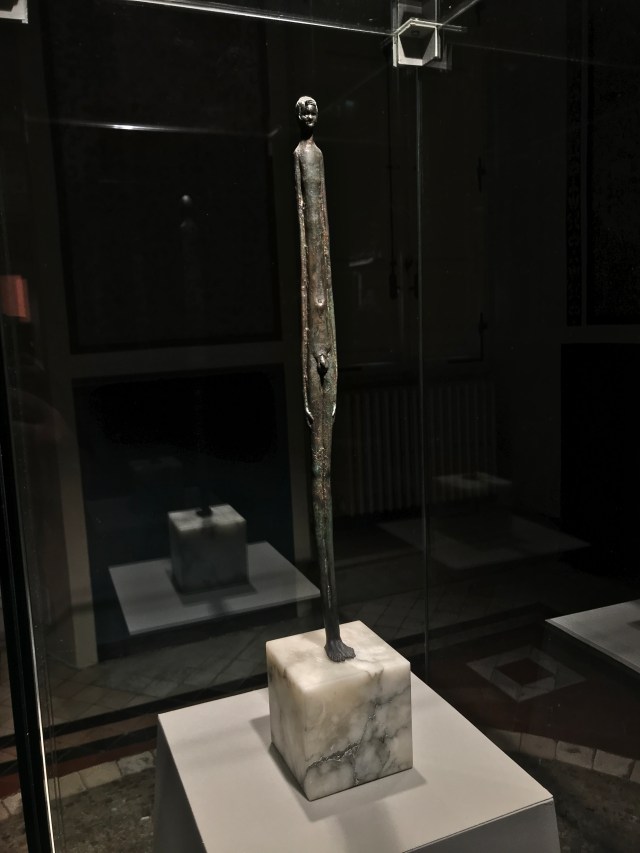
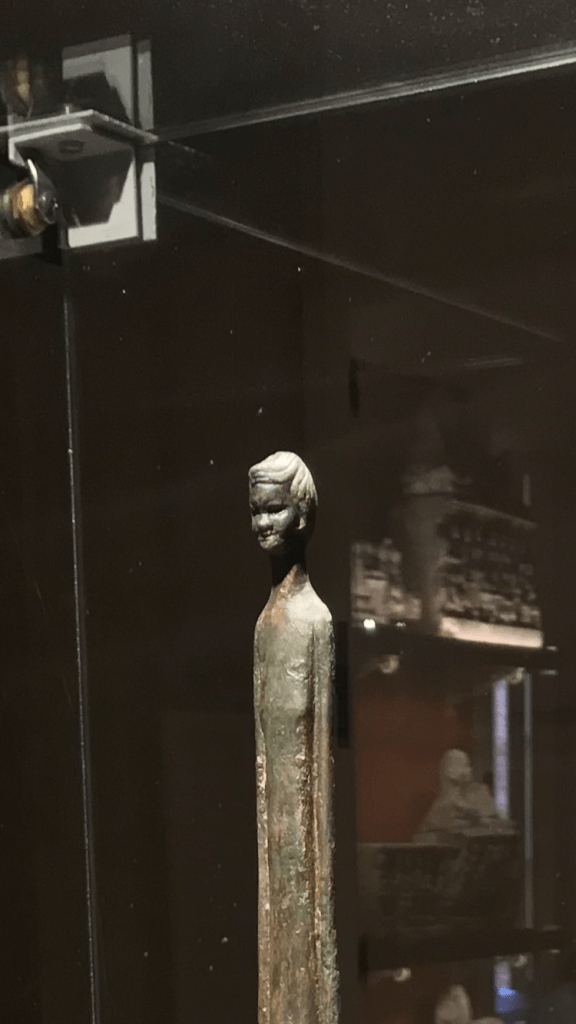
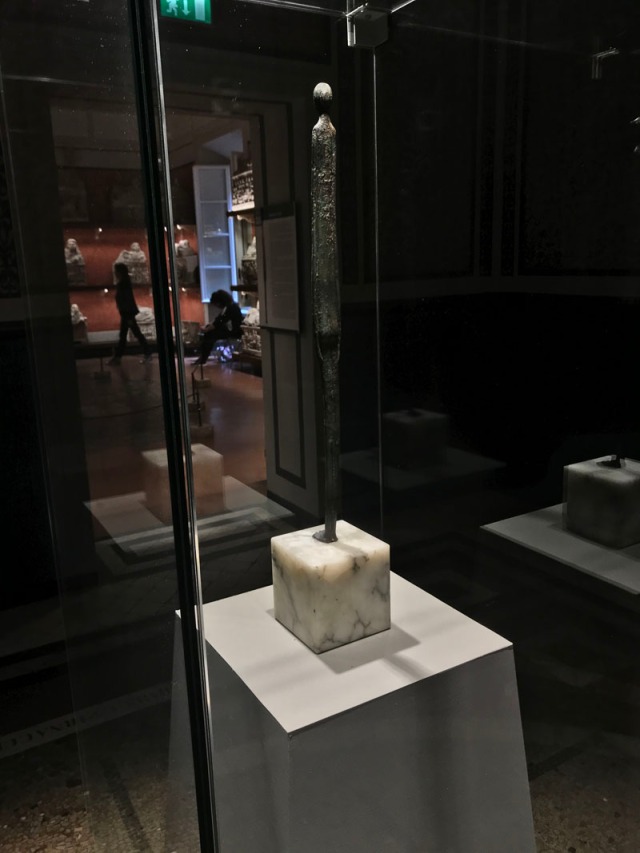
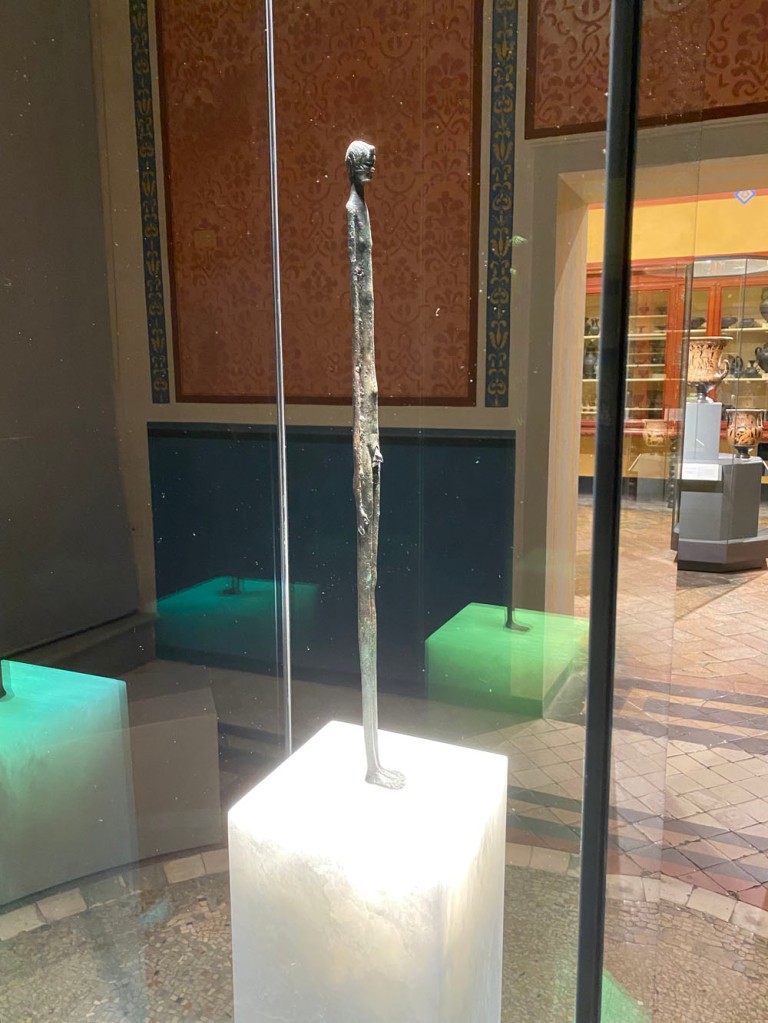
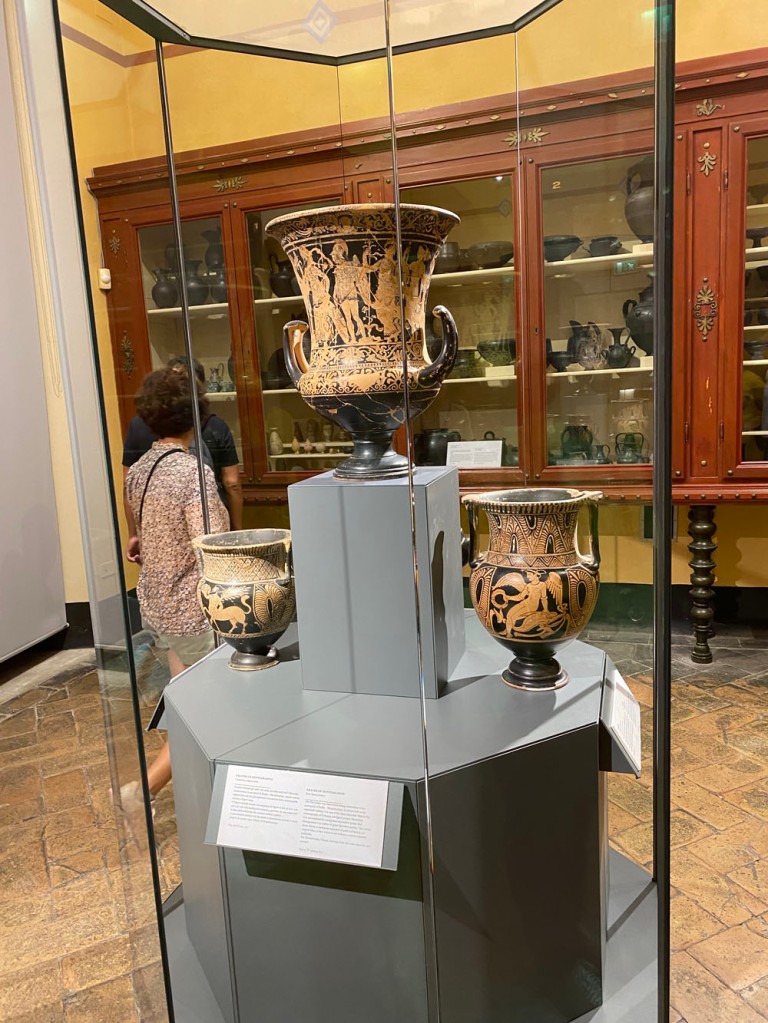
Within lie tons of Etruscan goodies: funerary urns, coins, warrior’s tombs, pottery with Greco influences. It has a couple of masterworks: the funerary urn of the married couple, and a spookily elongated bronze statue of a child called L’Ombra Della Sera.

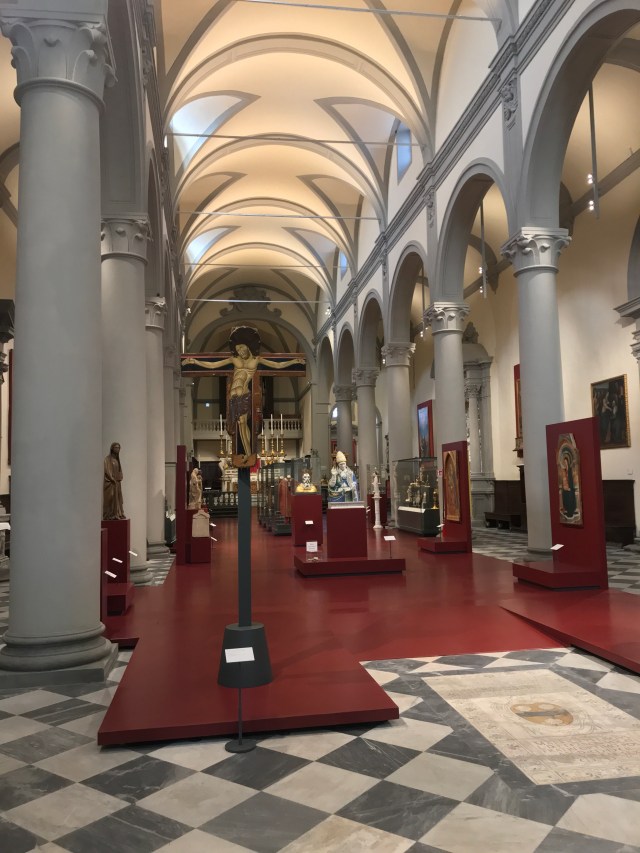
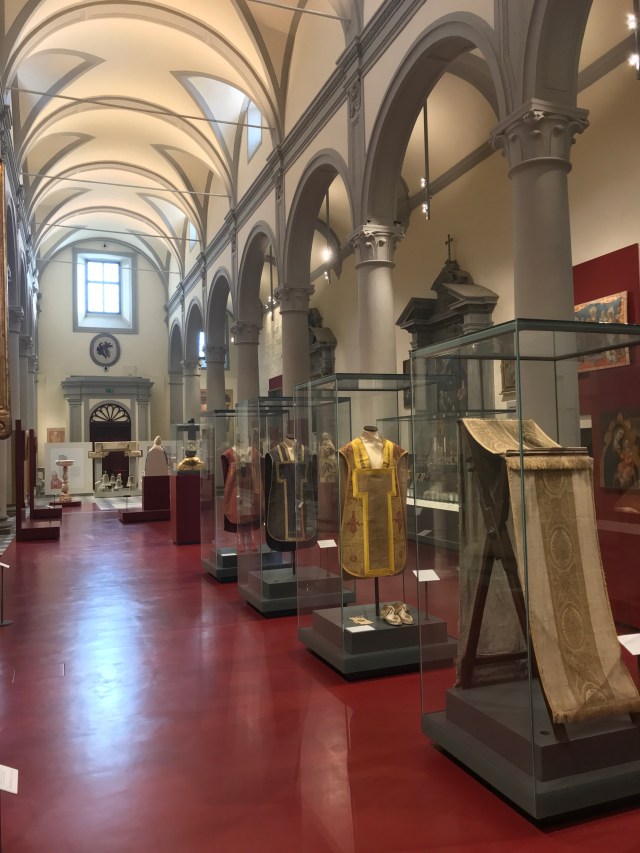
#16: A little beyond the Guarnacci museum, and past Volterra’s library lies the Museum of Sacred Art. It’s worth a quick visit and a stroll around. I have covered this place in another blog post here.

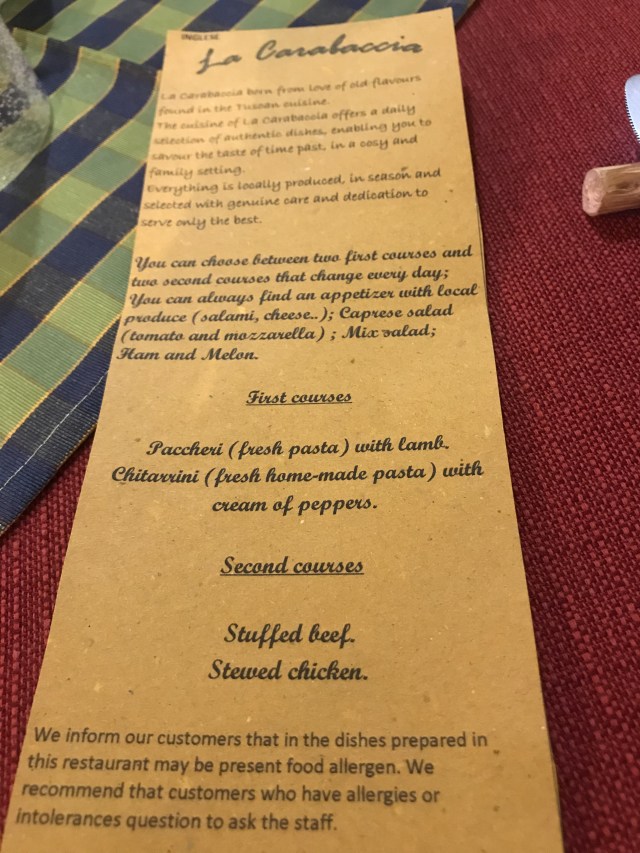
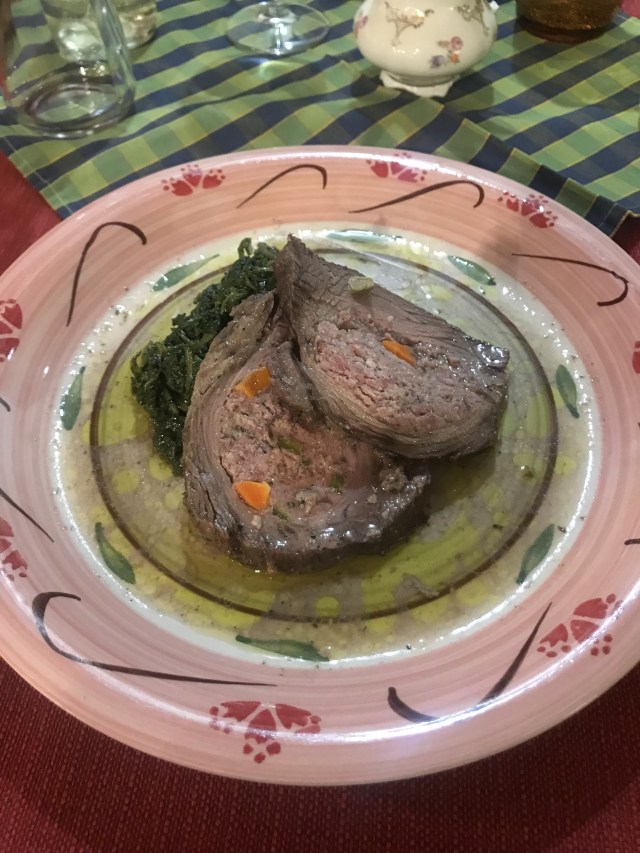
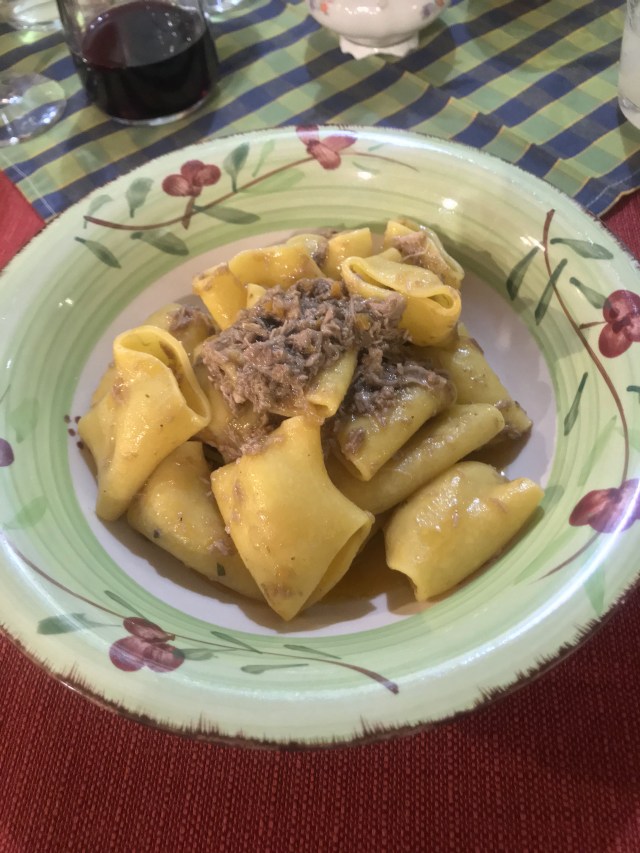
#17: Just as we enter Piazza Settembre XX, we come across another restaurant: La Carabaccia. This place is the very quintessence of the Italian concept of cucina povera (peasant cooking). It is run by three ladies: a woman and her two daughters.

Generally, there is a limited menu of two primi (generally pastas, all homemade) and two secondi (generally meats, but sometimes they have vegetarian options), but they will also put together a lovely antipasto plate for you.
If you can book a table, this is a must-visit. I’ve been dying to try the peposo here (black pepper beef), and I hope to do this on my next visit over. Menus are in English and Italian and change daily.
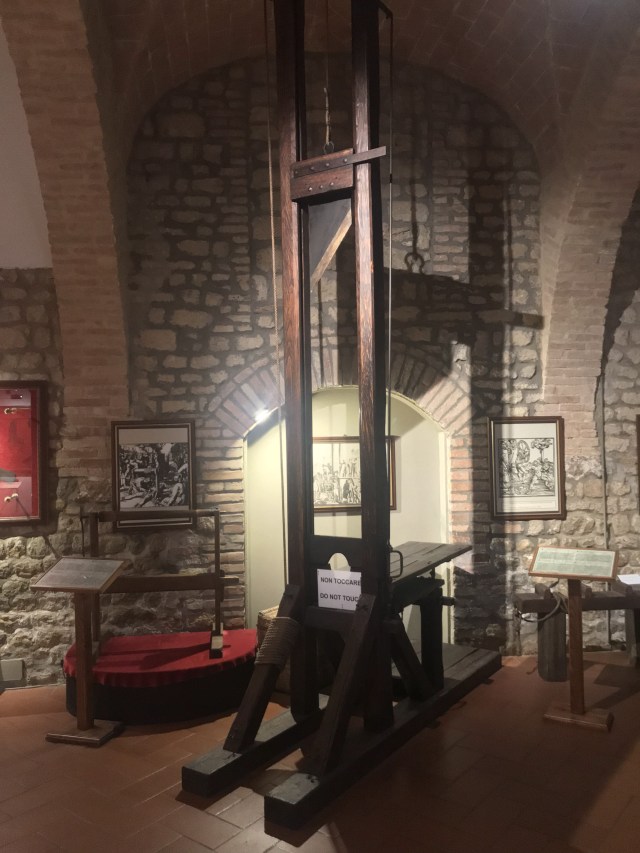
#18: So many towns of decent size in Tuscany seem to have a Torture Museum, and Volterra is no exception. I have visited this place only once, and to be honest, once is enough. It can be draining to see the awful things we used to do to one another in the name of perceived justice.

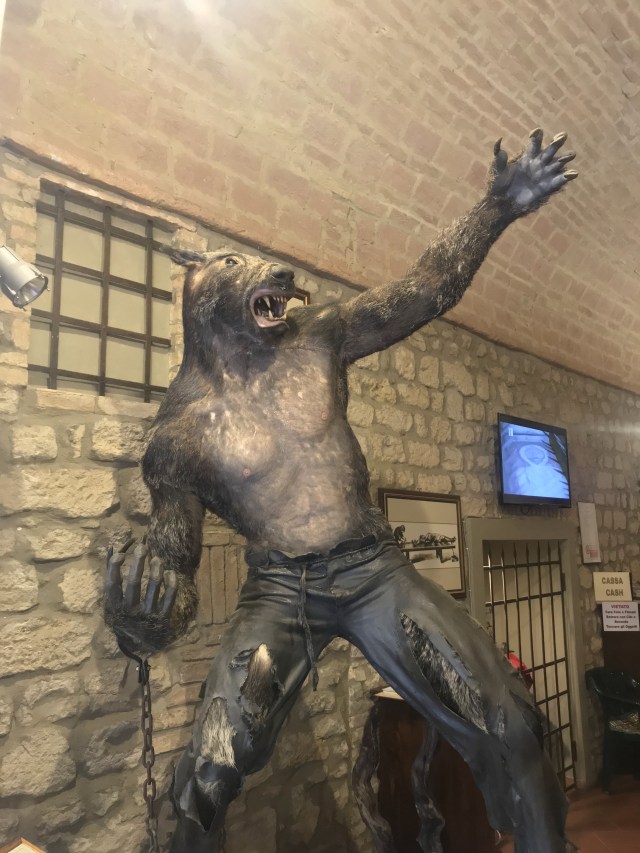
There (inexplicably) is a werewolf model at the front door, and best of all, is a strong message denouncing torture in all its forms. To be sure: this museum does not glorify torture. You may leave shaken and maybe even a little queasy, especially if you have a good imagination.

Tuscany, when it was a state all its own, was always considered somewhat enlightened. In fact, it was the first ever state to abolish capital punishment in 1786. Anyway, give it a visit… but maybe not too close to, or too soon after eating. Note that the displays aren’t especially graphic, but it’s all down to the power of imagination.

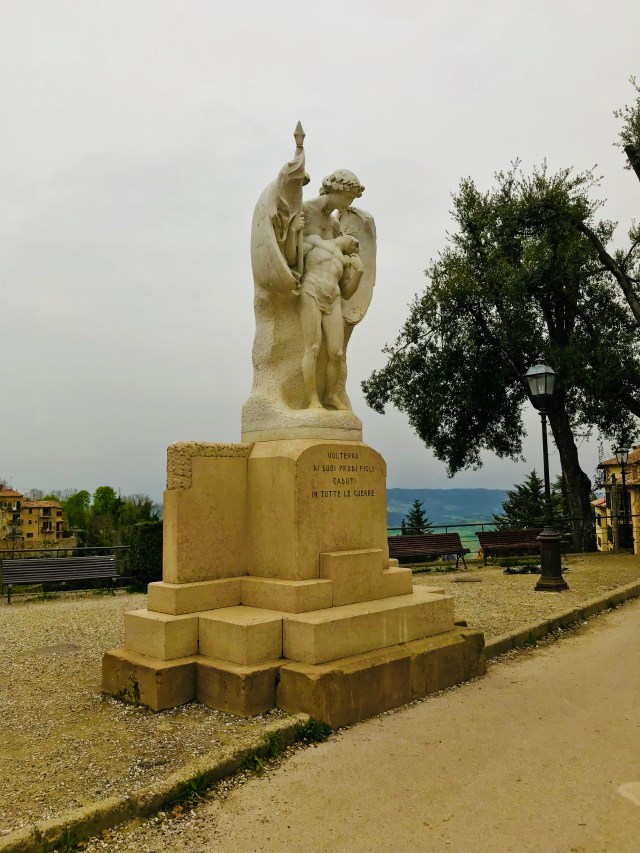
#19: We finish our journey here, in Piazza Settembre XX at the War Memorial and viewpoint. It’s a nice little square, part of which is used to house an ice-rink over the Christmas period. There are some additional restaurants here, but they largely cater to the tourist trade.

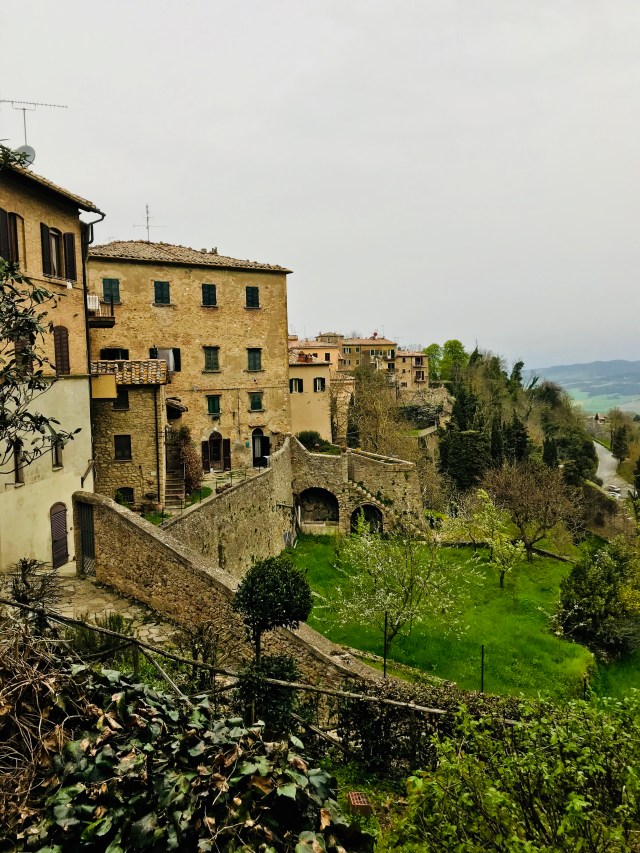
There are some lovely views to be seen out over the railing.

Thanks a lot for reading this, if you got this far! I hope it has stirred you into thinking about making a visit to Volterra.

I will have a think about the next route I will take!

Palazzo dei Priori and the Etruscan Museum

Palazzo dei Priori and the Etruscan Museum

I needed to look pretty for my trip back to Dublin, and went to the nearby barbers for a head-shave.  Fortunately, he was standing outside with three buddies, gossiping, and was able to see me immediately.  The dude takes his time and does an awesome job, but getting it done here is at least 25% more expensive than back at home.

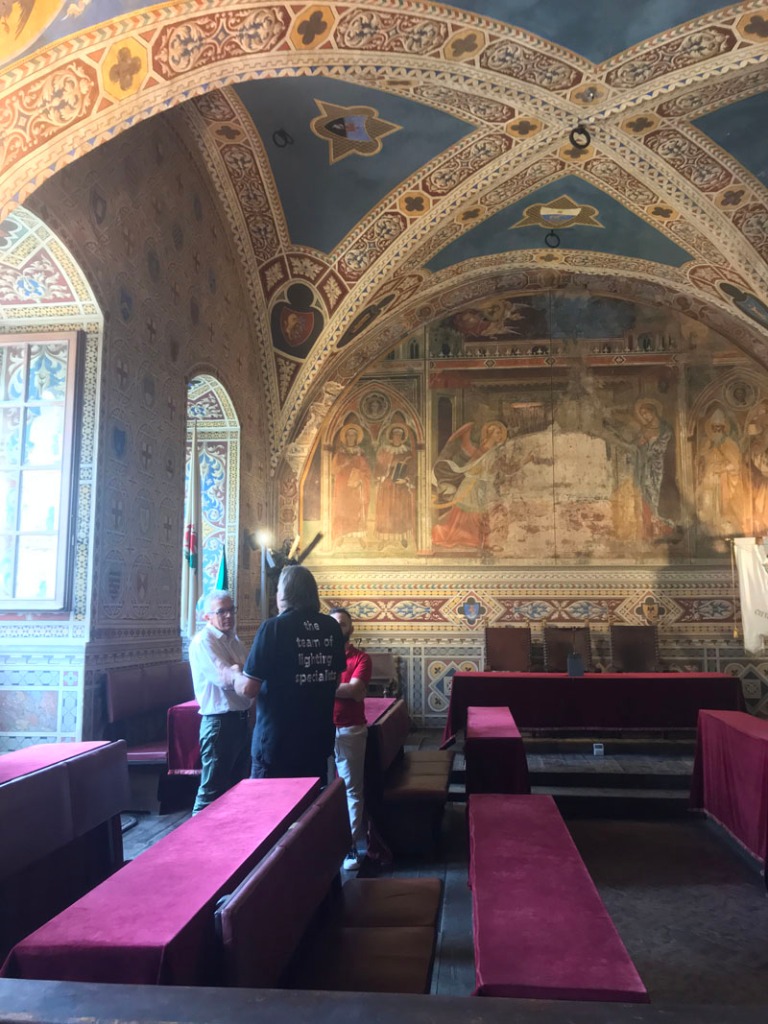
Anyway, when that was done and paid for, I went to the Palazzo dei Priori.  It is reputed to be the oldest townhall in Tuscany, its construction beginning in 1208 and finishing in the middle of the same century.  It’s still the centre of local government today.

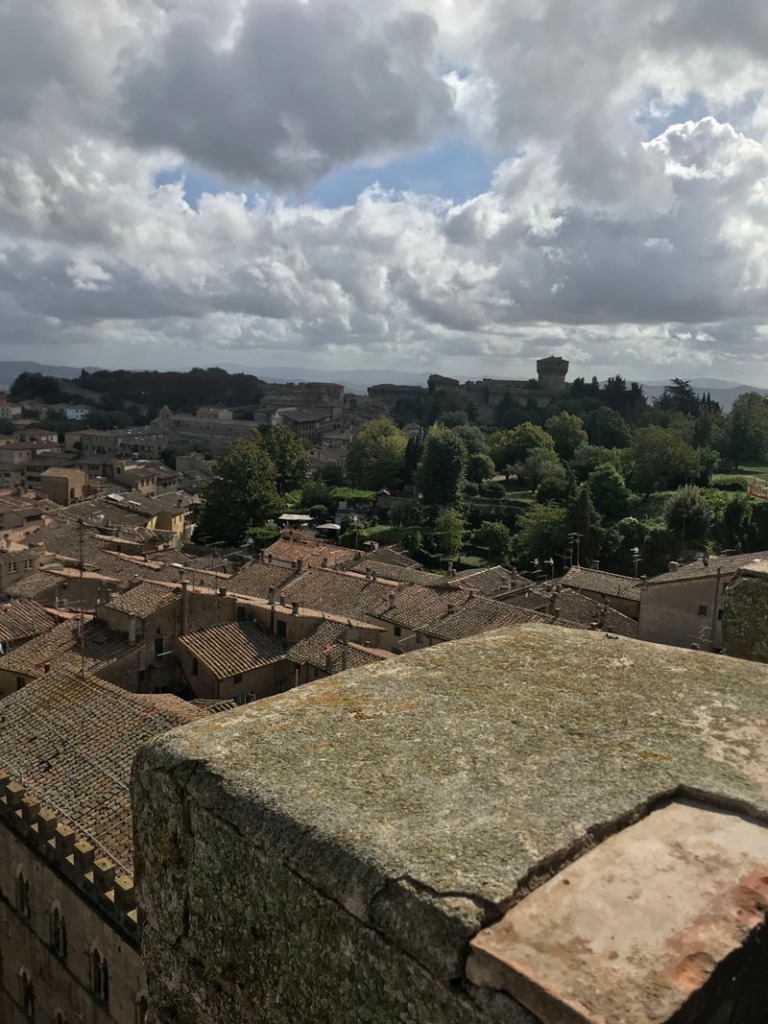
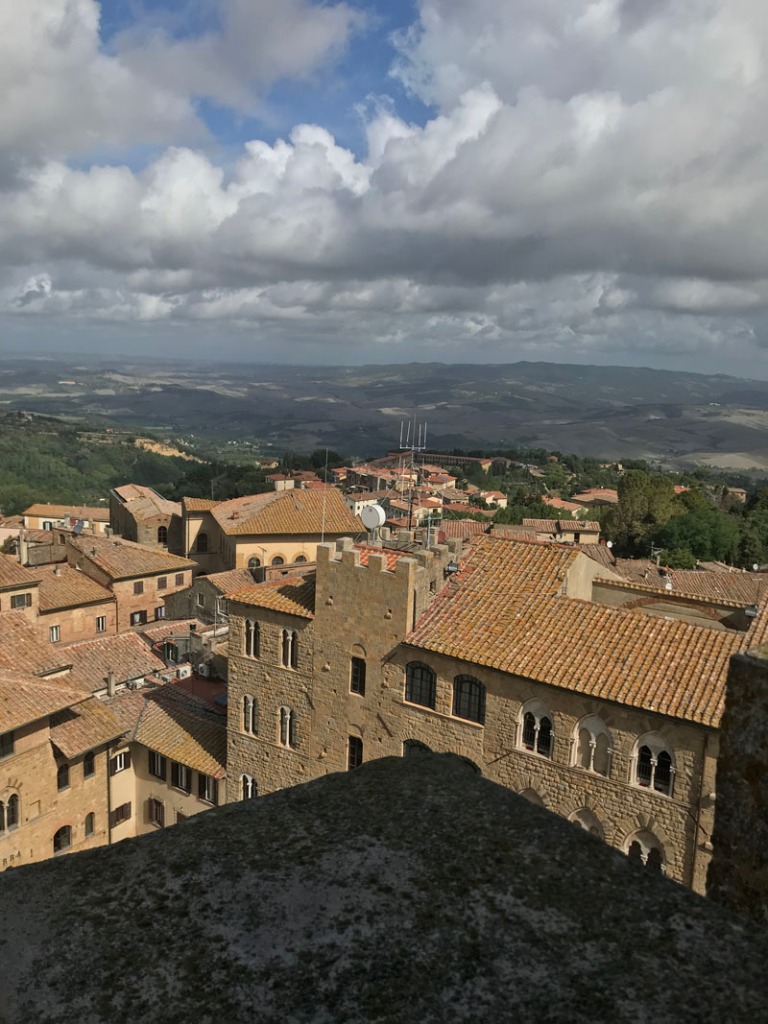
Inside, is the main seat of government, along with large areas for exhibitions.  Finally, at the top floor, there is a stairway up to the bell-tower which gives you excellent views of the town below.  It costs €6 per adult to enter.

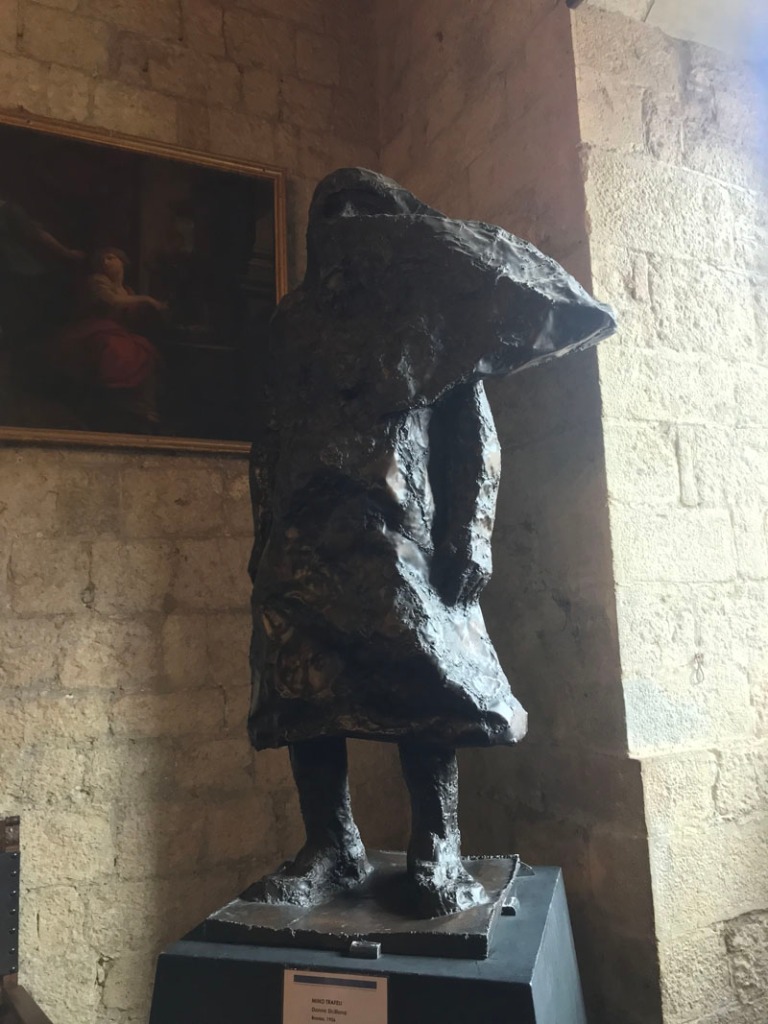
At the time of writing this, they had exhibitions of modern sculture, and a photo-log of patients in the ex-mental hospital.

After finishing up there, I contemplated having lunch, but thought I could squeeze in a visit to the Guarnacci Etruscan museum before my belly really started to complain.

I went the shortest route, which involves a steep climb past the park, and then down some steps into Piazza XX Settembre, and then a 100m walk to the museum itself.  The museum is one of the oldest in Europe, having opened in 1761.  It is €8 in for an adult, and is housed in a lovely medieval palazzo.

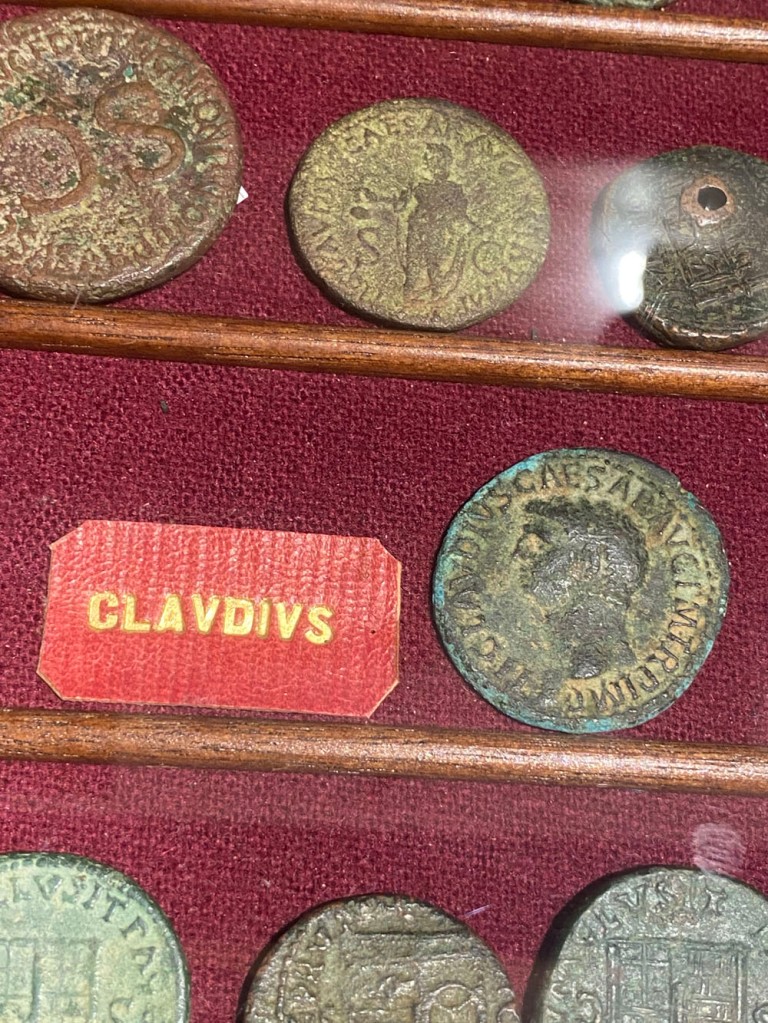
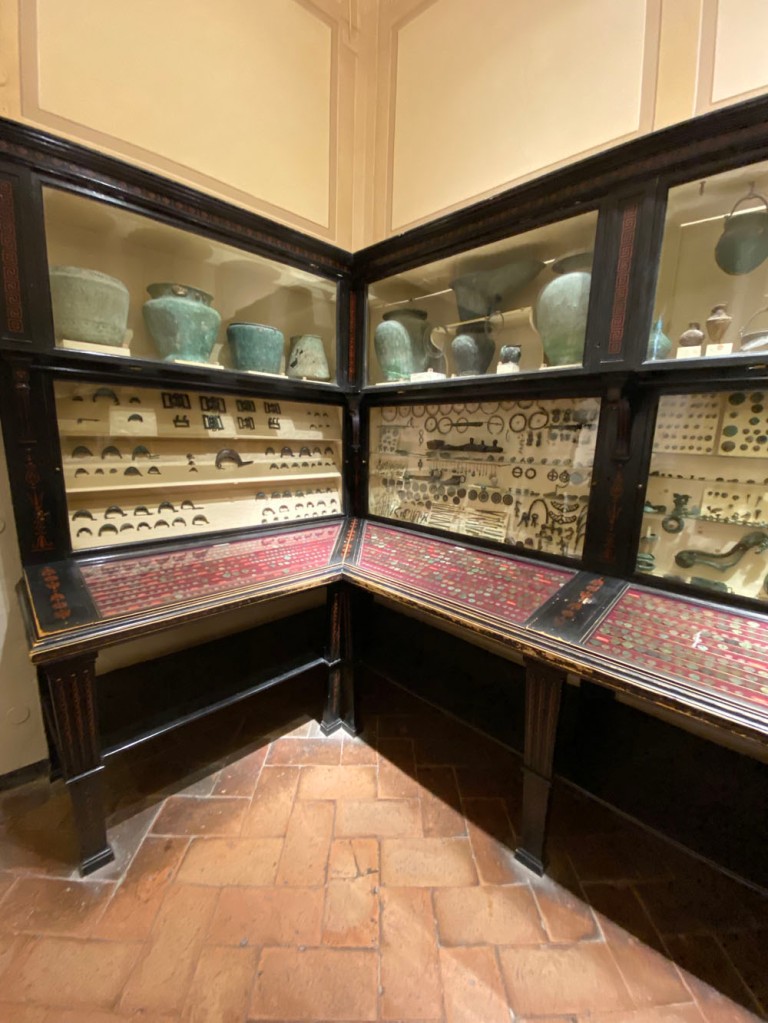
Collections there include jewellery and other items found in very old funerary urns, a warrior’s burial tomb (along with his artefacts), hellenistic-style decorative urns, coins from the old Roman republics, statuary, and of course the omnipresent carved funerary urns.
If I had to level one criticism of the museum, it’s how prolific the urns are – there are rooms and rooms of them.  Most are carved in alabaster, and as they become newer, their carvings become more intricate and impressive – but the whole scene begins to bore a little after a while.
Note also, that most of the descriptions do not have translations – but you can get an audio guide with select descriptions for an extra €3.

There are some masterworks in the museum.  The first is a very creepy-looking statue called Ombra della Sera (shadow of the evening), and is of an elongated child.  It’s extremely modern-looking for something that’s well over two millenia old – this probably adds to the creep factor.  You can buy copies of it all over town.  I might get one for myself.

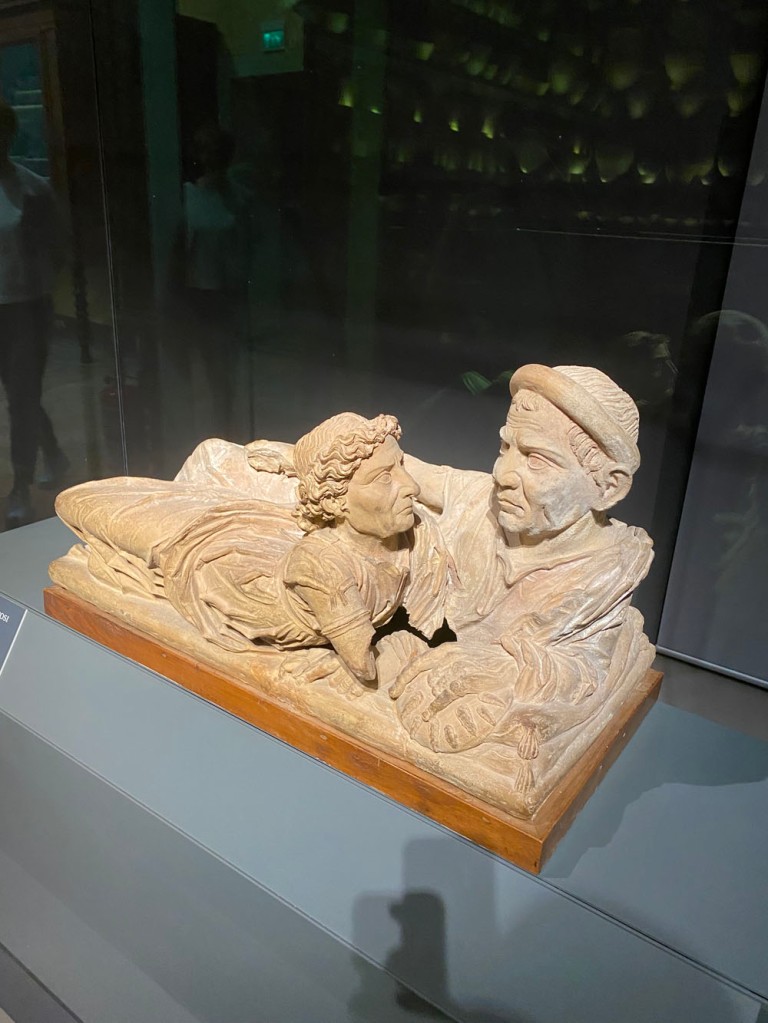
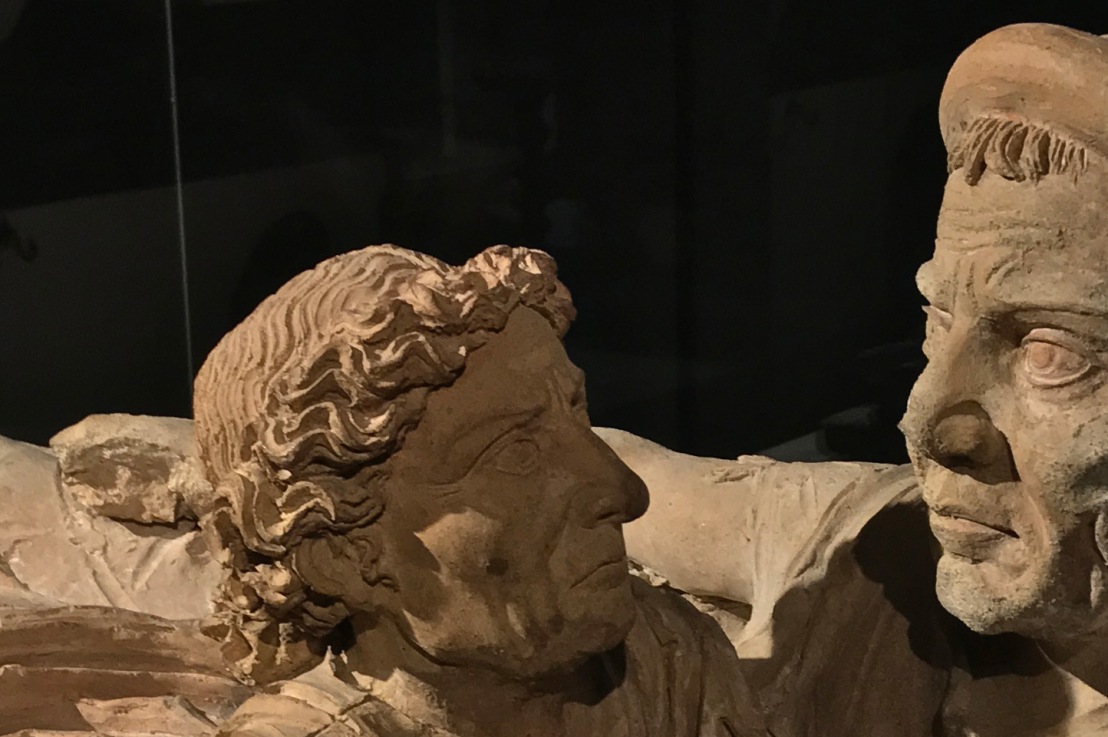
The second is the funerary urn top of the ‘married couple’, an exquisitely carved older couple in alabaster.  There is a school of thought that Etruscans carved people in their proper likenesses for these urns, but other scholars say that’s hogwash.

The last, and most controversial, is an early bust of (possibly) Apollo.  You may notice that written in a large font beside it is the word ‘COPIA’, meaning that this bust is a copy of the original.  The regional government in Florence saw fit to pilfer it for an Etruscan collection of their own.  So annoyed was the mayor of Volterra (at the time – there’s since been a new one) declared it the ‘second sacking of Volterra’, the first being the Medici conquest in the 1470’s.  Such language seems a little grandiose, but I totally understand it when Florence is already swimming in other cultural and historical goodies.

I met Niamh in La Mangiatoia for lunch. She had a veggie pizza, I had a burger – and a lovely one it was too – no photos of mine, I’m afraid.

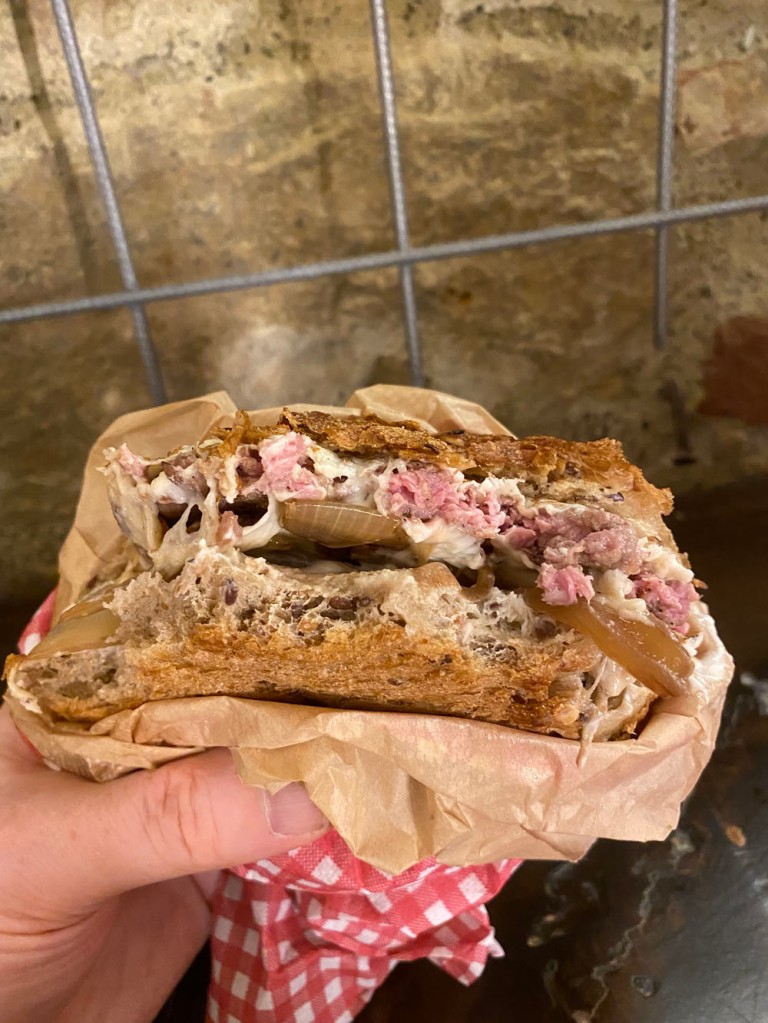
Not much was done for the rest of the day, except that we went to La Sosta del Priore for sandwiches.  Niamh had their burger, while I had a fab little mix of wild boar salami, pecorino, grilled zucchini and caramelised onions.  That way you get fresh, sweet and salty one after the other.  Fab stuff.

IMG_7198

We did nothing else for the rest of the evening.

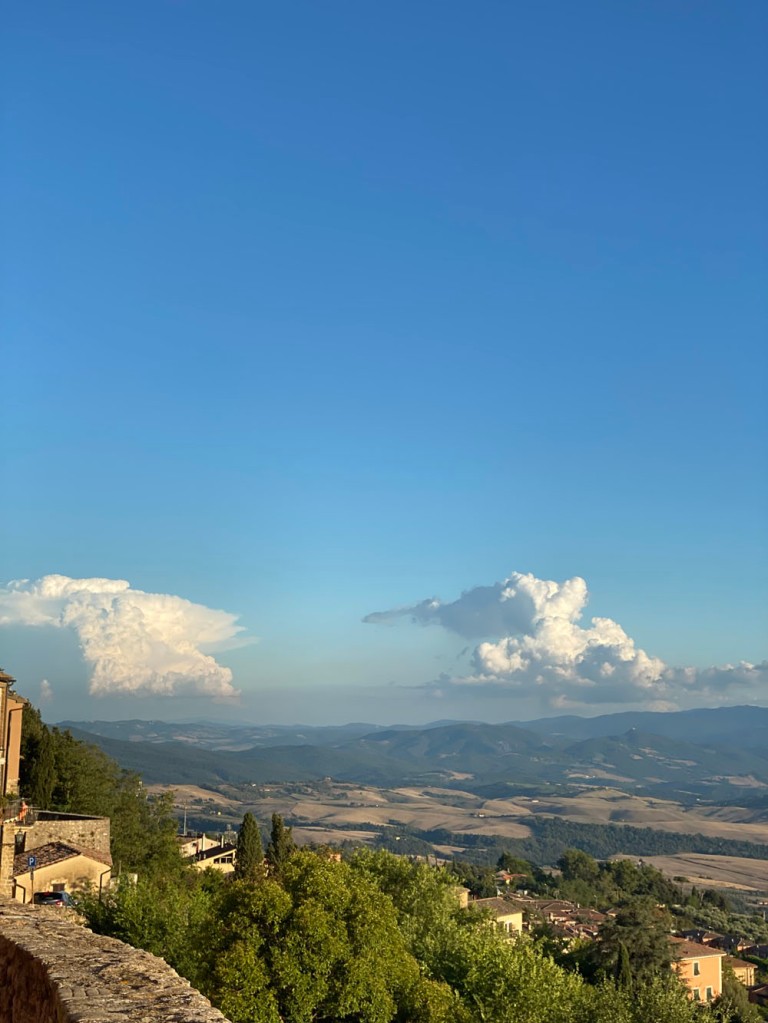
I got up for my last walk of this 9-week stay – we are heading home tomorrow morning.  I made it a short route, but Volterra didn’t disappoint with more fantastic cloudscapes.

We don’t have anything planned, except for packing today.  This may be the last blog, I’m afraid – but I’m toying with the idea of posting about other places I’ve been to in Tuscany, but not during this 9-week stay – there are a good number of them.

Arrivederci!

Suvereto, Campiglia Marittima and Populonia

Suvereto, Campiglia Marittima and Populonia

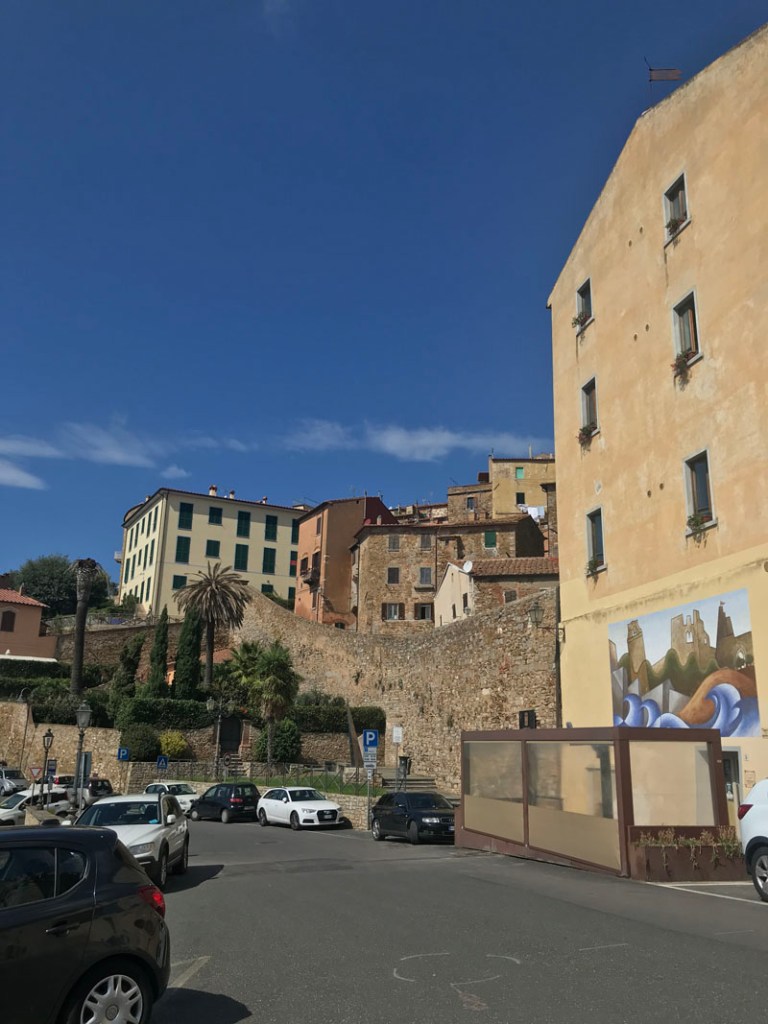
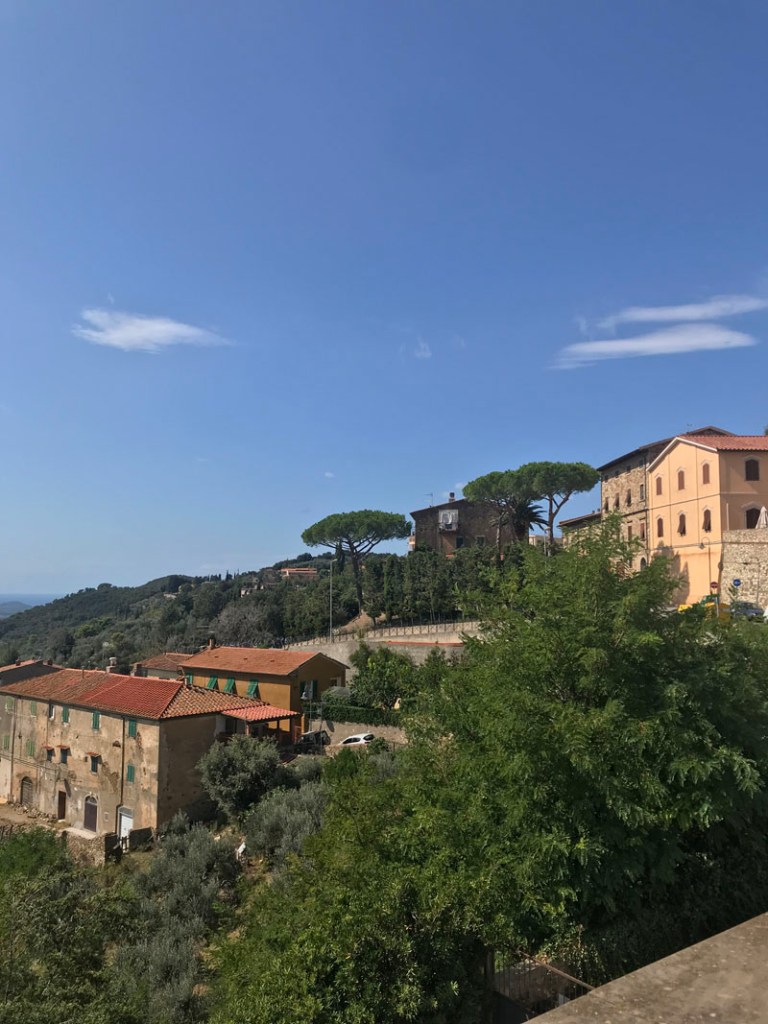
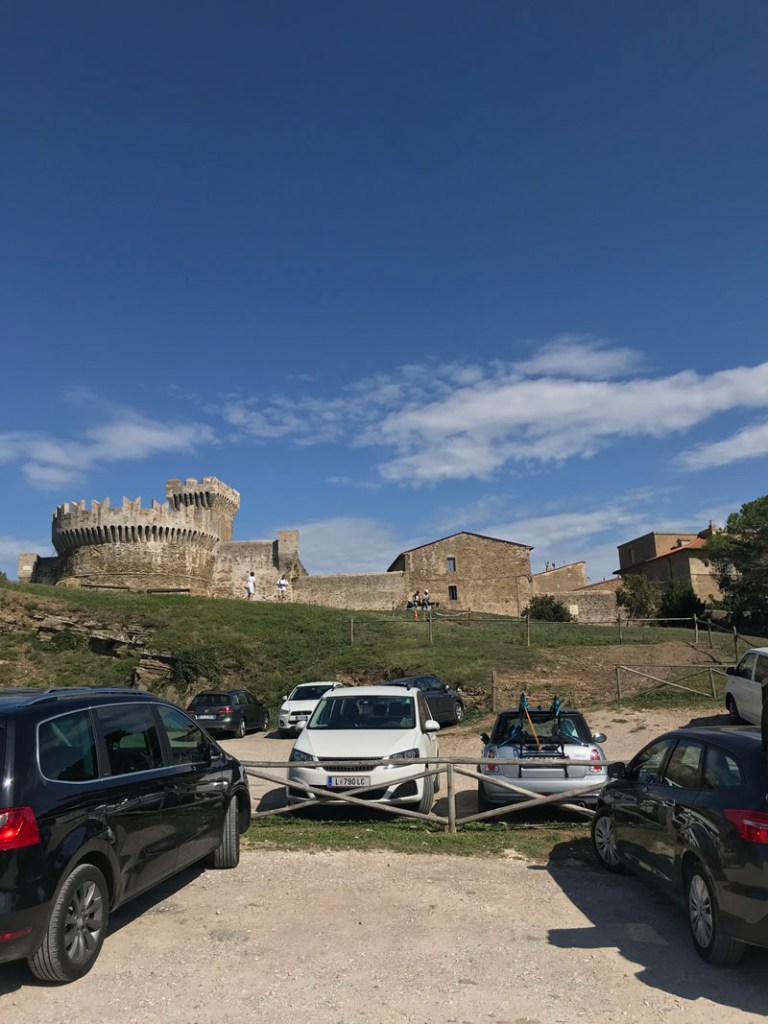
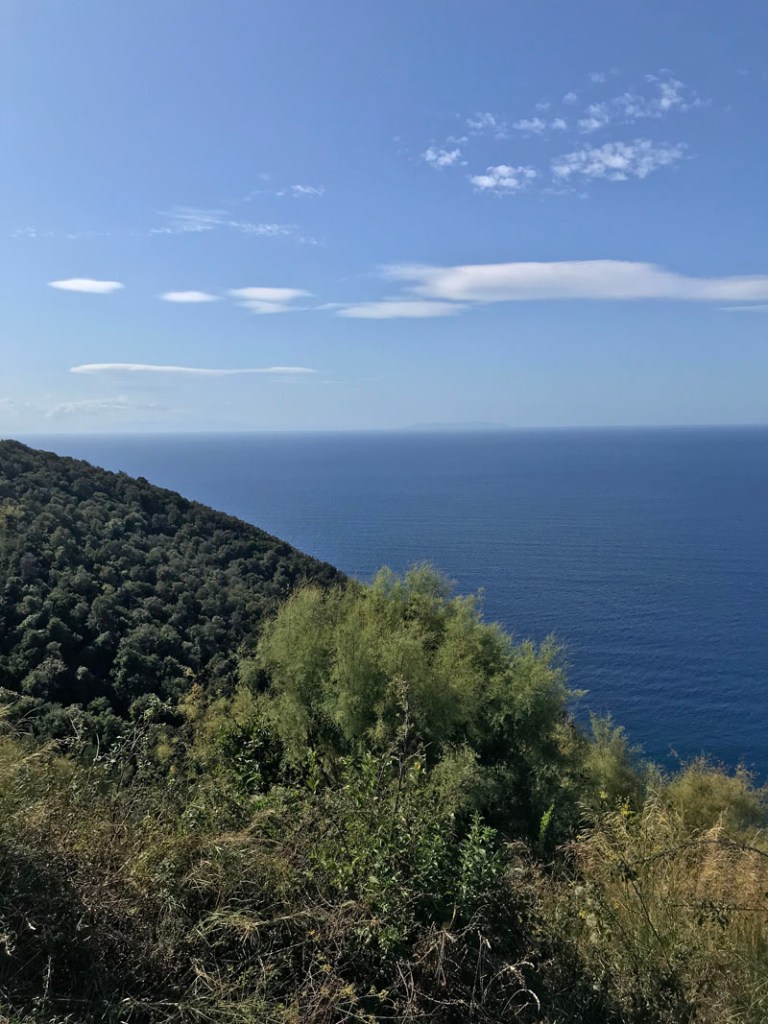
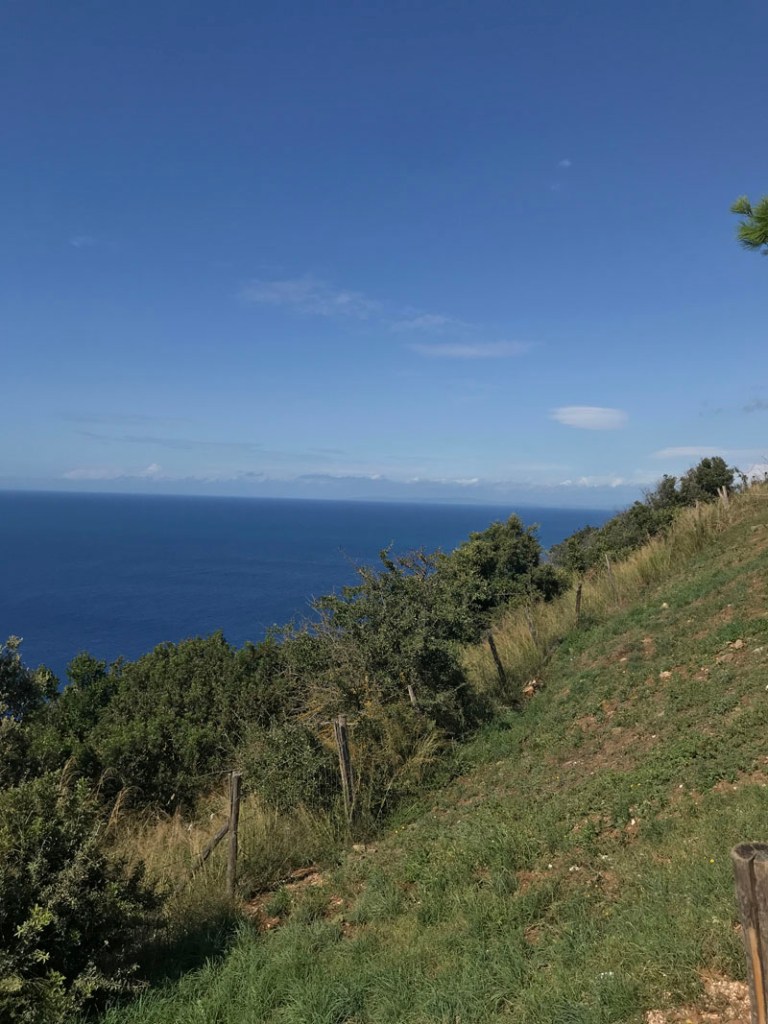
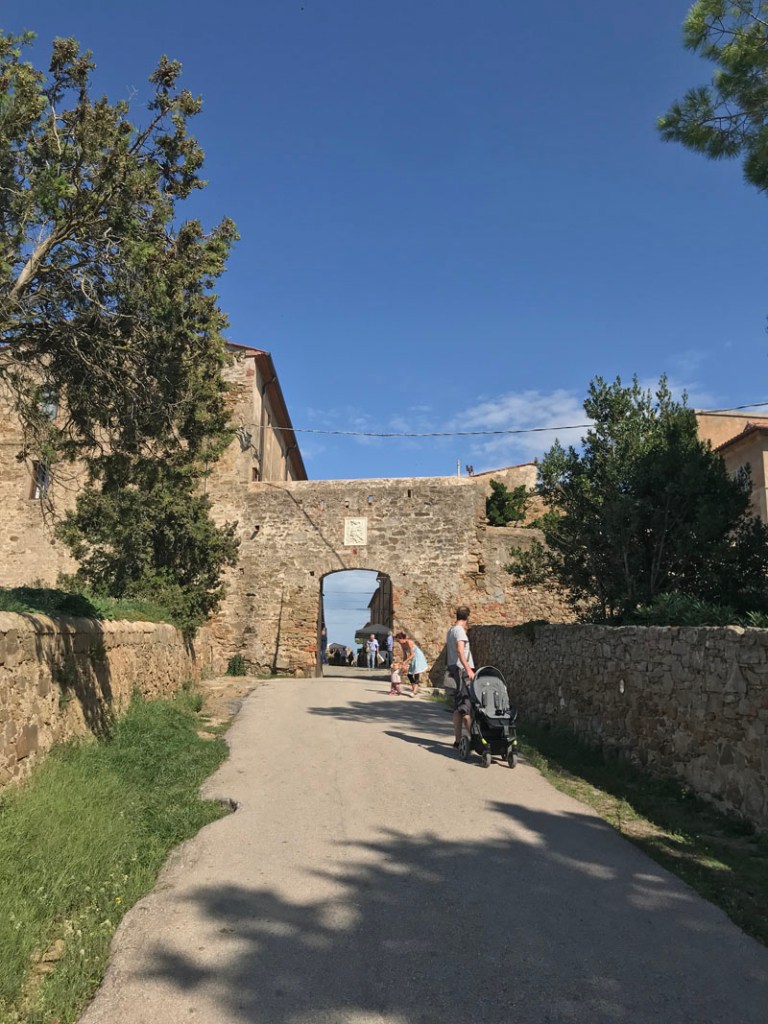
We began our mammoth day a little earlier than usual, so we could fit in all three towns.  The route we took was largely wooded, and so wasn’t as photo-friendly as others.  On our way to Suvereto, though, we tantilisingly passed by Canneto and Monteverdi Marittimo; two other towns on my ‘list’.  However, we couldn’t be detracted from our main objective, and so parked in one of Suvereto’s free areas close to midday. 

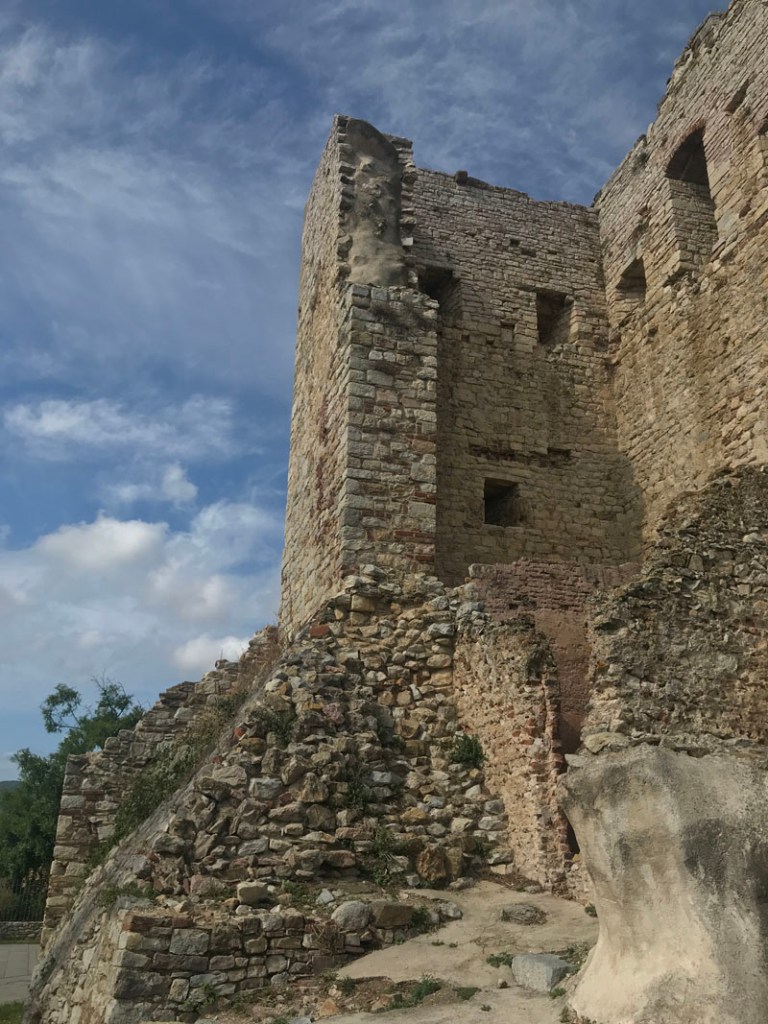
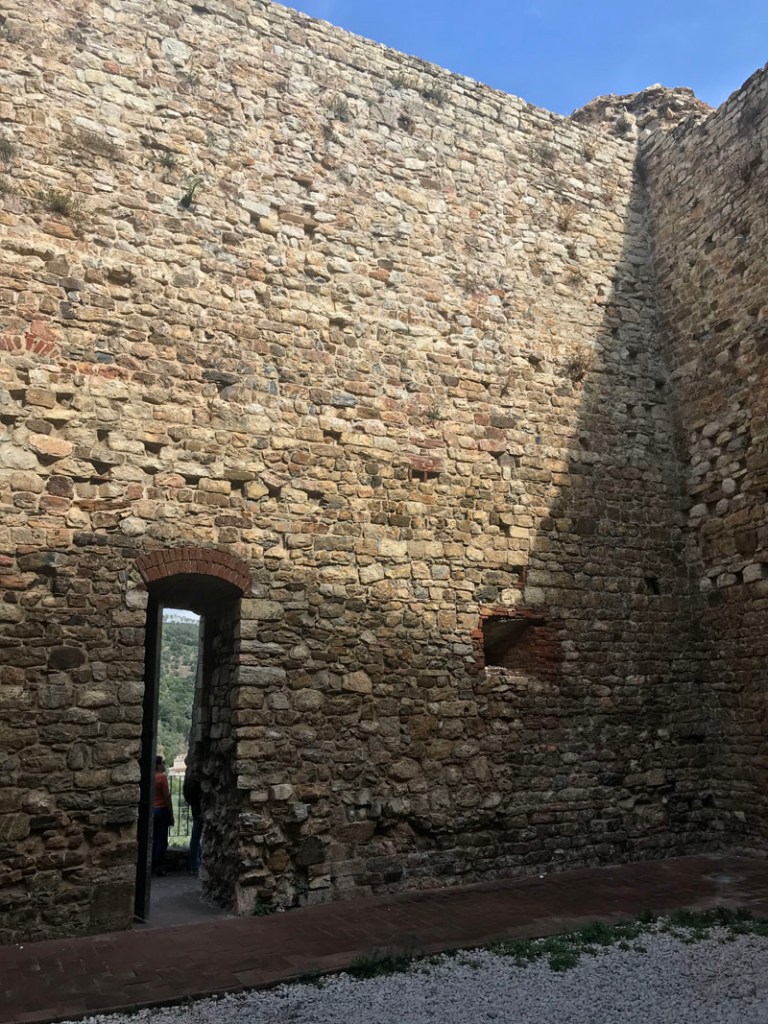
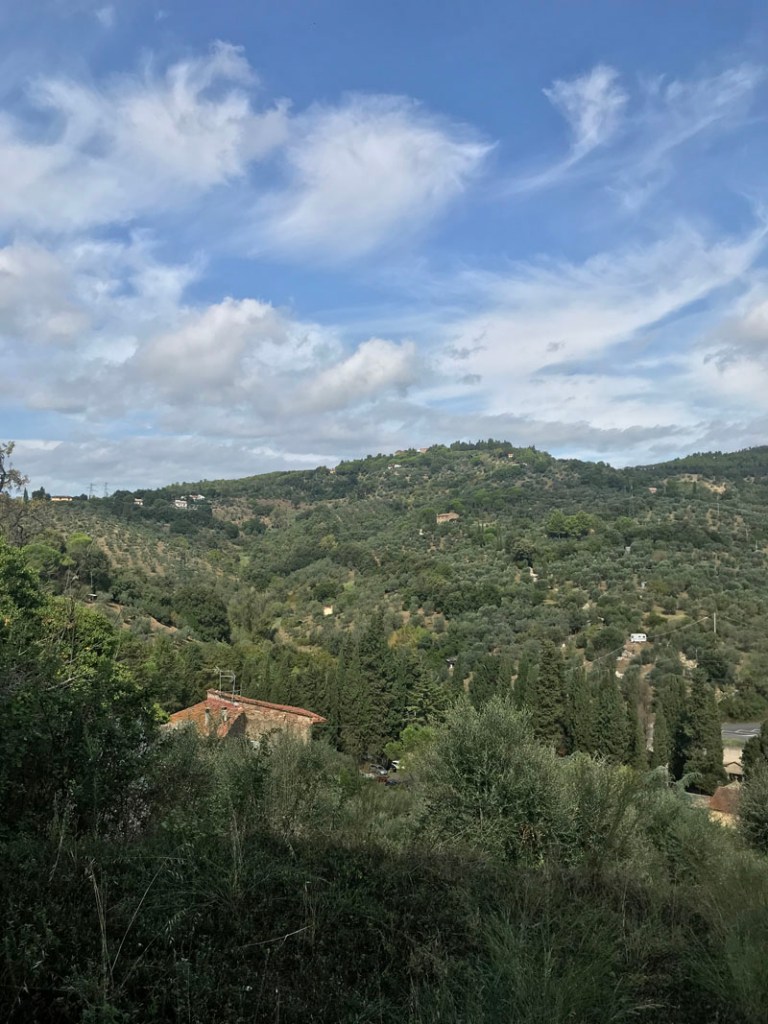
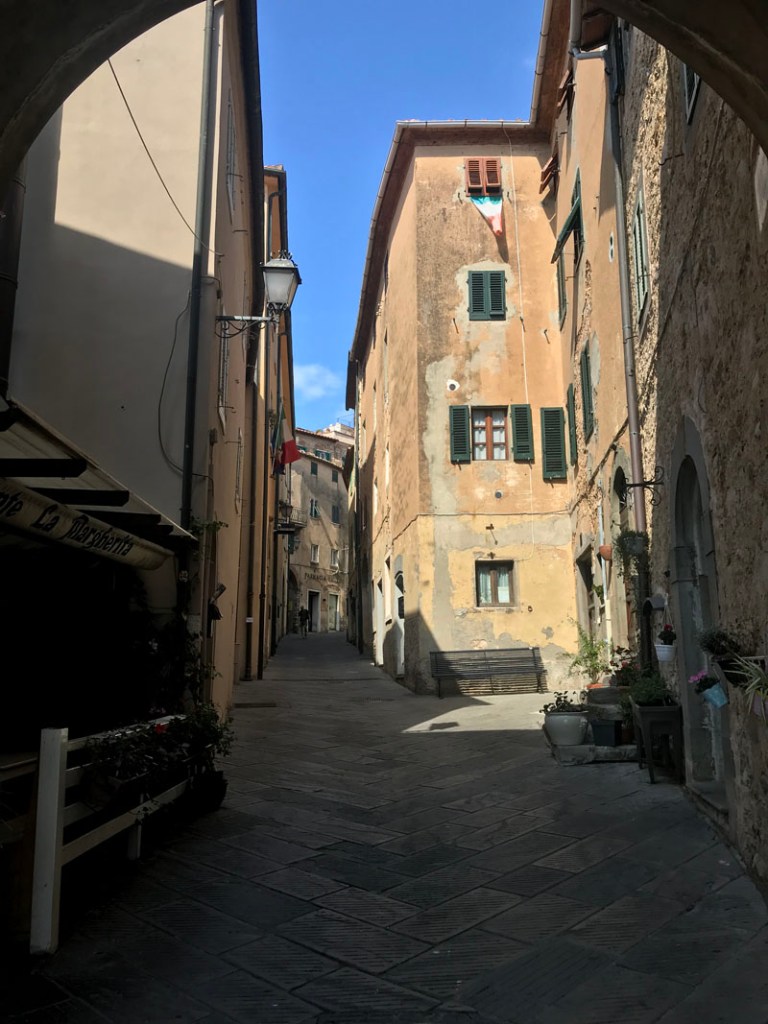
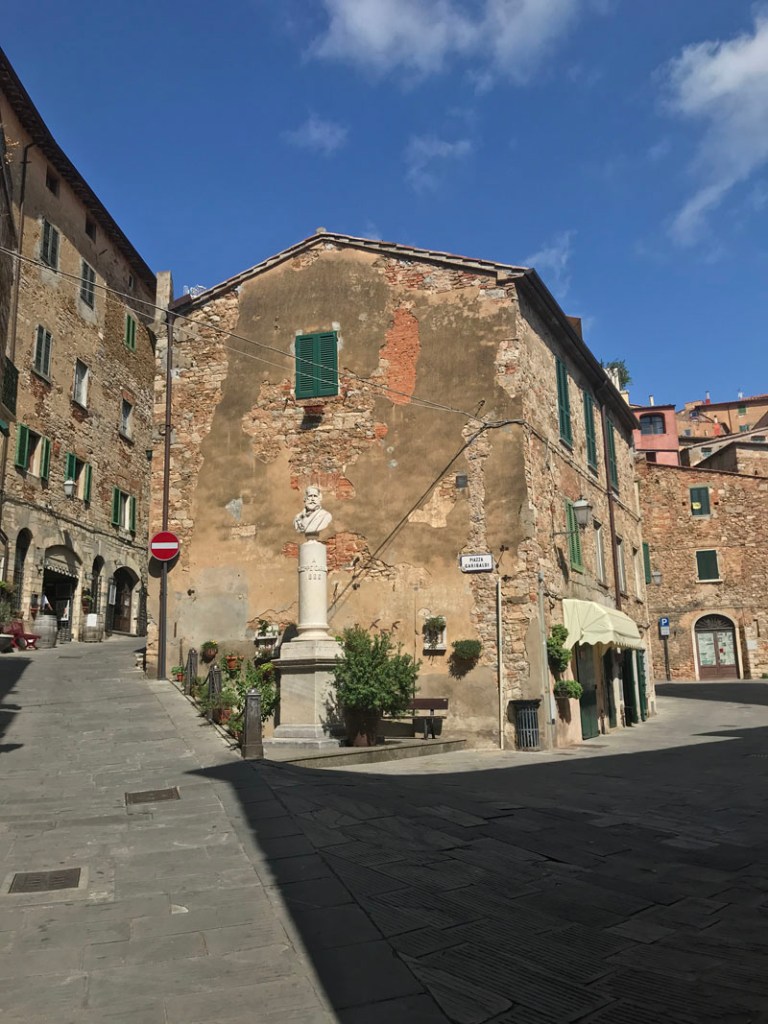
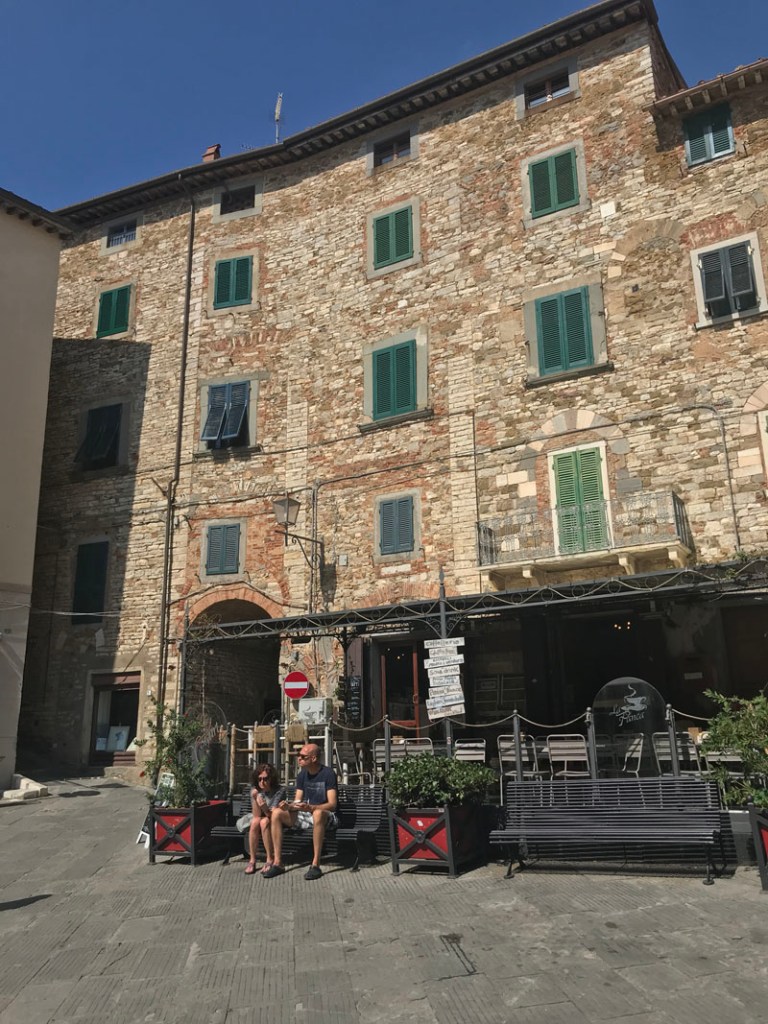
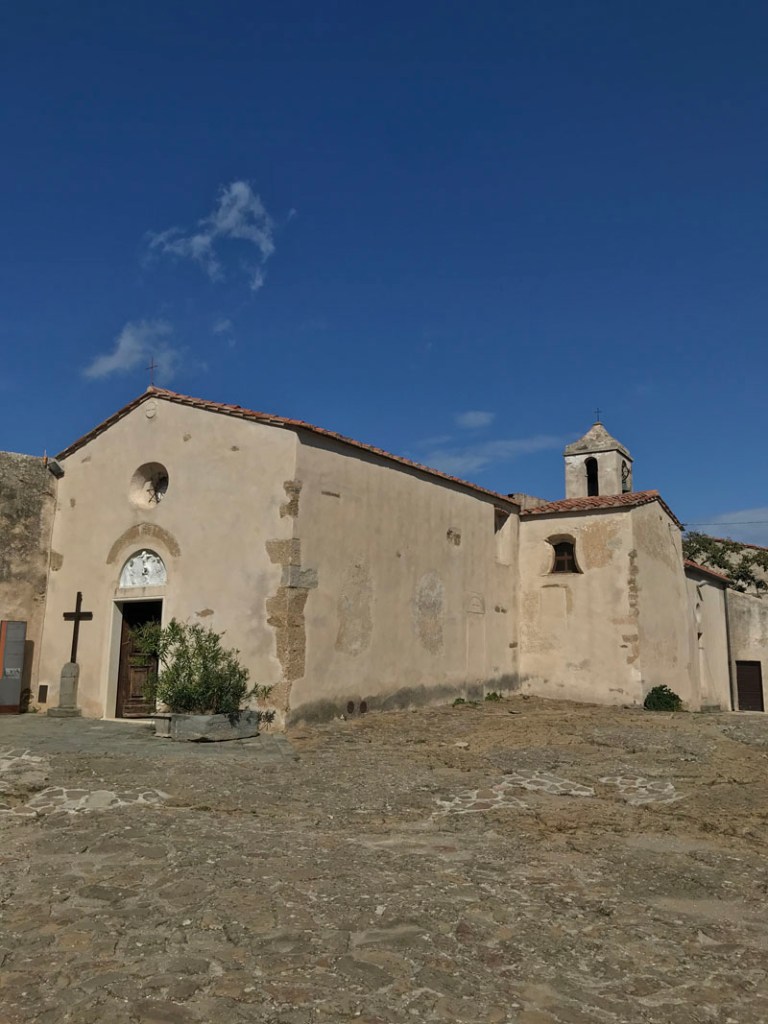
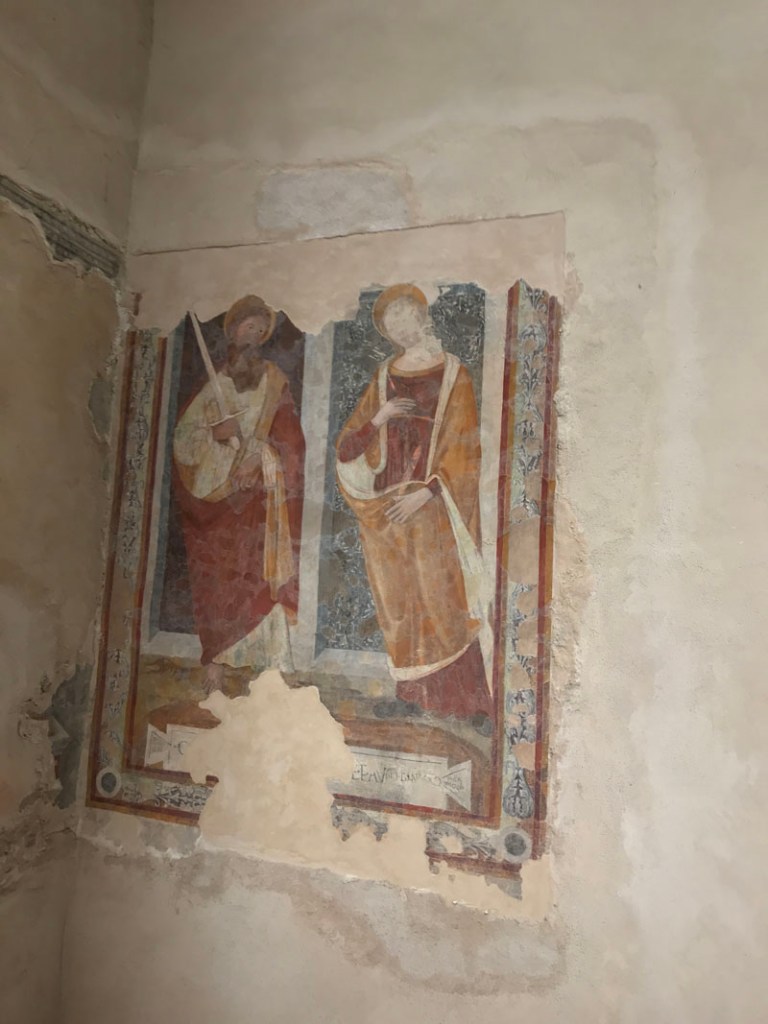
I know nothing really of the history of any of these places, save that the first two are topped with fortress ruins, and the last was an old Etruscan area – possibly the main necropolis.  There are tombs dotted about, but we didn’t go to the archaelogical park – we’ll definitely go on a return visit.  So, with that in mind, there won’t be too much narrative, so sit back, scroll and enjoy the pretty.

There are lots of photos in this post!

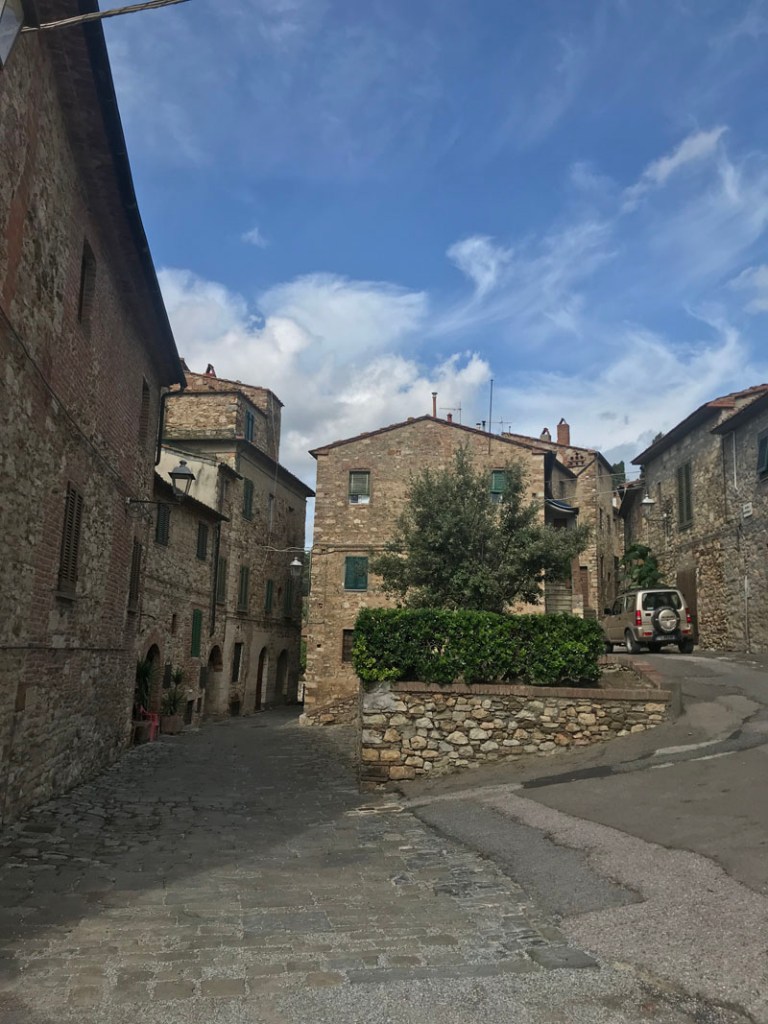
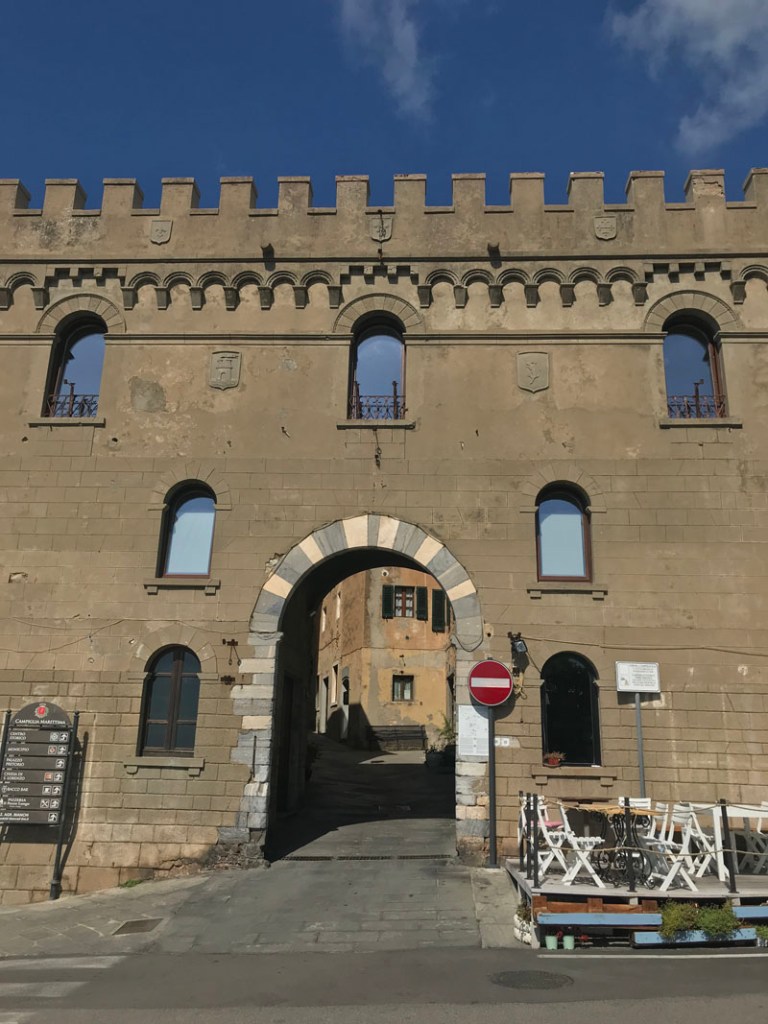
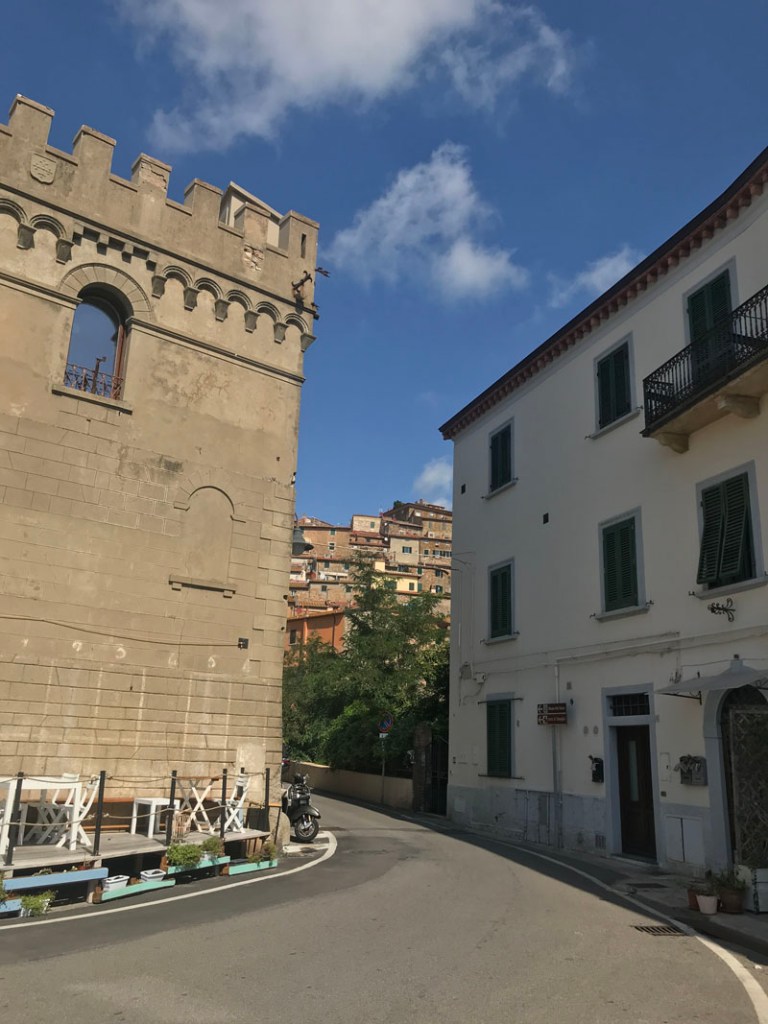
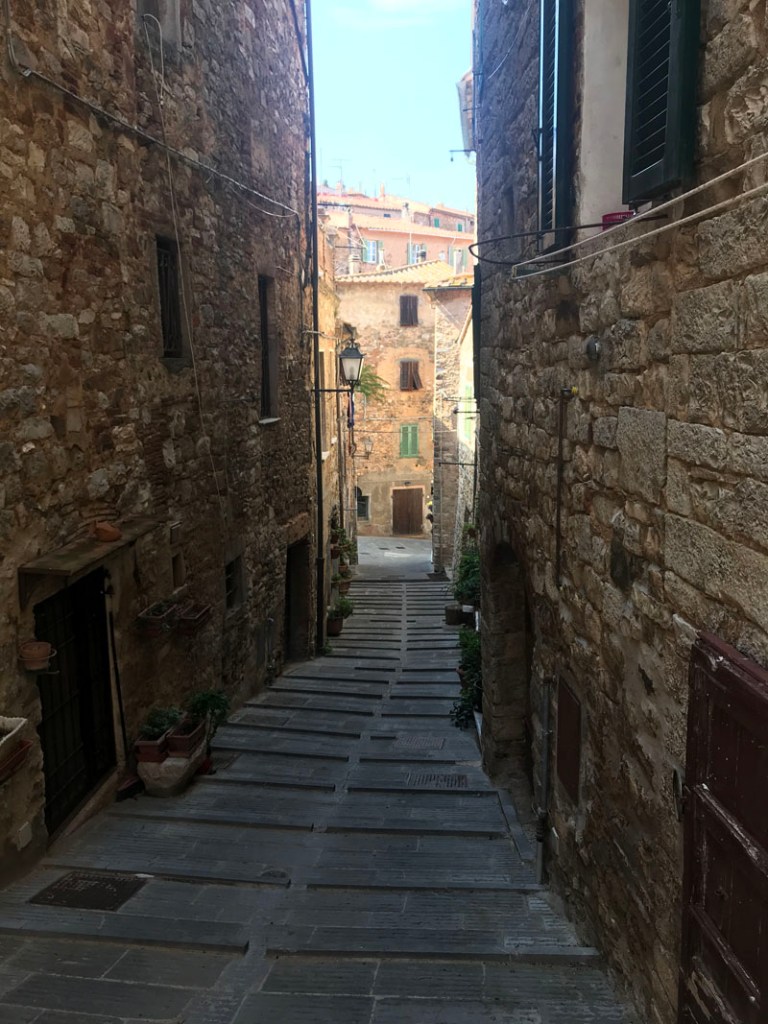
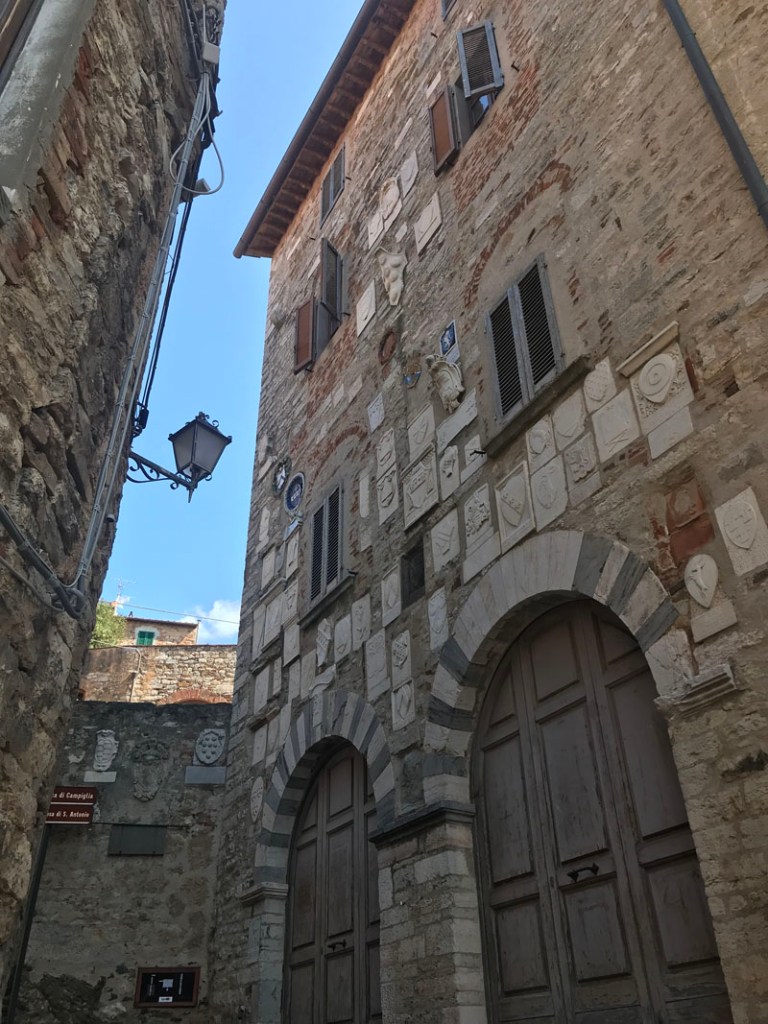
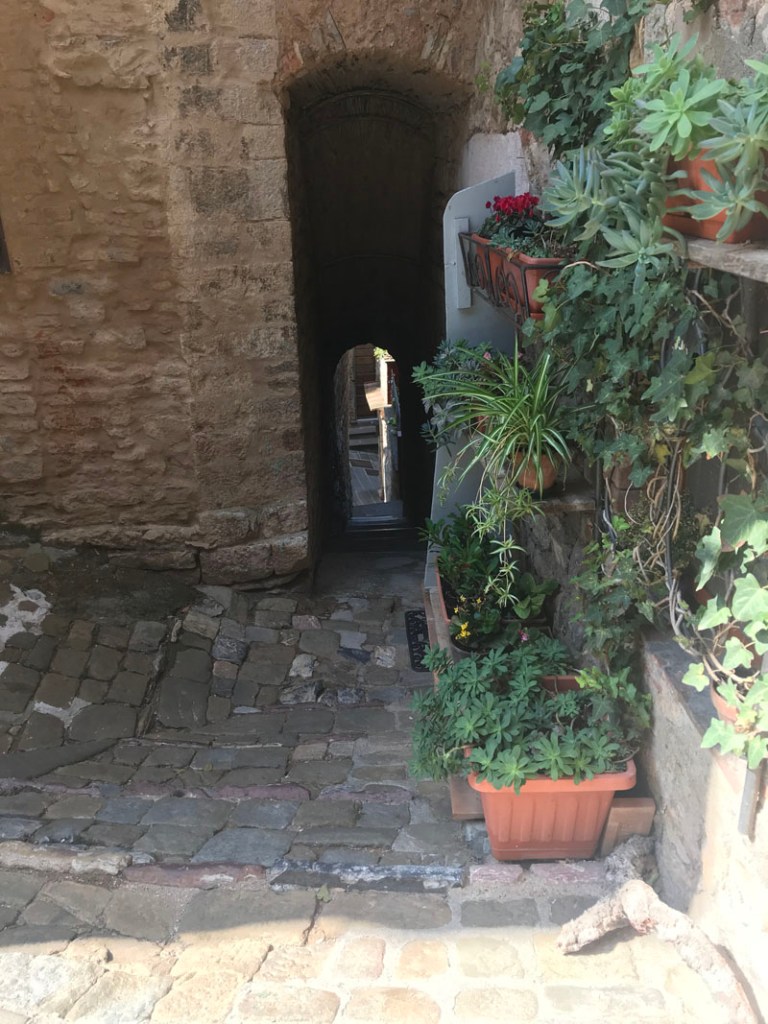
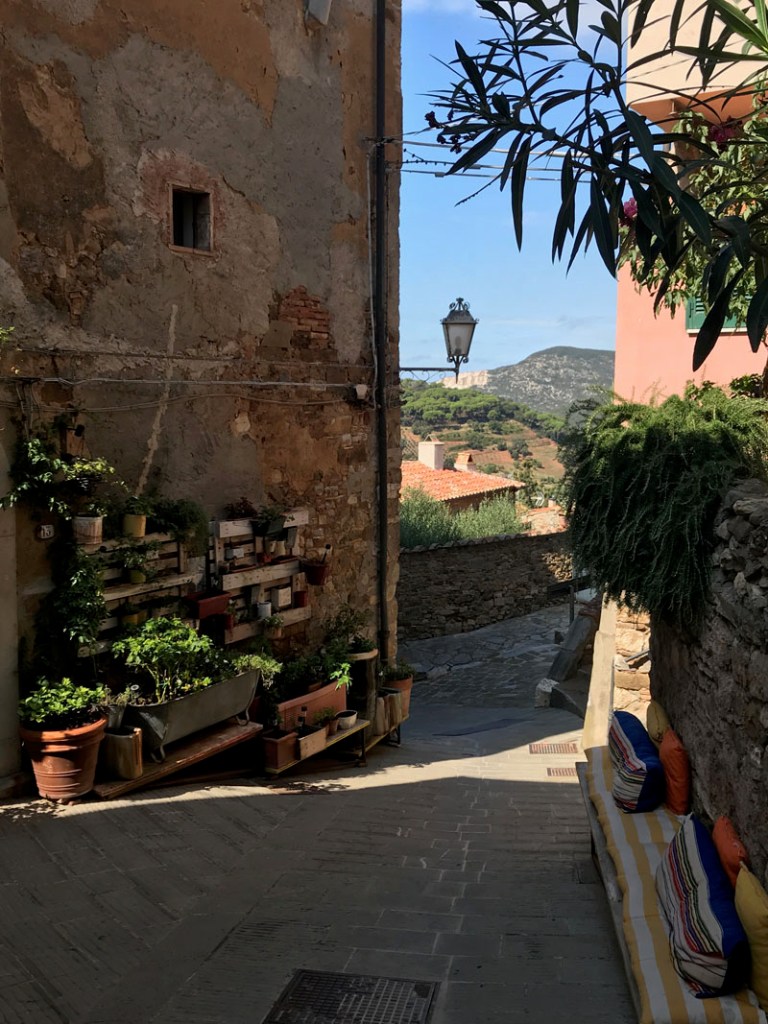
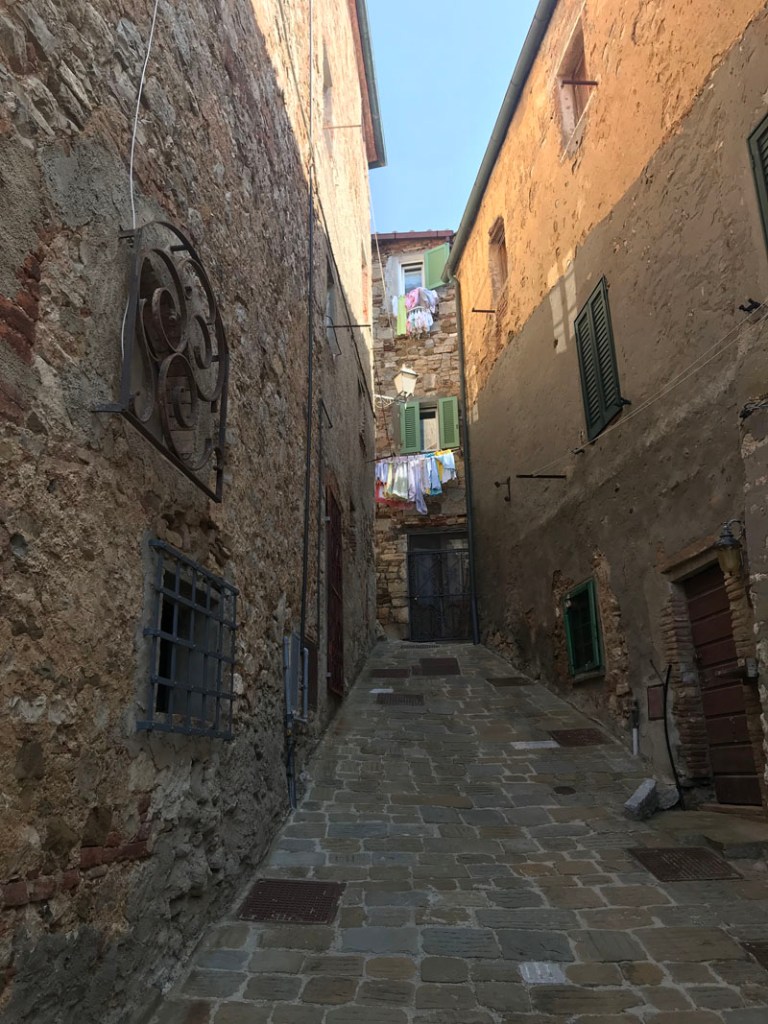
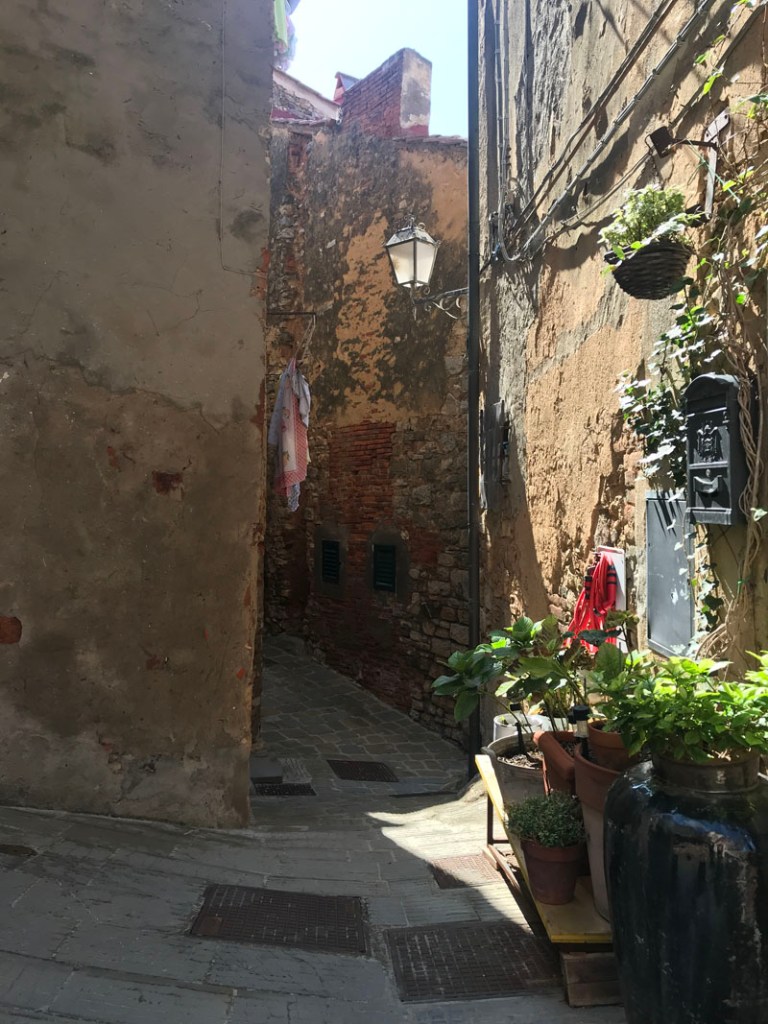
It turns out Suvereto was bigger than I’d thought.   The exact same thing happened in Campiglia Marittima – the explorable area looked small, but ended up being huge, thanks to the higgledy-piggledy nature of the streets there.  The latter was very impressive: every turn we made induced an “ooh” or “ahh” out of us.  We also had lunch in Campigla Marittima in Ristorante La Tavernetta, and it was a tale of two portion sizes.  Niamh’s was correct (ravioli with ragu), mine was way too big (little gnocchi in a leek and gorgonzola sauce.  I really liked mine at first, but it just got too ‘samey’ halfway through.

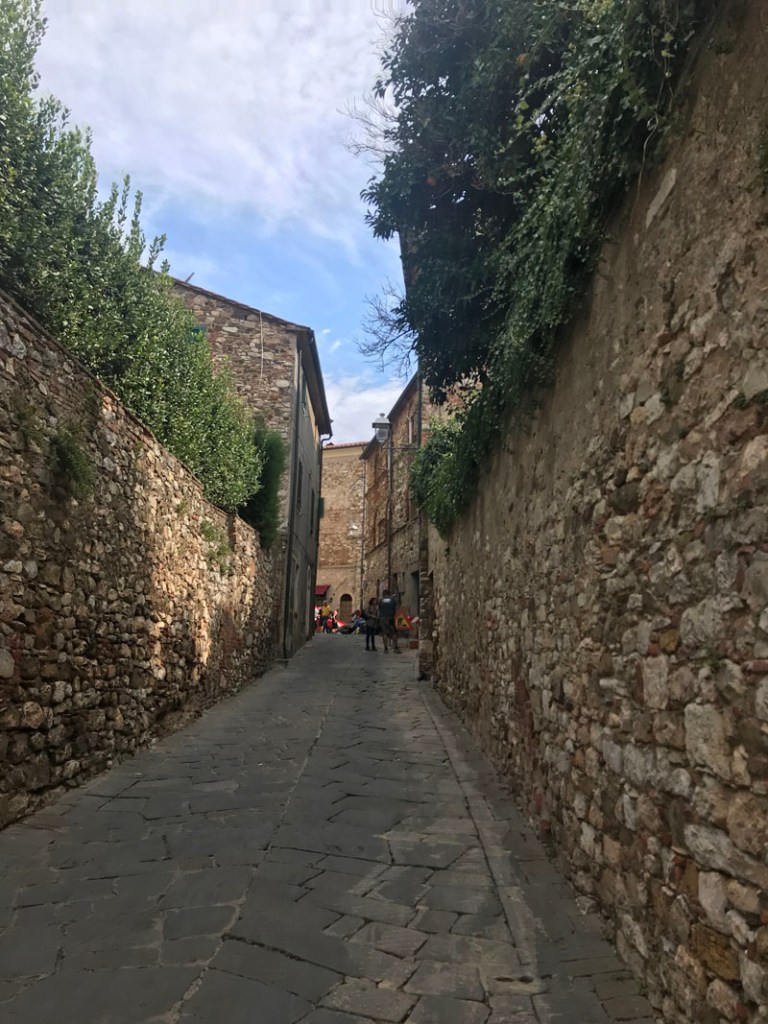
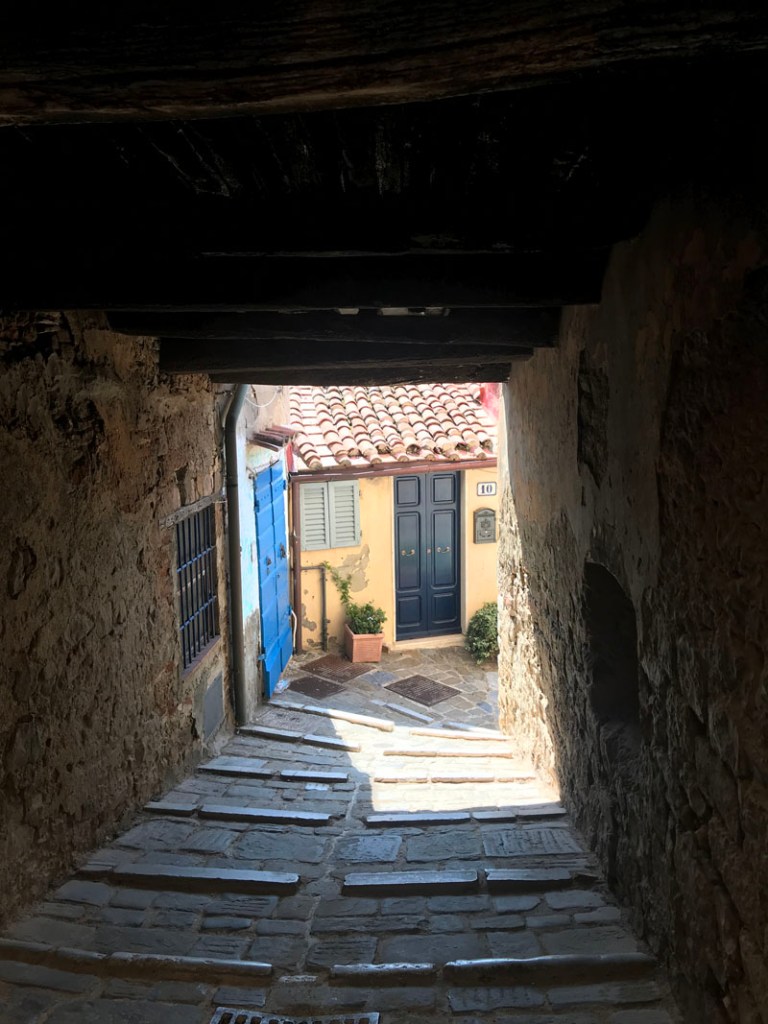
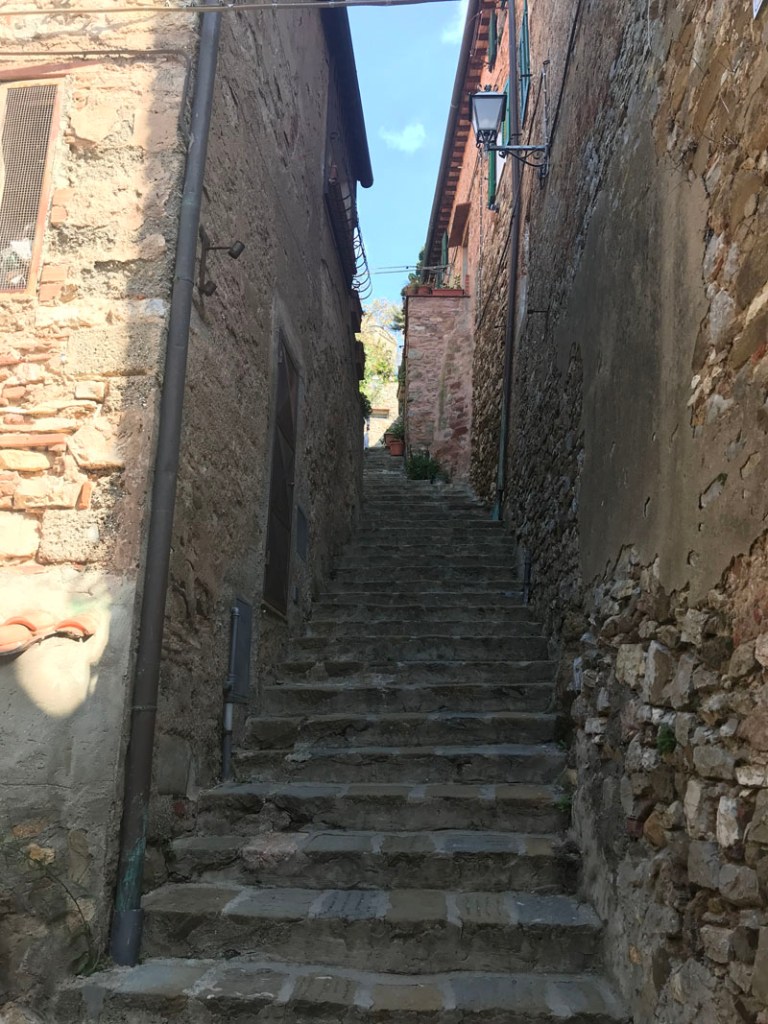
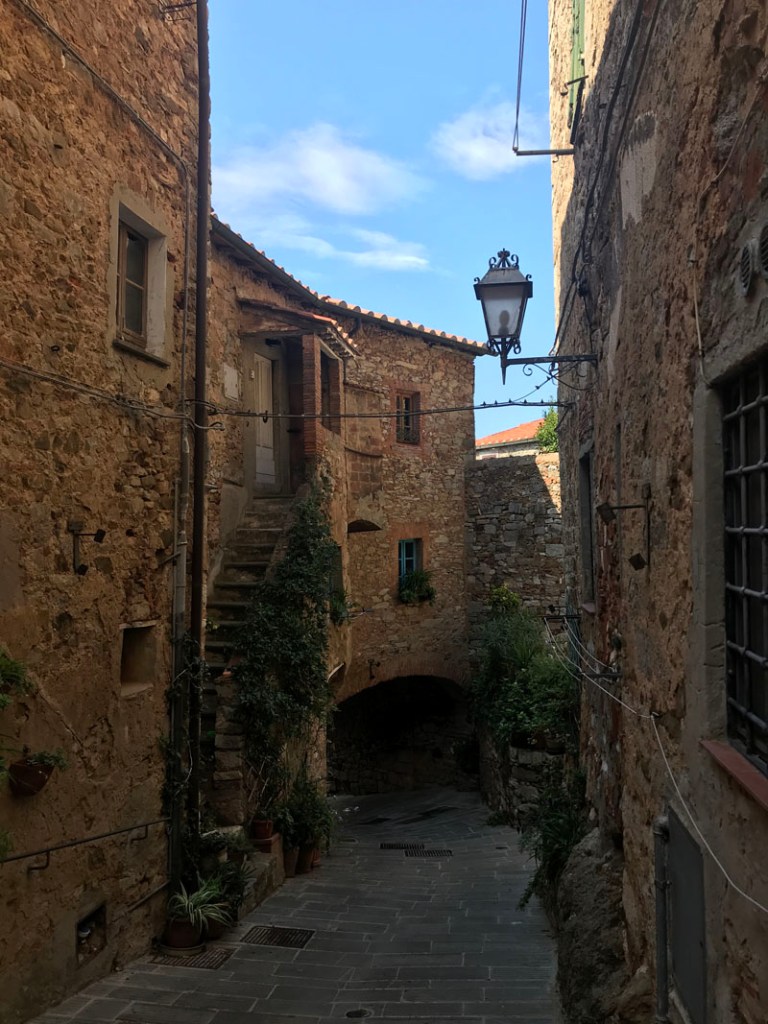
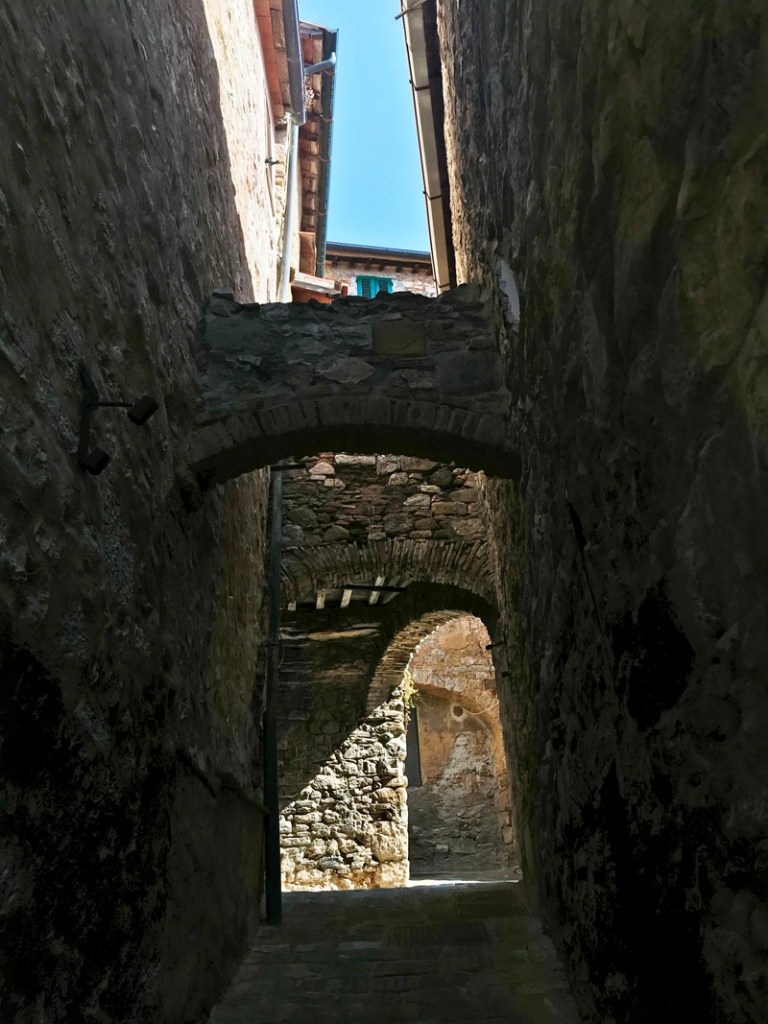
The town was gorgeous, though – although it seems to be residential-heavy – only a couple of streets were devoted to shops and eateries.  Every few footsteps brought a new arched stairways, nicely-decorated homes, squiggledy staircases… definitely worth a visit (as is Suvereto, which has more amenities to offer the tourist).

We took so many photos of Campigla Marittima, it was silly.

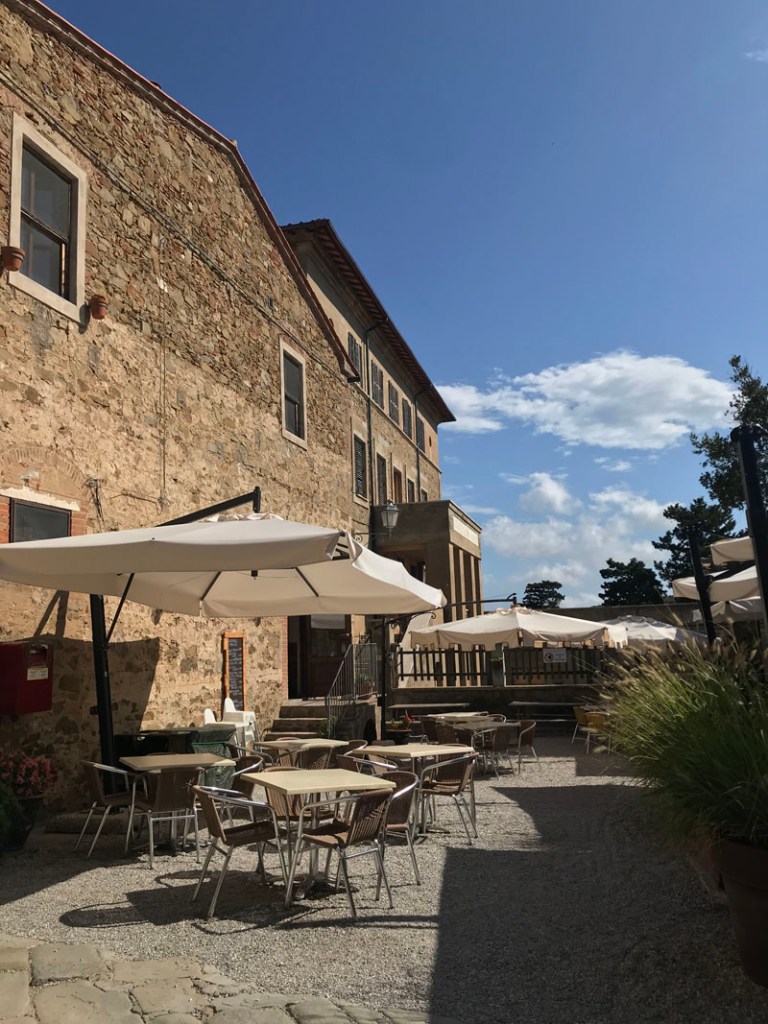
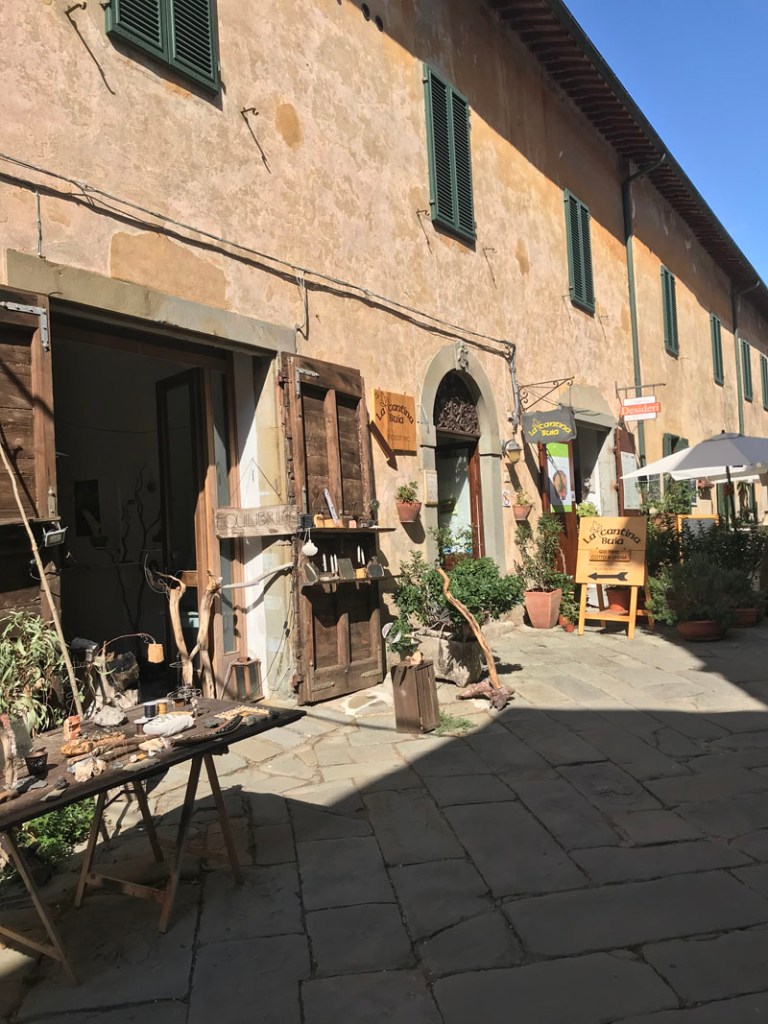
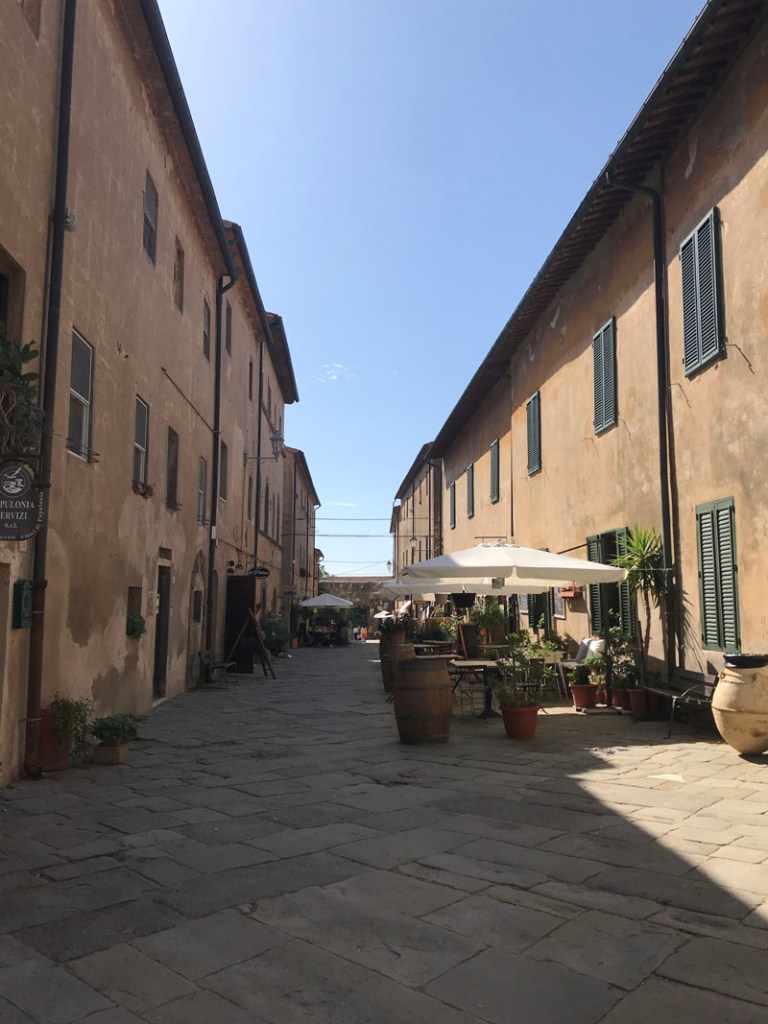
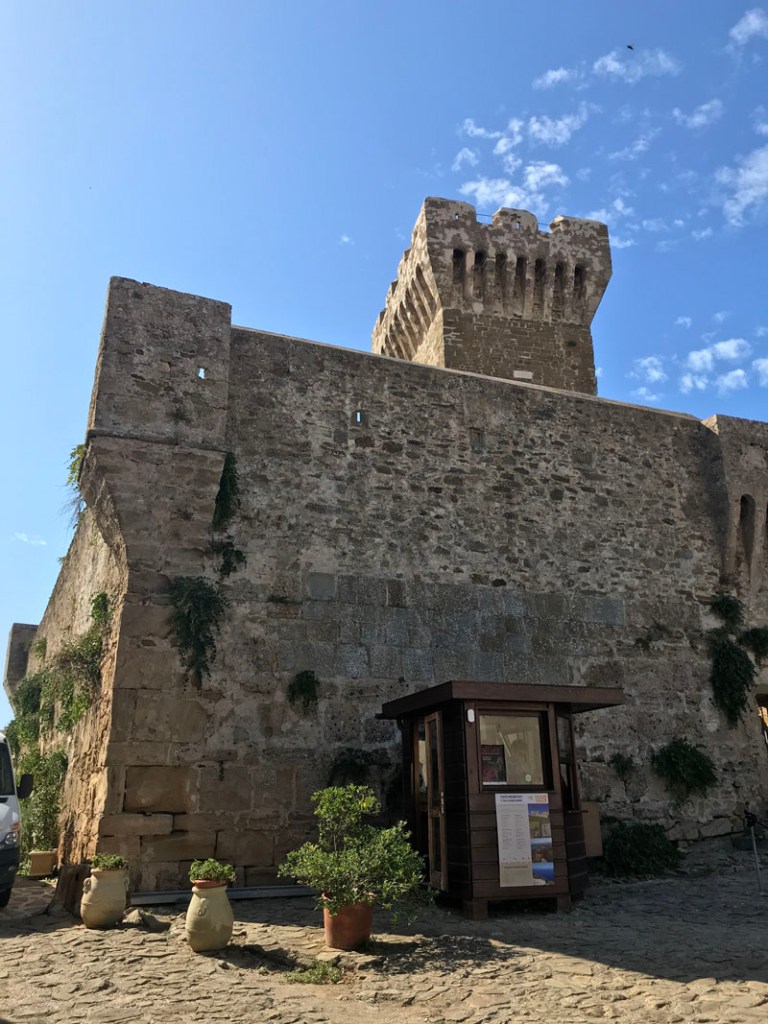
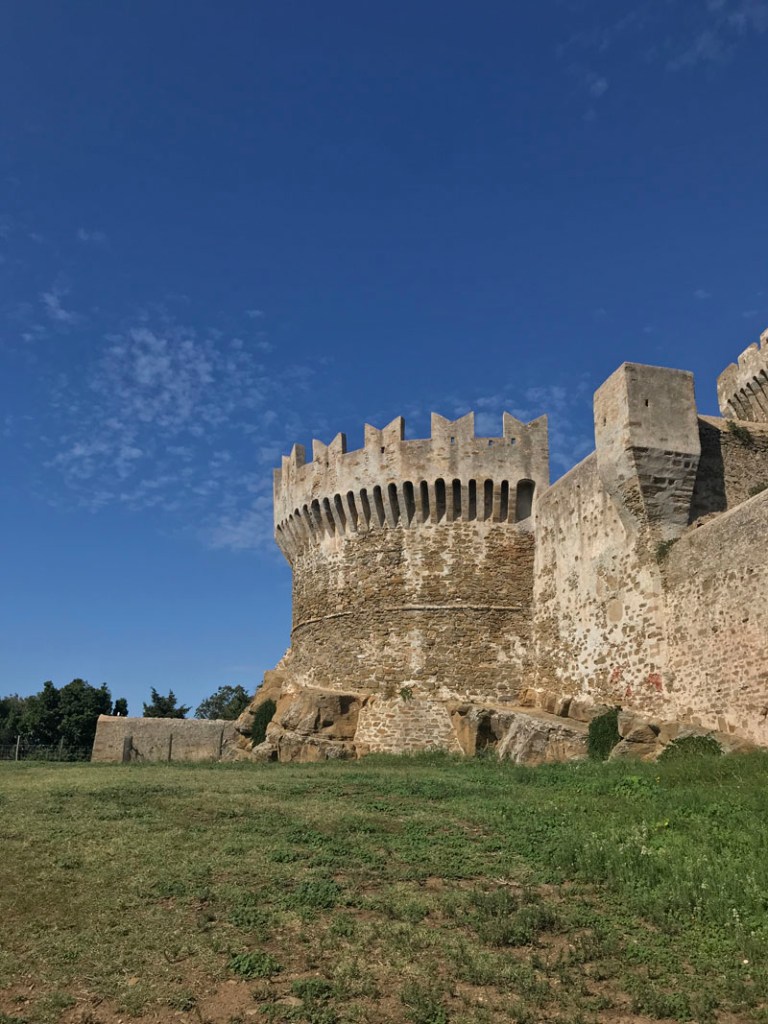
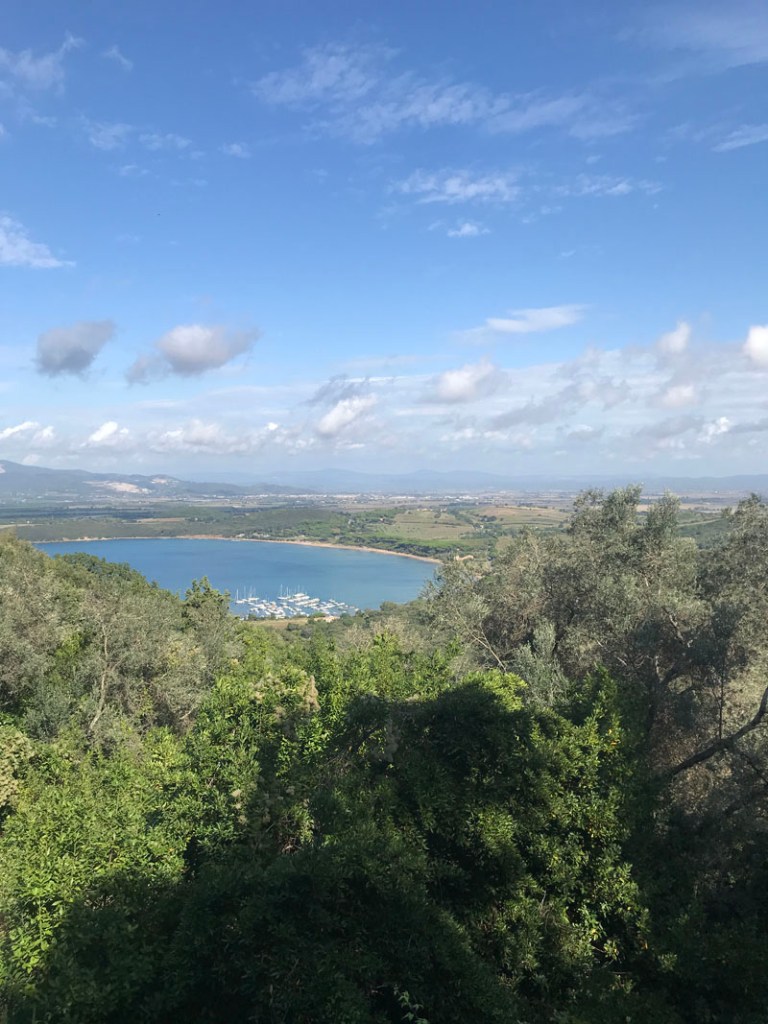
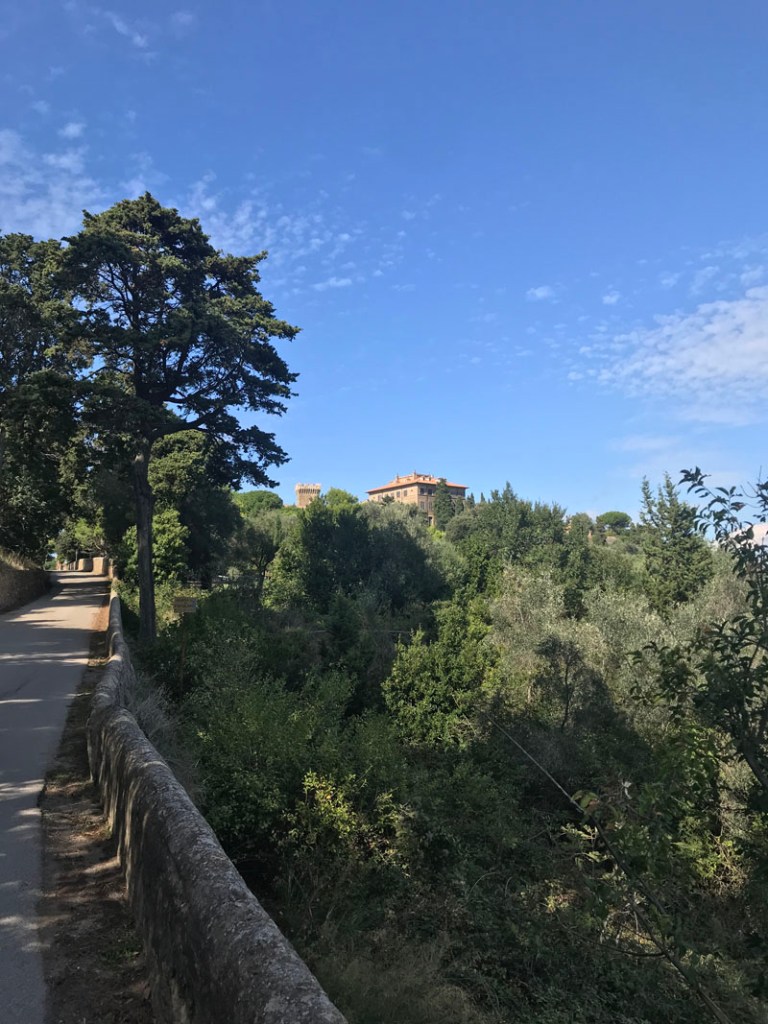
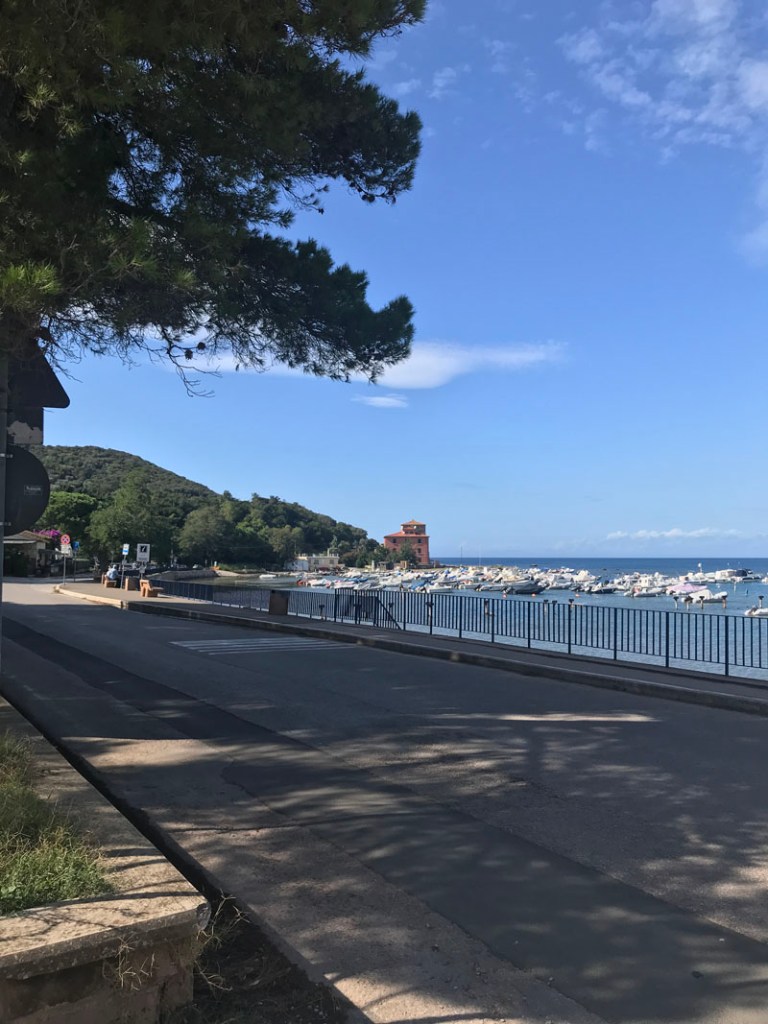
On to Populonia, which offers a cul-de-sac with an old walled hamlet (less than half the size of Monteriggioni), a marina and a fab looking beach.  In addition, there’s a hidden rocky beach that locals use a lot, and an Etruscan archaeological park, rife with tombs.  First we visited the town.

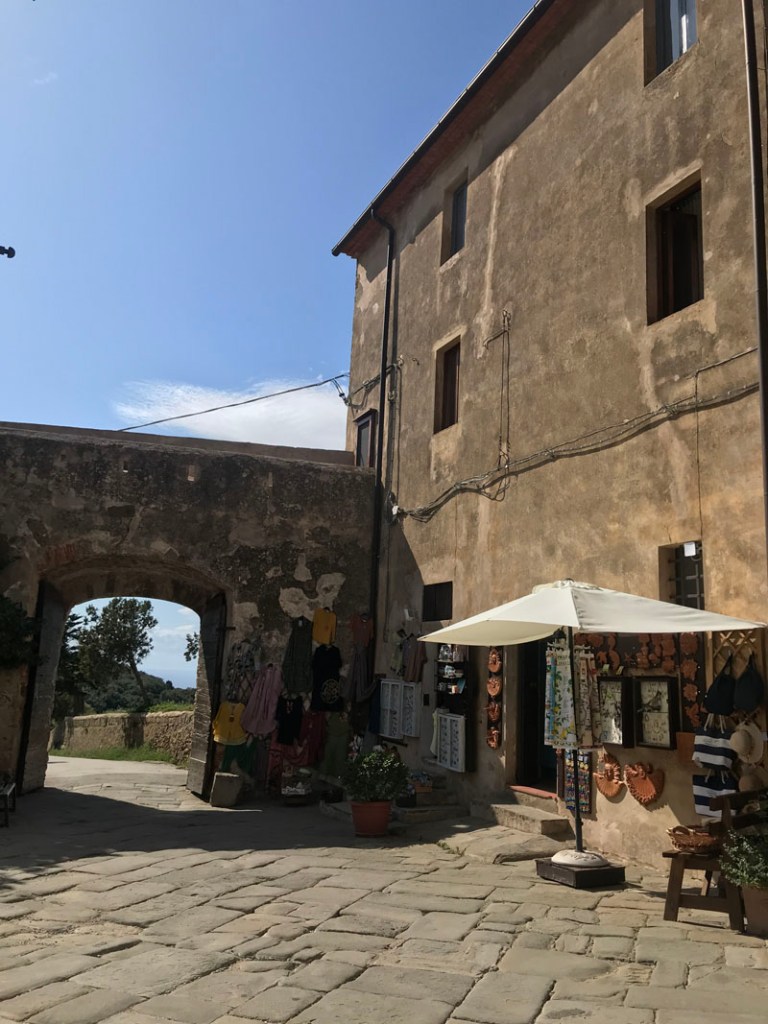
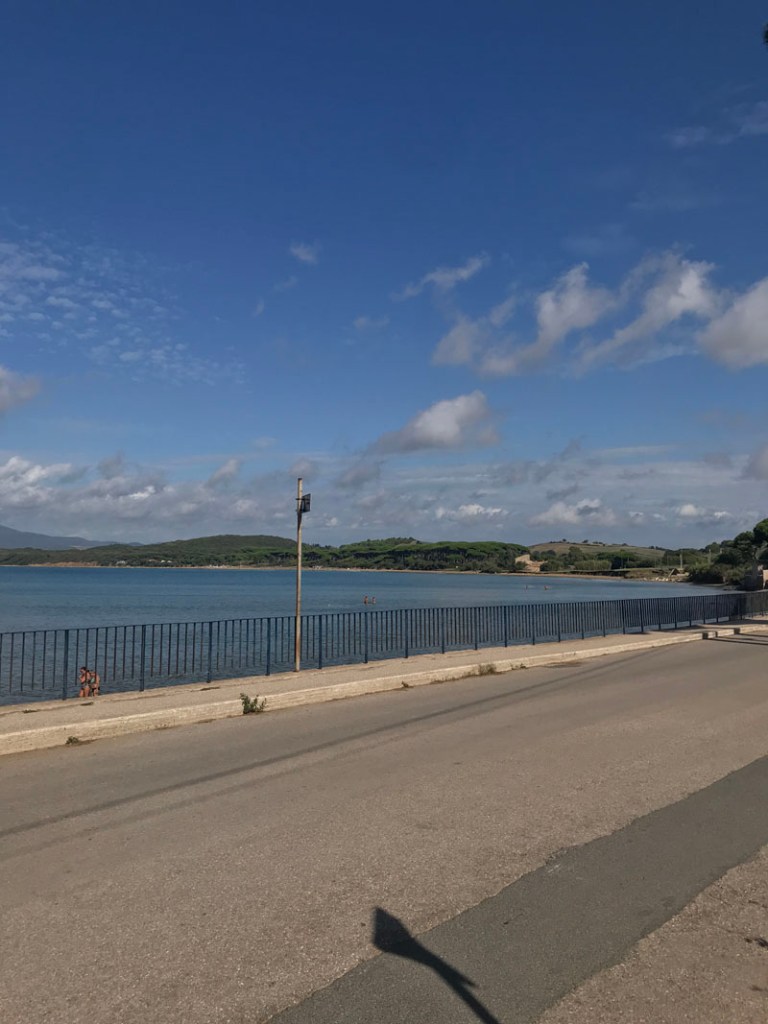
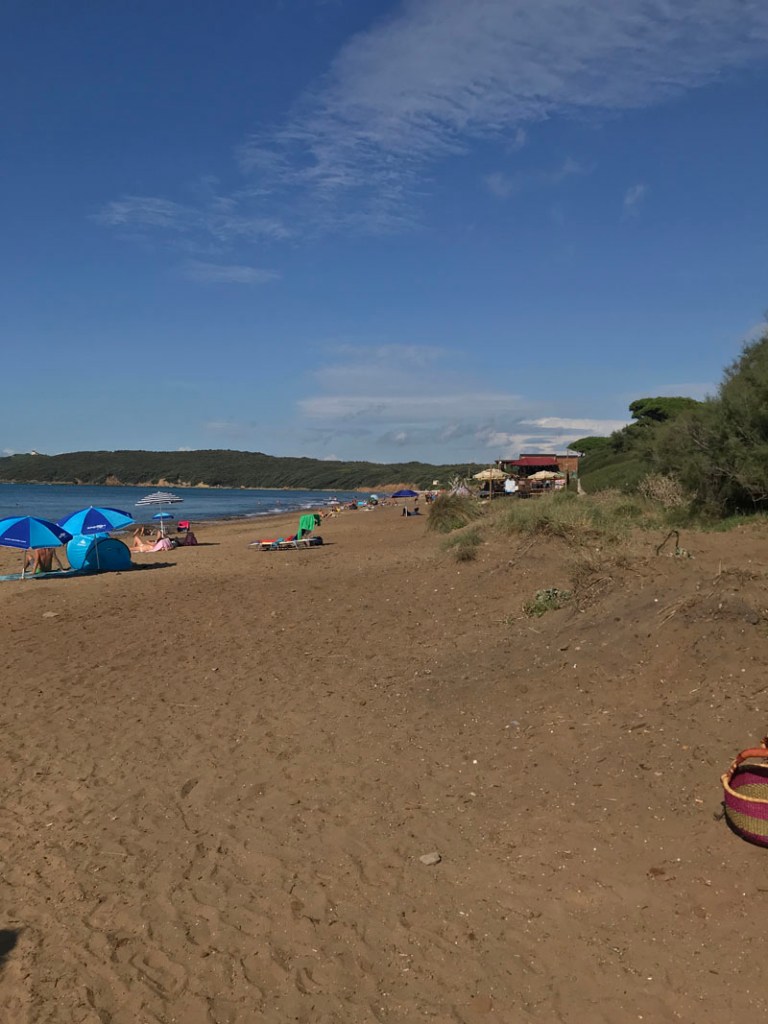
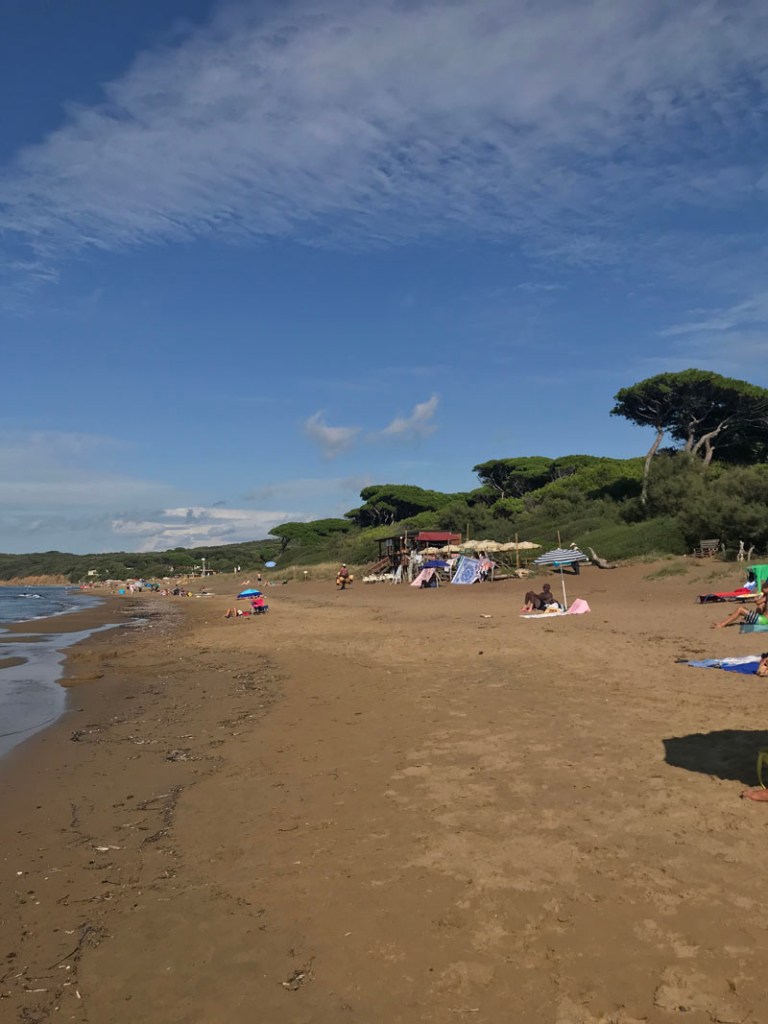
It’s a nice place, with a couple of artsy-craftsy places and a few restaurants.  We didn’t spend too long here, and so wound our way back down to the marina area.  It has a small beach nearby, and is pretty enough.  In the distance, there’s a much larger beach, with additional facilities.  We visited that too, but briefly – being the only fully-dressed people on a beach full of half-naked people tends to make one feel a little uncomfortable – especially when you’re taking photos!

So now it’s a toss-up between this beach (which is in lovely surroundings), versus Marina di Cecina (which is closer, and has more amenities, but isn’t nearly so pretty).  There are others in the area aswell – Castiglioncello (not too much further than Marina di Cecina, is lovely, has amenities, but requires climbing a lot of steps, and is rather small), and Rosignano Solvay, which offers nice white beaches and amenities, but I’ve never been to.  Of course, possible the queen of beach resorts is Viareggio – where the beaches are overrun, but there are amenities galore… Viaraggio also holds one of the biggest Mardi Gras festivals in Europe, which surprised the heck out of me when I read it.  Plus we’re about 90 minutes from it.

Anyway – back to the photos.

We were dog-tired when we got home, and so just chilled until it was time to go out to dinner in Ristorante Etruria.  It really is a well-decorated place!  The staff and food are good here too.  I had ravioli smothered in a cinta senese (Sienese pork) ragu, followed by grilled swordfish and fries.  Niamh had mussles and some amazing wild boar chops.  They were chargrilled, and tasted wonderfully.  I had serious food envy.  We were too stuffed to have dessert, or even the free limoncelli or grappe they offered us.  Rather than let us go home empty handed, they gave us a half-bottle of Chianti.  We have three of these now!

Nothing was done for the rest of the night.

I got up and walked around the walls again this morning, but this time clockwise.  I worked myself up into another sweaty mess!  There were some lovely cloudscapes on offer, though.

No travel plans today – I might head out and visit a couple of Volterran attractions I haven’t documented here.

A domani!

The Psychiatric Hospital Exhibit

The Psychiatric Hospital Exhibit

We’re still settling into a lifestyle here, which borders on ‘normal’.  The threat of bad weather still looms and we’re a little wary of travelling at the moment.  At the time of writing this, it’s actually raining and I’ve had to skip my walk.

Anyway, we fluted about most of yesterday, but did go to that place which serves Neopolitan street food after we’d done a little shopping.  We both got a cuoppo fritto, which essentially a collection of fried, bite-sized snacks (mini-arancini, battered stuffed olives, tempura veg, cheese balls, stuffed croquettes).  It was actually pretty tasty!  They have other stuff there, like deep-fried hot-dog rolls, and fried pizzas.

IMG_5021

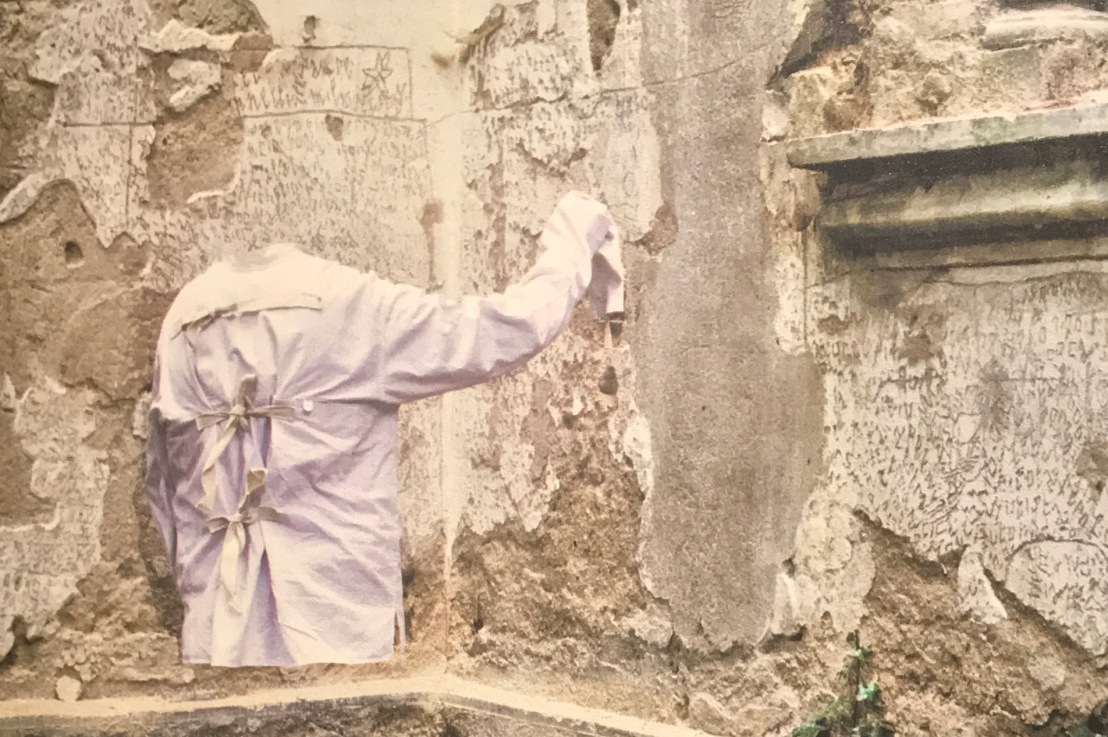
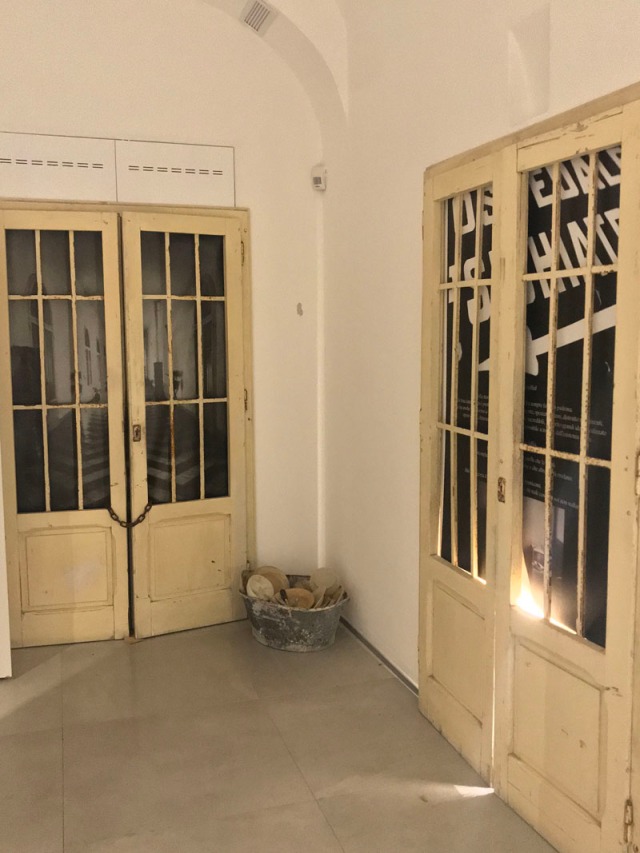
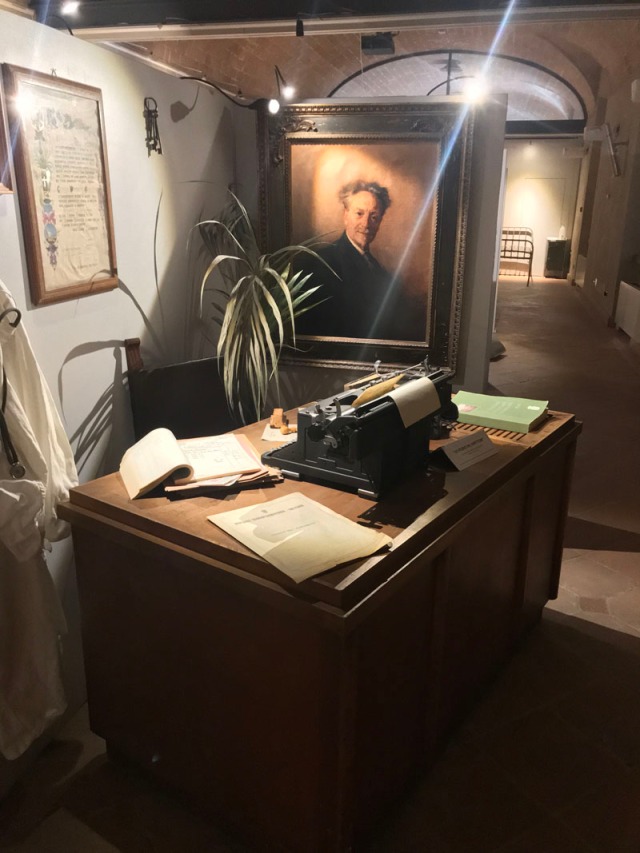
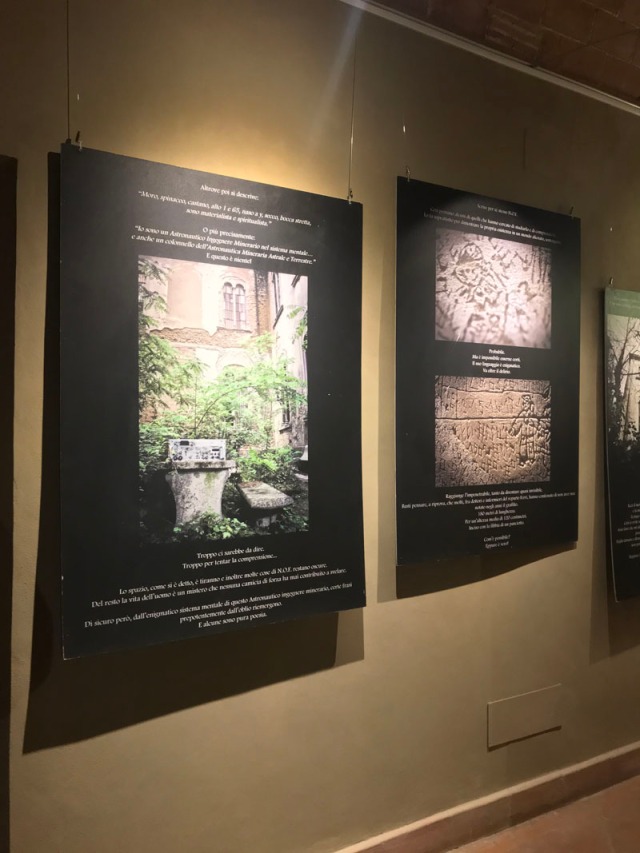
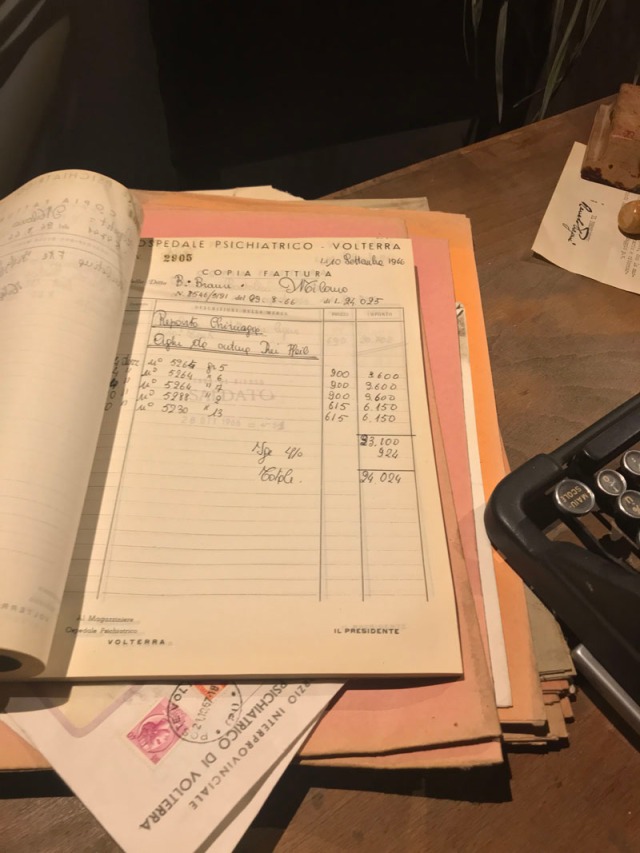
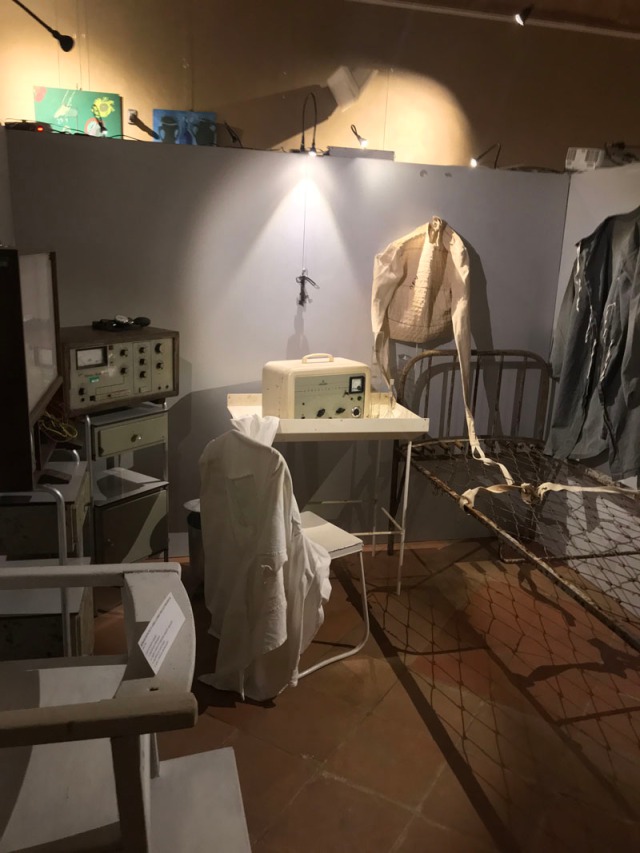
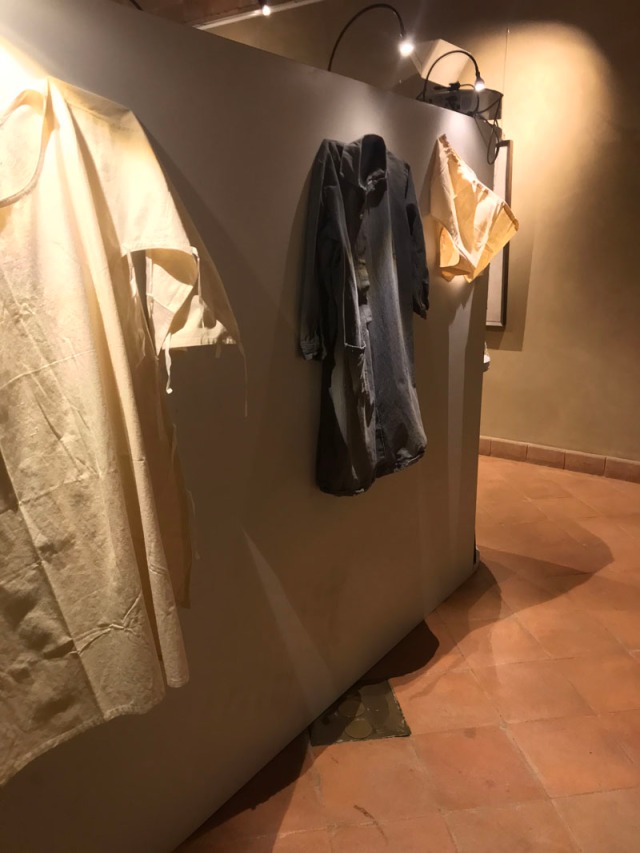
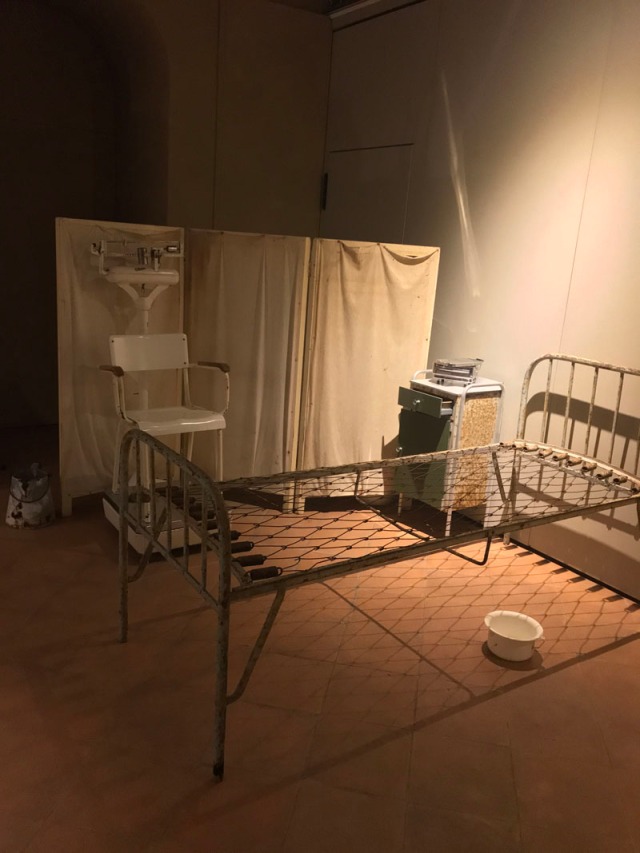
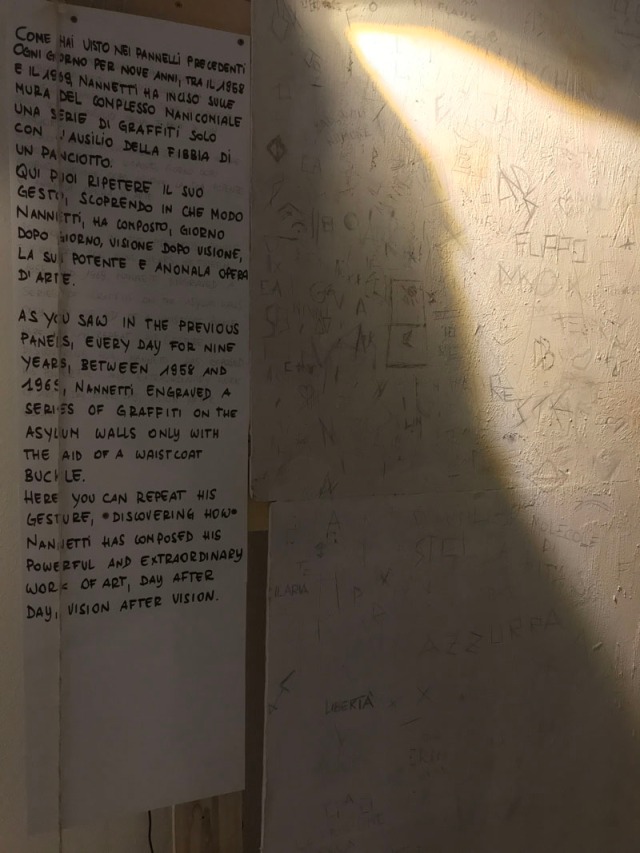
We settled in for the afternoon.  I had a short nap, and afterwards went out alone to the Ex Manicomio (abandoned psychiatric hospital) exhibition they had on in town (Niamh went on her own walk).  I’ve already written a little about the facility here.  As well as some general stuff on the hospital, they focused on one of the patients: Oreste Fernando Nannetti, also known as NOF4, who, using only a belt-buckle, wrote his personal exegesis on hospital walls, over hundreds of square meters.  There’s a brilliant article in English about him here.  It speaks of a man who must have been fabulously imaginitive and intelligent, but whose skills were harnessed in an incorrect and unjust way.

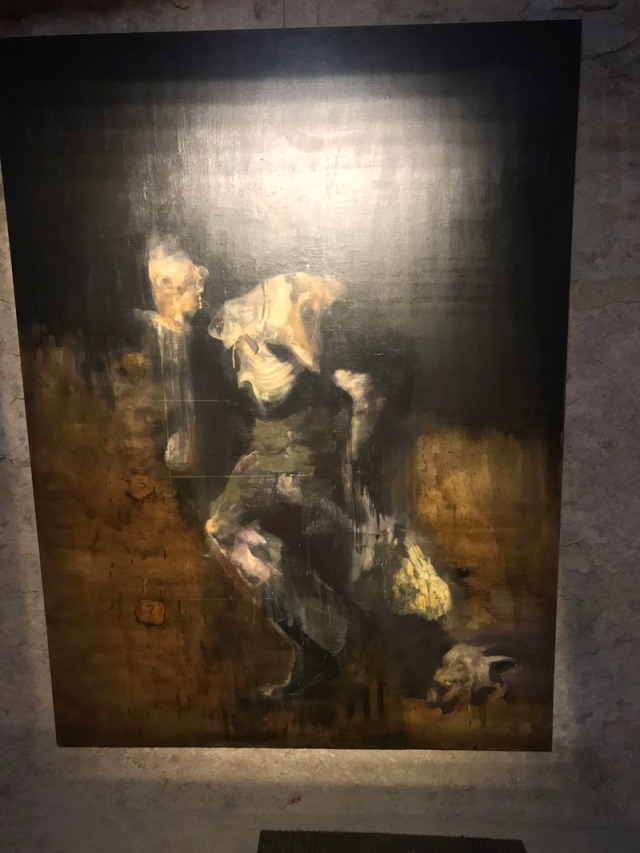
The exhibition was really well put together, and there was a sense of sadness as readings from letters (I think) to relatives were read over a PA, to piano accompaniment. There were some good, progressive years in the hospital, but when it was bad, it was very bad. These poor souls were stripped of everything that identified them as being a unique, self-actualised person and were homogenised into a system which kept them hidden from the outside world, including friends and family.

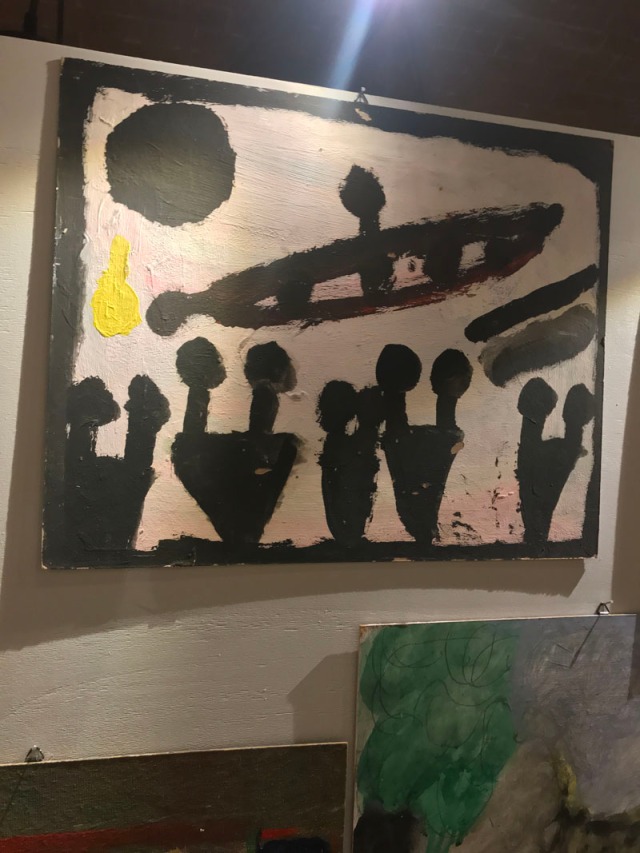
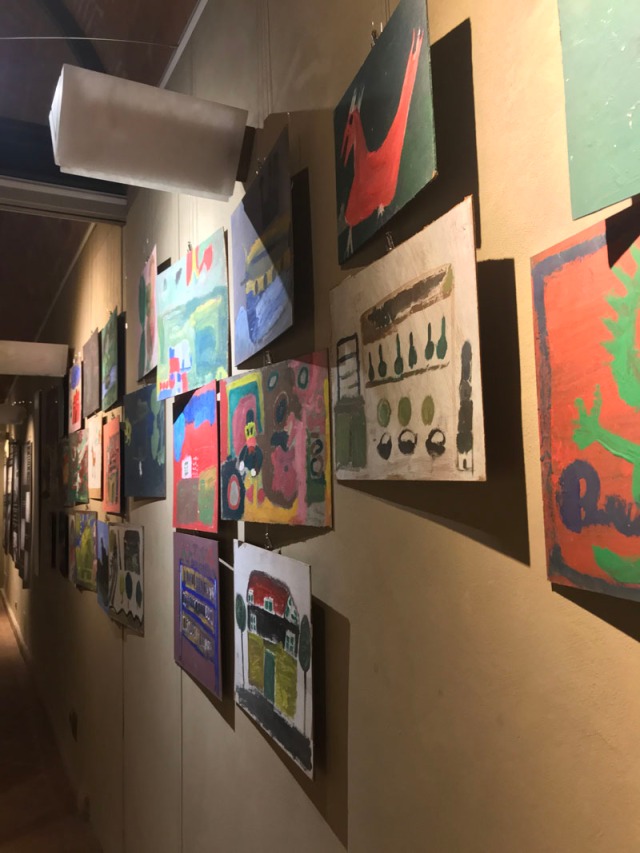
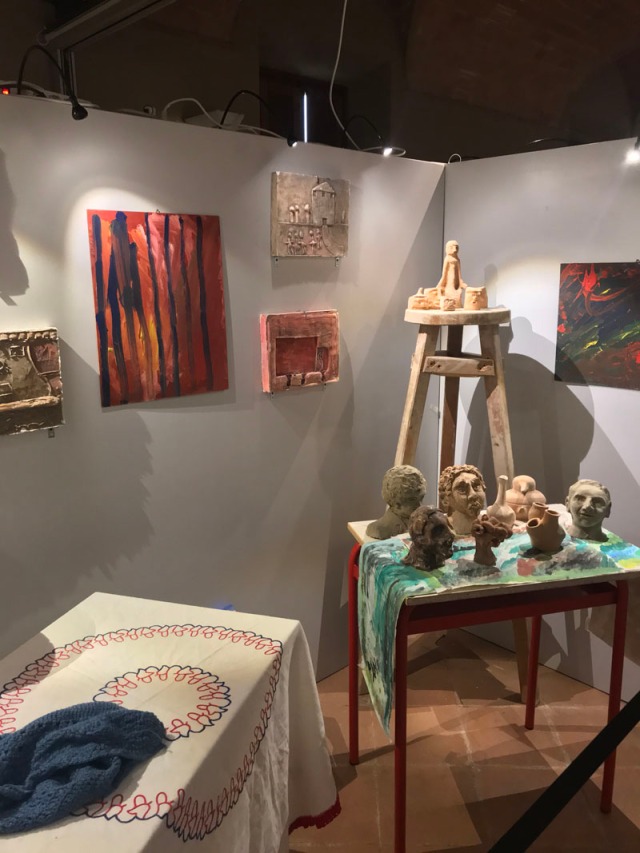
In particular there was a heart-breaking display of some letters which were posted by inmates to friends/family, but were intercepted by the institution and never actually sent to their destination. They did show some of the more progressive stuff, in particular where patients (inmates?) were able to express themselves through painting, drawing or sculpture.

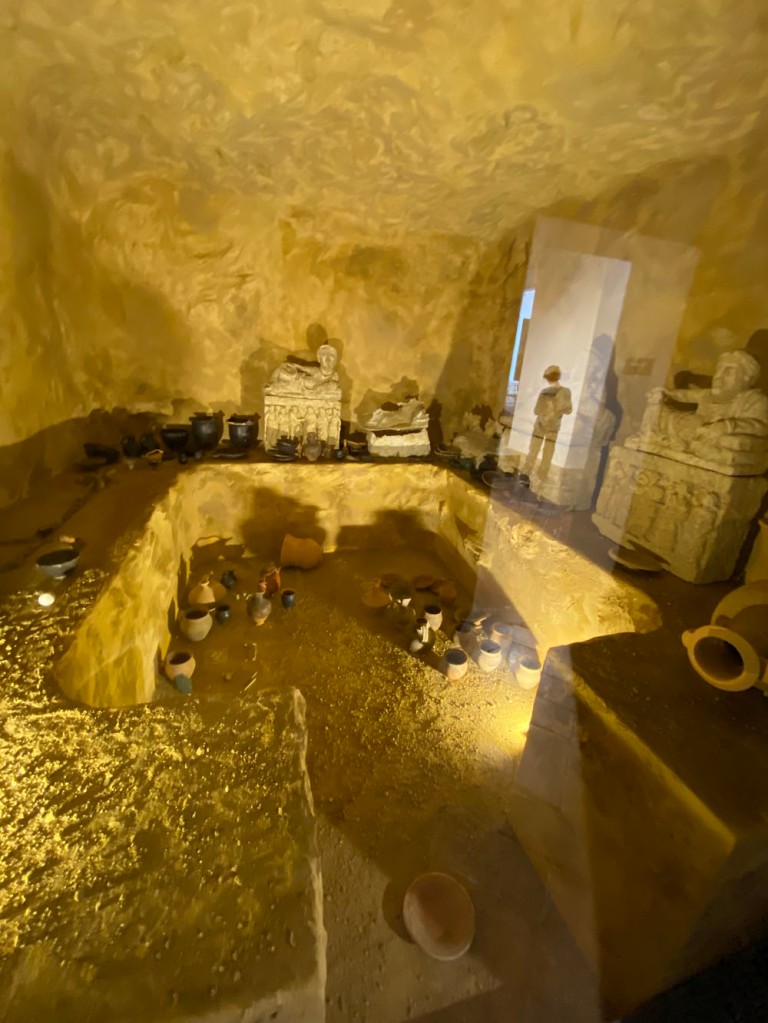
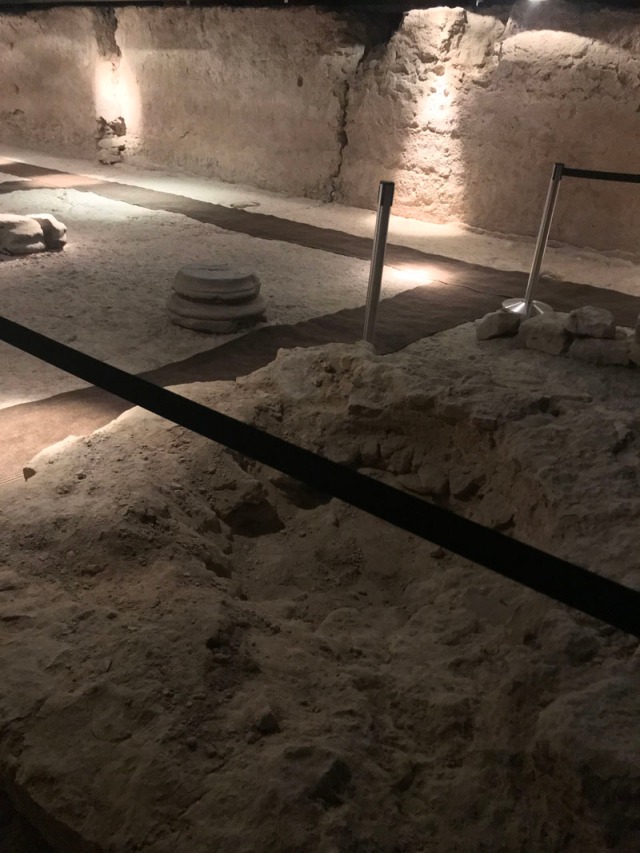
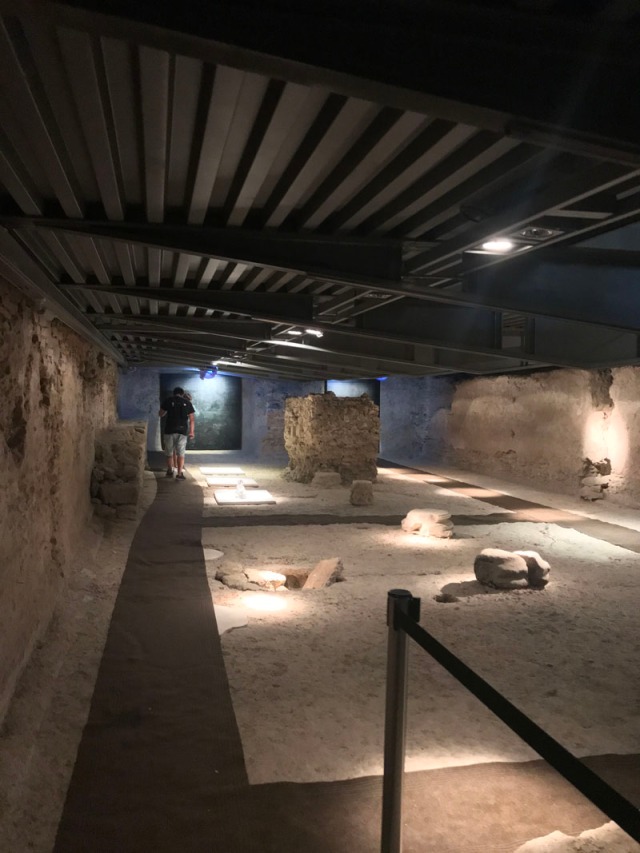
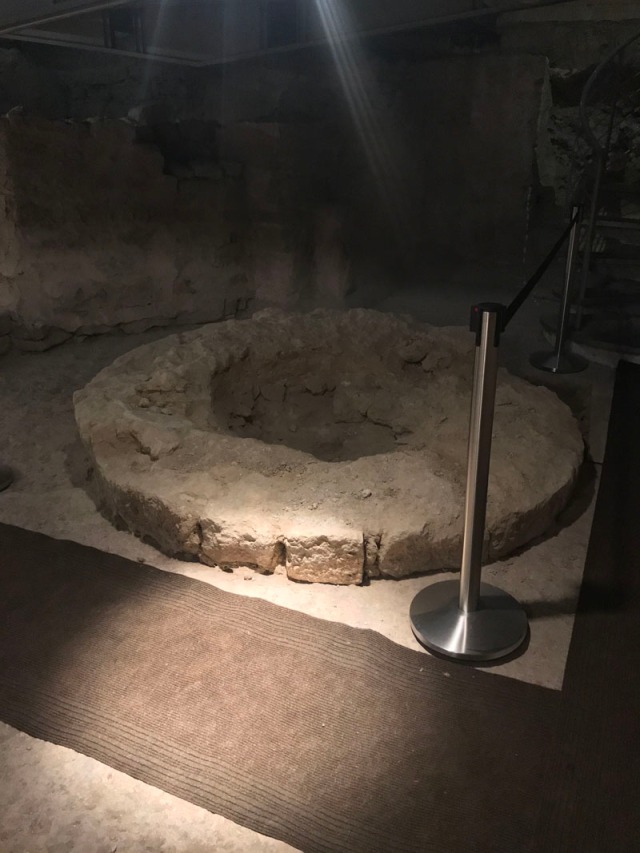
Above this exhibition, there were a bundle of rooms containing donations of the works of early-to-mid 20th Century local artists, and a mini-exhibit of local Etruscan burial sites. More Etruscan ruins were found below the main exhibition wall. All-in-all, it was €6 extremely well-spent. The facility is beautiful and modern, and a credit to the townsfolk.

I hope I’m ok with posting all of these photos.  Signs only warned against flash photography, and the exhibition ends on November 1st, so I’m thinking reader won’t get a chance to visit, unless they are local, or are coming over to Volterra soon for a visit. 

Sadly, I don’t think I’ll get a chance to get a tour of the hospital itself.  I think tours are in Italian, and require a minimum of 8 persons.

They had some cool-looking books and t-shirts there.  Unfortunately, their largest size of XL over here is like an L slim-fit back home.  Basically, it would have been a belly-top on me!

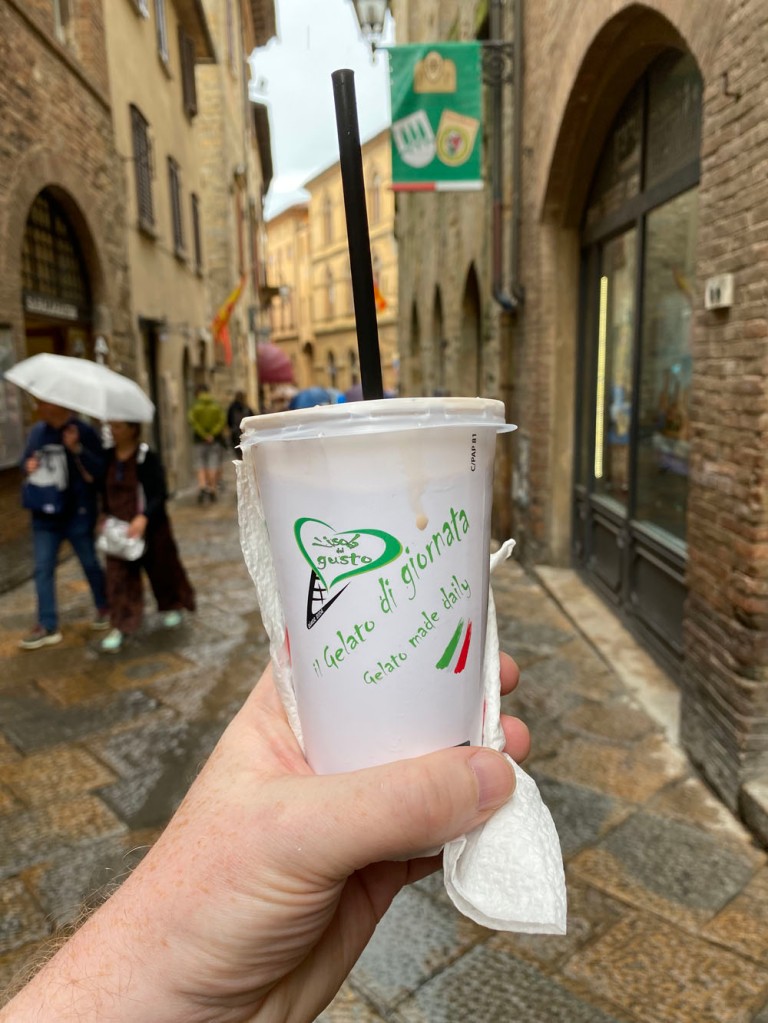
I grabbed a nice cone from L’isola del Gusto, before heading back to the apartment, which was probably acting-out, given my issue with t-shirt sizes!

Later that evening, we continued to eat like teenagers, and fried up store-bought burgers and had some of Niamh’s patented rosemary fries.  They were really excellent, but today I am in need of some veggies.  I then went out for a brief walk, to see if I could locate a live band I could hear – they were playing some Dad-rock classics and didn’t sound too bad.  I’m pretty sure they were in Albergo Etruria, just across the road from us.  There seemed to be a cover-charge in, and I just wanted to mooch for a while.  I skipped it and went back home.

IMG_5054IMG_5055IMG_5057

Some parts of Volterra get spooky at night!

So, with my walk skipped, that’s me done for today.  I’d like to make a veg-heavy soup as I feel I’m missing the vitamins.  I’ll post the results tomorrow!

I’ve been told that tonight there’s a Tuscan-wide crossbow competition in the main square, so we’ll definitely go to that, once we’ve found out the time it starts.

Cheers!

Volterran Antiquities and Medieval Fest Opening 2

Volterran Antiquities and Medieval Fest Opening 2

Well, it was market day again yesterday, so after breakfast we toddled down to the carpark beside the Roman ruins to have a looksee. We all got little items of clothing. I bought sandles, as we hope to rent medieval costumes today, and wearing them with modern walking shoes is not a good look.

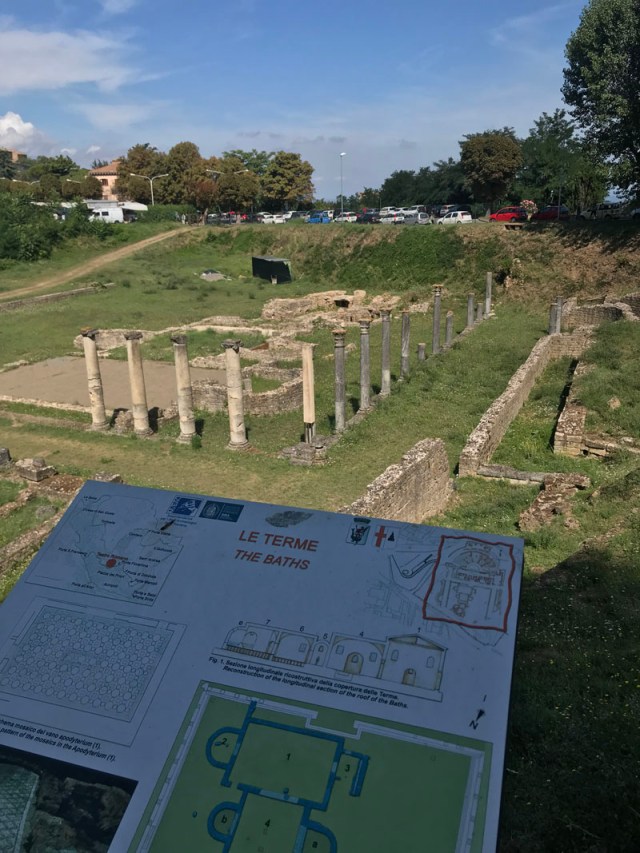
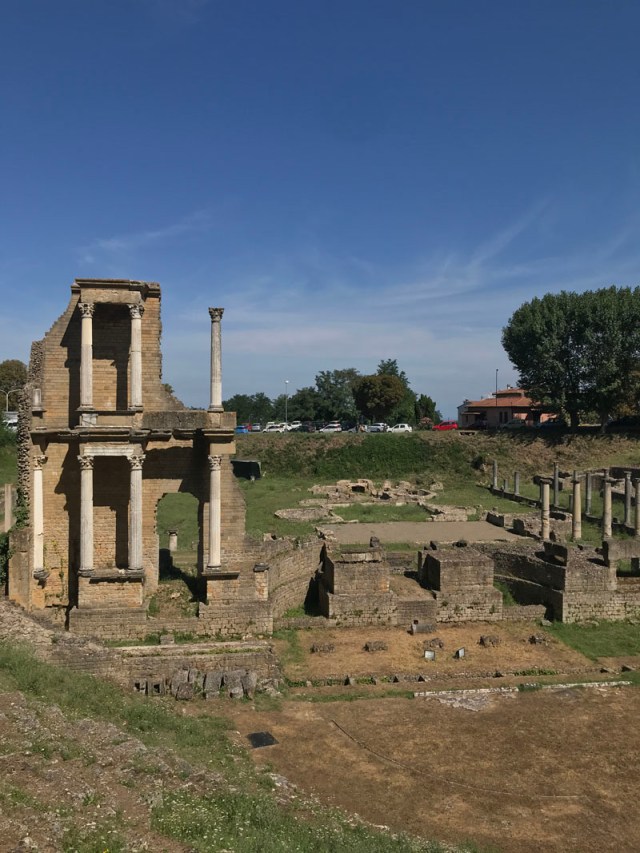
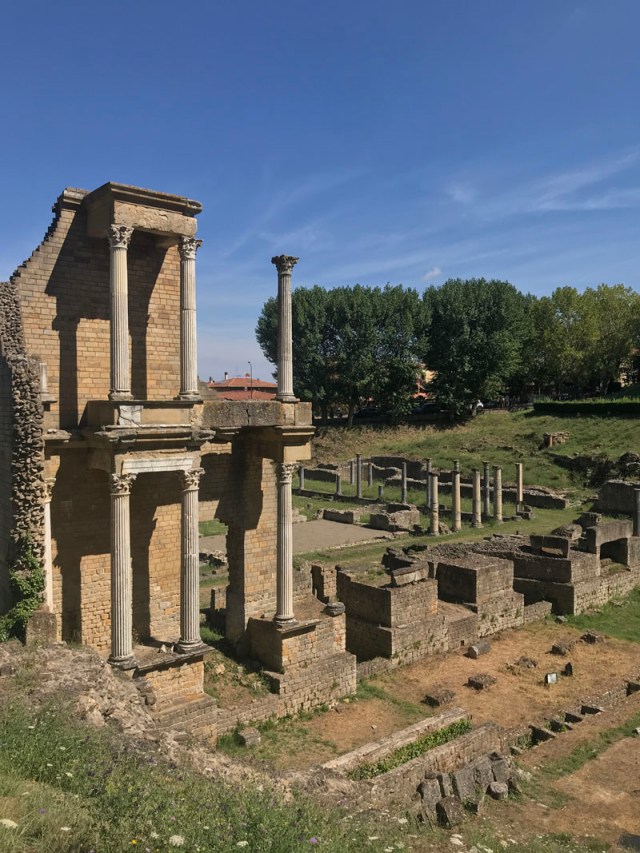
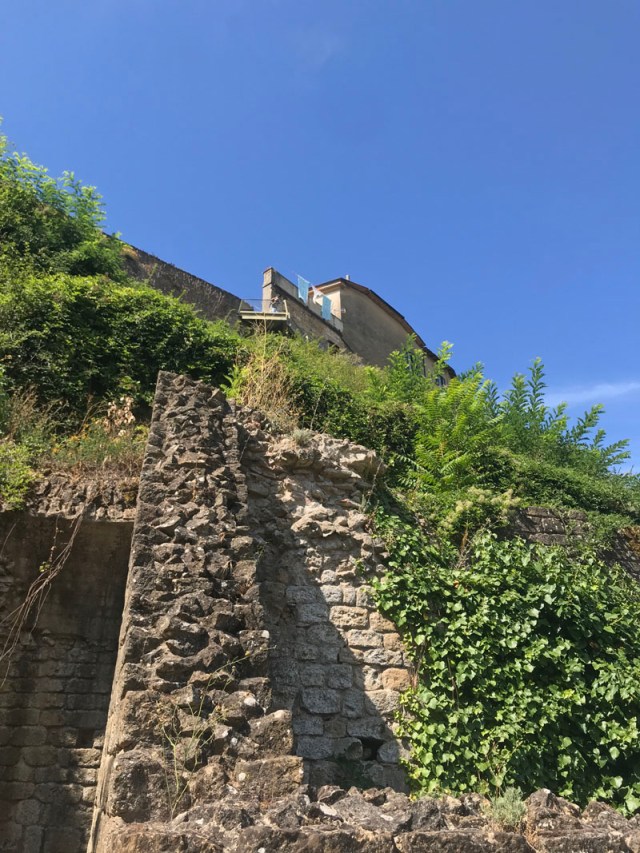
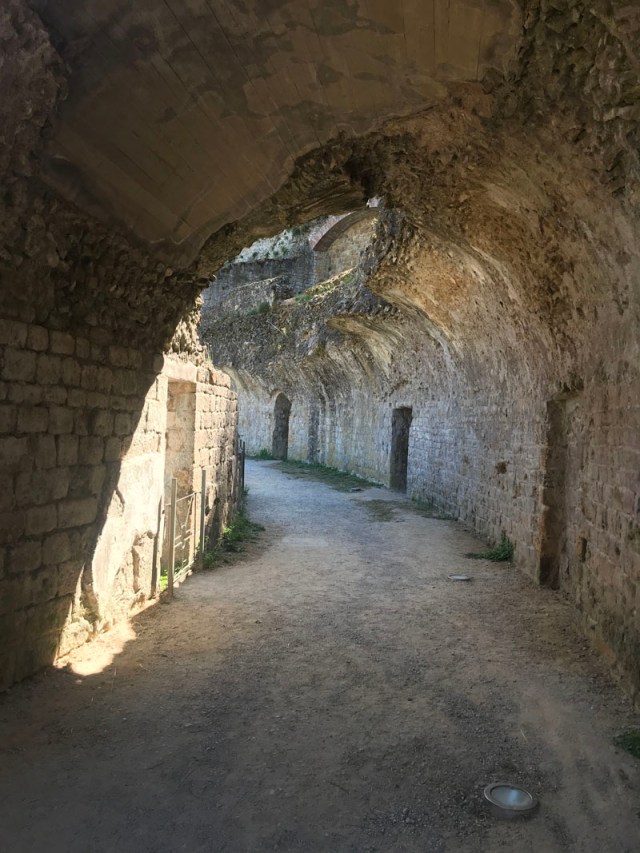
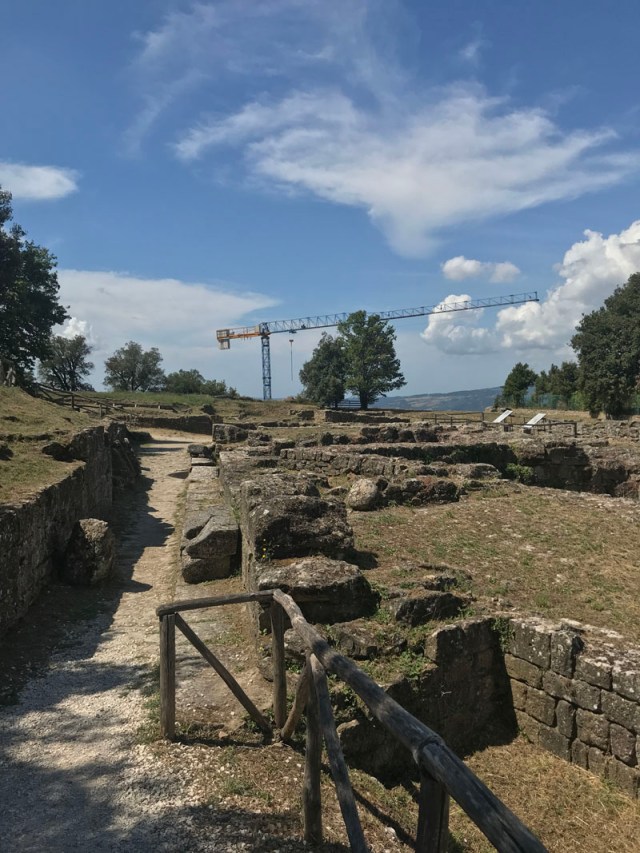
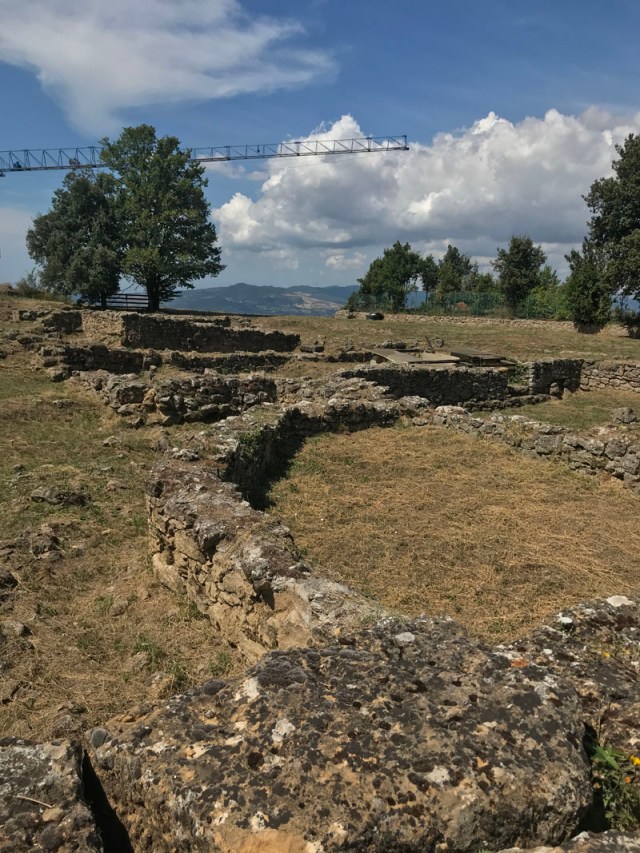
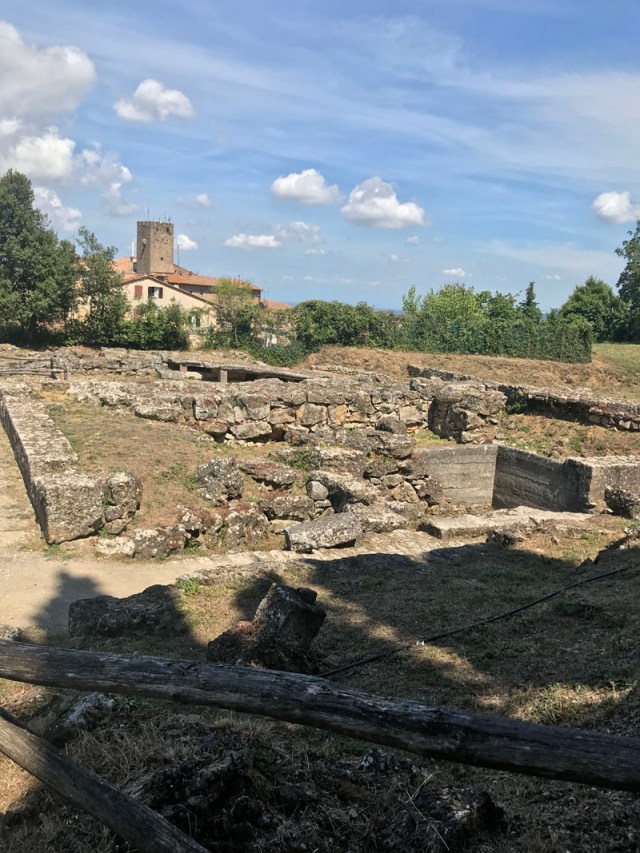
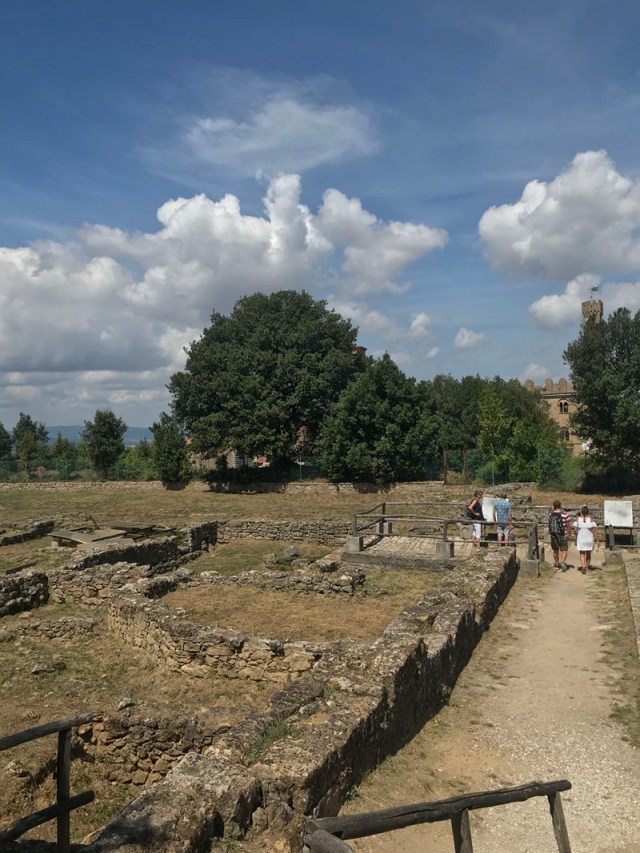
We have stayed in Volterra 6 times, for a total of about 9 weeks, and yet we still hadn’t visited the Roman or Etruscan ruins, so we decided to remedy that finally yesterday. I think it’s just €5 in per person (our visitor bought a Volterra Card, so she could check out most of the town’s main cultural attractions over 3 days) – which gets you into both the Roman site, and the Etruscan site in the public park.

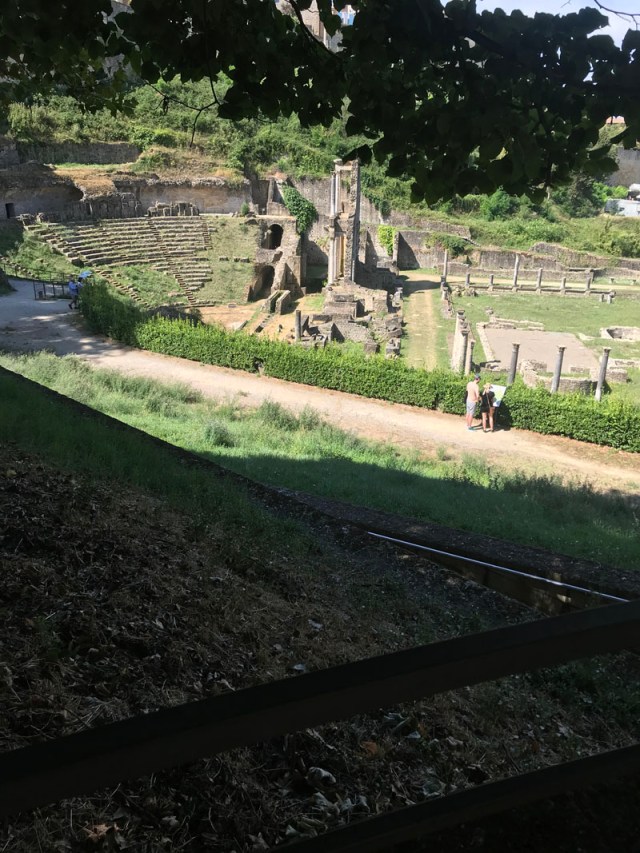
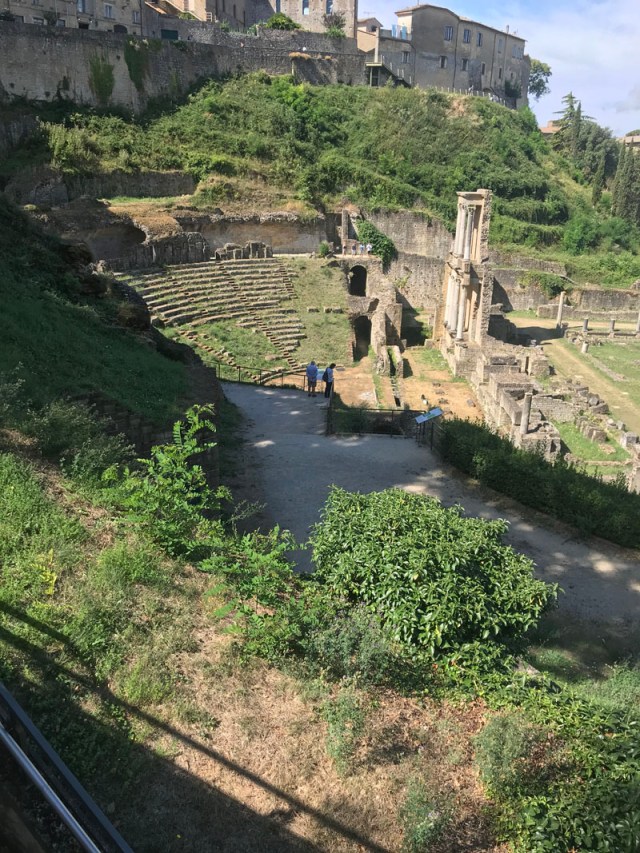
The Roman site was pretty good – although you can’t climb into the actual theatre (except if you buy a ticket during their arts festival).

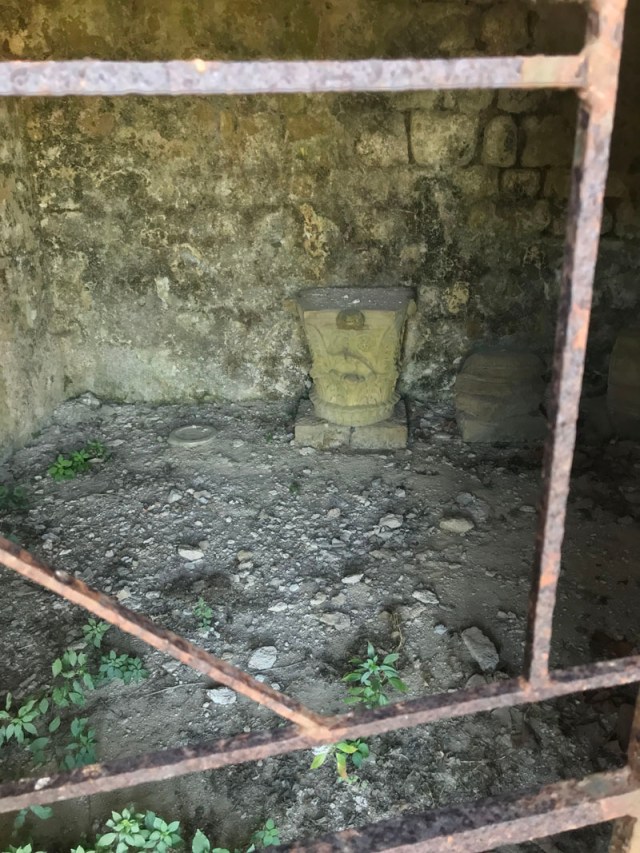
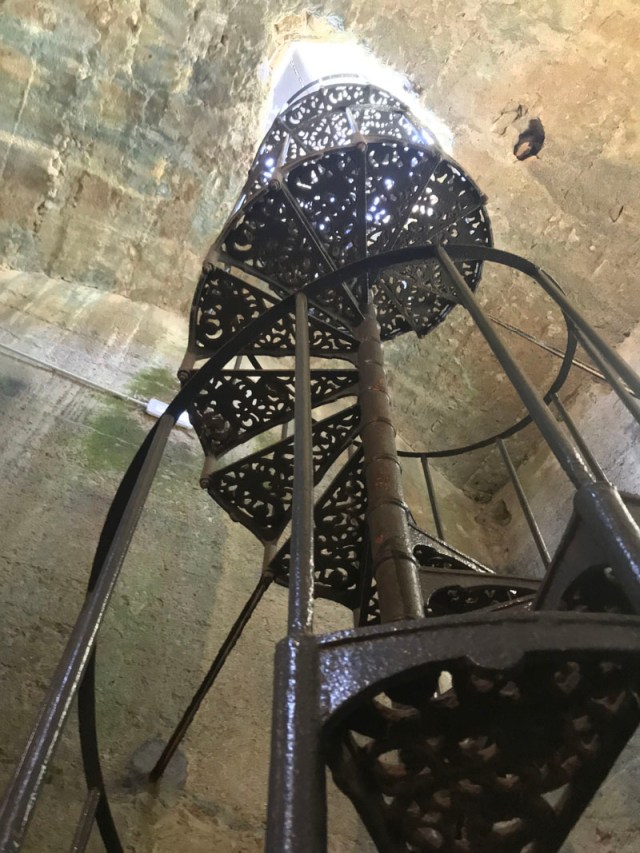
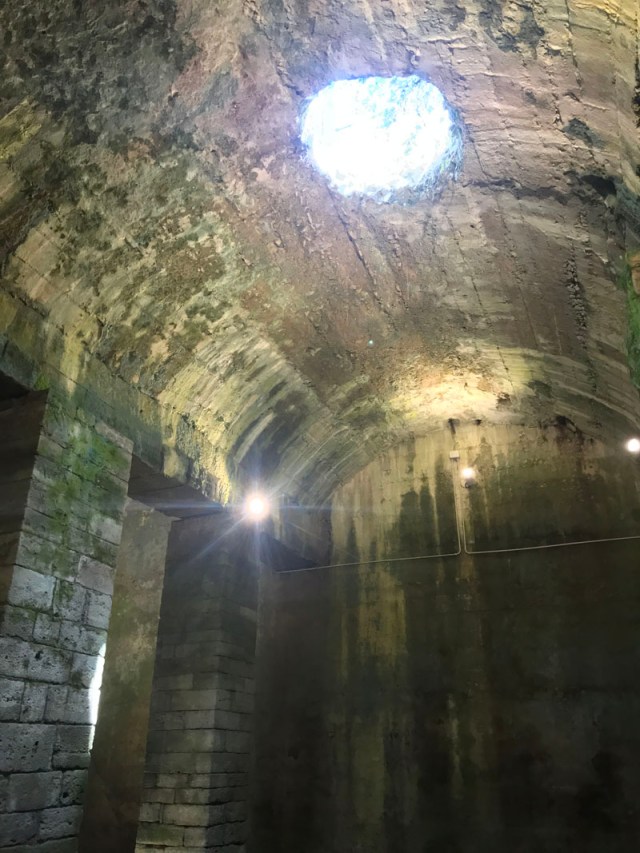
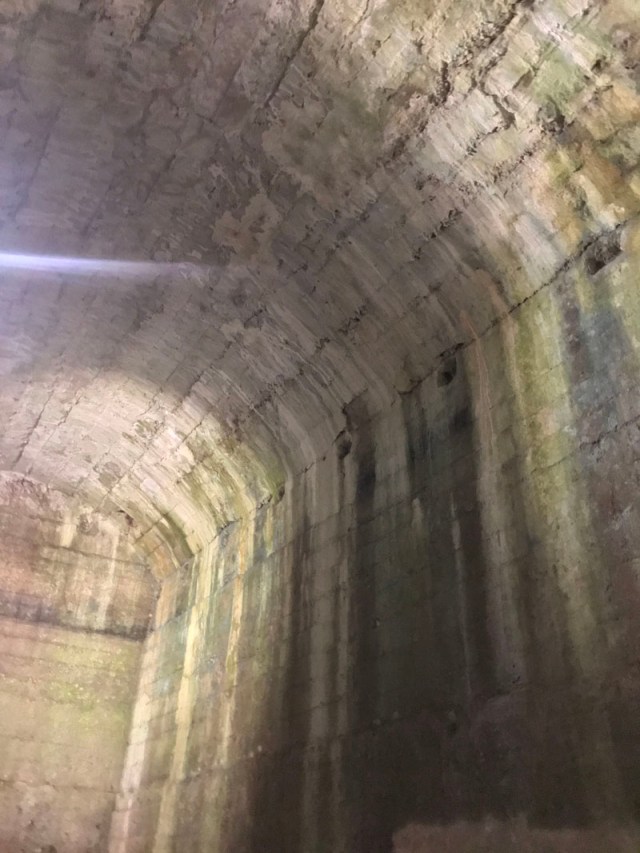
The Etruscan site, however, is rather tired-looking and in need of a bit of a cash-injection.  There are a couple of informational pedestals which are almost unreadable due to sun-damage, and the site itself is small.  I suppose it’s not bad for €5 per person, for both sites.  On the plus side, you can climb down into the Roman cistern here.  It’s a dizzying climb down a narrow spiral staircase into the chill, dank room below, but it’s mad to think they were engineering these things a couple of millenia ago.

Afterwards, we went to La Terra di Mezzo for lunch – wine and limoncello was had.

Niamh and I went to a crafts store to see if we could buy anything to start personalising the apartment, while our guest headed off to have a look at some other attractions.  We found a nice little cypress tree ornament, and a limited print of a lovely, stylistic painting of the walled village of Monteriggioni, which we have not yet visitied.  We’ll remedy that during this trip!

I crashed for a couple of hours, as I was still a bit bushed after yesterday’s trip to Pisa.  At around 17:20, I was groggy, but heard the unmistakable sound of drums heading our way.

IMG_4720

I’d forgotten that there would be some medieval fair stuff happening this evening.  I wrongly thought that it would be a repeat of last week, and hurriedly texted our guest to adviser her to make her way to Piazza dei Priori (the main square).  I got dressed and lashed up there myself.

When I got there, the lords and ladies were already arrayed at their table, and it seemed to me that the Master of Ceremonies (the same amazing riffing, rhyming guy from last week) was looking for volunteers for something.

As it happens, it was for racing cheese-wheels (well, wooden versions) around a simple course in the square.  It was professionals versus volunteers, and was a bit of fun.  They have their own ‘palio’ involving these cheese-wheels they race down an obstacle course in October (the ‘Palio dei Caci’).  Sadly, we will be missing that.  So, this was a good alternative!

You can check out a short video of a bout here:

They announced that something was going to be taking place in the square at 21:30, but my meagre Italian didn’t pick up exactly what it was.  We went home and had the first set of a large batch of beef ragú Niamh made up.  It was nice and coarse – I love it that way!

IMG_4733

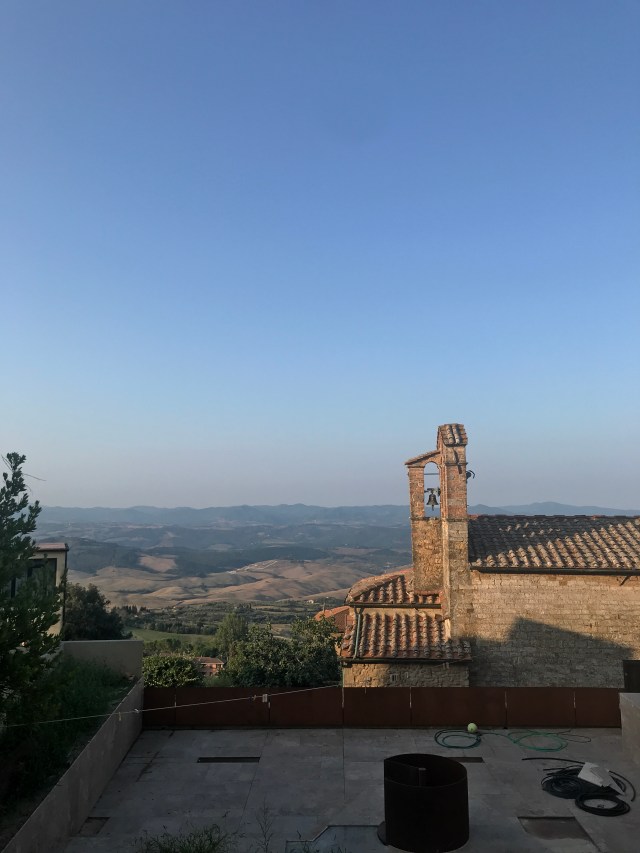
After dinner, we had a couple of glasses of wine, and I managed to catch this gorgeous panoramic shot of the sunset from our upper terrace.

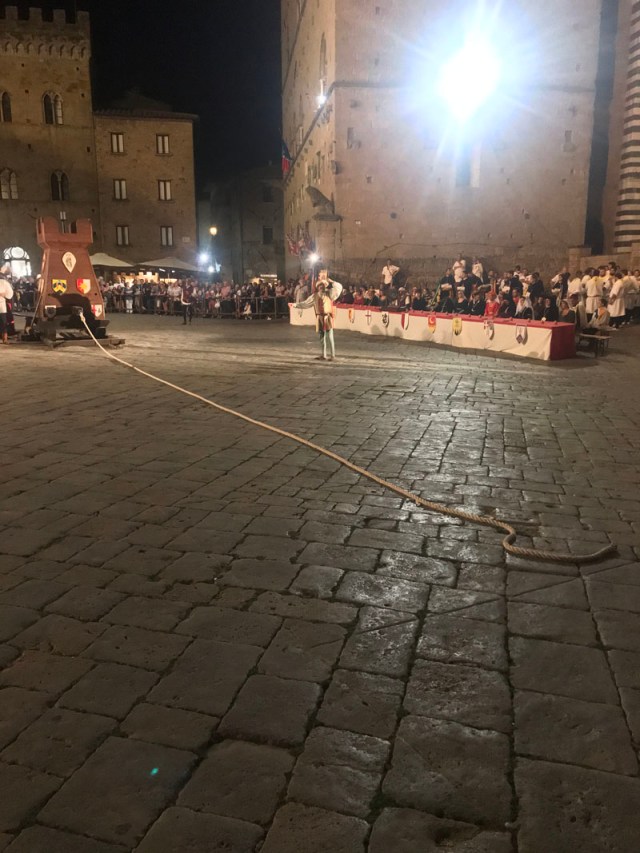
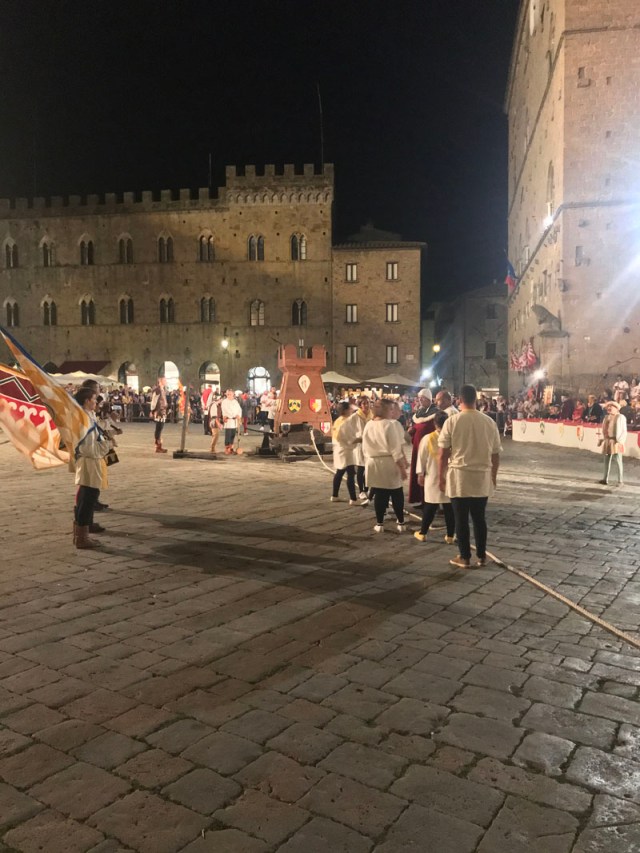
We went to the square, just in time to catch the entrance of the dignitaries, combatants and the teams representing their contrade for the Palio del Cero.

The teams would be contesting in a tug-of-war competition!

Once again, it was a knock-out affair, with semi-finals and a final.  The sbandieratori (flag jugglers) put on a couple of shows before the semis, and the final itself.  A fun evening, although we didn’t get bleacher seats and so were a little foot/backsore after nearly two hours of standing in the same spot.

The lord and lady representing the winning contrada were frocked and awarded.

And then, to bed.

I woke up, but decided on not doing a walk today, as I will be on my feet for the Medieval festival for much of the day.  We also have an All-Ireland final to watch this afternoon!

I’ll tell you all about the 2nd day of the Medieval Festival tomorrow.  Toodles!

My Scooby-doo moment

I lazed about for a couple of hours after my walk yesterday, and then we both went out to buy ingredients. If we’re not eating we’re buying food – that’s the way it seems to be right now! After shopping, we saw that the Volterra theatre was open, so we went in, donated and had a looksee.

It’s small, but perfectly formed, as the saying goes.  Gorgeous!  Niamh made lunch with some of the pasta we’d saved over from the previous day, plus a few grilled veggies, rocket and some mortadella (a wide sausage, with pistacchio nuts – not going to lie: it reminds me a lot of fancy luncheon meat, but I love it).

IMG_3523

I had to spend more time indoors while I dealt with Sky over our inability to stream via SkyGo.  No satisfactory conclusion was reached, but we’ll get by with YouTube, Netflix and Amazon… and, of course, all Volterra and Tuscany has to offer! 

After that debacle, we decided to get some much-needed dessert, but rather than going to L’isola Del Gusto (the place to go to get gelato usually, as it’s one of the best in Tuscany), L’Incontro was also recommended to us, so we gave it a bash.  I had orange cream and tirimasu, and it was fantastic – well done, folks!

IMG_3525

We walked the calories off a little before heading home, chilling, and having another meal, cooked by Niamh.  Are you beginning to sense a pattern yet?  We got a couple of juicy pork steaks on-the-bone from Antica Macelleria, and had ourselves an Irish-looking dinner.  It was fab, and a needed change.

IMG_3529

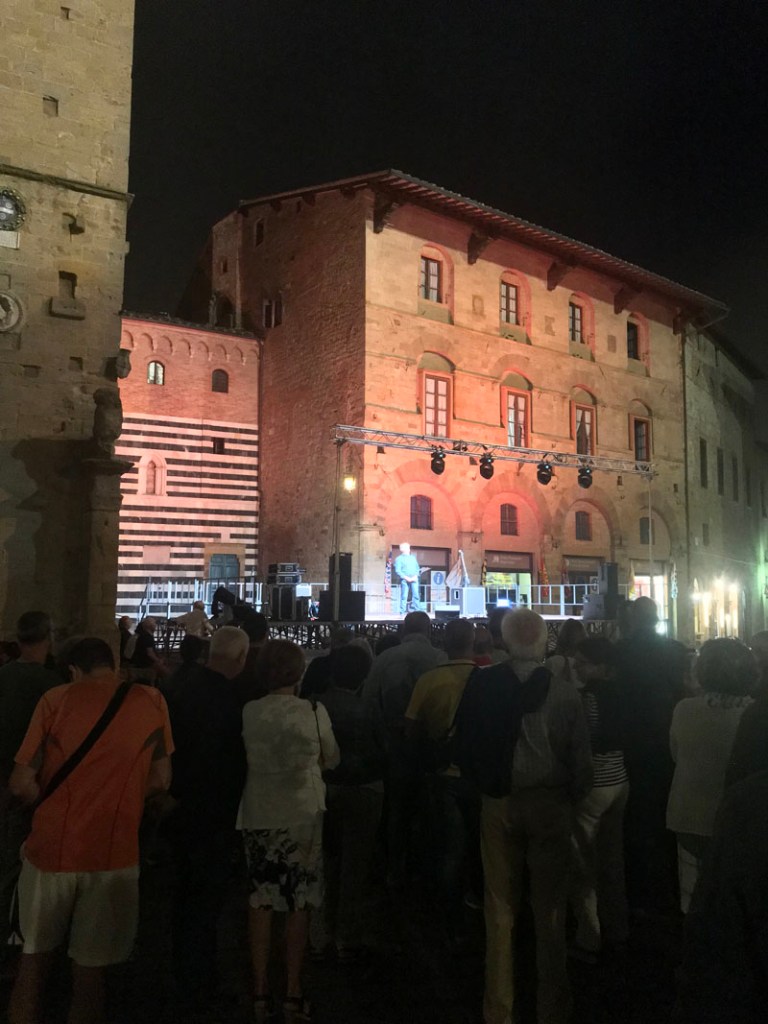
After another while we headed out to see if there was anything going on around town.  In the main square (Piazza dei Priori), a stage was erected, and some seating placed out for the townsfolk and visitors. While Volterra gets a lot of tourism from the UK, Germany and Holland, the bulk of it seems to be Italian, which is a great indicator, in my book.  A couple of comedians (we think) warmed the crowd up, but it being entirely lost on us, we went back home.  Looking at my social media feeds this morning, it seems as though there was music afterwards.  Ah well…

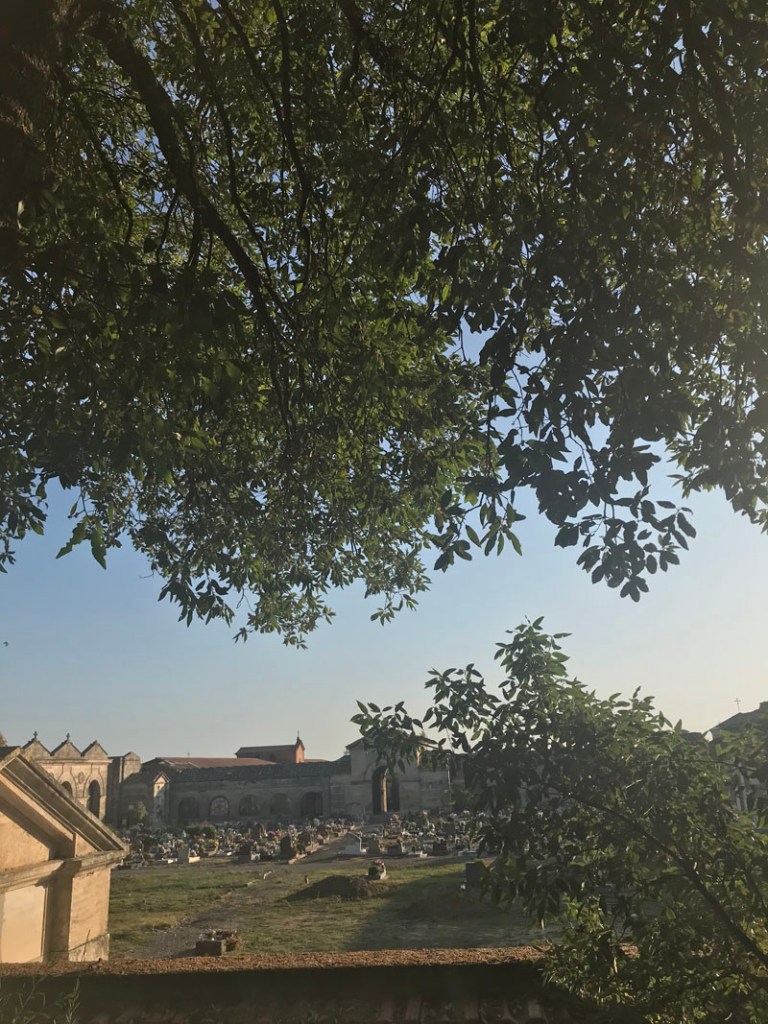
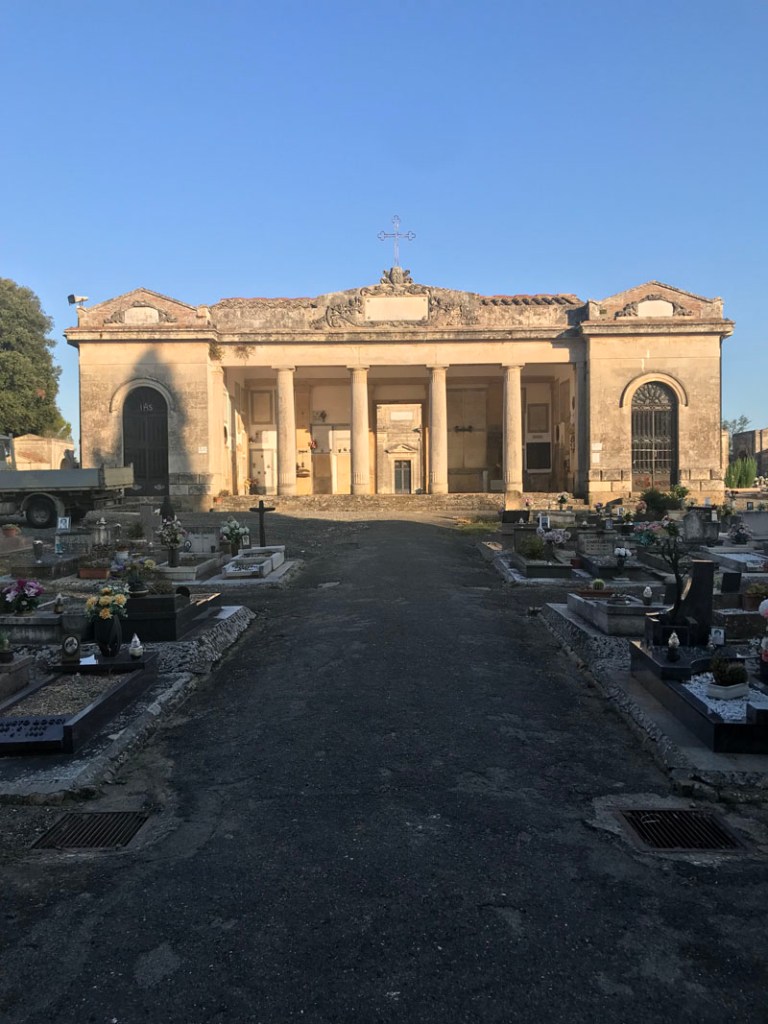
This morning, while Niamh continued her ‘Couch to 5k’ programme, I walked to the only gate in Volterra I hadn’t been to yet: Porta Diana.  The town’s cemetary is nearby and it’s a relaxing little walk.  At least the walk there is, the walk back is a different affair.

The gate no longer has its arch, sadly.  I can only speculate that this happened during the retreat of the Germans.  Portal all’Arco was saved, but sadly Diana was not.  If anyone reading this knows, please drop me a comment.  You can check out some old photos of it here.

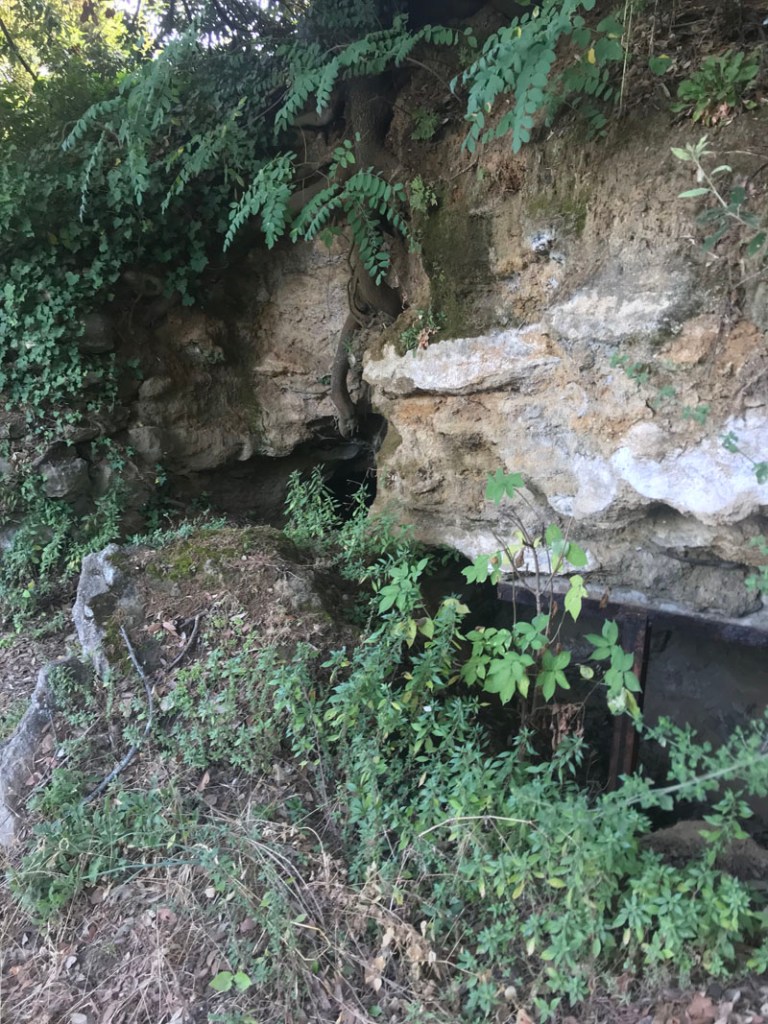
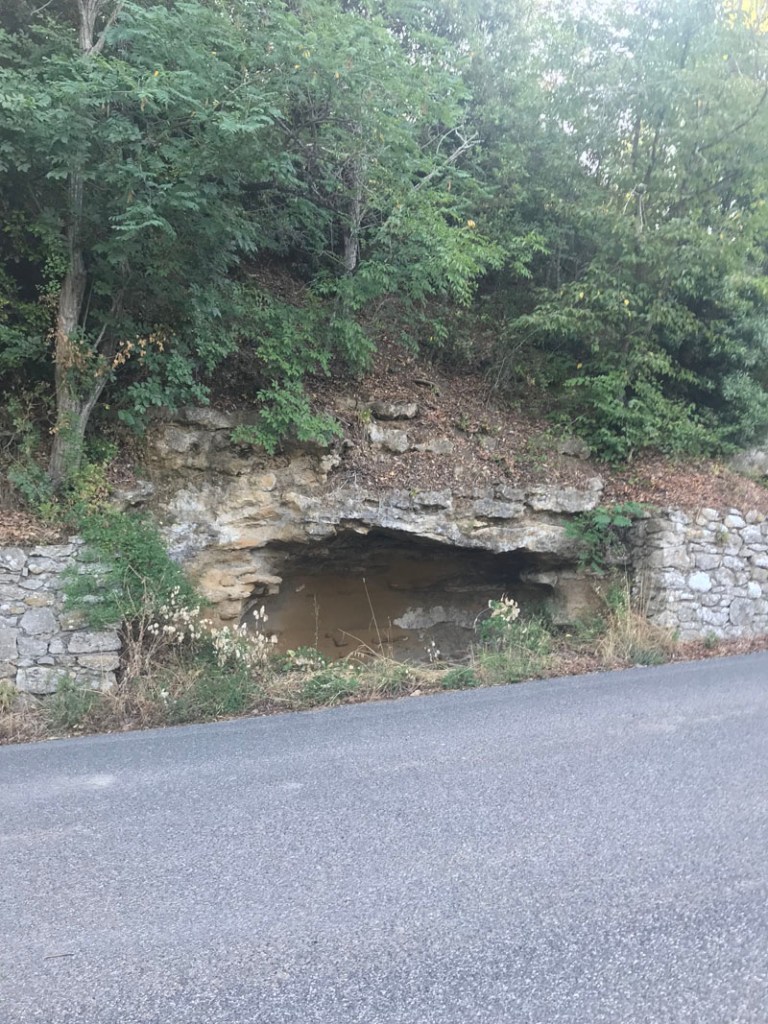
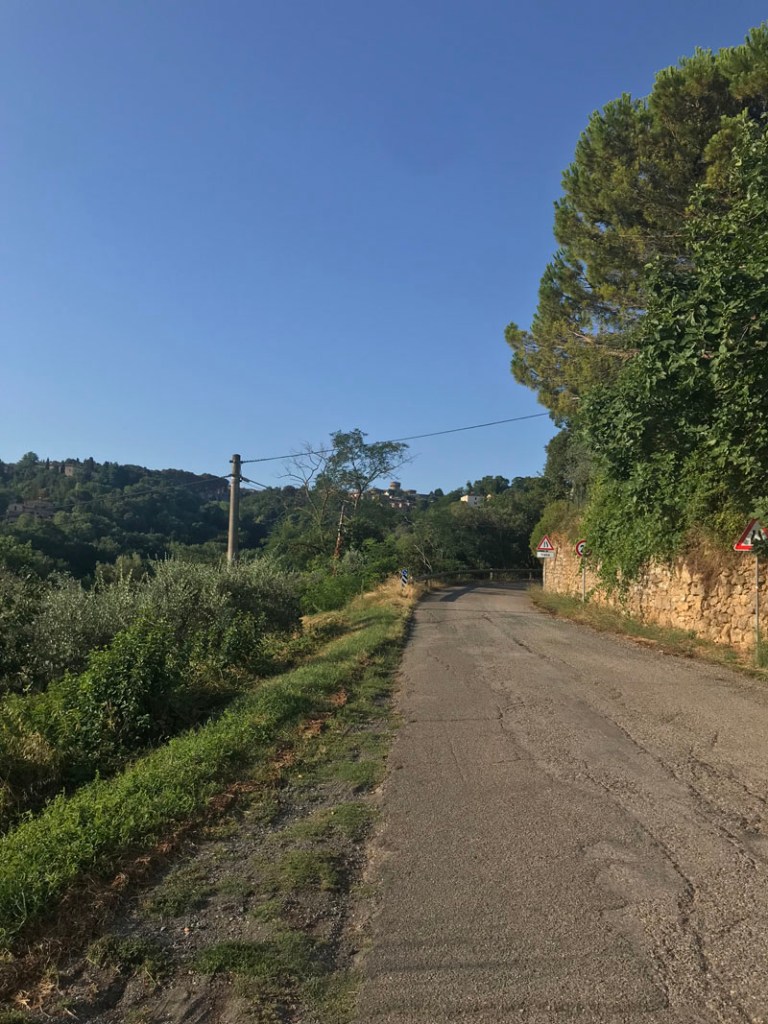
I noticed that there were some Etruscan ruins not too far away, so I decided to check them out.  The road wound steeply downhill, and I knew in the back of my mind that I would certainly pay for all with the walk back into town.  Halfway there, a car heading towards me had to jam-on, as an adolescent doe ran across its path, just yards away.  Where it had come from, stood a young buck, possibly contemplating the same move.  I didn’t make eye-contact for long, and swiftly made my way downwards.  I’m sorry now that I didn’t take a shot of him.  When I got closer to the ruins, I saw there were indents, cavelets (if you will), dug into the side of the road, with walls on top.  I knew I was in Etruscan country then. 

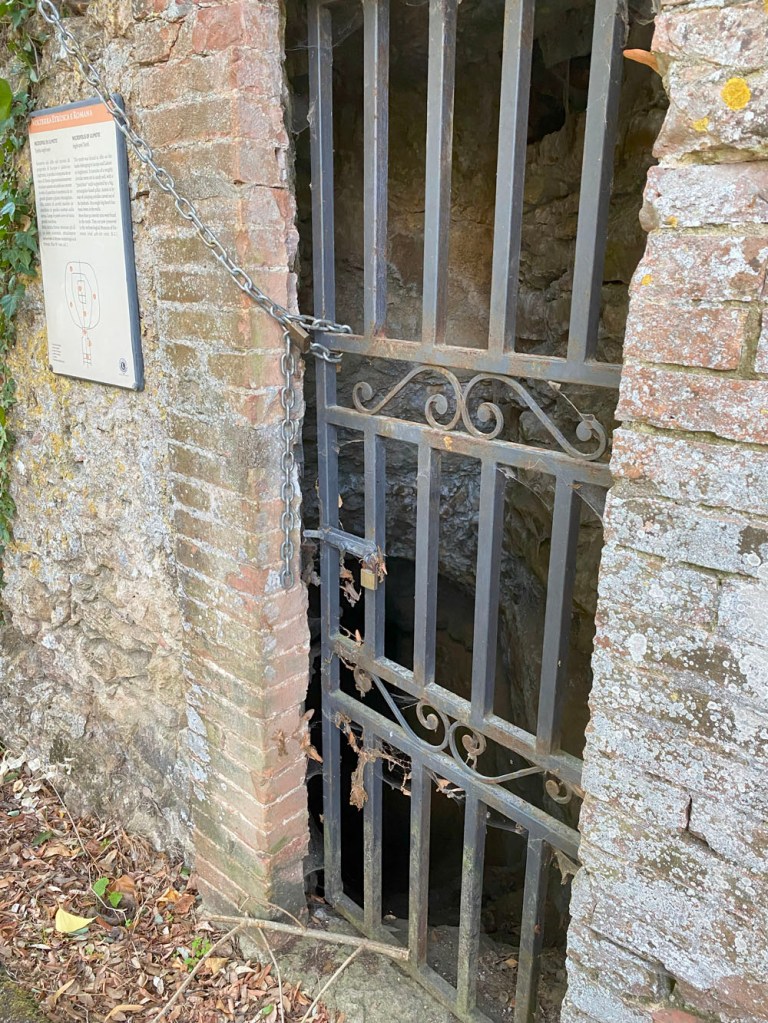
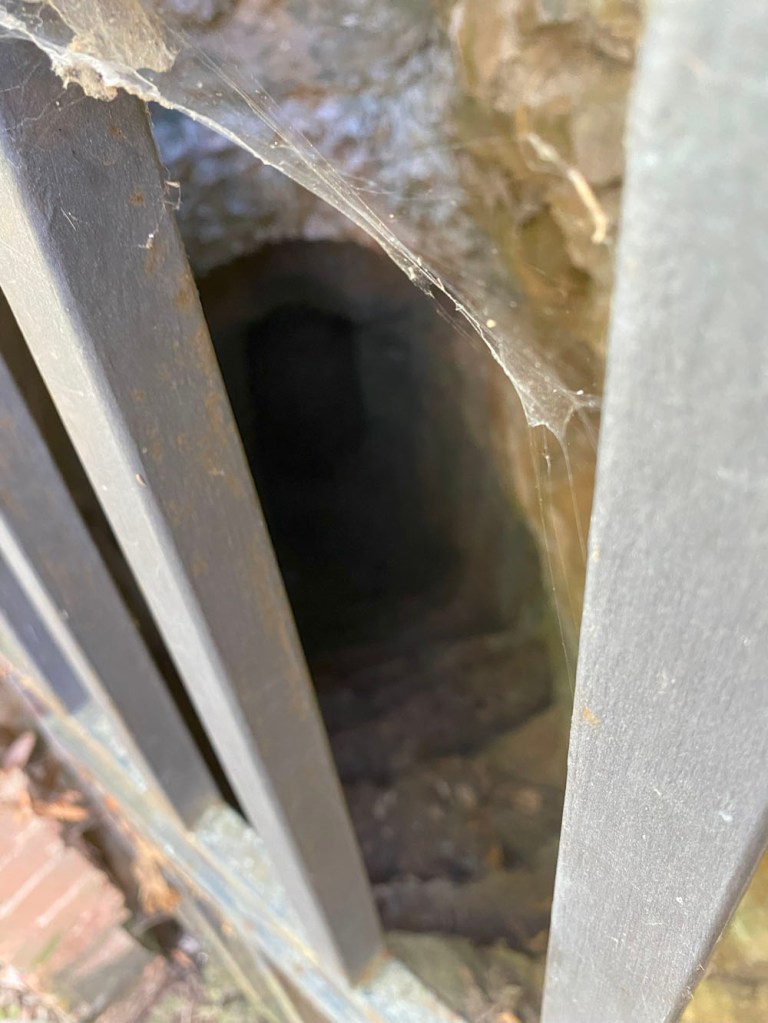
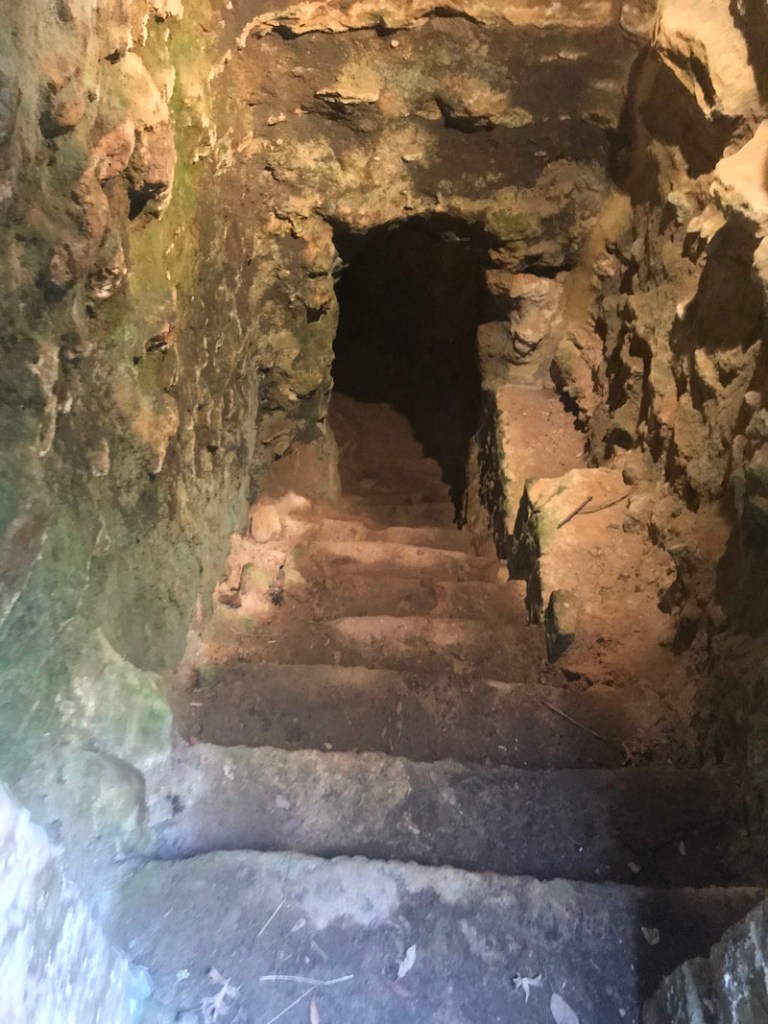
I found the entrance to the site and made my way by a dusty path to one of the tombs, and climbed in.  It was electrically lit, so I wasn’t too spooked (yet).

I only spent a minute down there, as I thought the place might be mozzie-infested, although I didn’t see or hear any insects.  A feeling of unease came over me, and I decided to, as masculinely as possible, make my way back up the stairs.  Then I heard a click behind me.  I moved again, and it became a crackling-crunch, so I bolted up the first few steps and then realised I had my damn water bottle in my back pocket.  The plastic for water bottles in Italy is a lot thinner than we use back home, so you only have to look at it to make it crackle.  I felt a bit of a tool, and slowly made my way up the rest of the steps and out.

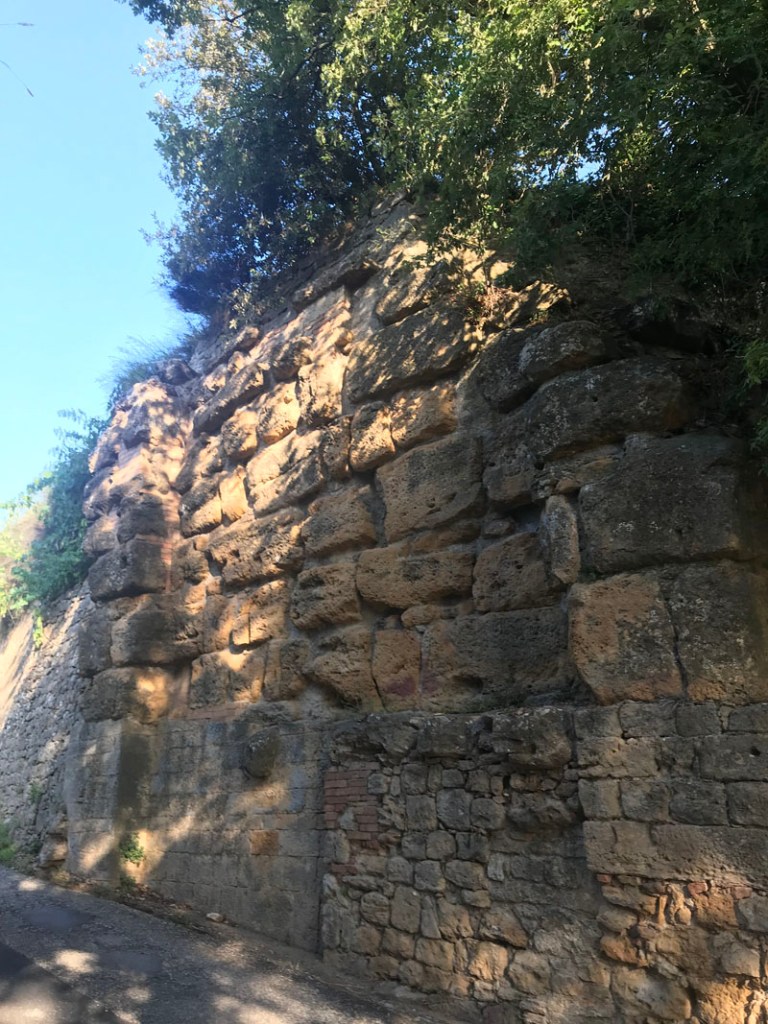
The walk back was horrendous.  I mean it was beautiful, but I am unfit and it damn-near killed me.  I probably won’t go back to those tombs on foot, until I get a little more active.  The 1.7km walk home was totally uphill, some of it steep.  I had to rest on my feet a couple of times and took another snap of Diana’s magnificent Etruscan blocks.

Today, we might do a little furniture shopping. We really need a wardrobe and a cabinet for the telly. Maybe we’ll look at some sunbeds too.

A dopo!

Volterran Facts and Myth

Much like Ireland has been doing recently, Volterra has, over its millenia, been hitting above its weight, in terms relative to the size of its population. Here are some of the stories it has accumulated, which have add to Volterra’s cultural history and notoriety.

I have to admit that I haven’t read all of the criteria for being announced as being protected as a UNESCO Heritage site, but it just seems very odd to me that Volterra’s application has been waiting for so long.

etruscansVolterra (Velathri, in the Etruscan language) was one of the twelve principal cities of the Etruscan League. It was a cultural cradle while Rome was still an upstart village on the banks of the Tiber. (I still have mad love for you, Rome!).  In fact, it is Tuscany’s oldest continuously inhabited town.

alabasterIt is one of the principal centres for production of alabaster works in Europe, if not the principal centre. It was for centuries, and then trade fell off.  It picked back up again in the eighteenth century, from which time Volterra has ruled the roost!  Check out alab’Arte, from where I pilfered this photo.
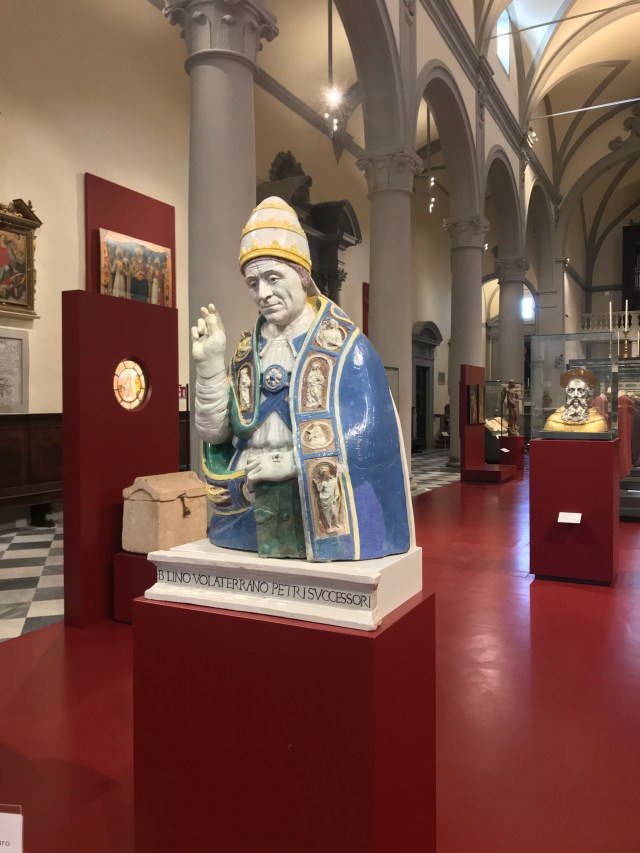
linusThe second Pope, St. Linus, was born in Volterra.  His cathederal is one of the few places we haven’t visited yet, as it was being renovated.  It may have reopened by now, so hopefully we’ll take a look when we get over there.
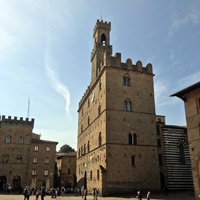
palazzo_dei_prioriThe main building of office in Volterra is still the 13th century Palazzo dei Priori, in the main square.  It is the oldest town hall in Tuscany.  So enamoured were the Medici by its design, that it was ‘culturally appropriated’, in that they based their Palazzo Vecchio in Florence on it.  It’s still used for officialdom, but you can also visit a museum and the bell-tower there.

view_from_pdpIf you were to stand beside the bell in the Palazzo dei Priori, you would be about 560 meters above sea-level, making Volterra Tuscany’s highest hilltown.  I can see our house from here!
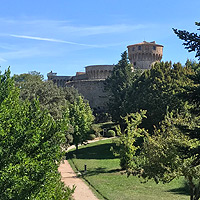
fortezzaThere is a Medicean fortress that dominates the south of the town.  There are only three ways you can visit it, however: (1) go to dinner there; (2) visit someone housed there; or (3) be a very naughty boy and earn a prison sentence.  Yes, it is, in fact, a medium-security prison.  However, it is a very progressive one.  Eight or so times a year, you can book yourself in to attend the so-called Cene Galeotte, where prisoners, aided by volunteering expert chefs help prepare food and provide waiting service, to help them get back on their feet by learning a trade.  More improbably, one of Italy’s finest theatrical troupes is made up of inhabitants of the Fortezza.
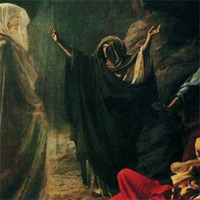
aradiaThe progenitor of your typical medieval witches was also reputed for have been born in Volterra, supposedly on August the 13th, 1313.  Her name was Aradia.  Read more about her here.  I haven’t yet visited the rock or caves, but that might change during my sabbatical.  
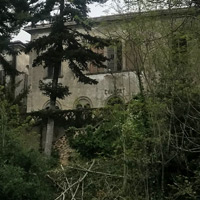
manicomioVolterra was home to a another town of sorts, on its outskirts.  During its dismal apex, it housed as many people as the walled town itself did – about 6,000.  It was a psychiatric hospital.  It began life as an institution which genuinely sought to help the mentally infirm, but became something much more insidious.  You can read more about it here and here.

It still remains, for all intents and purposes, abandoned, but I have now heard you can buy a ticket to visit.  Chalk something else up for our upcoming visit!

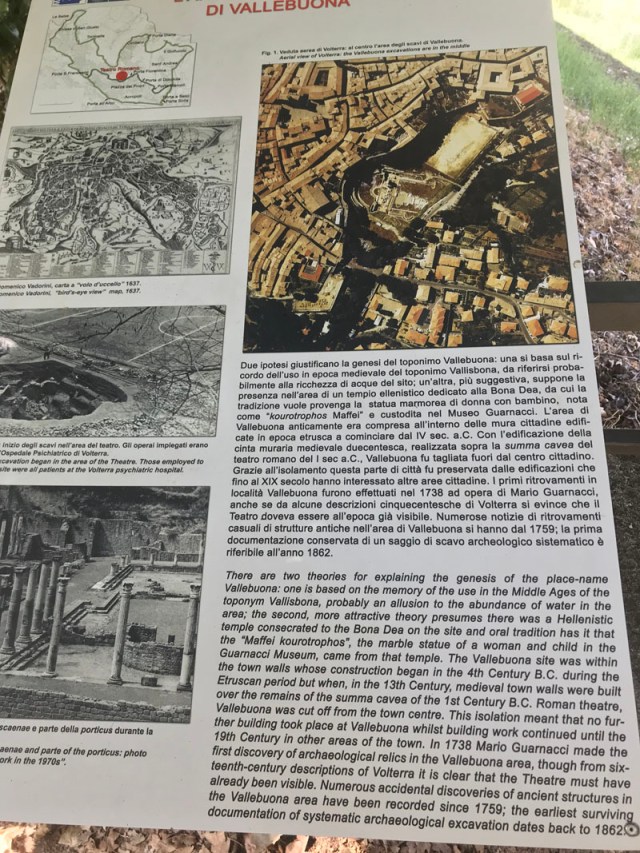
Another interesting story, is that patients helped dig up the trash heap that lay outside the town’s walls, and exposed the Roman Amphitheatre, which had lain there for centuries, forgotten.  Those that volunteered got clean bills of health.

rosso_depositionOne of the most famous and progressive scenes depicting the Deposition of Christ was painted by Rosso Fiorentino, and originally housed in the cathedral of Volterra.  It is now in the town’s art museum (pinacoteca), along with many other amazing pre-Renaissance pieces.  It features, unusually, a red-headed Judas (bottom right).

porta_allarcoOne of Volterra’s greatest treasures is on public display, and acts as one of the entrances to the walled town: the Porta all’Arco.  Part of it dates back to centuries BC.  During WWII, the German’s threatened to destroy the gate, to impede the approaching allies.  The remaining townsfolk (many of whom where women and children by then) begged the Germans to give them time instead to stop it up with rocks.  They were given 24 hours.  Incredibly they did it in time (it’s a big gate, with added depth) by forming a human conveyor belt, and so the gate remains intact today.

twilightMost recently, Volterra has seen movie and TV sets come and go, and been associated with modern young-adult urban fantasy.  Some scenes from the live-action version of Full Metal Alchemist were shot here, as well as much of Season 3 of The Medicis (still awaiting broadcast in Ireland, I think).  Most famously, Volterra has been associated with Stephanie Meyer’s Twilight Trilogy, with some of the second book being set here.  Sadly, only a few scenes of the film where shot in Volterra, with the majority of the outdoor stuff shot instead in Montepulciano, 70 miles away.

About Volterra

Today, I thought I’d set out some interesting facts about Volterra itself, before eventually leading into why we chose the town to buy an apartment at a later date.

Volterra is the oldest continuously inhabited town in Tuscany. Located on a plateau between about 40km from the Tuscan coast, it lies about halfway between the northern and southern borders of that region. Artefacts dating to the Iron Age have been found there, and subsequent to the Villanovans of that period, one can find constructions by the Etruscans and Romans. However, today the town is largely medieval in layout.

Three ages of Volterra
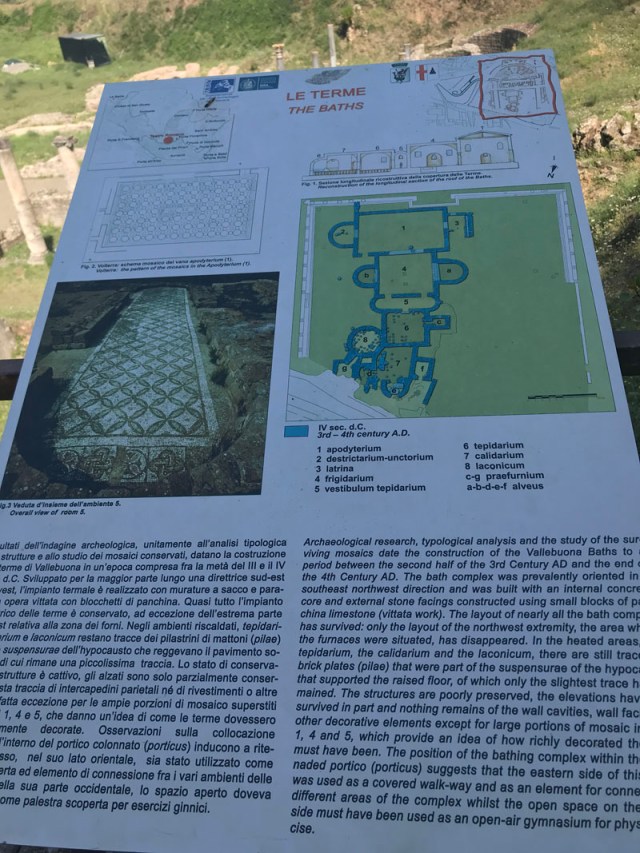
L-R: Porta all’Arco (Etruscan Gate), Roman Amphiteatre and baths, and medieval laneway

Today, although visited by tourists, is a little off the beaten path and much of its charm is derived not only due to its aesthetic qualities, but because it is also a genuine working town. About 6,000 people live within the walls of the Centro Storico (historical town centre), with a further 6,000 in the immediate environs and countryside. Centuries ago, the walls of the town surrounded a larger area, and within about 25,000 were said to have inhabited.

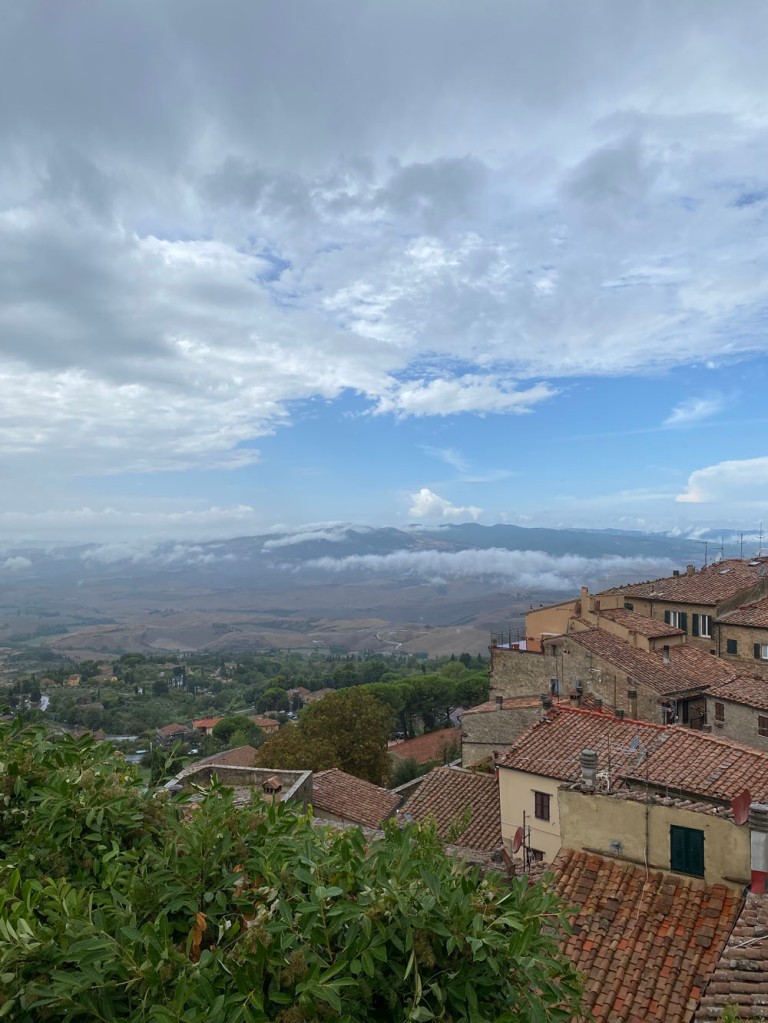
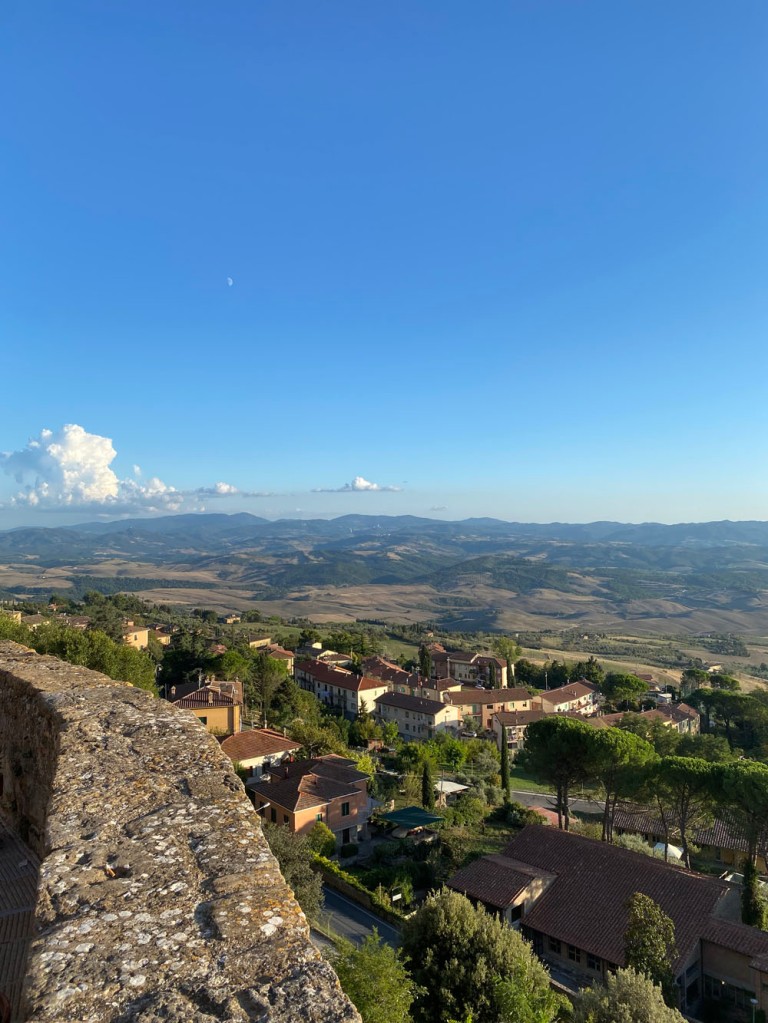
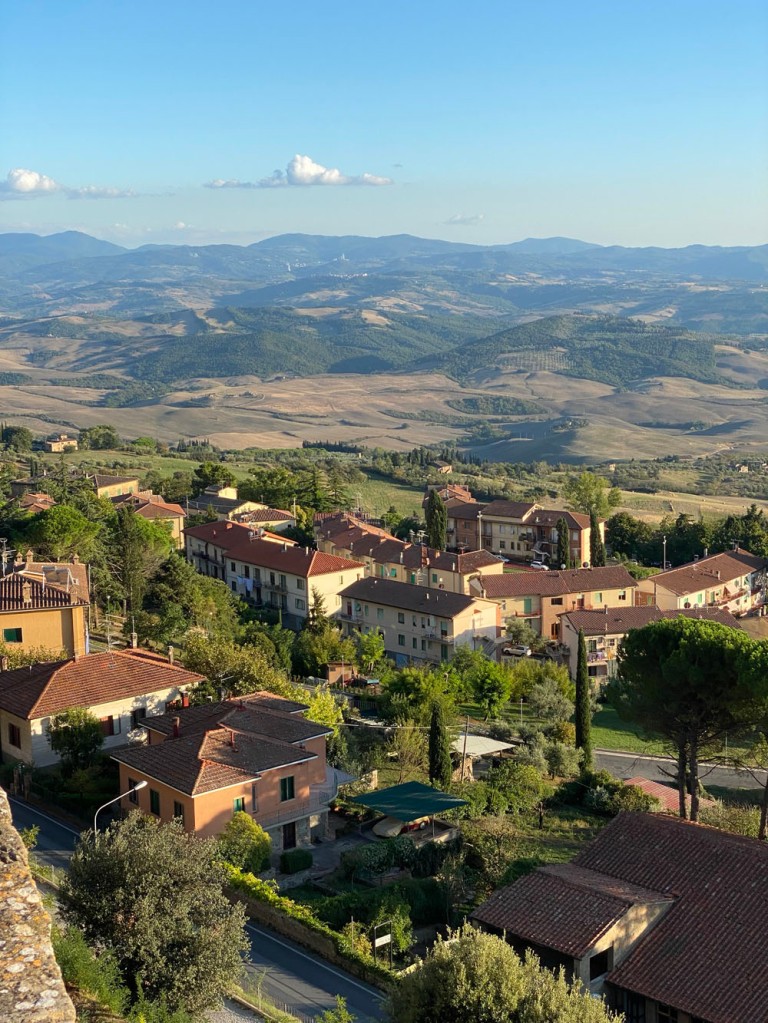
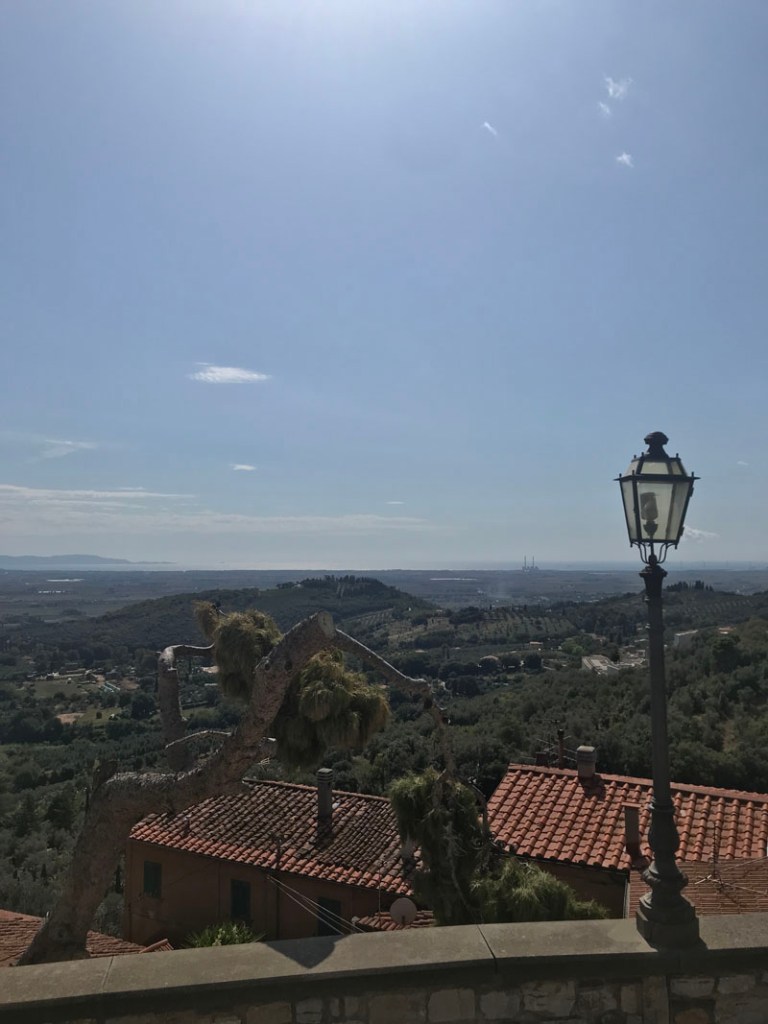
Volterra is also the highest hill-town in Tuscany, and it commands some seriously panoramic views of the countryside, all the way to the Tyrrhenian sea on a clear day. Photos tend not to do it justice, and the vistas from its walls always take my breath away.

We settled upon Volterra immediately after our first visit. The enormous sense of place, the history, the people and the food bring us back again and again – but more on those another time.